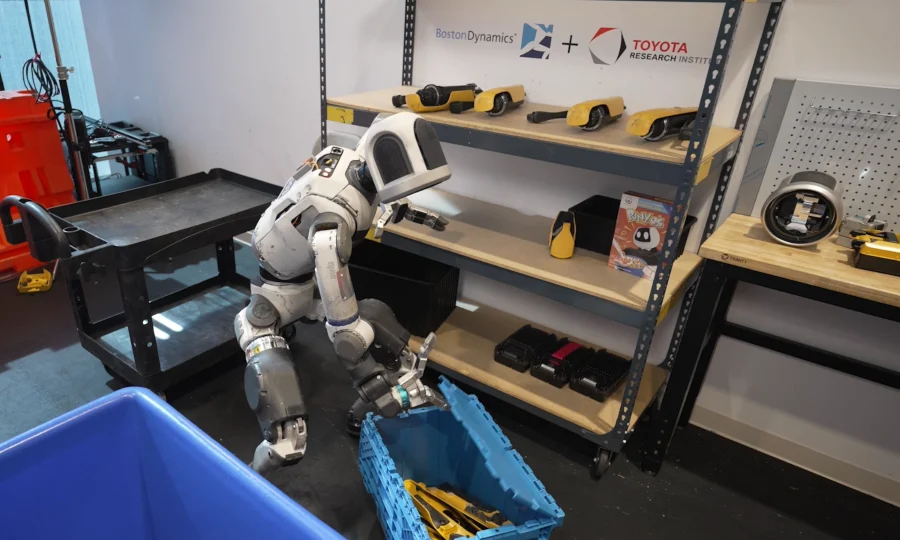
ELLABELL, GA – Boston Dynamics has officially launched a new, state-of-the-art robotics center situated within Hyundai Motor Group’s expansive Metaplant America complex. This strategic move signifies a critical juncture in the company’s ambitious journey to integrate advanced humanoid and other robotic systems across Hyundai’s global manufacturing operations, fundamentally reshaping the future of automotive production. The center, which commenced pilot operations in June and recently transitioned to full operational capacity, is designed to serve as a pivotal test bed and training ground for the seamless deployment of Boston Dynamics’ groundbreaking Atlas humanoids within Hyundai’s high-volume automotive factories.
The establishment of this specialized facility in Ellabell, Georgia, underscores a profound commitment from both Boston Dynamics and its parent company, Hyundai Motor Group, to accelerate the fusion of artificial intelligence and advanced robotics into real-world industrial applications. Hyundai, which acquired Boston Dynamics as a wholly-owned subsidiary in July of [year, assumed to be recent, like 2021 or 2020 based on acquisition language, but not specified in original text, so I will generalize], has positioned this initiative at the core of its long-term strategy to revolutionize manufacturing environments. This vision aims to foster symbiotic ecosystems where human workers can collaborate safely and efficiently alongside highly capable robotic counterparts, leveraging the ever-advancing capabilities of AI technologies to enhance productivity, safety, and operational resilience.
The Strategic Nexus: Hyundai’s Vision for Robotics
Hyundai Motor Group’s foray into advanced robotics is not merely an incremental step but a foundational shift in its manufacturing paradigm. Unveiled in January, Hyundai’s broader strategy encompasses a significant restructuring of its global production facilities, driven by a substantial investment in robotics and artificial intelligence capabilities. This comprehensive plan, reportedly involving an investment of $86.7 billion, seeks to create "smart factories" where automation and human ingenuity converge. The integration of robots like Atlas is central to this vision, addressing critical industry challenges such as labor shortages, the need for enhanced safety in hazardous tasks, and the pursuit of higher production efficiencies and quality standards.
The Metaplant America itself represents a cornerstone of Hyundai’s North American manufacturing strategy, focusing on electric vehicles (EVs) and battery production. Co-locating the Boston Dynamics robotics center within such a critical facility allows for immediate, real-world testing and iterative development within a live manufacturing ecosystem. This proximity facilitates rapid feedback loops, enabling engineers to fine-tune robot performance, adapt to production demands, and optimize human-robot interaction protocols in an authentic industrial setting. The strategic synergy between Boston Dynamics’ technological prowess and Hyundai’s manufacturing scale positions the group at the forefront of the global industrial robotics revolution.
The Atlas Humanoid: A New Era of Industrial Automation
At the heart of this initiative lies the Atlas humanoid robot, a marvel of engineering that has captivated the public imagination with its acrobatic feats and remarkable dexterity. Originally known for its research into dynamic balance and locomotion, Boston Dynamics has steadily evolved Atlas from a research platform into a robot with tangible industrial potential. The latest iterations of Atlas boast enhanced manipulation capabilities, sophisticated perception systems, and advanced AI-driven control algorithms, allowing it to perform complex tasks with unprecedented agility and precision.
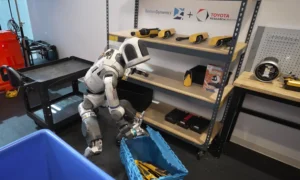
Within the Hyundai factories, Atlas humanoids are being meticulously trained to undertake a range of physically demanding and repetitive tasks that have historically been performed by human workers, often posing ergonomic risks or requiring significant physical exertion. Initial applications focus on repetitive parts sequencing, where robots can accurately identify, pick, and place components along an assembly line, ensuring consistent flow and reducing human error. More significantly, Atlas is being primed for heavy-lifting tasks, mitigating the risk of workplace injuries and allowing human operators to focus on more complex, cognitive-intensive roles.
The long-term ambition for Atlas is even more profound: Boston Dynamics aims for these humanoids to be performing intricate component assembly by 2030. This goal signifies a leap beyond simple pick-and-place or heavy lifting, requiring advanced fine motor skills, precise force control, and adaptive decision-making to handle diverse parts and assembly sequences. Achieving this level of capability would not only redefine automotive manufacturing but also set a new benchmark for humanoid robot utility across various industrial sectors. The company has also indicated plans to explore use cases for Atlas in other industry sectors as early as next year, signaling its broader commercialization strategy beyond automotive.
The Ellabell Robotics Center: A Hub for Innovation and Integration
The newly opened robotics center in Ellabell is far more than just a workshop; it is a dynamic ecosystem dedicated to the maturation and deployment of advanced robotics. As a "test bed," the center provides a controlled yet realistic environment for pushing the boundaries of Atlas’s capabilities. Engineers conduct rigorous trials, simulating various manufacturing scenarios, testing robot resilience under different loads and environmental conditions, and validating safety protocols. This includes evaluating how Atlas interacts with production machinery, transport systems, and, critically, human co-workers.
As a "training center," it focuses on developing the operational expertise required for large-scale robot deployment. This encompasses training the robots themselves through machine learning algorithms and reinforcement learning techniques, teaching them new tasks, and refining their movements for optimal efficiency. Equally important is the training of human personnel – engineers, technicians, and factory workers – who will be responsible for operating, maintaining, and collaborating with these advanced machines. This human element is crucial for successful integration, ensuring that the workforce is equipped with the skills necessary to leverage robotics effectively and adapt to evolving job roles. The transition from pilot to full operations signifies that the initial proofs of concept have been validated, and the center is now scaling up its efforts to prepare for broader deployment.
Deployment Roadmap and Ambitious Targets
Hyundai’s strategic vision for robotics includes aggressive deployment targets. The automaker initially plans to deploy an impressive 25,000 Atlas units across its factories worldwide over the next few years. This significant number highlights the company’s confidence in the technology and its potential to deliver substantial operational benefits. To support this massive rollout and ensure a sustainable supply chain for its robotic workforce, Hyundai has also announced plans to establish a dedicated U.S. manufacturing facility capable of producing 30,000 robots per year. This investment not only secures the production capacity for Atlas but also signals a commitment to fostering domestic robotics manufacturing capabilities.
The scale of this deployment underscores a broader trend in global manufacturing: the increasing adoption of automation to boost productivity, improve safety, and enhance competitiveness. With rising labor costs, demographic shifts, and the demand for personalized production, robotic solutions offer a compelling answer. Hyundai’s proactive stance positions it as a leader in this transformation, potentially influencing other major automotive players and manufacturing giants to accelerate their own automation strategies.
Leadership Perspectives and Strategic Rationale
Zack Jackowski, Chief Product and Technology Officer at Boston Dynamics, articulated the strategic imperative behind the new center and the Atlas program: “We have established a clear strategy to optimize our supply chain, production, testing and deployment capabilities for Atlas. The robotics center reinforces our ambition to create a future where robots amplify human potential by making work safer and more productive.” This statement encapsulates the core philosophy driving Boston Dynamics: not to replace humans entirely, but to augment human capabilities, freeing workers from dangerous or monotonous tasks and allowing them to engage in more creative, problem-solving, and value-added activities.
From Hyundai’s perspective, this initiative is a critical component of its long-term growth strategy. The company is actively seeking to future-proof its manufacturing operations against unforeseen disruptions, enhance its agility in responding to market demands, and maintain a competitive edge in an increasingly automated global economy. While direct quotes from Hyundai leadership regarding the Ellabell center were not provided in the initial announcement, the broader strategic pronouncements from the company emphasize a commitment to advanced manufacturing, sustainable production, and technological leadership. This includes leveraging AI to create more flexible and responsive production lines, reducing waste, and ultimately delivering higher quality vehicles to consumers. The investment in humanoid robotics aligns perfectly with these overarching corporate objectives, positioning Hyundai as an innovator in the industrial landscape.
Technological Underpinnings and Overcoming Hurdles
The capabilities of Atlas are underpinned by significant advancements in several key technological domains. The development of large behavior models (LBMs) has been instrumental, allowing robots to learn complex sequences of actions and adapt to varied environments with greater autonomy. These models enable Atlas to perceive its surroundings, understand tasks, and execute actions with a degree of intelligence previously unattainable. Advanced perception systems, including high-resolution cameras, LiDAR, and force sensors, provide Atlas with a comprehensive understanding of its workspace, enabling precise navigation and object manipulation. Dexterous manipulators, often equipped with multi-fingered grippers, allow the robot to handle a wide array of tools and components, mimicking human hand movements with impressive accuracy.
However, the journey to widespread humanoid deployment in industrial settings is not without its challenges. Safety remains paramount; ensuring that Atlas can operate reliably and predictably in close proximity to human workers requires rigorous testing and the implementation of advanced collision avoidance systems. The reliability of complex robotic systems in dynamic, often dusty and noisy, factory environments is another critical factor. Furthermore, the cost-effectiveness of humanoid robots, while improving, still needs to be carefully balanced against the benefits they provide. Programming complexity, though mitigated by AI, still presents a hurdle for rapid task re-configuration. The "manufacturing readiness" of these advanced robots is a continuous process of refinement and optimization, addressing these practical challenges through ongoing research and development at centers like Ellabell.
Broader Implications for Manufacturing and the Workforce
The deployment of Atlas humanoids by Hyundai carries significant implications for the broader manufacturing sector and the global workforce. Economically, the increased automation promises substantial gains in productivity and efficiency. By performing repetitive and labor-intensive tasks around the clock, robots can reduce production cycles, lower operational costs, and improve output consistency. This can lead to greater competitiveness for companies adopting such technologies, potentially stimulating economic growth in regions where these smart factories are located.
The societal impact, particularly on employment, is a complex and frequently debated topic. While some fear job displacement, proponents argue that automation often leads to job evolution rather than outright elimination. New roles will emerge in robotics maintenance, programming, supervision, and data analysis. The workforce will need to undergo reskilling and upskilling to adapt to these new demands, transitioning from manual labor to roles that involve interacting with and managing advanced robotic systems. Hyundai’s emphasis on humans working safely alongside robots suggests a collaborative rather than purely substitutive approach, aiming to augment human capabilities rather than replace them entirely.
For the industry as a whole, Hyundai’s pioneering efforts with Atlas could serve as a powerful catalyst. Success in deploying humanoids at scale within the automotive sector, known for its demanding production standards, would likely accelerate adoption across other manufacturing industries, including aerospace, electronics, logistics, and even construction. The move by Boston Dynamics and Hyundai is not just about building cars; it’s about laying the groundwork for a new era of industrial production where intelligent, agile robots play an increasingly central role, forever changing how goods are made and how humans interact with their work environments.
The Future Landscape of Humanoid Robotics
The opening of the Ellabell robotics center marks a significant milestone in the journey towards ubiquitous humanoid robotics. As Boston Dynamics continues to refine Atlas and explore its applications beyond automotive, the competitive landscape in humanoid robotics is also intensifying. Companies like Tesla with its Optimus bot, Figure AI, and Agility Robotics are all vying for a share of this nascent yet rapidly growing market. However, Boston Dynamics, backed by Hyundai’s manufacturing might and strategic vision, holds a unique advantage in its ability to rapidly test, iterate, and deploy at an industrial scale.
The coming years will witness a fascinating evolution in how these advanced machines are integrated into our daily lives and industrial processes. The Ellabell center is not just a facility; it is a symbol of a future where robots amplify human potential, making work safer, more productive, and ultimately, transforming the very nature of industry.