Electron microscopes, instruments capable of resolving structures far smaller than anything discernible with conventional light, have long been indispensable tools across myriad scientific disciplines. From elucidating the intricate architecture of viruses to mapping the atomic lattice of advanced materials, their power lies in leveraging the wave-like properties of electrons to achieve resolutions orders of magnitude beyond optical limits. However, despite their extraordinary capabilities, a team of researchers in Austria contends that conventional electron microscopes may be overlooking a wealth of valuable information inherently carried by each electron, information that, if harnessed, could unlock unprecedented insights and overcome critical limitations, particularly when imaging delicate biological samples. This assertion forms the foundation of a groundbreaking new approach that seeks to merge the formidable power of electron microscopy with the nascent field of quantum computing.
At the core of a standard electron microscope, the primary mechanism for image formation relies on the simple counting of electrons that pass through or reflect off a sample. While effective, this method essentially treats electrons as classical particles, tallying their presence or absence to construct a visual representation. Yet, each electron is also a quantum entity, endowed with subtle quantum information that typically goes unutilized. Recognizing this untapped potential, scientists at TU Wien, in a collaborative effort with expert teams from the University of Vienna, JKU Linz, and the University of Innsbruck, have embarked on a pioneering project to develop a novel system designed to capture and process this "extra" quantum information. Their audacious vision involves directly connecting an electron microscope to a quantum computer, thereby ushering in what they anticipate will be a revolutionary leap in imaging technology. By extracting more useful information from each electron, the researchers aim to enable scientists to form significantly clearer images while simultaneously reducing the electron dose applied to sensitive specimens. This advancement promises to be profoundly valuable for fields such as structural biology, where highly delicate biological materials, like proteins or cellular components, are notoriously susceptible to damage from intense electron beams. The construction of a prototype quantum computer electron microscope, based on this innovative concept, is now actively underway at TU Wien, marking a pivotal transition from theoretical possibility to experimental realization.
The Quantum Leap in Microscopy: Unlocking Hidden Information
Modern electron microscopes, whether scanning electron microscopes (SEM) or transmission electron microscopes (TEM), have pushed the boundaries of visualization to an atomic scale. Devices like cryo-electron microscopes (cryo-EM), which earned its pioneers the Nobel Prize in Chemistry in 2017, can reconstruct the three-dimensional structures of biomolecules in near-native states, revolutionizing structural biology. Such advancements have allowed for the detailed mapping of protein complexes, viral capsids, and cellular organelles, providing critical insights into their functions and disease mechanisms. However, achieving such extraordinary resolution often necessitates exposing samples to a substantial number of electrons. The inherent challenge lies in the destructive nature of these electron beams. As electrons interact with the sample, they can cause ionization, bond breakage, and heating, leading to irreversible structural damage. This issue is particularly acute for biological specimens, which are predominantly composed of light elements and water, making them exquisitely sensitive to radiation. For instance, a typical electron dose for high-resolution imaging in cryo-EM might be in the range of 30-100 electrons per square angstrom (e-/Ų). While this is a carefully optimized dose, it still represents a significant energy input that can alter or destroy the very structures being observed, particularly over prolonged imaging sessions or when seeking to resolve extremely fine details.
The central premise of the Austrian team’s innovation is to fundamentally alter this trade-off. Instead of simply increasing the number of electrons to enhance signal-to-noise ratios—a strategy that inevitably escalates sample damage—they propose to glean more meaningful data from each individual electron. "Today, we can image tiny details on the atomic scale," explains Philipp Haslinger from the Institute of Atomic and Subatomic Physics at TU Wien. "However, this requires a large number of electrons. And not every sample can be exposed to so many electrons without being damaged. This is often a problem, particularly when imaging biological samples such as individual proteins." The scientific community has long grappled with this dilemma, often resorting to techniques like cryo-fixation to mitigate damage, but even then, the inherent limitations of electron-matter interaction persist. The new approach seeks to transcend these classical statistical limits by leveraging quantum mechanics, aiming to provide a pathway to unprecedented clarity with significantly reduced sample degradation.
The Genesis of an Idea: A Collaborative Austrian Endeavor
The conceptualization of this quantum-enhanced electron microscope is a testament to interdisciplinary collaboration and a deep understanding of both quantum physics and advanced microscopy. Electron microscopy itself has a rich history, dating back to the early 1930s when Ernst Ruska and Max Knoll at the Technical University of Berlin first demonstrated the feasibility of using electron beams for imaging. Ruska later received the Nobel Prize in Physics in 1986 for his fundamental work. Since then, the field has continuously evolved, with innovations in electron optics, detectors, and computational image processing pushing resolution limits ever lower. Yet, the foundational principle of image formation—counting scattered electrons—has remained largely unchanged.
The Austrian project, however, represents a radical departure. It stems from a confluence of expertise housed within several leading Austrian institutions, brought together under the umbrella of the "quantA Cluster of Excellence." This major research initiative, coordinated by the University of Vienna, serves as a hub for quantum research, fostering collaboration between physicists specializing in quantum information, quantum computing, and experimental quantum systems, alongside experts in electron microscopy. This environment proved fertile ground for the audacious idea of integrating these disparate fields.
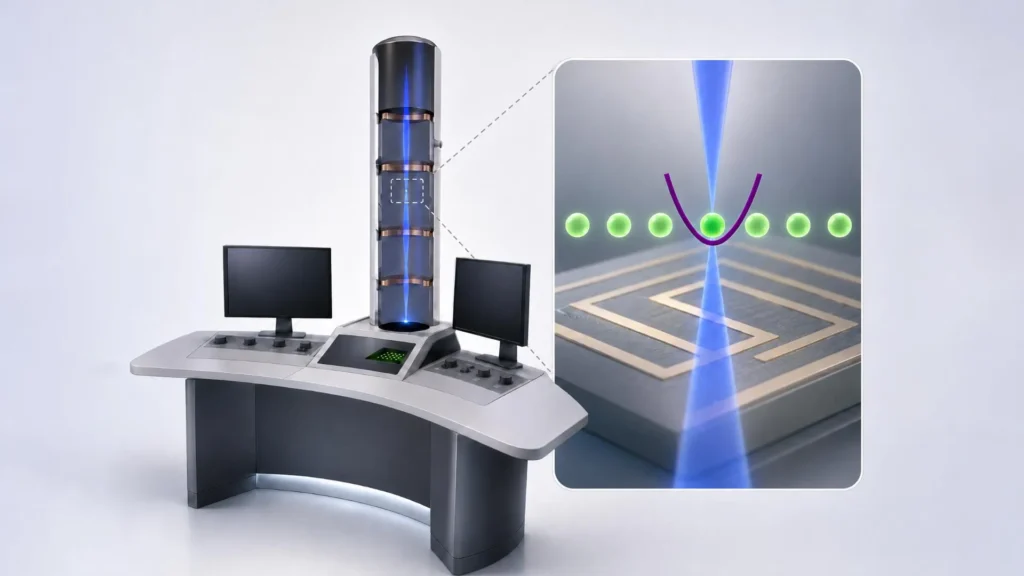
Elias Pescoller, the first author of the publication detailing this concept and a doctoral student at both the Institute for Theoretical Physics and the Institute of Atomic and Subatomic Physics at TU Wien, elucidated the core mechanism: "Our idea is to combine the electrons with a quantum computer. We let them interact with ions that are held in place along the path of the electron beam. This can, for example, create quantum entanglement between the electron and the quantum computer. The electron and the ion then share a joint quantum state." This interaction is the linchpin of the proposed system, allowing the elusive quantum information carried by the electron to be transferred to, or shared with, a robust quantum system—the trapped ion—which then acts as a memory and processing unit. The ambitious scope of this project is underpinned by substantial funding from the Austrian Science Fund (FWF) through the quantA Cluster of Excellence, as well as critical support from the Gordon and Betty Moore Foundation, signaling significant confidence in its potential to redefine scientific imaging.
Quantum Entanglement: The Heart of the Innovation
The concept of quantum entanglement is central to the proposed microscopy technique. Often described by Erwin Schrödinger as "the characteristic trait of quantum mechanics, the one that enforces its entire departure from classical lines of thought," entanglement occurs when two or more quantum particles become inextricably linked, sharing a common fate regardless of the distance separating them. A measurement performed on one entangled particle instantaneously influences the state of the other, even if they are light-years apart. In the context of the quantum electron microscope, this phenomenon is ingeniously employed to extract and preserve information.
Here’s how it is envisioned to work: as an electron, having interacted with the sample in the microscope, traverses a specific path, it is guided to interact with a trapped ion—a charged atom held in place by electromagnetic fields, forming the basic qubit (quantum bit) of a quantum computer. This interaction is designed to entangle the electron with the ion. Once entangled, the electron and the ion effectively share a joint quantum state. This means that certain properties of the electron, which might otherwise be lost or indistinguishable from noise if only classical counting were applied, are now encoded within the quantum state of the ion. Crucially, the ion, being part of a stable quantum computer, can retain this delicate quantum information far more effectively than a fleeting electron.
The process is not limited to a single electron. After one electron interacts and entangles with the trapped ion, another electron from the microscope can follow suit, interacting with the same quantum computer. By repeatedly carrying out carefully designed quantum operations, the system can systematically combine the quantum information gleaned from multiple electrons. Dennis Rätzel from the Institute of Atomic and Subatomic Physics at TU Wien emphasizes the power of this cumulative process: "If we perform very specific quantum-computing operations each time, we can optimally combine the information from several electrons so that we obtain a signal of maximum strength even though we use only a relatively small number of electrons." This intelligent aggregation of quantum data is what promises to dramatically improve image quality and information yield. The complex algorithms required to orchestrate these quantum-computing operations—ensuring optimal information extraction and combination—were meticulously developed in close collaboration with Johannes Kofler’s team at JKU Linz, highlighting the sophisticated theoretical underpinnings of this experimental endeavor.
Overcoming Classical Limits: From Noise to Clear Signal
The fundamental difference between this quantum-enhanced approach and conventional electron microscopy lies not in the electron beam itself, but in the intelligence applied to the information it carries. The electrons are still the primary probes used to image objects at the nanoscale, interacting with the sample to carry information about its structure, just as in any other electron microscope. The paradigm shift occurs in the post-interaction processing. Instead of merely registering the presence or intensity of electrons, the quantum computer actively processes the quantum information embedded within these electrons, information that would invariably be lost or deemed irrelevant by classical detection methods.
Iva Bezáková from the Institute for Theoretical Physics at TU Wien articulates this transformative potential: "By processing the quantum information carried by these electrons in a quantum computer, we can extract significantly more information from the process. What would previously have been indistinguishable from random noise can thus become a clear signal." This capability addresses a critical limitation in conventional microscopy: the inherent statistical noise that obscures weak signals. In many high-resolution imaging scenarios, especially with low electron doses or highly radiation-sensitive samples, the signal from the sample can be so faint that it is effectively buried within the background noise. Classical signal processing struggles to differentiate between true signal and random fluctuations under such conditions. However, by leveraging quantum correlations and coherent processing, the quantum computer can identify and amplify these subtle signals, converting what was once an ambiguous flicker into a discernible and useful detail.
Elias Pescoller further underscores this fundamental advantage, stating, "Quantum physics allows us to overcome the statistical limits that constrain conventional electron microscopes." These "statistical limits" refer to the shot noise or Poisson noise inherent in counting discrete particles like electrons. In classical imaging, improving the signal-to-noise ratio typically requires increasing the number of detected particles, which, in electron microscopy, directly translates to higher electron doses and greater sample damage. The quantum approach offers a path around this, enabling the extraction of more information per particle, thus achieving a higher effective signal-to-noise ratio without escalating the destructive dose. This capability could unlock the ability to image transient biological processes, track single molecules with unprecedented precision, or study the delicate phase transitions in quantum materials without inducing electron-beam artifacts. For instance, imaging a single protein molecule might currently require averaging data from thousands of identical molecules to overcome noise, but a quantum microscope might allow for high-fidelity imaging of individual proteins, revealing structural heterogeneity previously unobservable.
From Theoretical Blueprint to Experimental Reality: The Road Ahead
The journey from a groundbreaking theoretical concept to a fully functional experimental system is often arduous, demanding meticulous engineering and innovative problem-solving. So far, the researchers have successfully demonstrated, through rigorous mathematical proofs and theoretical modeling, that their new method offers significant advantages over conventional techniques. This crucial first step has established the scientific viability and potential benefits of quantum-enhanced electron microscopy. The immediate and most formidable challenge now lies in translating these theoretical predictions into demonstrable experimental results.
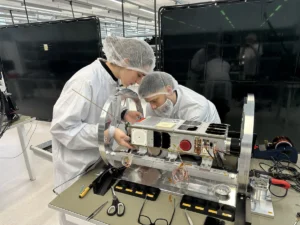
This critical phase of experimental realization is currently unfolding at TU Wien’s University Service Center for Transmission Electron Microscopy (USTEM). This state-of-the-art facility is where researchers are actively preparing to integrate a specialized ion-based quantum computer directly into an existing electron microscope infrastructure. The quantum computer itself is a product of cutting-edge research, developed by Philipp Schindler’s team at the University of Innsbruck. Ion traps, a leading platform for quantum computing, are renowned for their high-fidelity qubit operations and long coherence times, making them an ideal candidate for this complex integration. The challenge involves not only physically coupling these two sophisticated instruments but also ensuring that the delicate quantum coherence of the trapped ions is maintained in the presence of the electron beam and the environmental conditions of the microscope. This demands extraordinary precision in engineering, shielding, and control systems.
The successful integration and subsequent experimental validation of this quantum-enhanced electron microscope could mark a watershed moment in scientific imaging. If the system performs as expected, demonstrating its ability to yield more information from fewer electrons, it would inaugurate a fundamentally new paradigm in electron microscopy. This would not only provide researchers with an immensely powerful new tool but also open up previously inaccessible avenues of scientific inquiry, particularly for radiation-sensitive samples. The timeline for such a complex project typically spans several years from conceptualization to robust experimental demonstration. The current phase, involving the physical construction and integration of the quantum computer, is likely to be followed by extensive testing, calibration, and proof-of-concept experiments to validate the theoretical predictions. Only after these rigorous steps can the technology begin its transition towards broader scientific application.
Broader Implications and Future Outlook
The implications of a successful quantum computer electron microscope are far-reaching, promising to ignite advancements across numerous scientific and technological domains.
Scientific Impact:
- Structural Biology and Medicine: This innovation could revolutionize structural biology by enabling the high-resolution imaging of extremely fragile biomolecules, such as individual proteins, RNA structures, or membrane proteins, without the destructive effects of high electron doses. This could lead to a deeper understanding of molecular mechanisms underlying health and disease, accelerate drug discovery by providing clearer insights into drug-target interactions, and potentially allow for real-time observation of dynamic biological processes at the molecular scale, which is currently very challenging due to beam damage.
- Materials Science: The ability to image materials with greater sensitivity and less electron exposure would be invaluable for characterizing novel nanomaterials, quantum materials, and catalysts. Researchers could study the atomic structure of beam-sensitive polymers, track defects in semiconductors, or observe the formation of new phases in delicate alloys with unprecedented clarity, leading to the development of materials with tailored properties for advanced technologies.
- Fundamental Physics: Beyond its direct applications, this project itself pushes the boundaries of quantum technology, demonstrating how quantum computers can be integrated with classical scientific instruments to enhance their capabilities. It contributes to the broader field of quantum metrology, where quantum effects are harnessed to achieve measurements beyond classical limits.
Technological Impact:
- New Instrument Generation: This development could herald a new generation of scientific instruments that seamlessly blend classical and quantum technologies. It would serve as a powerful exemplar for how quantum computing can move beyond abstract theoretical exercises to deliver tangible, transformative benefits in applied science.
- Advancements in Quantum Hardware: The integration process itself will drive innovation in quantum computer design, particularly in making ion-trap systems more robust, compact, and compatible with external environments, pushing the boundaries of quantum engineering.
Economic and Societal Impact (Inferred):
- Accelerated Research and Development: By providing superior tools for fundamental research, the technology could accelerate discoveries in medicine, materials science, and energy, leading to new treatments, more efficient technologies, and sustainable solutions.
- Specialized Industries: The emergence of such advanced microscopy could foster new specialized industries for quantum microscopy services, quantum instrument manufacturing, and quantum data analysis.
While the potential benefits are immense, challenges remain. The technical complexity of integrating an ion-trap quantum computer into an electron microscope, maintaining quantum coherence in a dynamic environment, and scaling the system for practical use are significant hurdles. The cost associated with such highly specialized instruments will also be a factor in their widespread adoption. However, the collaborative spirit and interdisciplinary expertise within the quantA Cluster of Excellence provide a strong foundation for overcoming these obstacles. As Thomas Juffmann from the University of Vienna aptly states, "It is really exciting that, within the quantA Cluster of Excellence, we can combine the expertise in quantum information, quantum computing and electron microscopy available at the different universities in Austria. This allows us to launch a unique project." This synergy of brilliant minds and cutting-edge facilities positions Austria at the forefront of this revolutionary leap, promising a future where the unseen world is not just observed, but truly understood through the lens of quantum mechanics.