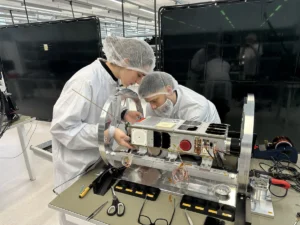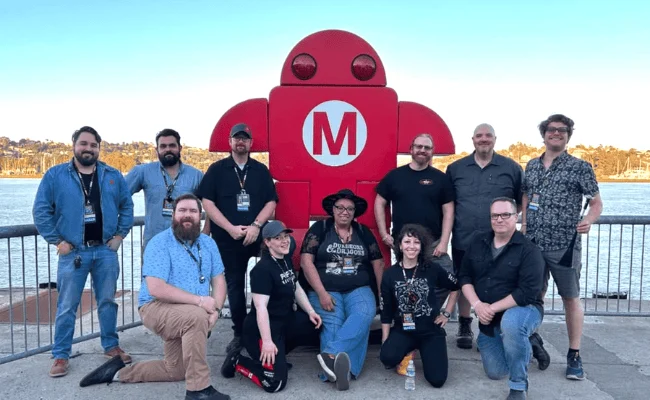
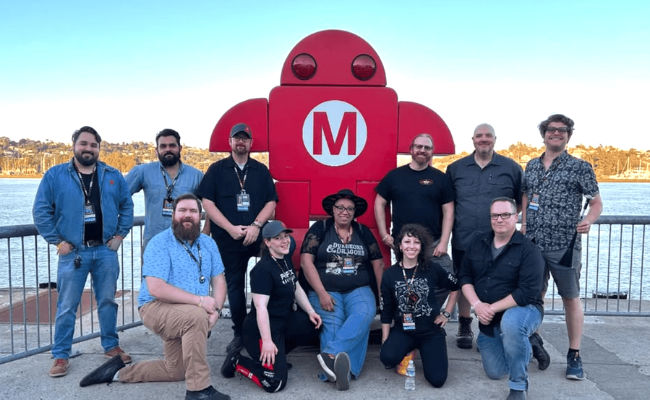
In an era increasingly dominated by computer-generated imagery (CGI), a notable shift toward the tangible and tactile is captivating audiences and creators alike. This movement was powerfully underscored by animatronics designer Jesse Velez, who, alongside his dedicated team, brought to life one of the most beloved and intricate science fiction props for the massively popular Netflix series, "Wednesday." Velez recently captivated attendees at Maker Faire Bay Area 2025, revealing the meticulous process behind the creation of "Thing," a fully wireless, portable animatronic hand capable of mirroring human movements in real time. This technological marvel was not merely a set piece; it embarked on a global promotional tour, engaging with the "Wednesday" cast and fans at high-profile red-carpet events in Los Angeles, New York, Seoul, Istanbul, and London, leaving an indelible mark on live entertainment and practical effects.
The Resurgence of Practical Effects in Modern Entertainment
The journey of "Thing" from concept to a global phenomenon is a testament to the enduring appeal and strategic advantages of practical effects. While CGI offers unparalleled flexibility and the ability to realize fantastical visions, a growing segment of the entertainment industry and its audience yearns for the authenticity and physical presence that practical effects provide. This trend is not isolated; recent blockbusters and critically acclaimed series, from the creature work in The Mandalorian to the intricate sets of Dune, have deliberately blended or prioritized practical elements to achieve a distinct aesthetic and immersive quality. The rationale extends beyond nostalgia; practical effects inherently possess a weight, texture, and interaction with light that CGI often struggles to replicate perfectly, even with advanced rendering techniques. For actors, interacting with a physical prop or creature can significantly enhance their performance, grounding their reactions in a tangible reality. For audiences, the visceral thrill of witnessing something physically present, however fantastical, fosters a deeper sense of belief and engagement.
"Wednesday," a spin-off of "The Addams Family" universe directed in part by Tim Burton, was a prime candidate for this practical approach. Burton himself is renowned for his signature gothic aesthetics and a long history of utilizing practical effects, puppetry, and stop-motion animation to create his distinct visual style. The character of "Thing," a disembodied, sentient hand, demanded an on-set physical presence to interact authentically with lead actress Jenna Ortega and other cast members, providing spontaneous reactions and comedic timing that would be challenging to achieve convincingly with purely post-production CGI. The decision to invest in a sophisticated animatronic for "Thing" was a strategic one, aiming to enhance the show’s unique charm and cement its iconic character in the minds of viewers.
"Wednesday’s" Global Impact and "Thing’s" Pivotal Role
Upon its release in November 2022, "Wednesday" quickly shattered viewership records, becoming one of Netflix’s most-watched English-language series debuts. Its success was fueled by a compelling narrative, strong performances, and a distinct visual style that resonated with both long-time fans of "The Addams Family" and new audiences. Central to this appeal was the character of "Thing." Historically, "Thing" has been portrayed through various clever practical effects, from a hand emerging from boxes to an actor hidden off-screen. For the Netflix series, the creative team faced the challenge of making "Thing" not just present, but an active, mobile, and emotionally expressive character, capable of nuanced interactions.
The animatronic "Thing" became a vital promotional tool, blurring the lines between fiction and reality for fans. Its ability to appear "live" on red carpets, scurrying across the floor, giving high-fives, or even playfully "signing" autographs, created viral moments across social media platforms. This real-world interaction elevated the promotional events beyond typical celebrity appearances, offering a unique, immersive experience that resonated deeply with the show’s audience. Industry observers suggest that the tangible nature of "Thing" significantly contributed to the show’s organic marketing success, generating authentic buzz and deepening fan connection.
From Concept to Global Performer: The Genesis of "Thing"
Like many groundbreaking innovations, the animatronic "Thing" began with a deceptively simple concept: a hand that could walk. Jesse Velez and his team embarked on an iterative design process, starting with rudimentary prototypes to test fundamental mechanics and locomotion. The initial goal was clear: to create a portable, wireless animatronic hand that could be controlled in real time by a hidden performer, allowing for spontaneous improvisation with both cast members and the public. This real-time control was paramount, distinguishing it from pre-programmed robots and enabling the nuanced, unpredictable interactions that made "Thing" so engaging.
The development phase involved extensive experimentation with various movement mechanisms, power sources, and control interfaces. Early prototypes likely focused on achieving stable locomotion across different surfaces, ensuring the hand could navigate the diverse environments of red carpets and stage events without mechanical failure. The team had to consider not only the physical mechanics but also the aesthetic integration – how to make a mechanical device appear organic and lifelike, seamlessly blending into the "Wednesday" universe. This foundational work laid the groundwork for the sophisticated animatronic that would eventually captivate audiences worldwide.
Engineering the Illusion: The Technical Marvel of a "Thing"-esque Walking Hand

Jesse Velez’s approach to bringing "Thing" to life exemplifies a philosophy of creative hacking – ingeniously combining off-the-shelf components with custom-built parts to achieve a complex functionality within tight constraints. The challenge was multifaceted: create a highly mobile, robust, and expressive animatronic hand that could operate wirelessly for extended periods, respond instantly to a performer’s input, and withstand the rigors of international travel.
The "ingredients" for this live-performing animatronic hand were a sophisticated blend of robotics, electronics, and material science:
- Mechanical Structure: At its core, "Thing" featured a lightweight yet durable internal skeleton, likely crafted from high-strength, low-weight materials such as aluminum alloys or carbon fiber composites. This skeletal structure provided the framework for the hand’s articulation. Intricate miniature linkages and gears were designed to replicate the complex movements of human fingers, thumb, and palm. Each finger segment would have required multiple degrees of freedom to achieve lifelike gestures, from grasping to pointing.
- Actuation System: High-torque micro-servos or stepper motors were strategically placed within the hand, connected to the finger linkages. These motors, chosen for their precision, speed, and compact size, allowed for dynamic and subtle movements. The challenge was to integrate enough power for movement while keeping the overall weight minimal and distributing it evenly to maintain balance during locomotion.
- External Aesthetics and Durability: The exterior of "Thing" was meticulously crafted to replicate the appearance of a human hand. This involved the use of flexible, skin-like materials such as silicone or specialized latex, which were sculpted and painted with incredible detail to simulate skin texture, wrinkles, and even subtle veins. This outer layer also had to be robust enough to endure repeated handling and environmental exposure during its global tour, requiring materials that resisted tearing, smudging, and damage.
- Wireless Control System: The heart of "Thing’s" real-time interactivity was its advanced wireless control system. A custom-built, wearable control glove, worn by a hidden performer, likely featured an array of sensors – including flex sensors for finger articulation, accelerometers for hand orientation, and gyroscopes for rotational movements. This data was transmitted wirelessly (via a robust RF or custom Bluetooth protocol) to a miniature microcontroller unit (MCU) housed within "Thing."
- Onboard Electronics and Power: The internal MCU (e.g., a custom Arduino or Raspberry Pi-based board) processed the incoming control signals in real time, translating them into precise commands for each servo motor. This required highly optimized firmware to minimize latency, ensuring the animatronic’s movements were instantaneous and fluid, mirroring the performer’s actions. Power was supplied by a compact, high-density lithium-ion battery pack, carefully chosen for its energy efficiency and ability to provide sustained operation between charges, a critical factor for live events.
- Locomotion System: While the article mentions a "walking hand," the actual mechanics for this would involve a combination of finger and palm movements designed to create a convincing scuttling or crawling motion. This likely involved programmed sequences triggered by the performer’s movements, allowing "Thing" to move across surfaces with an uncanny resemblance to a real hand, including subtle shifts in weight and balance.
The seamless integration of these diverse components, from the mechanical skeleton to the sophisticated wireless control and lifelike aesthetics, was the true triumph of Velez’s team. It was a project that demanded expertise across engineering disciplines, a keen artistic eye, and an unwavering commitment to making the impossible feel real.
The Global Showcase: "Thing" on the Red Carpet
The success of the "Thing" animatronic extended far beyond the confines of the film set. Its global promotional tour was a masterclass in experiential marketing, demonstrating the power of practical effects to create unforgettable moments. At premieres and fan events in major cities like Los Angeles, New York, Seoul, Istanbul, and London, "Thing" became an instant celebrity.
Imagine the scene: "Wednesday" star Jenna Ortega engaging in a playful "conversation" with the scuttling hand on a red carpet, or fans gasping and cheering as "Thing" playfully crawls over a journalist’s microphone. These interactions were genuine, unscripted, and entirely dependent on the animatronic’s real-time responsiveness. "Thing" didn’t just stand there; it performed. It interacted with the cast, responding to their cues, and engaged directly with bewildered and delighted audiences. These viral moments were meticulously planned yet felt utterly spontaneous, a testament to the animatronic’s advanced design and the skilled performer controlling it. The tangible presence of "Thing" provided an interactive element that a purely digital character simply could not replicate, forging a unique connection between the show’s fantastical elements and the real world.

Broader Implications: The Future is Tangible, The Future is Tactile
Jesse Velez’s work on the "Wednesday" animatronic is more than just a captivating behind-the-scenes anecdote; it serves as a powerful indicator of a burgeoning movement that places immense value on tangible spectacle and immersive experiences. In an age saturated with digital content, where the boundaries between reality and simulation are increasingly blurred on screens, the visceral thrill of encountering something real, complex, and "alive" right in front of you holds a profound appeal.
This project underscores several significant implications for the entertainment industry and beyond:
- Reaffirmation of Practical Effects: It reinforces the critical role practical effects play, not as a replacement for CGI, but as a vital complement. The blend of both technologies often yields the most compelling and believable results. Productions are increasingly recognizing that for certain characters or interactions, a physical presence offers unparalleled authenticity and on-set benefits.
- Innovation in Miniaturization and Control: The development of a fully wireless, portable animatronic capable of real-time movement demonstrates significant advancements in miniaturized robotics, power management, and intuitive control systems. These innovations have applications far beyond entertainment, potentially influencing fields like prosthetics, remote manipulation, and interactive robotics for educational or industrial purposes.
- Enhanced Fan Engagement: The success of "Thing’s" global tour highlights the power of experiential marketing. Providing fans with a tangible, interactive encounter with a beloved character creates a deeper, more memorable connection than traditional advertising or purely digital content. This model could inspire future promotional strategies across various media.
- The Psychological Impact of the Real: In an increasingly digital world, there’s a growing appreciation for sensory, tactile experiences. Practical effects tap into a primal human desire for tangible interaction, offering a sense of wonder and disbelief that can be more impactful than even the most flawless CGI. It’s a reminder that physical presence still holds immense power in storytelling and engagement.
- The Maker Ethos in Professional Production: Velez’s "creatively hack together" approach embodies the maker ethos, demonstrating that groundbreaking solutions often arise from ingenuity, resourcefulness, and a willingness to blend conventional and unconventional methods. This spirit of innovation is crucial for pushing the boundaries of what’s possible in professional production environments.
Jesse Velez stands as a leading figure in this exciting blend of artistry and engineering. His work on "Thing" for "Wednesday" is a shining example of how relentless creativity, combined with technical prowess, can bring even the wildest sci-fi dreams to vibrant, tangible life, one servo, one line of code, and one meticulously sculpted piece at a time. As the demand for authentic and immersive experiences continues to grow, the future of entertainment promises to be increasingly tactile, with innovators like Velez at the forefront, crafting the physical magic that continues to astound and delight audiences worldwide. His presentations, such as the one at Maker Faire Bay Area, offer invaluable insights into the intricate processes that shape our beloved on-screen realities.