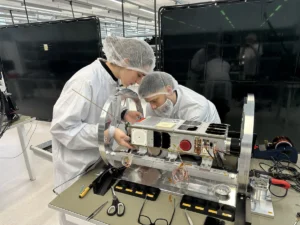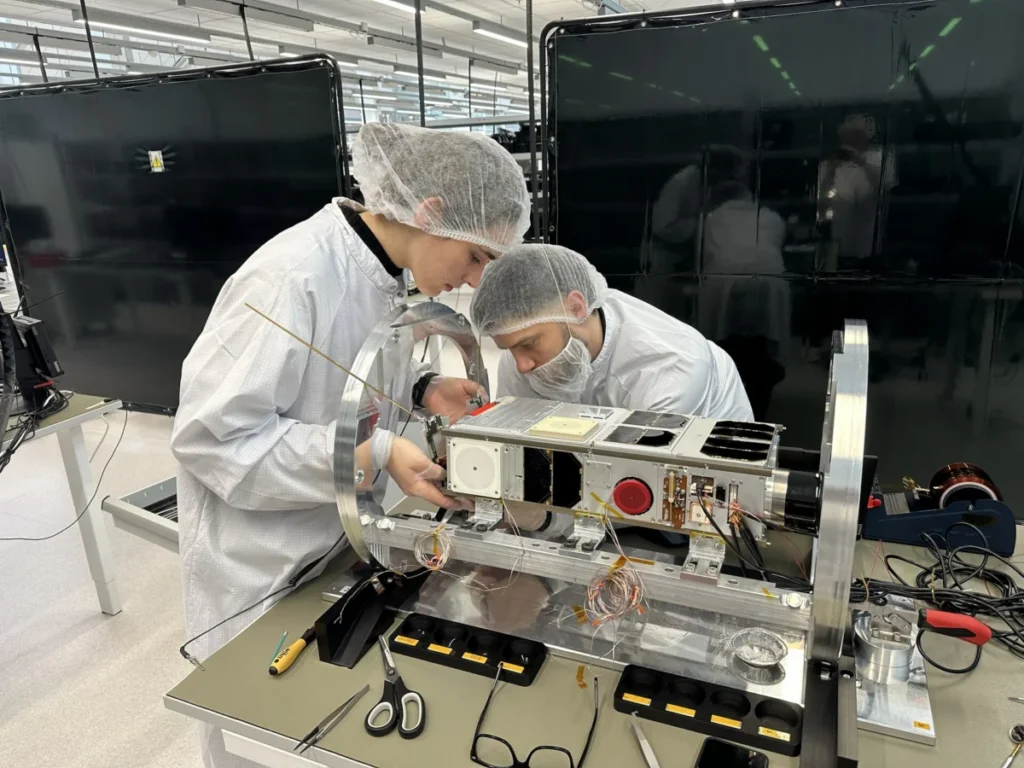
A miniature satellite, meticulously engineered and currently undergoing rigorous laboratory testing, represents a significant leap forward in space technology and its terrestrial applications. This particular CubeSat, a standardized modular spacecraft composed of 10-centimeter cubic units, is the GOMX-5 mission, a testament to European innovation and collaboration, and is now integrated into its deployer, anticipating a launch in October 2026. Developed by GomSpace, a leading European nanosatellite manufacturer, GOMX-5 is not just another orbital experiment; it is a crucial in-orbit demonstration mission orchestrated under the European Space Agency’s (ESA) General Support Technology Programme (GSTP). This ambitious undertaking is designed to rigorously validate a suite of cutting-edge ESA-supported technologies and operational concepts, with a profound focus on enhancing maritime awareness detection, pioneering automated collision avoidance systems, and crucially, advancing ESA’s visionary "Zero Debris" initiative, aiming to create a more sustainable and responsible future for space exploration and utilization.
The GOMX-5 mission embodies a strategic convergence of miniaturized satellite technology and the pressing needs of global industries and environmental stewardship. The CubeSat form factor, born from academic initiatives in the late 1990s as a cost-effective platform for university research and development, has matured remarkably. What began as a tool for educational purposes has evolved into a sophisticated platform capable of conducting complex scientific and technological demonstrations, often at a fraction of the cost of traditional, larger satellites. GomSpace has been at the forefront of this evolution, consistently pushing the boundaries of what is achievable with these compact spacecraft. The GOMX series, in particular, has served as a vital proving ground for new technologies, with each iteration building upon the successes and lessons learned from its predecessors. GOMX-1, for instance, launched in 2012, was one of the first European CubeSats to demonstrate operational capabilities. GOMX-3, launched in 2015, focused on advanced communication technologies. GOMX-5, therefore, represents the latest chapter in this ongoing saga of innovation, designed to tackle some of the most significant challenges facing our planet and its orbital environment.
Enhancing Maritime Awareness: A New Era of Sea Surveillance
One of the primary objectives of the GOMX-5 mission is to revolutionize maritime awareness. The vastness of the world’s oceans presents a persistent challenge for effective monitoring, whether for security, environmental protection, or commercial shipping efficiency. GOMX-5 will deploy and test advanced sensor technologies and data processing algorithms specifically designed to improve the detection and tracking of vessels. This enhanced capability is critical for a multitude of applications. For instance, it can bolster efforts to combat illegal, unreported, and unregulated (IUU) fishing, a global issue that results in billions of dollars in lost revenue annually and poses a severe threat to marine ecosystems. Furthermore, improved maritime awareness is essential for search and rescue operations, enabling faster and more precise responses to distress calls. It also plays a vital role in monitoring maritime traffic for security purposes, helping to identify potential threats and manage shipping lanes more effectively.
The technology being validated on GOMX-5 likely includes sophisticated Automatic Identification System (AIS) receivers, designed to capture and process AIS signals from ships with unprecedented sensitivity and range. AIS is a transponder system that transmits identifying information about a vessel, such as its name, position, course, and speed, to other ships and to shore-based stations. By enhancing the ability to receive and interpret these signals from orbit, GOMX-5 can create a more comprehensive and continuous picture of maritime activity than is currently possible with ground-based systems alone. This could involve advanced signal processing techniques to filter out noise and interference, as well as novel antenna designs to maximize signal reception. The implications for international maritime law enforcement, environmental monitoring of sensitive areas like marine protected zones, and the optimization of global trade routes are substantial, promising a more secure and sustainable use of our oceans.
Automated Collision Avoidance: Safeguarding Our Orbital Future
The GOMX-5 mission also places a significant emphasis on automated collision avoidance systems. As the number of satellites in orbit continues to grow exponentially – a trend that shows no signs of slowing – the risk of orbital collisions has become an increasingly pressing concern. The United Nations Office for Outer Space Affairs (UNOOSA) estimates that there are currently over 10,000 satellites in orbit, with thousands more expected in the coming decade due to constellations like Starlink and OneWeb. Even a small piece of debris, traveling at orbital velocities of thousands of kilometers per hour, can cause catastrophic damage to operational satellites. This phenomenon, known as the Kessler Syndrome, could render certain orbital altitudes unusable for future space activities.
The technologies to be tested on GOMX-5 are designed to contribute to the development of more robust and autonomous collision avoidance capabilities for future spacecraft. This could involve advanced sensors that can detect and track other objects in orbit, sophisticated onboard processing to predict potential collision trajectories, and the ability to execute evasive maneuvers autonomously and efficiently. The integration of such systems into a CubeSat platform like GOMX-5 is particularly significant, as it demonstrates the feasibility of implementing these critical safety features even in smaller, more cost-effective spacecraft. This not only enhances the safety of GOMX-5 itself but also provides invaluable data and operational experience that can be scaled up for larger, more complex missions, and even for the management of entire satellite constellations. The goal is to move towards a future where space is not a free-for-all, but a carefully managed environment where all actors operate with a high degree of safety and responsibility.
Advancing Zero Debris Aspirations: A Cleaner Orbit for Generations to Come
The GOMX-5 mission is a direct embodiment of ESA’s ambitious "Zero Debris" initiative. Launched in 2019, this initiative aims to prevent the generation of new space debris and to actively remove existing debris from orbit. The long-term vision is to ensure that Earth’s orbital environment remains safe and sustainable for future generations. GOMX-5’s contribution to this vital effort is multi-faceted. Firstly, by demonstrating advanced collision avoidance technologies, it directly addresses the prevention of future debris creation caused by accidental collisions. Secondly, the mission may also test technologies related to improved deorbiting capabilities. This could involve more efficient propulsion systems or novel mechanisms for safely bringing satellites back to Earth at the end of their operational lives, ensuring they burn up harmlessly in the atmosphere rather than becoming derelict space junk.
The "Zero Debris" initiative is not merely an environmental aspiration; it is a pragmatic necessity for the continued growth and sustainability of the space economy. The cost of dealing with space debris is immense, encompassing the loss of operational satellites, the expense of maneuvering satellites to avoid collisions, and the potential disruption to critical space-based services such as communication, navigation, and Earth observation. By investing in technologies that reduce the risk of debris generation and facilitate its removal, ESA and its partners are taking proactive steps to safeguard these vital assets. GOMX-5, as a demonstration platform, plays a crucial role in validating these technologies in the real space environment, providing the empirical evidence needed to accelerate their development and widespread adoption.
The Road to Launch: A Chronology of Innovation
The journey of the GOMX-5 mission from concept to its impending launch in October 2026 is a testament to the methodical and iterative nature of space technology development. While specific dates for early-stage development are not publicly detailed, the mission’s progression can be understood through the typical lifecycle of ESA’s technology demonstration programs.
- Early Concept and Design Phase: Following the success of previous GOMX missions and under the umbrella of ESA’s General Support Technology Programme (GSTP), the concept for GOMX-5 would have been formulated, likely in collaboration with GomSpace and other European partners. This phase involves defining the mission objectives, identifying the key technologies to be demonstrated, and outlining the preliminary spacecraft design.
- Technology Development and Maturation: The technologies intended for GOMX-5, such as advanced maritime sensors and automated collision avoidance algorithms, would have undergone significant research, development, and ground-based testing. This is a crucial step to ensure the technologies are robust and ready for the harsh environment of space.
- GomSpace Development and Integration: GomSpace would have then taken the lead in designing, manufacturing, and assembling the GOMX-5 CubeSat itself. This involves integrating the various subsystems, including the payload, power, communication, and attitude determination and control systems.
- Environmental Testing: Once the CubeSat is assembled, it undergoes rigorous testing in laboratory conditions to simulate the extreme temperatures, vibrations, and vacuum of space. This is where the satellite is "propped up in a laboratory for testing," as noted in the initial information.
- Integration with Deployer: The GOMX-5 satellite is then integrated into its launch vehicle’s deployer. This mechanism is responsible for safely releasing the CubeSat into its designated orbit once the launch vehicle reaches its operational altitude. This integration is a critical milestone, signifying that the satellite is physically ready for space.
- Launch Campaign and Launch: The final phase involves the launch campaign, where the integrated satellite and deployer are transported to the launch site, undergo final checks, and are integrated with the launch vehicle. The launch is scheduled for October 2026.
- In-Orbit Demonstration: Following a successful launch and deployment, GOMX-5 will begin its in-orbit demonstration phase, where its technologies will be tested and validated in the actual space environment.
Supporting Data and Programmatic Context
The General Support Technology Programme (GSTP) is a cornerstone of ESA’s strategy to foster innovation and maintain European competitiveness in the space sector. GSTP aims to mature and validate technologies that have the potential for significant impact, both within ESA’s own future missions and for the broader European space industry. The program typically supports technologies from early breadboard models through to flight-ready hardware, often culminating in in-orbit demonstrations like GOMX-5. The financial investment in such programs, while not always publicly itemized for individual missions, represents a strategic commitment by ESA member states to advance technological capabilities.
The GOMX series itself has a proven track record. For example, the GOMX-3 mission, launched in 2015, successfully demonstrated advanced communication technologies, including the ability to downlink data at very high rates, paving the way for future high-throughput satellite missions. The cumulative data and operational experience gained from these missions provide invaluable feedback for future satellite designs and mission planning. The success of GOMX-5 will not only validate new technologies but also contribute to the growing body of knowledge about CubeSat capabilities for complex, operational missions.
Official Responses and Perspectives
While specific quotes from ESA officials or GomSpace representatives regarding GOMX-5 are not provided in the source material, the program’s very existence and its inclusion within ESA’s GSTP speak volumes about their strategic priorities. ESA has consistently emphasized the importance of space sustainability and the need for enhanced maritime monitoring. Director General Josef Aschbacher has frequently highlighted the agency’s commitment to developing technologies that address global challenges, including climate change and the responsible use of space.
GomSpace, as a commercial entity deeply involved in the development of nanosatellites, would view GOMX-5 as a crucial opportunity to showcase their technological prowess and to further validate their platform for advanced applications. Their continued involvement in ESA missions underscores the strong partnership between European space agencies and the commercial sector in driving innovation. The successful demonstration of these technologies on GOMX-5 will undoubtedly bolster GomSpace’s position in the global nanosatellite market.
Broader Impact and Implications
The GOMX-5 mission, with its dual focus on maritime awareness and orbital sustainability, carries significant broader implications.
- Economic Impact: Enhanced maritime awareness can lead to more efficient shipping, reduced fuel consumption, and better resource management, all contributing to economic growth. The reduction of space debris is also an economic imperative, safeguarding billions of dollars in existing space assets and enabling future space-based economic activities.
- Environmental Impact: The mission’s contribution to combating IUU fishing and improving the monitoring of marine environments directly supports global efforts to protect ocean health. The Zero Debris initiative, in which GOMX-5 plays a part, is crucial for preserving the orbital environment for future generations, ensuring that space remains a viable domain for scientific discovery, communication, and Earth observation.
- Geopolitical Impact: Improved maritime domain awareness can enhance national security and support international cooperation in areas such as piracy prevention and search and rescue. The leadership demonstrated by ESA in promoting space sustainability through initiatives like Zero Debris can also foster greater international collaboration and establish best practices for space governance.
- Technological Advancement: The success of GOMX-5 will serve as a powerful proof of concept for the increasing capabilities of CubeSats. This could lead to a wider adoption of nanosatellites for a range of applications, from Earth observation and scientific research to telecommunications and even planetary exploration. The development of automated collision avoidance systems is a critical step towards ensuring the long-term viability of space operations.
In conclusion, the GOMX-5 mission represents a critical juncture in the evolution of space technology. By integrating advanced maritime surveillance capabilities with groundbreaking advancements in orbital debris mitigation, this ESA-supported CubeSat, developed by GomSpace, is not merely an object of scientific curiosity. It is a tangible step towards a safer, more secure, and more sustainable future, both on Earth and in the increasingly vital domain of outer space. The October 2026 launch marks the beginning of a new chapter in demonstrating the profound impact that miniaturized satellite technology can have on global challenges.