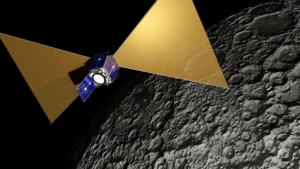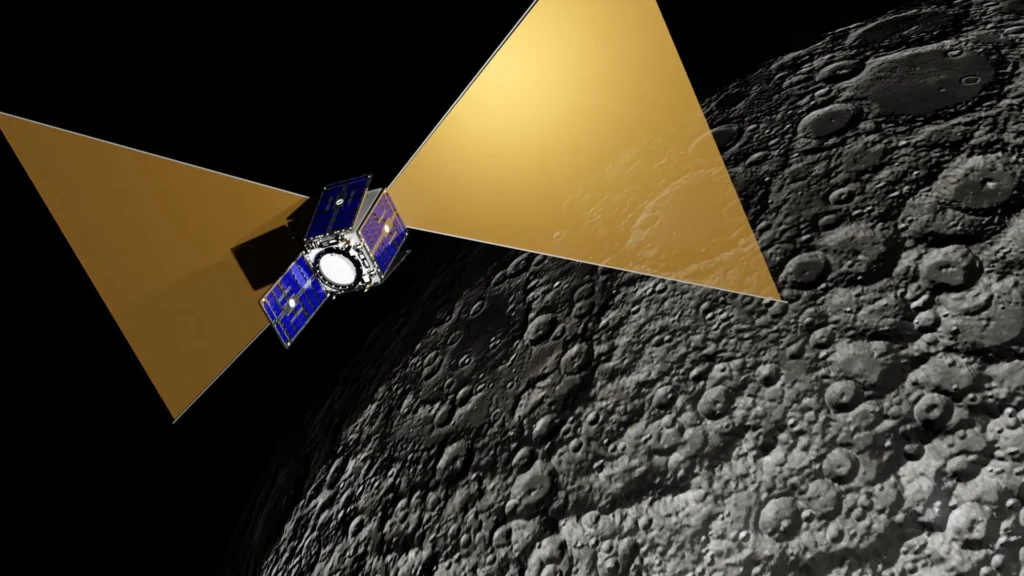
A small satellite, roughly the size of a carry-on suitcase, is poised to venture into the deepest reaches of the lunar environment to solve one of the most enduring mysteries in modern astrophysics. Developed by a consortium of British researchers and international partners, the CosmoCube mission aims to observe the "Cosmic Dark Ages"—a period of approximately 150 million years that followed the Big Bang but preceded the birth of the first stars. By utilizing the unique radio-quiet environment of the lunar far side, this compact spacecraft seeks to detect a signal that has remained invisible to humanity for over 13.5 billion years.
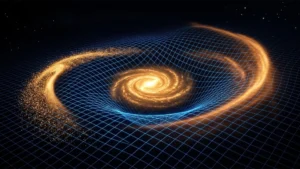
The project, led by the University of Cambridge’s Cavendish Laboratory and the Kavli Institute for Cosmology, represents a significant leap in the field of low-frequency radio astronomy. While modern telescopes like the James Webb Space Telescope (JWST) can peer back to the formation of the earliest galaxies, they are limited by the fact that they detect light. During the Dark Ages, there was no light; the universe was filled with a fog of neutral hydrogen and invisible dark matter. CosmoCube is designed to "listen" rather than "see," searching for the subtle radio signatures of that hydrogen fog to map the structure of the infant universe.
The Scientific Frontier: The Cosmic Dark Ages and the 21-Centimeter Line
To understand the importance of CosmoCube, one must look back to the timeline of the early universe. Approximately 380,000 years after the Big Bang, the universe cooled sufficiently for protons and electrons to combine into neutral hydrogen atoms, a milestone known as Recombination. This event released the Cosmic Microwave Background (CMB), the oldest light in the cosmos. However, following this release, the universe entered a period of total darkness. It would take another 150 to 200 million years for gravity to pull matter together tightly enough to ignite the first stars, an era known as the Cosmic Dawn.
The intervening period, the Dark Ages, is the "missing link" in our cosmic history. Scientists believe that during this time, dark matter began to form "halos" or gravitational wells that pulled in hydrogen gas. To study this, researchers look for the "21-centimeter line." This is a specific radio frequency emitted by neutral hydrogen when the spin of its electron flips relative to the spin of its proton.
Because the universe has been expanding for billions of years, these 21-centimeter signals have been stretched, or "redshifted," into much longer wavelengths. For the Dark Ages, these signals arrive at Earth as low-frequency radio waves between 10 and 50 MHz. Detecting these waves is the primary objective of CosmoCube, as they contain the blueprints of how the universe transitioned from a smooth, hot plasma into the complex web of galaxies we see today.
The Lunar Far Side: A Necessary Sanctuary
The primary challenge in detecting the 21-centimeter signal is not the distance, but the noise. Earth is an incredibly "loud" planet in terms of radio frequency interference (RFI). The frequencies required to study the Dark Ages overlap with FM radio broadcasts, television signals, satellite communications, and global navigation systems. Furthermore, Earth’s ionosphere—a layer of charged particles in the upper atmosphere—acts as a barrier, reflecting and distorting low-frequency radio waves from space before they can reach ground-based observatories.
The Moon offers the only viable solution. The lunar far side is the only location in the inner solar system that is permanently shielded from Earth’s radio chatter by the massive bulk of the Moon itself. When CosmoCube passes behind the Moon, it enters a "radio-quiet zone" where the interference from Earth is suppressed by up to 100 decibels.
During its planned two-hour orbit, CosmoCube will spend approximately 40 minutes behind the Moon. Over a projected two-year mission lifespan, this will allow for roughly 1,000 hours of pristine, interference-free observations. This window is essential for isolating a signal so faint that it is often described as trying to hear a whisper in the middle of a rock concert.
Technological Innovation and the SSTL-21 Platform
CosmoCube’s ability to perform high-stakes science within a small frame is a testament to recent advances in aerospace engineering and digital signal processing. The spacecraft is built on the SSTL-21 platform, developed by Surrey Space Technology Limited (SSTL), a UK-based leader in small satellite manufacturing.
The heart of the mission is a highly integrated miniature radiometer. This instrument utilizes Radio Frequency System on Chip (RFSoC) technology, which combines high-speed analog-to-digital converters with powerful programmable logic on a single silicon chip. This allows the satellite to process vast amounts of data in real-time while maintaining a low power profile—a critical requirement for a mission operating in the harsh thermal environment of lunar orbit.
To ensure the integrity of the data, CosmoCube employs a "Dicke switched" calibrator. This system allows the spacecraft to constantly alternate its input between the sky and an internal reference source of known temperature. By doing so, the electronics can identify and subtract any "noise" generated by the satellite’s own internal systems. Without this self-calibration, internal heat or electronic fluctuations could easily be mistaken for the ancient cosmic signal.
Unlocking the Mysteries of Dark Matter
Beyond mapping hydrogen, CosmoCube has a secondary, perhaps even more profound, goal: investigating dark matter. While dark matter makes up about 27% of the universe, it does not emit, absorb, or reflect light, making it detectable only through its gravitational influence.
During the Dark Ages, dark matter acted as the gravitational "scaffolding" of the universe. It clumped together first, creating the gravitational pits that hydrogen gas eventually fell into to form the first stars. By observing the distribution and temperature of hydrogen during this era, CosmoCube can provide indirect evidence of dark matter’s properties.
"This emission from hydrogen after the Big Bang, but before the first stars, will hopefully allow us to understand the role of dark matter in the early universe, how it worked to pull together hydrogen into the first stars and galaxies," said Professor Eloy de Lera Acedo, the lead author of the mission study published in Nature Astronomy. If the hydrogen appears colder or more clumped than current models suggest, it could point to new physics or interactions between dark matter and ordinary matter that have never been observed.
A Collaborative UK Success Story
The development of CosmoCube is a multi-institutional effort that highlights the UK’s growing leadership in the global space economy. Funded in part by the UK Space Agency and supported by the Science and Technology Facilities Council (STFC), the mission involves academic partners from the University of Portsmouth and STFC RAL Space. International collaboration is also central to the project, with researchers from EU nations, including Malta, contributing to the data analysis frameworks.
Dr. Will Grainger of STFC RAL Space emphasized the engineering rigor required for the mission: "We’ve worked with the project partners to develop representative models of the satellite and its payload. These have been tested in our facilities to ensure the thermal performance allows the payload to operate and perform the required sensitive measurements under the different temperature conditions it will experience whilst in orbit around the Moon."
The team recently submitted their proposal to the European Space Agency (ESA) "mini Fast missions" Call for Ideas. With a target cost of under 50 million Euros, CosmoCube represents a "high-reward, low-cost" approach to space exploration, demonstrating that significant cosmological breakthroughs do not always require multi-billion-dollar flagship missions.
Data Processing and the Bayesian Challenge
Once the data is collected behind the Moon and transmitted back to Earth, the work is far from over. The signal CosmoCube seeks is buried under "foreground" emissions from our own Milky Way galaxy, which are thousands of times brighter than the 21-centimeter line.
To extract the cosmic signal, the team will employ advanced Bayesian statistical techniques. These mathematical models allow researchers to separate the desired signal from the galactic noise by looking for specific spectral patterns. Furthermore, computer simulations will be used to reconstruct how the satellite’s long, lightweight antenna responds to different regions of the sky, allowing for the correction of any distortions caused by the spacecraft’s orientation.
Future Implications and the Global Lunar Race
CosmoCube is part of a broader, international surge in interest regarding the lunar far side. Organizations such as NASA, the Indian Space Research Organisation (ISRO), and the Chinese National Space Administration (CNSA) are all eyeing the Moon’s "quiet" side for future radio observatories. NASA’s LuSEE-Night mission, for instance, aims to place a stationary lander on the far side to perform similar measurements.
However, CosmoCube’s orbital approach offers a unique advantage: it can survey the entire sky over time rather than being fixed to a single point on the lunar surface. If successful, the mission will provide a roadmap for future, larger arrays on the Moon, potentially leading to a permanent lunar observatory that could function as the "Hubble of radio astronomy."
As the mission moves toward a potential launch within the next five years, it stands as a beacon of British scientific ambition. By combining cutting-edge RF technology with a strategic use of celestial mechanics, CosmoCube may finally shine a light—or rather, a radio wave—on the darkest, most mysterious era of our cosmic past.
The success of CosmoCube would fundamentally change our understanding of the early universe. It would bridge the gap between the Big Bang and the modern era of stars, providing the first direct evidence of how the "cosmic web" was spun. For a satellite no larger than a suitcase, the implications are truly universal.