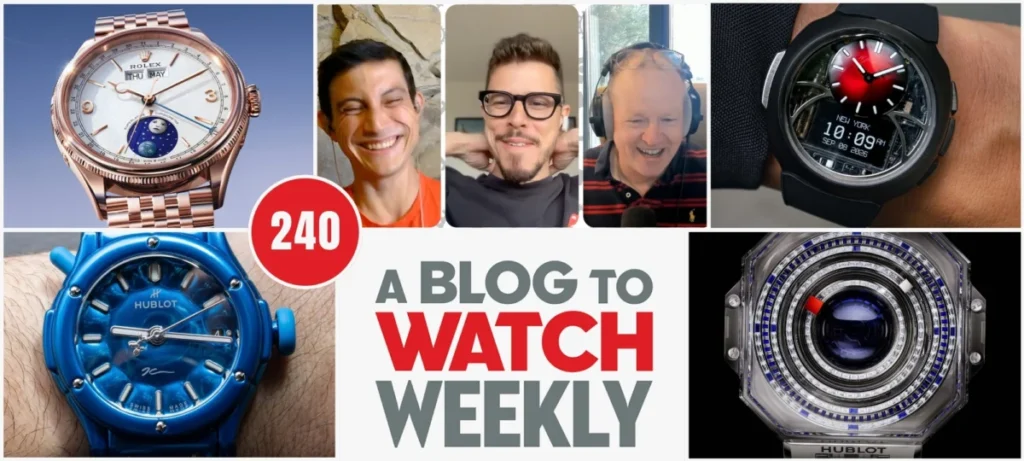
The latest installment of aBlogtoWatch Weekly, episode 240, dives deep into a fascinating array of horological topics, featuring discussions on cutting-edge watchmaking, strategic brand positioning, and even the intersection of haute horlogerie with professional sports. Hosts Rick, David, and Ripley navigate a landscape of timepieces that span the spectrum from surprisingly accessible to exceptionally avant-garde, prompting critical analysis of market trends and brand philosophies. The episode, available for viewing and listening, serves as a comprehensive overview of current watch industry conversations, touching upon innovative designs, marketing challenges, and the ever-evolving definitions of luxury and value.
H. Moser & Cie.’s Digital Pivot and the Challenge of Sustaining Watch Marketing Conversations
The discussion opens with an examination of H. Moser & Cie.’s intriguing foray into the digital realm. While the specifics of their digital initiatives are not detailed in the provided summary, the hosts’ commentary suggests a move that has captured their attention, potentially involving new online platforms, digital content strategies, or even innovative digital tools for customer engagement. This segues into a broader critique of contemporary watch marketing, with the panel observing a perceived decline in brands’ ability to maintain engaging dialogues with their audiences.
In an era saturated with digital content, the watch industry faces the persistent challenge of cutting through the noise. Brands are increasingly expected to offer more than just aesthetically pleasing products; they must cultivate a narrative, foster community, and provide consistent value to their followers. The hosts’ observation points to a potential gap between the creative output of watchmakers and their capacity to translate this into compelling, ongoing conversations that resonate with enthusiasts and potential buyers alike. This could manifest as a lack of innovative storytelling, insufficient engagement on social media, or a failure to connect the emotional appeal of watchmaking with the digital experiences of consumers. The success of brands like H. Moser & Cie. in this evolving digital landscape will likely hinge on their ability to create authentic connections and deliver consistent, engaging content that goes beyond mere product promotion.
Cartier’s Ambitious Ascent: Challenging Rolex’s Dominance
A significant portion of the episode is dedicated to a thought-provoking debate on whether Cartier could genuinely emerge as a challenger to Rolex’s formidable market position. This hypothetical scenario invites an exploration of what strategic shifts and product developments would be necessary for Cartier to compete at the highest echelons of the luxury watch market, particularly against a brand as universally recognized and revered as Rolex.
Rolex, for decades, has established itself as the benchmark for reliability, prestige, and enduring value in the watch world. Its market capitalization and brand recognition are unparalleled, making any direct challenge a monumental undertaking. Cartier, while a globally recognized luxury powerhouse with a rich heritage in jewelry and watchmaking, has historically occupied a slightly different niche. Its strengths lie in design, elegance, and a certain artistic flair, often appealing to a clientele that values aesthetic sophistication and brand heritage.
For Cartier to truly rival Rolex, it would likely need to:
- Elevate its Mechanical Prowess: While Cartier produces exceptional timepieces, Rolex’s reputation is built on robust, in-house mechanical movements that are synonymous with precision and durability. Cartier might need to further invest in and highlight its movement development and manufacturing capabilities, showcasing technical sophistication that can stand toe-to-toe with Rolex’s engineering.
- Reinforce Brand Narrative of Enduring Value: Rolex’s secondary market performance is legendary, with many models holding or increasing their value over time. Cartier would need to cultivate a similar perception of its watches as long-term investments, not just beautiful accessories. This could involve limited production runs, strategic material choices, and a consistent focus on timeless design.
- Strategic Product Diversification: While Cartier has a strong offering across various collections, a focused push into highly sought-after sports watch categories or exceptionally complicated timepieces could broaden its appeal to a demographic that currently gravitates towards Rolex’s iconic sports models.
- Marketing and Distribution Dominance: Rolex’s global retail presence and highly effective marketing campaigns have cemented its ubiquity. Cartier would need to ensure its distribution network is as widespread and accessible, and its marketing efforts create a similar level of aspirational desire.
The discussion underscores the immense challenge and the intricate strategic considerations involved in even contemplating such a significant shift in the luxury watch landscape.
Rolex Perpetual 1908 Padellone: A Bold Move Upmarket
The conversation then pivots to a specific Rolex release that has sparked considerable interest and debate: the new Perpetual 1908 Padellone. This model, described as bringing "real complication" to Rolex’s dressier side, is noted for its significant price point, leading the hosts to question the brand’s trajectory in terms of market positioning.
The "Padellone," meaning "large frying pan" in Italian, refers to the watch’s distinctive large dial, a design element that has historically been associated with prestigious and often complicated dress watches. The introduction of such a piece by Rolex signals a deliberate effort to expand its offerings into a more exclusive and high-complication segment of the dress watch market. This move is particularly noteworthy for Rolex, a brand often associated with robust sports watches like the Submariner and the Daytona, which have historically driven much of its demand and desirability.

The "real complication" likely refers to an advanced movement or a significant functional feature beyond basic timekeeping, which would justify a higher price tag. This strategic escalation in price and complexity for a dress watch suggests Rolex is aiming to capture a segment of the market that previously might have looked towards brands specializing in haute horlogerie. The hosts’ questioning of "how far upmarket the Crown wants to go" points to a potential tension between Rolex’s established accessibility and its exploration of ultra-luxury territory. This could be interpreted as a strategy to further solidify its position as a comprehensive luxury brand, capable of meeting the demands of collectors seeking both iconic sports watches and sophisticated, high-complication dress pieces. The success of the Perpetual 1908 Padellone will likely depend on its reception by discerning collectors and its ability to justify its premium pricing through both technical merit and the enduring appeal of the Rolex name.
Hublot and Jeff Koons: A Fusion of Art, Luxury, and Controversy
The episode then shifts to a more avant-garde collaboration: Hublot’s partnership with the renowned artist Jeff Koons. The mention of "Balloon Dogs, sapphire, wild pricing" paints a vivid picture of the audacious and attention-grabbing nature of this partnership. This collaboration exemplifies Hublot’s long-standing strategy of merging watchmaking with the worlds of art, sports, and celebrity.
Jeff Koons, known for his provocative and often monumental sculptures, brings his distinctive aesthetic to the watchmaking canvas. The "Balloon Dogs," a recurring motif in Koons’ work, are likely translated into the design of these timepieces, perhaps through intricate enamel work, gem-setting, or novel case constructions. The use of sapphire, a material prized for its transparency and hardness, suggests a focus on showcasing the movement and the artistic elements within the watch, while also contributing to a luxurious and exclusive feel.
The "wild pricing" is a characteristic often associated with high-end art and luxury collaborations. Such pieces are not merely timekeeping instruments; they are wearable art objects, commanding prices that reflect the artist’s name, the rarity of the production, and the complexity of the craftsmanship involved. These watches are designed to provoke a reaction, to be conversation starters, and to appeal to a very specific, often affluent, collector base that appreciates the intersection of art and horology.
This collaboration with Jeff Koons is indicative of Hublot’s brand philosophy: to be bold, to push boundaries, and to create watches that are instantly recognizable and undeniably impactful. While such partnerships can be divisive, they undoubtedly generate significant buzz and reinforce Hublot’s image as an innovative and daring brand within the luxury watch industry. The success of these collaborations is measured not only in sales but also in their ability to elevate the brand’s profile and spark dialogue about the evolving nature of luxury goods.
The Intriguing Pairing of Watches and NFL Teams
The episode concludes with a more lighthearted, yet engaging, segment: matching watches with NFL teams. This segment likely involves a playful debate about which watch brands or specific models best represent the ethos, history, or fan base of various professional football teams.
This discussion, while perhaps less technically focused than previous topics, offers insights into how brands and consumers connect with broader cultural phenomena. The pairing of luxury goods with sports teams can serve several purposes:
- Brand Association and Visibility: Watch brands may seek partnerships or create themed collections to tap into the massive fan bases of popular sports leagues like the NFL. This increases brand visibility and associates the watch with the passion and excitement of the sport.
- Targeting Specific Demographics: The NFL attracts a diverse audience, and by aligning with specific teams, watch brands can target particular fan demographics who may have a shared appreciation for both football and luxury timepieces.
- Creating Collectible Items: Limited-edition watches themed around NFL teams can become highly collectible items for both watch enthusiasts and sports memorabilia collectors.
- Symbolic Representation: The choice of watch can symbolize a team’s characteristics – for example, a robust, durable watch for a team known for its strong defense, or a sleek, sophisticated timepiece for a team with a reputation for strategic play.
The hosts’ deliberation on "questionable pairings" suggests a critical and analytical approach even to this more casual topic, highlighting the importance of authenticity and strategic alignment in any brand-team relationship. The promise of plotting a similar "watch brands versus car brands" comparison for a future episode indicates a continued interest in exploring these cross-industry intersections. This suggests a forward-thinking approach to content creation, aiming to cover a wide range of topics that engage the watch community and beyond.
The overall scope of aBlogtoWatch Weekly episode 240 demonstrates a commitment to providing a multifaceted and insightful perspective on the watch world, covering everything from the intricacies of high-end watchmaking and brand strategy to the cultural impact of luxury goods. The discussions serve as a valuable resource for enthusiasts seeking to stay abreast of the latest trends, debates, and innovations in the dynamic and ever-evolving landscape of horology.