Following a groundbreaking fly-off that pushed the boundaries of unmanned aerial vehicle capabilities, the Defense Advanced Research Projects Agency (DARPA) is preparing to launch its second iteration of the DARPA Lift Challenge (DLC), slated for 2028. This highly anticipated event aims to significantly elevate the payload-to-weight ratios that drones can achieve, building upon the lessons learned and demonstrated possibilities from its predecessor.
The Genesis of the DARPA Lift Challenge: Redefining Drone Potential
The inaugural DARPA Lift Challenge, DLC-1, emerged from a recognized need to transcend the conventional limitations of drone technology. Historically, most drones operate with a payload-to-weight ratio of approximately 1:1, meaning their carrying capacity is roughly equivalent to their own weight. This inherent limitation restricts their utility in various applications, from logistics and search-and-rescue to military operations where heavier equipment or supplies need to be transported efficiently. DARPA, known for its forward-thinking approach to defense innovation, recognized this bottleneck and initiated a challenge to incentivize the development of drones capable of carrying substantially more than their own weight.
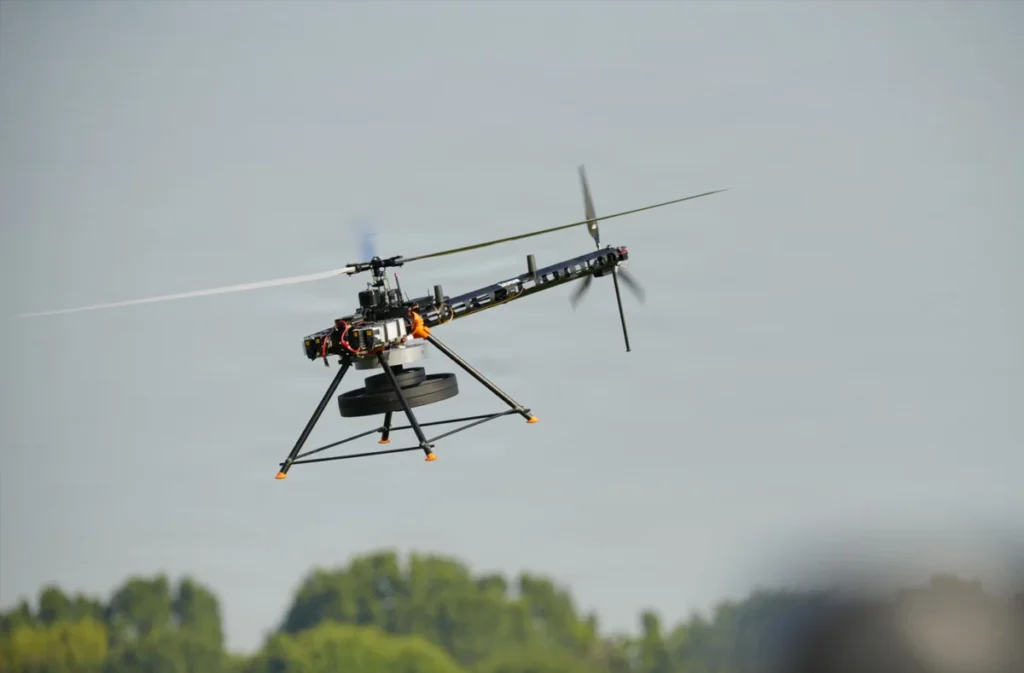
The primary objective of DLC-1, which concluded with a live-flight competition in Dayton, Ohio, in August, was to task participants with designing and building drones that could achieve a 4:1 payload-to-weight ratio. This ambitious target required teams to reimagine fundamental aspects of drone design, including propulsion systems, airframe construction, power management, and aerodynamic efficiency. The competition course itself was designed to test these capabilities rigorously, requiring drones to navigate a 5-nautical-mile route while carrying standardized weightlifting plates, simulating real-world payload scenarios.
DLC-1: A Testament to Progress and a Glimpse of Future Potential
While the ultimate goal of a 4:1 ratio was not fully realized by any single team completing the entire course, the results of DLC-1 were nonetheless a significant indicator of progress. Lieutenant Colonel Phillip Smith, the DARPA Lift Challenge program manager, acknowledged the achievement: "We consider that we proved that 4:1 is possible, even though no one actually completed the 5 miles at that ratio." This statement underscores the fact that the fundamental engineering principles required to achieve such a high lift capacity were demonstrably viable.
The top honors in DLC-1 went to AVIDrone Inc., which secured the $1.25 million grand prize by achieving an impressive 3.84:1 lift ratio. This near-perfect execution demonstrated a high degree of engineering prowess and validated the feasibility of significantly exceeding traditional payload capacities.
Beyond the primary competition, DARPA also recognized innovative approaches that, while not meeting all course completion criteria, showcased remarkable technological advancements. DefendTex, for instance, was awarded the "Most Promising Technology" category for its unique "string-based" drone design. This innovative approach managed to achieve an astonishing 9.63:1 lift ratio, the highest recorded during the event. Although this particular drone did not complete the full 5-nautical-mile course, its extraordinary lift capability highlighted the potential of unconventional designs to unlock unprecedented performance metrics.
The Evolution to DLC-2: Doubling Down on Ambition
The success and learnings from DLC-1 have directly informed the planning for its successor, DLC-2. The upcoming challenge, scheduled for 2028, is set to significantly raise the stakes, making the 4:1 lift ratio the minimum requirement for participation, rather than the aspirational ceiling. This strategic shift signifies DARPA’s intent to push the envelope even further, targeting a new generation of drones with exponentially greater lifting power.
"DARPA is doubling the lift requirements and preparation timelines for this second challenge," stated Lt. Col. Smith. The specifications for DLC-2 are clear: drones must not only achieve a lift ratio of at least 4:1 but also successfully complete a considerably more demanding 10-nautical-mile course. This increased distance further emphasizes the need for sustained performance, reliability, and energy efficiency under heavy load.
While high-level information regarding the course design is expected to be released in the coming weeks, final venue selection will precede the detailed specifications. The application window for prospective teams is anticipated to open in early 2027, providing an ample two-year preparation period leading up to the 2028 fly-off. This extended timeline is a deliberate measure designed to foster deeper innovation and allow teams to mature more complex and potentially groundbreaking technologies.
Analyzing the Landscape: What Made DLC-1 Tick, and What’s Next?
Reflecting on the outcomes of DLC-1, Lt. Col. Smith observed that many of the most successful designs were rooted in established aerial vehicle architectures. "The winning drones were basic designs. It was helicopters and a quadcopter or a multi-copter – and those designs have been around for a long time," he noted. This suggests that while incremental improvements on existing platforms were effective, the short design timeline of approximately nine months for DLC-1 may have constrained the exploration of more radical, paradigm-shifting concepts.
"There was no shortage of creative drones, but ultimately, we didn’t see a lot of innovation complete that course because of that short design timeline," Smith elaborated. Many teams, he explained, were dedicating their final efforts to overcoming last-minute challenges with critical components such as advanced engines, powertrain systems, or novel aerodynamic features. The inability to fully integrate and test these cutting-edge elements within the given timeframe meant that some of the most promising technological leaps remained just beyond reach.
However, these near-misses and incremental advancements have provided DARPA with invaluable insights. The agency now believes that the maximum achievable payload-to-weight ratio for heavy-lift drones is "much higher" than previously estimated by experts. "We don’t know what that [limit] is," Lt. Col. Smith remarked, signaling a frontier of unexplored potential.
Fueling the Next Wave of Innovation for DLC-2
The overarching goal for DLC-2 is to encourage and facilitate the development of genuinely innovative designs. DARPA is eager to see the field move beyond incremental improvements and embrace more disruptive approaches. "We’re excited for more innovative designs to get out there," Smith stated, expressing optimism about the creative energy that the extended development cycle and elevated requirements will unleash.
Several promising technological avenues identified during DLC-1 are particularly of interest for further development. These include:
- Propeller-Driven Rotors: Innovations in which the main drone rotor blades are augmented with smaller propellers at their tips. This concept aims to enhance lift and efficiency by optimizing airflow and thrust generation.
- Integrated Gearbox Engines: Designs that incorporate the gearbox directly into the engine unit. This integrated approach seeks to minimize component count, thereby reducing weight, increasing reliability, and improving overall power efficiency.
- Multi-Unit Drone Systems: This intriguing concept involves tethering two or more drones together, and to a payload, to fly in coordinated formations. By flying in synchronized circular patterns, these drone swarms can collectively generate sufficient lift to carry exceptionally heavy loads.
Lt. Col. Smith envisions a collaborative future for drone technology, where these disparate yet promising subcomponents and ideas converge. "If all of these different groups and ideas and subcomponents can get together and form the next generation [of drones], I think that’s going to be even better and more impactful to the aviation world than DLC-1 was," he posited.
The Broader Implications: Reshaping the Future of Aerial Logistics and Beyond
The DARPA Lift Challenge, particularly with the ambitious scope of DLC-2, is poised to have profound implications across a multitude of sectors. The successful development of drones capable of significantly higher payload-to-weight ratios could revolutionize:
- Logistics and Delivery: Imagine drones capable of delivering substantial quantities of goods to remote or hard-to-reach areas, bypassing the need for traditional ground transportation infrastructure. This could be particularly transformative for disaster relief, medical supply delivery in developing regions, and even last-mile commercial deliveries.
- Infrastructure Inspection and Maintenance: Drones equipped with heavy sensors and tools could efficiently inspect bridges, power lines, wind turbines, and other critical infrastructure, reducing human risk and operational costs.
- Search and Rescue Operations: The ability to deploy larger payloads, such as advanced medical equipment, communication systems, or even small robotic units, could significantly enhance the effectiveness of search and rescue teams in challenging environments.
- Military Applications: Beyond payload delivery, heavy-lift drones could support forward operating bases, transport heavy equipment, or serve as mobile communication platforms, enhancing operational flexibility and reducing the logistical burden on ground forces.
DARPA’s strategic investment in the Lift Challenge reflects a forward-looking perspective on the future of unmanned systems. By setting audacious goals and providing a platform for innovation, the agency is actively shaping the trajectory of drone technology. The ambition for DLC-2 suggests a future where the limitations of current drone capabilities are not just pushed but fundamentally redefined.
"In two years, I’m hoping that 4:1 [lift ratio] is not looked at as a one-off novelty," Lt. Col. Smith concluded. "Maybe the novelty is 20x or 10x." This statement encapsulates the transformative potential of the DARPA Lift Challenge – not merely to achieve incremental gains, but to usher in an era where exceptionally high payload capacity becomes the new norm, unlocking capabilities that were once confined to the realm of science fiction. The journey from DLC-1 to DLC-2 is more than just a technological progression; it is a testament to human ingenuity and DARPA’s unwavering commitment to exploring the outer limits of what is possible in aviation.