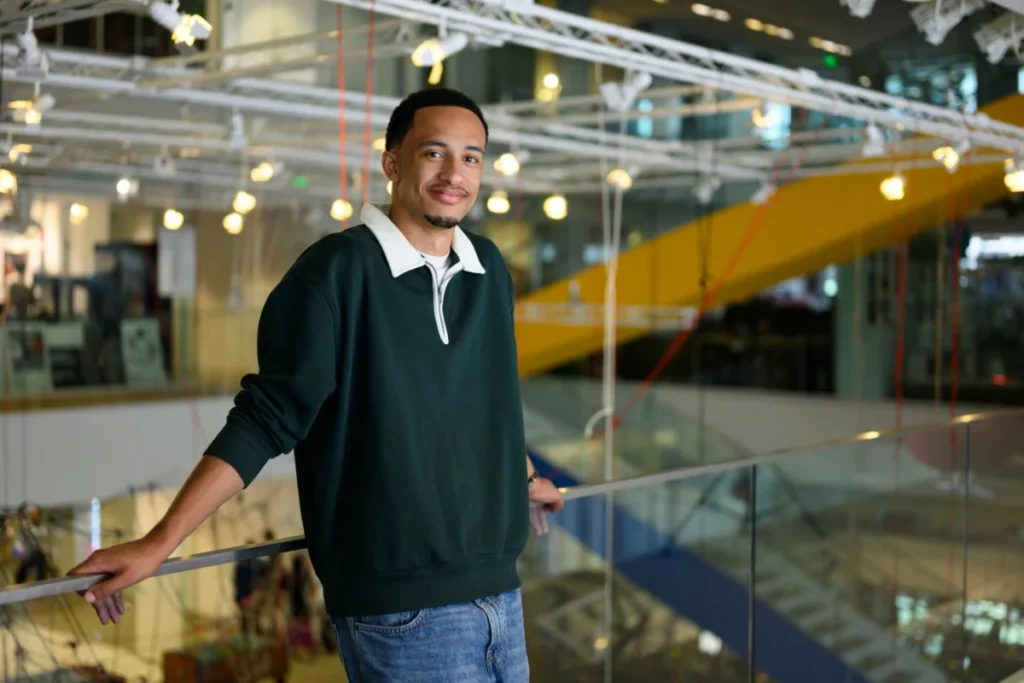
A burgeoning talent at the Massachusetts Institute of Technology, Kayode Dada, a rising senior in mechanical engineering, is spearheading an ambitious initiative to foster community and facilitate social integration among 1,100 incoming first-year students through a meticulously redesigned trading-card game. His creation, "Campus Trade," is set to debut during MIT Orientation in late August, building upon a successful pilot program and aiming to transform initial interactions into lasting connections within the rigorous academic environment of MIT. Dada’s project underscores a belief that games, when thoughtfully conceived, possess an unparalleled capacity to bridge divides and cultivate engagement.
From Childhood Games to Campus Innovation
Dada’s journey into the world of game design began far from the hallowed halls of MIT, rooted in a childhood fascination with interactive entertainment. Growing up in Louisville, Kentucky, he and his brother spent countless hours immersed in a diverse array of games, from the strategic depths of "Dungeons and Dragons" and "Risk" to the resource management of "Catan" and the competitive spirit of "Yu-Gi-Oh!". His vivid recollections, often accompanied by a visibly brightened demeanor, speak to a profound connection with these experiences. The shared ritual of nightly "Monopoly" games with his family during the Covid-19 pandemic further solidified his appreciation for the communal power of play, demonstrating how games could become a cornerstone of daily life and connection.
Even as a child, Dada possessed an inquisitive mind, often dissecting the underlying mechanics and decision-making processes embedded within the games he played. This inherent curiosity evolved into practical application during his high school years, where he ventured into hands-on game design. His inaugural creation involved crafting custom dice from arts and crafts materials, a testament to his inventive spirit. This initial foray sparked a prolific period of creativity, during which he estimates designing approximately 25 games, with nine fully realized and gifted to friends for their birthdays. This early, tangible experience laid the groundwork for his future endeavors, showcasing a unique blend of analytical thinking and creative expression.
Navigating MIT Admissions with Unconventional Talents
Dada’s passion for board game design became a central theme in his application to MIT, a choice he initially approached with a degree of trepidation. He harbored a common misconception that MIT primarily sought candidates with extensive "tech stuff" experience, a category he felt his board game creations didn’t squarely fit. However, his perspective shifted dramatically after delving into the MIT Admissions blogs. A particular post by a computer science major, who openly shared her lack of prior coding experience before attending MIT, resonated deeply with him. This revelation offered a crucial insight into the institution’s holistic admissions philosophy, emphasizing potential, passion, and diverse talents over pre-existing technical proficiency.
"That gave me motivation and hope that I could apply with a bunch of cardboard games, and I got in," Dada recounts, highlighting the pivotal role of student narratives in demystifying the application process. He further reflected on the profound impact of seeing current students portray themselves as "real" individuals, not "super-duper geniuses in an unattainable sense." This transparency not only empowered him but also revealed MIT as a community that values authenticity and a wide spectrum of intellectual curiosities. His acceptance validated his unconventional path and affirmed the institution’s commitment to nurturing diverse forms of innovation.
Fostering Community: Kayode’s Broader Impact at MIT
Upon arriving at MIT, Dada immersed himself in a rich tapestry of extracurricular activities, temporarily shifting some focus from intensive game design but broadening his impact on the campus community. His involvement spans multiple facets of student life, reflecting a deep commitment to engagement and service. He serves as an MIT Admissions blogger, sharing his experiences and insights with prospective students, much like the bloggers who inspired his own application. He is an orientation captain, a leader in MIT Cru (a campus Christian group), a drummer in the MIT Live student music group, and a DJ on WMBR 88.1 FM, where his show, "Midwest Pizzeria," showcases a niche genre of Midwest emo math rock.
For Dada, roles such as blogging and orientation captaincy are more than just activities; they are meaningful avenues for community building and increasing awareness about the myriad opportunities available to students. He recalls a particular blog post about being a Christian at MIT that elicited a significant response, generating numerous emails from interested students, parents, and high school counselors who expressed gratitude for the information. This experience underscored the importance of providing diverse perspectives and information, especially for topics that might not be immediately apparent to outsiders. He also frequently engages with students who doubt their ability to gain admission to MIT, offering encouragement: "I tell them, ‘I think you should still apply… and regardless if you get into MIT or not, you’re going to do amazing things.’" This empathetic approach reflects his desire to inspire confidence and foster a broader understanding of success.
This summer marks Dada’s third involvement with MIT Orientation, an experience he clearly cherishes. He thrives on connecting with new students, learning about their interests, and then actively facilitating connections to relevant campus resources or individuals. The collaborative spirit of orientation is evident in his interactions, and he finds immense satisfaction in "giving it back to MIT and contributing towards building up the next class." In a serendipitous turn, some of the current orientation leaders he collaborates with are individuals who once read his blogs as prospective students, creating a powerful full-circle moment that highlights the lasting impact of his contributions. He has also forged some of his strongest friendships through his orientation involvement, underscoring the deep personal connections that can arise from shared commitment to community service.
The Genesis of "Campus Trade": Addressing a Need
The intersection of Dada’s passion for game design and his dedication to MIT Orientation materialized last year. As orientation staff brainstormed innovative ways to keep incoming students engaged during transitional periods between official events, Dada proposed a unique solution: a trading-card game designed to double as an ice-breaker. The inaugural version of his game, "Campus Trade," ingeniously leveraged the existing structure of MIT Orientation, where students are divided into 12 distinct groups, each identified by a specific color.
The premise was straightforward yet effective: each student began with 12 trading cards corresponding to their assigned group’s color. The objective was to collect one card from every other group, resulting in a complete set of 12 different colors by the end of the week. This simple mechanic immediately encouraged interaction and movement among the new students, providing a low-stakes reason to approach and engage with their peers. The game proved to be an immediate success, exceeding expectations in its ability to captivate the participants. "They got so invested immediately, and we couldn’t get them to stop playing and go back inside to the next meeting," Dada recalls, illustrating the potent appeal of a well-designed interactive experience.
First Iteration and Key Learnings: The Call for Deeper Connection
Despite the initial triumph of "Campus Trade" in generating engagement, Dada, with his keen designer’s eye, observed a crucial aspect that warranted further refinement. While students were actively trading cards and moving between groups, many interactions remained superficial. The primary goal of collecting cards often overshadowed the opportunity for genuine conversation. Students would frequently exchange cards with minimal verbal interaction before moving on, missing the chance to forge deeper connections beyond the transactional nature of the game. This observation sparked Dada’s commitment to redesigning the game, moving beyond mere engagement to foster meaningful social interaction.
This insight aligns with broader research into the efficacy of orientation programs. While logistical information and institutional introductions are vital, studies consistently show that social integration and the formation of peer networks are critical predictors of student success, retention, and overall satisfaction in higher education. Effective ice-breakers and community-building activities are not just fun; they are strategic tools to mitigate feelings of isolation, reduce anxiety, and create a sense of belonging for first-year students transitioning into a new, often overwhelming, environment. Dada’s observation pointed to a gap: while the game facilitated initial contact, it needed to be re-engineered to explicitly encourage sustained, qualitative interaction.
Redesign and Collaboration: The MIT Media Lab Connection
Driven by the desire to deepen the social impact of "Campus Trade," Dada embarked on a comprehensive redesign. This ambitious undertaking led him to connect with Cassandra Lee, a research designer at the MIT Media Lab’s Center for Constructive Communication. Lee’s expertise, particularly her interest in the intricate relationship between games and social interaction, made her an ideal mentor for Dada’s project. This collaboration provided Dada with invaluable guidance and resources, elevating his design process from an intuitive hobby to a rigorous, research-backed endeavor.
Under Lee’s supervision, Dada dedicated his junior year to an Undergraduate Research Opportunities Program (UROP) project, facilitated through the realtalk@MIT program. The realtalk@MIT initiative is specifically designed to support students who conceive, develop, and implement their own creative community infrastructure projects, fostering a culture of student-led innovation in social design. This framework provided Dada with the institutional backing and intellectual environment necessary to systematically address the challenges he identified in the initial "Campus Trade" iteration. The UROP experience involved months of intensive prototyping, iterative testing, and direct engagement with students through interviews, gathering crucial feedback to inform each stage of the redesign. This systematic approach, characteristic of design thinking methodologies, ensured that the revised game would be both engaging and effective in achieving its core objective of fostering deeper social connections.
Lee lauded their collaboration, describing it as "sincerely rewarding." She emphasized that effective community development necessitates a student who deeply understands and passionately advocates for "the value of people, stories, and being in community." Lee further praised Dada’s unique ability to balance his innate spirit and creativity with the demanding organizational work required to bring a large-scale project like "Campus Trade" to fruition. This endorsement from a Media Lab researcher underscores the profound impact and sophisticated design principles embedded in Dada’s work.
The Enhanced "Campus Trade" Experience: A Blueprint for Connection
The culmination of months of dedicated research, prototyping, and iteration is the enhanced version of "Campus Trade," poised for its grand rollout to the incoming class of 2027. The revised cards are notably larger, adopting a tarot-sized format, which makes them more visually engaging and substantial. A significant upgrade lies in the artwork: one side of each card features original artwork by current MIT students, depicting a diverse array of campus landmarks, iconic figures, or distinctive objects. This artistic element not only beautifies the cards but also grounds the game firmly within the MIT experience, offering conversation starters tied directly to the campus environment.
Crucially, the reverse side of each card now features an icebreaker question. These questions are carefully crafted to prompt more meaningful dialogue beyond a simple transactional exchange. By mandating a conversational element, the game actively encourages participants to pause, interact, and learn something personal about their peers. Furthermore, the redesigned game incorporates multiple pathways to victory, moving away from a single, competitive objective. This multi-faceted winning condition is a deliberate design choice aimed at encouraging collaboration, negotiation, and diverse interaction strategies rather than purely individualistic card collection. For instance, students might be rewarded for facilitating connections between others, sharing unique stories, or collectively achieving a certain number of meaningful interactions, fostering a more inclusive and cooperative play environment.
The underlying pedagogical theory here is that games, when designed with intention, can lower social barriers and provide a structured context for interaction. For new students, particularly in a high-achieving environment like MIT, the pressure to make a good first impression can be immense. A game like "Campus Trade" offers a playful, non-threatening framework within which to initiate conversations, discover commonalities, and begin the crucial process of forming a social support network. The visual appeal, campus-specific content, and embedded icebreaker questions collectively transform the game from a simple engagement tool into a sophisticated instrument for community building and social integration.
Impact and Broader Implications for Student Integration
The strategic deployment of "Campus Trade" during MIT Orientation carries significant implications for student integration and well-being. Effective orientation programs are vital for setting the stage for academic success and personal growth. Studies consistently show that students who feel a strong sense of belonging and have robust social networks are more likely to thrive academically, persist in their studies, and report higher levels of satisfaction with their university experience. Conversely, feelings of isolation or a lack of connection can contribute to stress, anxiety, and even attrition.
By proactively designing an experience that encourages peer-to-peer interaction and facilitates the discovery of shared interests, Dada’s game directly addresses these critical aspects of the first-year transition. It provides a tangible, fun, and memorable mechanism for breaking down initial social barriers, which can be particularly challenging in a large, intellectually intense institution where students arrive from diverse backgrounds with varying levels of social confidence. The game’s success could serve as a model for other universities seeking innovative ways to enhance their orientation programs and foster more vibrant, connected student communities. It demonstrates the power of student-led initiatives, especially when supported by institutional resources like the Media Lab and UROP, to address real-world challenges within the educational landscape.
Moreover, the project underscores MIT’s commitment to nurturing not just scientific and engineering prowess, but also crucial soft skills like communication, collaboration, and community building. By valuing and supporting a mechanical engineering student’s passion for game design, MIT reinforces its identity as a place where interdisciplinary thinking and diverse talents are celebrated.
The Future of Game Design: Kayode’s Aspirations
Looking ahead, Kayode Dada envisions a future deeply embedded in the realm of game design. His experience with "Campus Trade," particularly the large-scale implementation and the rigorous design process, has solidified his aspirations and provided him with invaluable practical expertise. He often finds himself contemplating game mechanics and ideas, even in moments of quiet reflection, such as lying awake at night or during church services. This constant ideation reflects a profound and unwavering passion for the craft.
"Before, I didn’t really believe I could do it," Dada admits, reflecting on his earlier self-doubt. "But now that I have this project under my belt, some real experience working on a game on a large scale, I definitely have a lot of ideas." This newfound confidence, born from tangible achievement and collaborative learning, is a testament to the transformative power of experiential education. He now sees clear pathways for a professional career in the industry. His immediate considerations include applying for a position at a prominent game design company, such as Wizards of the Coast, known for iconic trading card games like "Magic: The Gathering." Alternatively, he entertains the entrepreneurial ambition of establishing his own game design company, embracing the spirit of innovation that defines MIT.
Conclusion: A Model of Student Innovation
Kayode Dada’s journey from a childhood fascination with games to designing a large-scale community-building initiative at MIT is a compelling narrative of passion, perseverance, and practical innovation. His "Campus Trade" project is more than just a game; it is a thoughtfully engineered tool for social integration, designed to equip a new generation of MIT students with the connections they need to thrive. His story resonates as a powerful example for prospective students, illustrating that diverse talents and unconventional passions are not only welcomed but can flourish and make a significant impact within a world-class institution. After all, he took a chance when he decided to apply to MIT with a portfolio of cardboard games, and that decision has proven to be an exceptionally rewarding and pivotal move, shaping his trajectory and leaving a lasting imprint on the MIT community.