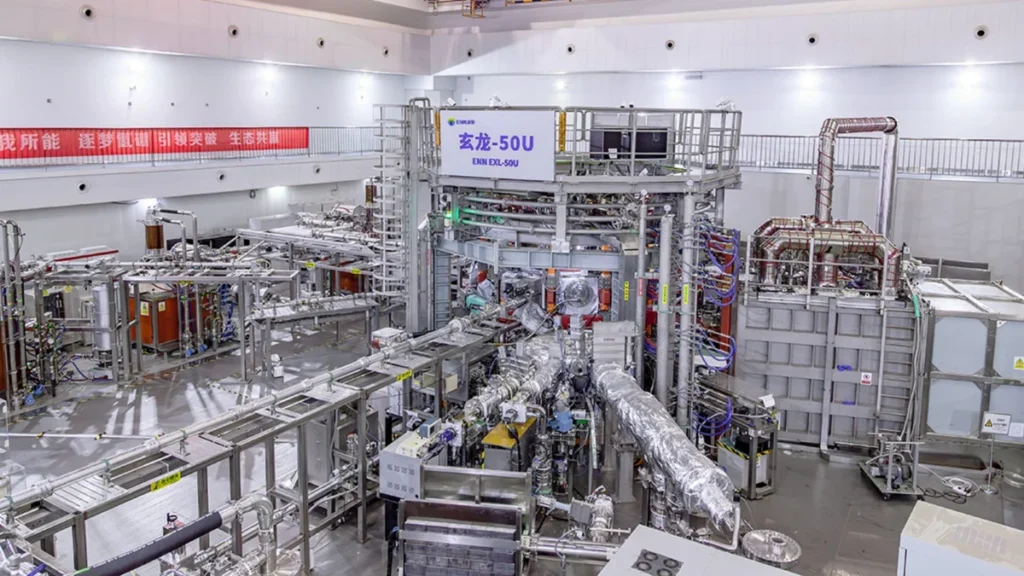
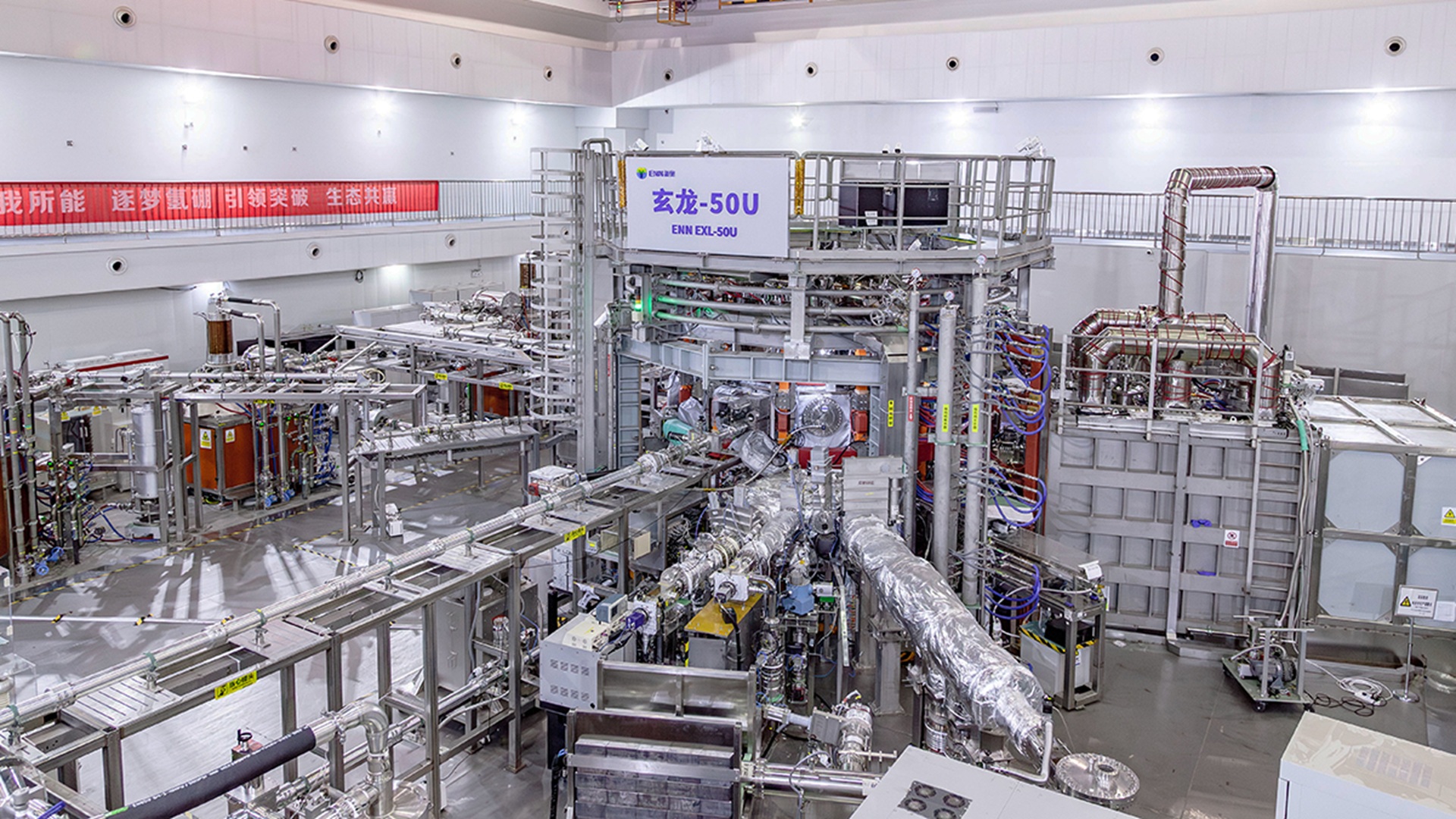
A significant breakthrough in the global quest for clean energy has been announced by China’s ENN Group, a clean energy firm, which has successfully achieved hydrogen-boron (H-B) fusion reactions in its EXL-50U spherical tokamak. This experimental device, which represents the nation’s first medium-scale spherical torus, recorded an impressive reaction rate exceeding 100 million per second. The Hebei-based ENN Group confirmed that its experiment yielded more than 100 million fusion reactions per second, marking a historic first for a commercial fusion company to achieve such a reaction on its proprietary device. The announcement was made on Monday, September 28, and is poised to offer novel insights into the complex physics of hydrogen-boron fusion, potentially accelerating the development of a cleaner, safer form of nuclear energy.
A New Horizon in Fusion Research: Hydrogen-Boron vs. Deuterium-Tritium
The landscape of fusion research has long been dominated by the deuterium-tritium (D-T) fuel cycle. Projects like the International Thermonuclear Experimental Reactor (ITER) in France, the world’s largest fusion experiment, primarily focus on D-T fusion due to its ability to be achieved under less demanding conditions compared to alternative fuel cycles. D-T fusion involves combining a deuterium nucleus with a tritium nucleus, resulting in helium-4, a high-energy neutron, and 17.6 megaelectronvolts (MeV) of energy. While D-T fusion has shown promise in laboratory settings, it presents inherent challenges, including the scarcity and radioactivity of tritium, which is an isotope of hydrogen. Tritium is not naturally abundant and must be bred from lithium within the reactor, adding complexity and cost. Furthermore, the high-energy neutrons produced as a primary product of D-T fusion can severely damage reactor materials over time, leading to material degradation and induced radioactivity in surrounding components, necessitating robust shielding and regular material replacement.
In stark contrast, hydrogen-boron fusion offers a compelling alternative. This advanced fuel cycle does not produce high-energy neutrons as its primary product. Instead, a hydrogen proton fuses with a boron-11 nucleus. The reaction releases energy and primarily produces three alpha particles, which are helium nuclei. These charged alpha particles are far less damaging to reactor walls than neutrons and do not induce radioactivity in the surrounding structures. Moreover, hydrogen and boron-11 are comparatively abundant and readily accessible elements, eliminating the supply chain and radioactivity concerns associated with tritium. The prospect of an aneutronic (or nearly aneutronic) fusion reaction, coupled with readily available fuel, positions H-B fusion as a highly attractive long-term solution for clean energy generation.
The Technological Leap: EXL-50U Spherical Tokamak
The EXL-50U, also known as ENN Xuanlong-50, is a critical component of ENN Group’s ambitious fusion research program. Built between 2018 and 2019, this medium-scale spherical tokamak represents a significant investment in advanced fusion technology. Spherical tokamaks are a relatively modern variant of the conventional toroidal tokamak design. They are characterized by a much smaller aspect ratio (the ratio of the major radius to the minor radius of the plasma torus), giving them a more "cored-apple" or "spherical" shape. This compact geometry offers several potential advantages, including improved plasma confinement and stability, higher plasma beta (the ratio of plasma pressure to magnetic field pressure), and potentially a more efficient magnetic field utilization compared to traditional tokamaks. These characteristics make spherical tokamaks particularly suitable for exploring advanced fuel cycles like hydrogen-boron, which require extremely high plasma temperatures and densities.
Achieving hydrogen-boron fusion is considerably more challenging than D-T fusion, as it demands vastly higher plasma temperatures—in the order of billions of degrees Celsius—and extremely strict confinement conditions to overcome the Coulomb barrier between the proton and boron nucleus. To address this formidable challenge, the ENN team employed an innovative approach. Instead of attempting to uniformly raise the temperature of the entire plasma to the required extreme levels, they combined high-energy neutral beam injection (NBI) with radio frequency (RF) waves.
Neutral beam injection is a technique where high-energy neutral atoms are injected into the plasma, transferring their energy to the plasma particles and heating them. RF waves, on the other hand, use electromagnetic waves at specific frequencies to resonate with and heat specific particle populations within the plasma. By carefully tuning these heating methods, the ENN researchers stimulated particles in a specific energy range where hydrogen-boron reactions are most likely to occur. This target energy range is known as the "first resonance peak" for the H-B fusion reaction, a point where the cross-section for the reaction significantly increases. This targeted energy deposition generated a large number of energetic, or "fast," protons within the plasma. These fast protons then efficiently collided with boron nuclei, effectively driving the fusion reaction rate beyond the 100 million reactions per second milestone. This sophisticated method highlights a strategic departure from bulk heating, focusing instead on creating localized conditions conducive to H-B fusion, a testament to the team’s ingenuity in tackling one of fusion’s most difficult problems.
International Validation and Future Steps
The significance of ENN Group’s achievement has been underscored by an international review process. The company stated that more than 10 experts from various international research institutes and universities reviewed the results, providing an independent verification of the experimental findings. Furthermore, repeatable measurements of the alpha particles produced during the experiment offered conclusive evidence that the hydrogen-boron fusion reactions had, in fact, taken place. The detection of these characteristic alpha particles is a critical diagnostic for confirming fusion events.
Yang Yuanming, an ENN engineer who led the fusion project, emphasized the growing interest in hydrogen-boron fusion within the private sector, citing US-based TAE Technologies and Germany’s Marvel Fusion as other prominent developers pursuing this advanced fuel cycle. He reiterated the critical advantage of hydrogen and boron fuels being abundant and readily accessible, which is a major draw for commercial viability. This abundance contrasts sharply with the limited supply and complex breeding requirements of tritium for D-T fusion.
Beyond the fuel advantages, the approach of hydrogen-boron fusion offers another compelling benefit: the potential for direct energy conversion. Since H-B fusion primarily produces energetic charged particles (alpha particles), future power systems could potentially convert their kinetic energy directly into electricity. This would bypass the traditional thermodynamic cycle of using heat to generate steam and power a turbine, a process that inherently incurs energy losses. Direct energy conversion could lead to significantly higher efficiencies for fusion power plants, making them more economically competitive and resource-efficient.
Despite this groundbreaking achievement, the path to a practical H-B fusion power plant is still fraught with technical hurdles. The immediate next step for the ENN team is to push the plasma to even more extreme conditions. Yang Yuanming outlined a clear objective: "[We will] strive to get the plasma to 100 million degrees Celsius (180 million degrees Fahrenheit) as soon as possible." While this temperature is still orders of magnitude below the billions of degrees needed for optimal H-B reactions, achieving 100 million degrees Celsius is a crucial milestone for D-T fusion and an important step in demonstrating control over high-temperature plasmas for any fusion fuel cycle. This immediate goal indicates a methodical progression towards higher performance regimes.
In a clear demonstration of its long-term commitment, ENN Group is already moving forward with its next experimental platform. Earlier this month, the company held a groundbreaking ceremony for Helong-2, its third-generation fusion device. This rapid progression from EXL-50U to Helong-2 underscores ENN’s aggressive timeline and strategic vision in the global fusion power race, indicating a sustained investment in scaling up their fusion research capabilities.
The Broader Implications for Global Energy
The successful demonstration of hydrogen-boron fusion reactions by a commercial entity like ENN Group carries profound implications for the global energy landscape. Fusion energy, often dubbed the "holy grail" of energy, promises an almost limitless supply of clean power, derived from fuels that are abundant across the planet. If successfully harnessed, fusion could provide a carbon-free, safe, and sustainable energy source, fundamentally transforming how humanity meets its energy needs and offering a viable solution to climate change and energy security concerns.
The shift towards advanced fuels like hydrogen-boron represents a significant step in this direction. While D-T fusion remains the most advanced in terms of achieving net energy gain (where the fusion power produced exceeds the power input to heat the plasma), the inherent challenges of tritium management and neutron damage are substantial. H-B fusion, if made technically feasible, could offer a cleaner, safer, and potentially more economical pathway to commercial fusion power. It could drastically reduce the operational complexities and material costs associated with neutron-induced radioactivity, making fusion power plants easier to build, maintain, and decommission.
China’s increasing prominence in fusion research, exemplified by ENN Group’s achievement and its contributions to international projects like ITER, highlights the nation’s strategic focus on securing future energy independence and leadership in advanced technological fields. This commercial breakthrough adds a new dimension to the global fusion race, traditionally dominated by national laboratories and academic institutions. The involvement of private companies brings entrepreneurial drive, diverse funding streams, and a strong commercialization imperative that can accelerate innovation and deployment.
However, significant challenges remain. Achieving sustained, net energy gain with H-B fusion is a monumental task that will require overcoming immense scientific and engineering hurdles, including achieving and maintaining the extreme temperatures and densities required, managing plasma instabilities, and developing materials that can withstand the harsh conditions inside a fusion reactor for extended periods. The path from laboratory demonstration to a grid-scale power plant is typically measured in decades, not years. Yet, each milestone, like ENN Group’s achievement, brings the world closer to the tantalizing promise of fusion power, offering a glimpse into a future powered by the same reactions that fuel the sun. This breakthrough serves as a powerful reminder of the persistent human ingenuity driving the pursuit of a sustainable energy future.