A groundbreaking innovation from engineers at the Massachusetts Institute of Technology (MIT) promises to revolutionize the textile industry by addressing one of its most persistent environmental challenges: the colossal volume of non-recyclable fabric waste. After decades of struggling with the intricate problem of recycling mixed-fiber garments, particularly those containing elastic materials like spandex, researchers have developed a novel yarn made from a form of plastic commonly used in everyday items such as milk bottles and grocery bags. This new material is not only capable of being woven into stretchy, lightweight clothing but can also be repeatedly melted down and re-spun into new yarn, or even repurposed into other plastic accessories, without significant loss of quality or performance. This breakthrough offers a tangible path toward a truly circular economy for textiles, a stark contrast to the current linear model that culminates in landfills and incinerators.
The scale of the global textile waste crisis is staggering and growing. Each year, the average American discards approximately 81 pounds of clothing, contributing to an astounding 11 million tons of textiles that ultimately end up in landfills or incinerators across the United States alone. Globally, estimates suggest that less than 1% of clothing is recycled into new garments, with the vast majority either incinerated, landfilled, or downcycled into lower-value products like rags or insulation. This dire situation is largely exacerbated by the rise of "fast fashion," a business model characterized by rapid production cycles, low costs, and high consumption, leading to an unprecedented volume of clothing being purchased, worn briefly, and then discarded. The environmental footprint extends beyond waste management, encompassing significant resource consumption—including vast amounts of water for cotton cultivation and energy for synthetic fiber production—and the release of microplastics from synthetic fabrics during washing.
The core of the recycling problem lies in the complex composition of modern textiles. While natural fibers like cotton and wool, and single-polymer synthetics like pure polyester, have established (albeit often imperfect) recycling pathways, the vast majority of contemporary garments are blends. These blends, particularly those incorporating elastic fibers such as spandex, present an insurmountable challenge for conventional mechanical recycling methods. Spandex, a polyurethane-based synthetic fiber known for its exceptional elasticity, is rarely used alone. Instead, it forms the core of an elastic yarn, which is then wrapped in a sheath of tougher, less flexible materials like polyester or nylon. This combination, while providing the desired stretch and strength in clothing, makes the entire yarn non-recyclable through standard processes. The different chemical compositions of the core and sheath require complex, costly, and often environmentally harmful chemical treatments to separate them before any component can be potentially recycled. As Svetlana Boriskina, a research scientist in MIT’s Department of Mechanical Engineering, highlights, "Eighty percent of textiles on the U.S. market currently contain some amount of spandex, which makes them nonrecyclable. There’s no widely adopted technology now that recycles textiles into textiles. With our new yarn, we hope to change that."
A Novel Approach to Elasticity and Recyclability
The MIT team’s innovation centers on developing a yarn that mimics the desirable properties of spandex-blended textiles – namely, stretch and strength – but entirely from a single, recyclable polymer family: polyethylene. Polyethylene is the most widely produced plastic globally, ubiquitous in packaging, consumer goods, and industrial applications due to its versatility, durability, and low cost. Crucially, it is a thermoplastic, meaning it can be melted and reformed multiple times without significant degradation, making it inherently recyclable. However, polyethylene has historically not been considered a viable textile fiber due to its perceived lack of suitable properties for clothing.
Building upon earlier research, Boriskina’s group previously demonstrated in 2021 that polyethylene could indeed be spun into a yarn with desirable textile properties, focusing on its moisture-wicking, stain-resisting, and cooling capabilities. The current study, detailed in a paper published in the journal ACS Materials Letters with first author SeongHyeon Kim and co-authors Duo Xu, Volodymyr Korolovych, Domingo Flores-Hernandez, Kaniz Moriam, and Daniel Braconnier, extends this foundational work by specifically engineering polyethylene yarn to possess the elasticity and strength required to replace spandex blends.
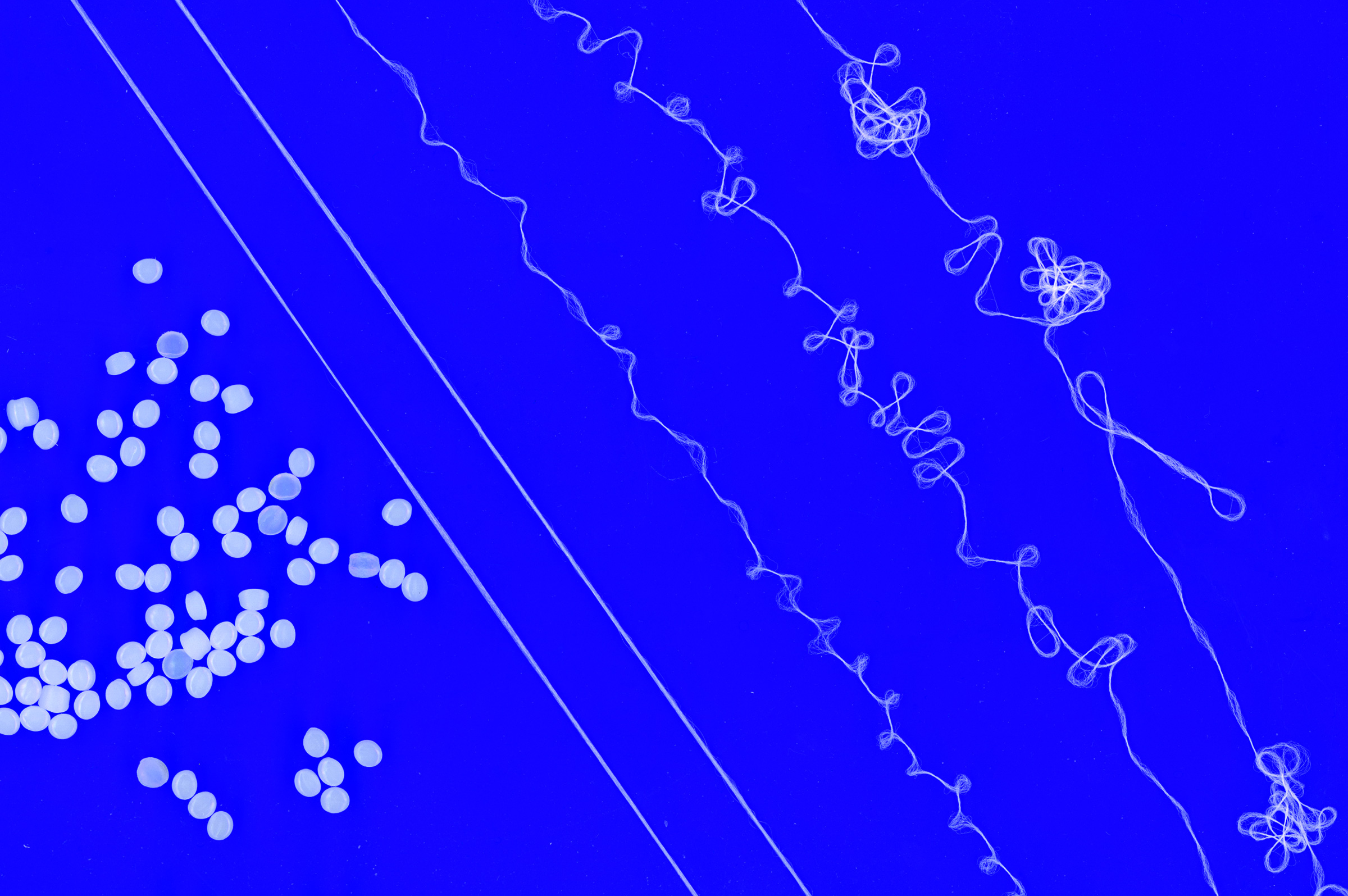
The researchers meticulously evaluated numerous chemical variations of polyethylene, akin to "Christmas garland" structures with varying "decorations" (hydrogen atoms or short branches), to identify specific formulations that could replicate the distinct properties of both the stretchy core and the sturdy sheath of traditional elastic yarns. For the elastic core, they selected a polyethylene-based resin that yielded a more flexible fiber. For the robust sheath, a stiffer polyethylene resin was chosen. The fabrication process involved heating pellets of these resins to approximately 350 degrees Fahrenheit, melting them, and then extruding the molten plastic through fine orifices to create hair-thin fibers. Kim describes this process evocatively as being "like a spaghetti machine." An industrial yarn spinner then wound the sheath fibers around the core fiber to construct the final, elastic yarn.
The critical advantage of this design is that both the core and the sheath are derived from the same chemical family of polyethylene. This mono-material composition eliminates the need for complex and environmentally damaging chemical separation processes prior to recycling, a major hurdle for spandex-based textiles. Boriskina emphasizes, "Because they are exactly the same chemistry, they play nicely together. That’s what makes this yarn very recyclable."
Demonstrating Unprecedented Recyclability
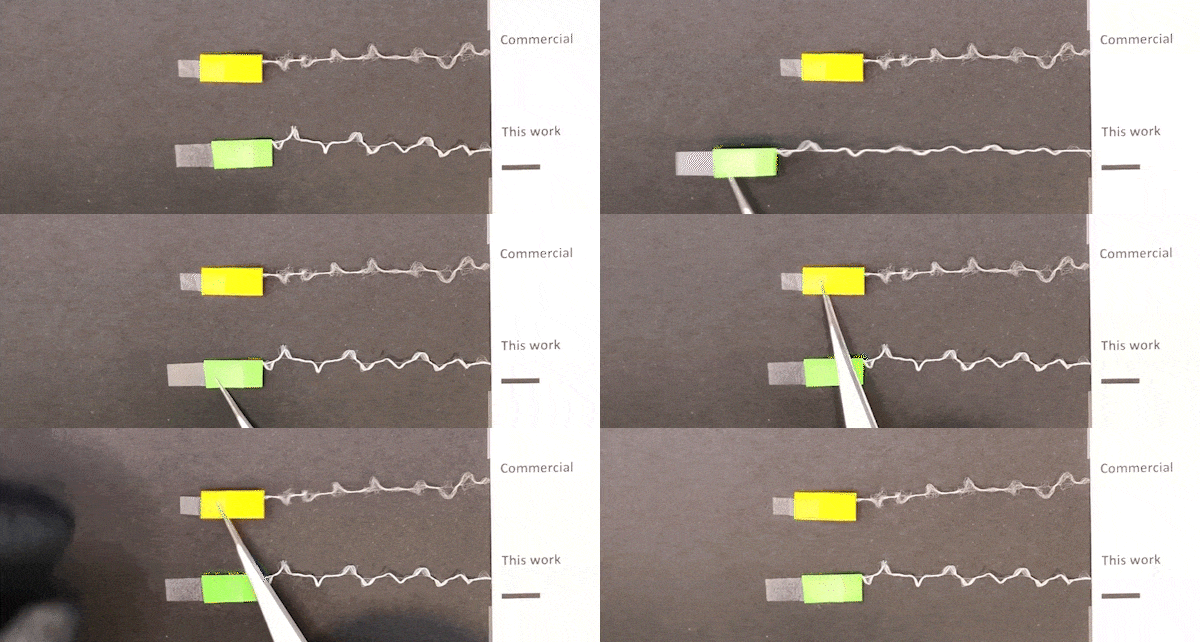
To rigorously test the recyclability of their new material, the MIT team subjected the elastic core-sheath yarn to a demanding cycle of twisting, melting, and re-spinning – a process repeated an impressive 10 times. After each cycle, the mechanical properties of the recycled yarn were meticulously assessed. Researchers precisely stretched threads and measured the force required to break them. The results were highly encouraging: even after 10 cycles, the recycled yarn exhibited strength and flexibility comparable to the original, newly spun material. This remarkable durability in recycling stands in stark contrast to most existing textile recycling methods, which often lead to a degradation of material quality, limiting subsequent uses. The ability to maintain material integrity through multiple recycling loops is paramount for achieving a truly circular economy, where resources are kept in use for as long as possible.
The implications of this demonstrated recyclability are profound. Currently, the vast majority of stretchy garments are destined for landfills because of the intractable recycling challenge posed by spandex blends. This new polyethylene yarn offers a viable, high-performance alternative that can be melted down and re-spun into new yarn, or even cast into other plastic products like buttons or belt buckles, creating a versatile pathway for end-of-life textiles.
Broader Impact and a Vision for a Circular Future
The MIT engineers envision their polyethylene yarn as a cornerstone of a more sustainable fashion and textile industry. The potential impacts span environmental, economic, and societal dimensions.
Environmental Impact: The most immediate and significant benefit is the drastic reduction in textile waste. By diverting millions of tons of clothing from landfills and incinerators, the innovation can mitigate land pollution, reduce greenhouse gas emissions from incineration, and lessen the demand for virgin plastic production, thereby conserving fossil resources. The elimination of toxic chemicals typically associated with separating mixed fibers also contributes to a cleaner production and recycling process. Furthermore, the longevity of the material through multiple recycling cycles inherently reduces the overall environmental footprint associated with manufacturing new garments.
Economic Implications: The development of a widely recyclable textile material could spur significant investment in new recycling infrastructure. Currently, the economic viability of textile-to-textile recycling is hindered by the technical difficulties and high costs associated with processing mixed materials. A mono-material, easily recyclable yarn could lower these barriers, making large-scale textile recycling economically attractive. This could create new jobs in collection, sorting, and reprocessing, and potentially lead to cost savings for manufacturers who could source recycled materials instead of virgin ones. However, integrating this new material into established supply chains and manufacturing processes will require substantial industry collaboration and investment.
Transforming the Fashion Industry: For an industry often criticized for its environmental impact, this innovation represents a beacon of hope. It provides designers and brands with a powerful tool to create truly sustainable stretchy clothing, from activewear to everyday apparel, without compromising on performance or aesthetics. As consumer awareness and demand for eco-friendly products continue to grow, brands adopting such materials could gain a significant competitive advantage. The vision of a consumer simply dropping a polyethylene garment into a dedicated recycling bin, much like plastic bottles and cans, and seeing it reborn as new clothing or accessories, paints a compelling picture of fashion’s future.
Advancements in Material Science: Beyond textiles, this research demonstrates the remarkable potential of advanced polymer engineering to tailor existing materials for novel applications. By precisely controlling the chemical structure and processing of polyethylene, the MIT team has unlocked properties previously thought unattainable for this common plastic, expanding the scope of its utility and challenging preconceived notions about material limitations. This success could inspire similar innovations in other material science domains, fostering a broader shift towards designing materials for inherent recyclability.
Challenges and the Path Forward
While the scientific breakthrough is undeniable, transitioning this laboratory success to widespread industrial adoption presents several challenges. Scaling up production of the specialized polyethylene yarn to meet the vast demands of the global textile industry is a monumental task. This involves optimizing manufacturing processes for efficiency and cost-effectiveness, ensuring consistency in material properties across large batches, and securing reliable supply chains for the specific polyethylene resins.
Furthermore, integrating this new yarn into existing garment manufacturing facilities will require adjustments to knitting, weaving, and dyeing processes. The aesthetic properties of the yarn, such as its ability to accept dyes, its drape, and its feel, will need to be thoroughly evaluated and optimized to meet consumer expectations. Consumer acceptance is also crucial; while the environmental benefits are clear, the tactile experience and performance of the garments must be comparable to or exceed current standards.
Perhaps the most significant challenge lies in establishing a comprehensive, global collection and recycling infrastructure specifically designed for polyethylene textiles. This requires collaboration across governments, industry, and consumers to create effective take-back programs, standardized sorting processes, and efficient reprocessing facilities. Education campaigns will be essential to inform consumers about the new material and how to properly dispose of it for recycling.
Conclusion
The MIT engineers’ development of a recyclable polyethylene yarn marks a pivotal moment in the quest for a sustainable textile industry. By offering a high-performance, endlessly recyclable alternative to problematic spandex blends, this innovation directly addresses a critical pain point in textile waste management. The ability to melt down and re-spin garments repeatedly, without significant material degradation, opens the door to a genuine circular economy for clothing, promising a future where fashion is no longer synonymous with disposable waste. As Boriskina aptly states, "Hopefully it will prevent the need for making more and more textile materials, because you can keep recycling a large portion of it." While significant work remains to transition this lab-scale success to global industrial application, this breakthrough provides a clear and hopeful roadmap for a more sustainable, resource-efficient future for what we wear. This work was supported in part by the DEVCOM Soldier Center through the U.S. Army Research Office, the Office of Naval Research Global via Tecnologico de Monterrey, and the MIT Portugal Program, underscoring the broad interest in solving this pressing environmental challenge.