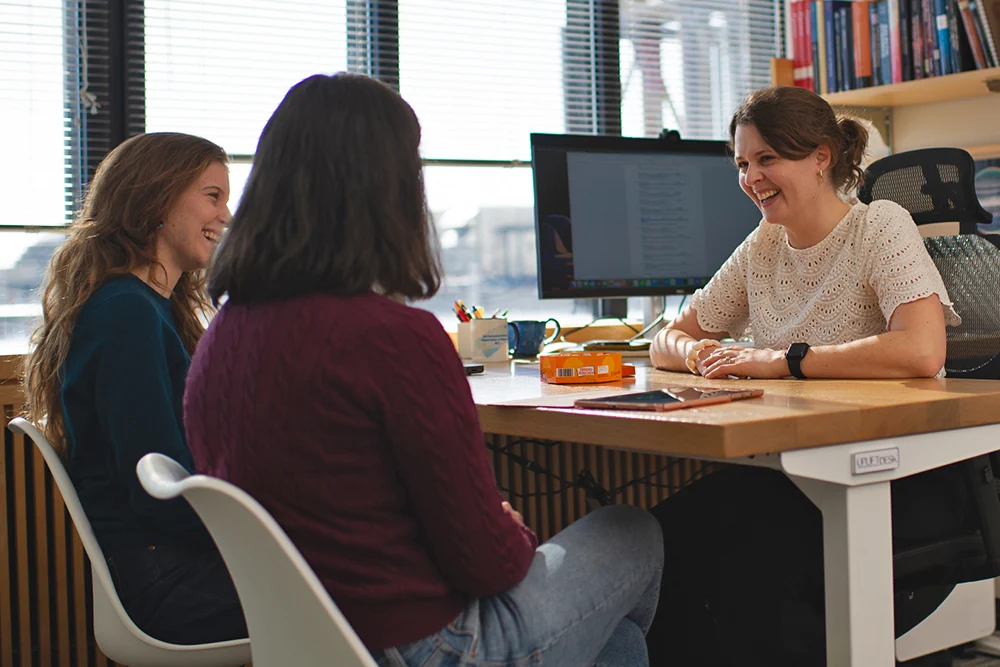
In the high-pressure environment of elite scientific research, the distinction between a supervisor and a mentor often dictates the long-term success and well-being of graduate students. At the Massachusetts Institute of Technology (MIT), Professor Anna-Christina Eilers has emerged as a leading figure in bridging this gap, recently receiving formal recognition through the "Committed to Caring" (C2C) initiative. This student-driven program, administered by the MIT Office of Graduate Education, honors faculty members who demonstrate an extraordinary commitment to the professional development and personal welfare of their advisees. For Eilers, an observational astrophysicist whose work probes the most distant reaches of the universe, the recognition underscores a philosophy that academic excellence is inextricably linked to a supportive, human-centric laboratory culture.
The Scientific Frontier: Mapping the Cosmic Dawn
To understand the weight of Eilers’ mentorship, one must first consider the rigorous and often daunting nature of her field. As a researcher within the MIT Kavli Institute for Astrophysics and Space Research, Eilers focuses on the "Cosmic Dawn"—the period roughly 13 billion years ago when the first stars and galaxies began to form. Her work involves the study of supermassive black holes and quasars, which are among the brightest and most distant objects in the known universe.
Utilizing data from state-of-the-art facilities such as the James Webb Space Telescope (JWST) and the Magellan Telescopes in Chile, Eilers and her team investigate how black holes grew to massive proportions in a relatively short cosmic timeframe. This research is technically demanding, requiring advanced statistical modeling, deep-space imaging analysis, and a mastery of the physics governing the early intergalactic medium. In such a competitive and data-intensive field, the pressure on graduate students to produce "groundbreaking" results can be immense. It is within this context that Eilers’ approach to mentorship has been described by her students as a necessary anchor.
The Architecture of Consistency in Mentorship
The nomination for the Committed to Caring award centered on the "everyday moments" that define Eilers’ interaction with her research group. Students highlighted her consistency as a foundational trait. In many academic settings, faculty members with heavy research and teaching loads may become inaccessible, leading to delays in student progress. However, Eilers’ mentees report a different experience, noting that her availability for thoughtful feedback and regular check-ins remains a constant, regardless of her professional schedule.
The "Committed to Caring" initiative specifically looks for faculty who exhibit "best practices" in mentoring, which include maintaining open lines of communication and providing constructive, timely critiques. For Eilers, this manifests as a meticulous review of every draft her students produce. By providing detailed feedback early and often, she prevents the "bottleneck" effect that frequently stalls the completion of doctoral dissertations and peer-reviewed publications. This responsiveness is not merely a matter of administrative efficiency; it is a form of professional respect that validates the student’s labor and intellectual contribution.
Building a Culture of Collective Success
Beyond individual advising, Eilers has been credited with fostering a sense of community that mitigates the isolation often felt in graduate school. Her research group has established traditions that transform individual achievements into collective celebrations. For instance, it has become a staple of the group’s culture to celebrate the publication of a research paper with the author’s favorite dessert during group meetings.
Furthermore, the group maintains a unique tradition regarding academic travel. When a member returns from a conference or a research visit—whether to a telescope site in the Atacama Desert or a symposium in Europe—they bring back a local specialty to share. These treats serve as a catalyst for a broader intellectual exchange. During these sessions, the traveler recounts the latest developments in the field, summarizes key talks, and introduces new ideas to the rest of the group. This practice serves a dual purpose: it democratizes the knowledge gained from expensive travel and reinforces the idea that the success and exposure of one member benefit the entire collective.
Navigating the Challenges of Research Collaborations
The path of a graduate student is rarely linear, often beset by technical failures, rejected papers, or difficult interpersonal dynamics within large international collaborations. Students in Eilers’ group noted her proactive stance in these situations. Rather than adopting a "sink or swim" mentality, Eilers is known to step in when research obstacles or collaborative frictions threaten a student’s progress.
Her advocacy extends to identifying potential pitfalls before they escalate. By maintaining a pulse on her students’ emotional and professional state, she can offer guidance on how to navigate the complex social hierarchies of global science. This level of attentiveness is particularly crucial in astrophysics, where large-scale projects often involve hundreds of contributors from various institutions, making it easy for a junior researcher to feel overshadowed or overlooked.
The "Whole Person" Philosophy: Identity Beyond the Lab
One of the most striking aspects of Eilers’ mentorship is her emphasis on life outside the laboratory. She frequently advises incoming students to find a hobby that involves people outside of their immediate work circle. This advice is rooted in her own experience and an understanding of the high rates of burnout in STEM (Science, Technology, Engineering, and Mathematics) fields.
"Graduate school can be all-consuming," Eilers noted, reflecting on the tendency for students to let their research become their entire identity. By encouraging students to maintain external interests, she promotes a model of "sustainable ambition." This philosophy suggests that a researcher who is well-rested and has a diverse range of interests is more likely to maintain the long-term curiosity and resilience required for a career in academia.
This approach aligns with broader institutional shifts at MIT. The Committed to Caring program was launched in 2014 as part of a larger effort by the Office of Graduate Education to prioritize mental health and well-being. By honoring mentors like Eilers, the Institute signals that the "hidden curriculum" of academia—learning how to balance life and work—is just as important as the formal curriculum of physics and mathematics.
Institutional Context and Broader Implications
The MIT Committed to Caring initiative is unique in that the nominations come entirely from the student body. To be selected, a faculty member must be nominated by a student (or a group of students) and then vetted by a committee that looks for sustained evidence of excellence in mentorship. The program has become a prestigious marker at MIT, highlighting those who excel in the "soft skills" of leadership that are often undervalued in traditional tenure and promotion metrics.
The recognition of Eilers comes at a time when the academic community is increasingly scrutinizing the "leaky pipeline" in STEM, where a lack of support and a toxic work culture often lead talented researchers, particularly those from underrepresented backgrounds, to leave the field. Mentorship styles like those practiced by Eilers are seen as a primary defense against this trend. By creating an environment where students feel "seen" and supported, she contributes to the retention of the next generation of astrophysicists.
Fact-Based Analysis: The Impact of Mentorship on Research Output
While the C2C award focuses on "caring," data suggests that such mentorship also correlates with higher scientific productivity. Studies on academic labor have shown that graduate students who report a positive relationship with their advisor are more likely to publish more frequently, complete their degrees on time, and secure prestigious postdoctoral positions.
In Eilers’ group, the results are evident. Her students are actively contributing to high-impact research regarding the early universe, utilizing the latest data from the JWST to challenge existing models of how black holes formed. The psychological safety provided by her mentorship allows students to take the intellectual risks necessary for such groundbreaking work. When a student knows they have a mentor who will "keep an eye out for them" and help them navigate failures, they are more likely to pursue ambitious, high-reward research questions.
Conclusion: Excellence Through Connection
Professor Anna-Christina Eilers’ recognition through the Committed to Caring program serves as a case study in modern academic leadership. Her approach demonstrates that the rigors of observational astrophysics do not have to come at the cost of human connection. By combining high scientific expectations with genuine attentiveness, she has built a research environment that values both the discovery and the discoverer.
As the scientific community continues to grapple with the mysteries of the "cosmic dawn," the work being done in Eilers’ lab at MIT provides more than just data about the early universe. it provides a blueprint for how the next generation of scientists can be trained—not just as researchers, but as colleagues and mentors in their own right. Through her steady commitment to her students, Eilers proves that in the vast, often cold expanse of cosmic research, it is the small, human gestures that allow excellence to truly flourish.