ANN ARBOR, Mich. – The Association for Advancing Automation (A3) has officially announced the completion of its comprehensive safety framework for industrial mobile robots (IMRs) with the release of ANSI/A3 R15.08-3-2026. This pivotal final component of the R15.08 standard addresses the critical aspects of IMR system safety after initial deployment, providing essential guidelines for manufacturers and end-users alike to ensure continued safe operation throughout the robot’s lifecycle. The announcement marks a significant milestone in the ongoing effort to integrate advanced automation safely and efficiently into diverse industrial environments, cementing a holistic approach to managing the inherent risks associated with these dynamic technologies.
The Proliferation of Industrial Mobile Robots and the Imperative for Safety
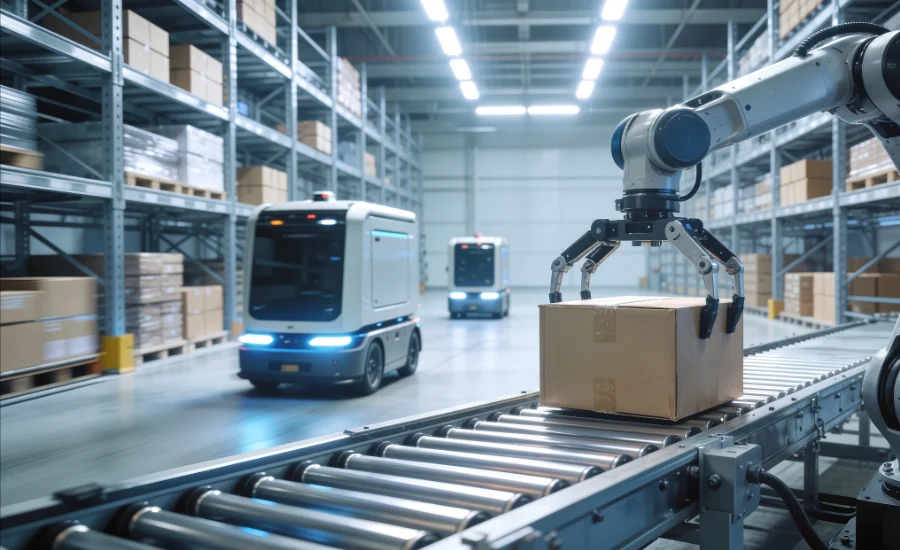
The landscape of modern manufacturing, logistics, and warehousing has undergone a profound transformation in recent years, largely driven by the rapid adoption of industrial mobile robots. These autonomous or semi-autonomous machines, ranging from Automated Guided Vehicles (AGVs) and Autonomous Mobile Robots (AMRs) to more specialized mobile manipulation platforms, are increasingly becoming indispensable assets. Their ability to transport materials, perform inspections, and assist human workers with unprecedented efficiency has propelled them to the forefront of Industry 4.0 initiatives. Market research firms consistently project robust growth for the global industrial mobile robot market, with some forecasts predicting a Compound Annual Growth Rate (CAGR) exceeding 15% to 20% over the next decade, pushing market valuation into tens of billions of dollars. This exponential growth is fueled by factors such as persistent labor shortages, the demand for increased productivity, the need to optimize supply chains, and the imperative to remove human workers from hazardous or repetitive tasks.
However, the very mobility and autonomy that make IMRs so valuable also introduce unique safety challenges. Unlike stationary industrial robots, which are typically guarded within fixed work cells, mobile robots navigate dynamic environments, often interacting with human personnel, other machinery, and unpredictable obstacles. The potential for collisions, crushing injuries, unexpected movements, or even tip-overs necessitates a rigorous and comprehensive safety framework. Early incidents, while relatively few given the widespread adoption, highlighted the critical need for standardized safety protocols that could evolve with the technology. This recognition laid the groundwork for A3’s proactive development of the R15.08 series, an ambitious undertaking designed to address safety from the robot’s design phase through its daily operation and eventual decommissioning.
A Phased Approach to Comprehensive IMR Safety: The R15.08 Series
The development of the ANSI/A3 R15.08 standard has been a multi-year, collaborative effort, involving a broad spectrum of industry experts, including robot manufacturers, system integrators, end-users, safety professionals, and regulatory bodies. This collaborative process ensures that the standard is both technically sound and practically applicable across a wide array of industrial settings. A3, formerly known as the Robotic Industries Association (RIA), has a long-standing history of developing critical safety standards for robotics, with its R15.06 standard for industrial robots being a globally recognized benchmark. The R15.08 series extends this legacy to the specific domain of mobile robots, acknowledging their distinct operational characteristics and risk profiles.
The standard was strategically developed in three distinct but interconnected parts, each addressing a specific phase or aspect of an IMR application’s lifecycle:
-
Part 1 (ANSI/A3 R15.08-1): Requirements for the Mobile Robot Itself.
Released earlier in the development cycle, this foundational part focuses on the inherent safety design and construction of the industrial mobile robot. It specifies requirements for the robot’s hardware, software, and control systems, ensuring that safety features are built into the core design. This includes aspects like emergency stop functionality, protective stops, speed and separation monitoring, safe motion control, and the prevention of unintended operation. This part essentially dictates what manufacturers must incorporate into the robot before it even leaves the factory floor, establishing a baseline of safety performance. -
Part 2 (ANSI/A3 R15.08-2): Requirements for IMR Systems and Applications.
Building upon Part 1, this section addresses the integration of the mobile robot into a broader system and its specific application within a given environment. It covers critical considerations such as the design of the work cell or operating area, the integration of peripheral equipment, the establishment of safe routes and zones, and the interaction between the IMR system and human workers. This part is crucial for system integrators and end-users who are responsible for deploying and configuring IMRs within their facilities, ensuring that the overall system operates safely in its intended context. -
Part 3 (ANSI/A3 R15.08-3-2026): Requirements for Post-Deployment Operational Safety.
The newly released third part completes this comprehensive safety framework. It meticulously outlines the responsibilities and procedures for maintaining an acceptable level of risk throughout the day-to-day operation of industrial mobile robot applications, extending beyond initial deployment and commissioning. This segment is particularly vital as it acknowledges that industrial environments are dynamic and that changes can occur over time, potentially introducing new hazards or altering existing risk profiles. Its focus on the "continued use" of IMR applications in the workplace is a testament to A3’s commitment to lifecycle safety.
Deep Dive into ANSI/A3 R15.08-3-2026: Maintaining Acceptable Risk
ANSI/A3 R15.08-3-2026 represents a forward-thinking approach to safety, recognizing that initial compliance is just the beginning of a continuous journey. The standard is meticulously structured to provide clear guidance on several critical post-deployment responsibilities, aiming to prevent the degradation of safety levels over time due to operational changes, wear and tear, or evolving environmental conditions. Key areas addressed by R15.08-3-2026 include:
-
Ongoing Risk Assessment: The standard emphasizes that risk assessment is not a one-time event. Facilities operating IMRs must conduct periodic reviews of their risk assessments, especially after any significant changes to the system, environment, or operational procedures. This ensures that new or evolving hazards are identified and mitigated proactively. It involves a systematic process of identifying potential hazards, estimating the likelihood and severity of harm, and implementing control measures.

-
Management of Change (MoC): This is arguably one of the most critical components of R15.08-3-2026. Industrial environments are rarely static. The standard provides a robust framework for managing any modifications that occur after an IMR system has been deployed. This includes changes to the physical layout of the facility, alterations to the IMR’s programming or software, modifications to the tasks it performs, integration of new equipment, or even changes in the types of materials being transported. The MoC process requires a thorough evaluation of the safety implications of such changes, ensuring that new risks are assessed and controlled before implementation. This prevents "creep" in risk levels that can occur when minor, unassessed changes accumulate over time.
-
Employee Training and Competency: Human interaction with IMRs is a constant in many industrial settings. R15.08-3-2026 places a strong emphasis on comprehensive and recurrent training for all personnel who interact with or are in the vicinity of industrial mobile robots. This includes operators, maintenance technicians, supervisors, and even general employees working in IMR-occupied zones. Training must cover safe operating procedures, emergency protocols, hazard recognition, and proper interaction techniques. The standard also stresses the importance of ensuring that employees maintain their competency through refresher courses and practical exercises, adapting to any system updates or procedural changes.
-
Periodic Reviews and Inspections: To ensure that IMR systems continue to function as intended and that safety features remain operational, the standard mandates regular inspections and performance verifications. These periodic checks include verifying the functionality of safety sensors, emergency stops, protective fields, and navigation systems. Preventative maintenance schedules are also crucial to address potential wear and tear on components that could compromise safety. Documenting these reviews and inspections is essential for demonstrating ongoing compliance and for identifying trends that might indicate emerging safety concerns.
-
Incident Reporting and Analysis: Learning from experience is fundamental to continuous safety improvement. R15.08-3-2026 encourages robust incident reporting mechanisms, not just for accidents but also for near misses. A thorough analysis of these incidents can reveal underlying causes, systemic flaws, or gaps in training that might not be apparent during routine operations. The insights gained from such analyses are then used to refine safety procedures, update risk assessments, and improve training programs, fostering a culture of continuous learning and safety enhancement.
-
Decommissioning and Disposal: While not explicitly detailed in the initial summary, a comprehensive lifecycle standard would logically include guidelines for the safe decommissioning, dismantling, or repurposing of IMRs. This ensures that even at the end of their operational life, robots do not pose hazards during removal or disposal, addressing environmental and safety concerns associated with their end-of-life management.
Industry Reactions and Broader Implications
The release of ANSI/A3 R15.08-3-2026 has been met with widespread positive anticipation across the automation industry. A spokesperson for A3 underscored the significance of this final part, stating, "The completion of the R15.08 series provides a robust, holistic framework for industrial mobile robot safety, covering the entire lifecycle from design to daily operation. This standard is a testament to our industry’s proactive commitment to ensuring that the benefits of automation are realized without compromising worker safety."
Manufacturers of industrial mobile robots are expected to welcome the clarity and comprehensive nature of the standard. Clear guidelines provide a level playing field and foster confidence among prospective buyers. One leading IMR manufacturer, who preferred not to be named before an official statement, commented, "Having a unified standard that addresses post-deployment safety is incredibly valuable. It helps us guide our customers on best practices and ensures our robots are used in the safest possible manner, building trust in the technology."
For end-users – the factories, warehouses, and logistics centers deploying these robots – R15.08-3-2026 offers an invaluable roadmap for maintaining compliance and minimizing risk. Operations managers will find the detailed guidance on risk assessment, change management, and training particularly useful in their daily operations. "This new section fills a crucial gap," remarked a safety director at a large automotive plant. "Our environments are constantly evolving, and having a structured approach to manage those changes and ensure ongoing training is exactly what we needed to feel fully confident in our IMR deployments."
The broader implications of this standard are far-reaching:
- Enhanced Workplace Safety: The most direct and significant impact will be a tangible improvement in workplace safety, leading to a reduction in accidents and injuries related to IMR operations.
- Increased Adoption and Confidence: By providing clear safety parameters, the standard is likely to boost confidence among businesses hesitant to adopt IMRs due to perceived safety risks, thereby accelerating the growth of the automation market.
- Regulatory Alignment and Harmonization: Industry-led standards often serve as precursors or benchmarks for governmental regulations. R15.08-3-2026 could influence future regulatory frameworks globally, promoting a more harmonized approach to IMR safety. It also positions the U.S. as a leader in industrial automation safety standards.
- Economic Benefits: Safer operations translate to fewer disruptions, reduced downtime, lower insurance premiums, and improved worker morale and retention. These factors contribute positively to a company’s bottom line.
- Innovation Catalyst: With a clear safety framework in place, robot developers and researchers can innovate with greater assurance, knowing the safety boundaries and requirements their new technologies must meet. This could lead to the development of even more sophisticated and inherently safer IMR capabilities.
- Professional Development: The emphasis on ongoing training and competency will likely spur the development of specialized training programs and certifications for IMR operators, technicians, and safety professionals, elevating the skill sets within the industry.
Challenges and the Path Forward
While the release of ANSI/A3 R15.08-3-2026 is a monumental achievement, its successful implementation will face certain challenges. Ensuring widespread adoption and consistent adherence across a diverse range of industries, company sizes, and geographical locations will require ongoing educational efforts from A3 and its partners. The dynamic nature of robotics technology also means that standards must be living documents, requiring periodic reviews and updates to account for new innovations, such as advanced AI-driven decision-making in robots or increasingly complex human-robot collaboration scenarios. Furthermore, the burden of continuous training and maintaining compliance will necessitate dedicated resources from companies utilizing IMRs.
Nevertheless, the completion of the R15.08 series represents a critical step forward for the global automation community. By providing a comprehensive, three-part safety framework that addresses industrial mobile robots throughout their entire lifecycle – from initial design and system integration to daily operation and management of change – A3 has laid a robust foundation for the safe and sustainable growth of this transformative technology. The focus on post-deployment operational safety, in particular, highlights a mature understanding of real-world industrial environments and the continuous vigilance required to protect human workers as they increasingly collaborate with their robotic counterparts. The industrial future, powered by mobile automation, is now poised to be not only more efficient but also significantly safer.