The harsh Colorado sun has weathered countless vehicles, but for one particular specimen, its final resting place in a northeastern Colorado car graveyard offers a poignant epilogue to a largely forgotten chapter of automotive history. A rare 1982 Isuzu I-Mark Diesel sedan, a testament to the Japanese automaker’s early foray into the American market, has been documented, offering a glimpse into a time when Isuzu was more than just a truck manufacturer in the United States. This discovery, made by automotive historian and enthusiast Murilee Martin, highlights the scarcity of early Isuzu passenger cars and underscores the brand’s complex evolution in North America.
Isuzu’s official entry into the U.S. market with its own dealerships began for the 1981 model year. This marked a significant shift from its earlier, more indirect presence. While obscure models like the Bellel and Bellett saw limited importation in the 1960s, the Isuzu name gained wider recognition through its partnerships with American manufacturers. During the mid-to-late 1970s, Isuzu’s engineering prowess powered some of the vehicles marketed as "Buick Opels," a strategic alliance that paved the way for Isuzu’s independent dealerships.
The true groundwork for Isuzu’s widespread recognition in the U.S., however, was laid with the Chevrolet LUV (Light Utility Vehicle). These compact pickup trucks, first arriving as 1972 models, were essentially rebadged Isuzu Faster pickups. The LUV enjoyed a significant run, continuing to be sold alongside the homegrown Chevrolet S-10 even after the S-10’s debut as a 1982 model. This period of overlap meant that for a brief moment in 1982, LUVs and S-10s shared Chevrolet showrooms, illustrating the transitional phase for GM’s light truck offerings.
Furthermore, Isuzu’s engineering footprint extended to the ubiquitous Chevrolet Chevette. The Chevette, a pivotal model for General Motors in the compact car segment, originated from an Isuzu-Opel project that spawned the T Platform in 1973. This versatile platform became the foundation for a global array of vehicles, including the Daewoo Maepsy in South Korea and the Opel Kadett C in Europe. The "Buick Opel by Isuzu" was also a product of this T-Car lineage, demonstrating the extensive reach of Isuzu’s platform development.
In its home market of Japan, the T-Car was known as the Gemini. The I-Mark found in the Colorado junkyard represents an Americanized version of this globally recognized model. While the I-Mark shared its mechanical underpinnings with the U.S.-market Chevette, which remained in production until the 1987 model year, the I-Mark offered body styles – sedans and coupes – that were not available on the hatchback-only Chevette.
At the inception of Isuzu’s independent dealership network in 1981, American consumers were presented with a limited selection: the I-Mark and the P’up. The P’up, as mentioned, was the same truck as the Chevrolet LUV, further emphasizing the synergistic relationship between the two brands. Early marketing efforts for these vehicles, while functional, lacked the memorable flair of the later "Joe Isuzu" advertising campaigns, which debuted in 1986 and became iconic for their satirical take on automotive promises.
The Isuzu Gemini-derived Impulse, a sportier coupe, arrived in the U.S. market as a 1983 model, adding another dimension to Isuzu’s passenger car offerings. Throughout the 1980s, Isuzu continued to sell cars, including a new front-wheel-drive I-Mark, in the United States. However, the escalating popularity of SUVs began to reshape Isuzu’s identity in America, gradually transforming it into primarily a truck manufacturer.
The final Isuzu-manufactured passenger vehicles offered in the U.S. were the 1993 models: the Isuzu Stylus and the Geo Storm. The Geo Storm was, in essence, a rebadged Gemini Coupe, also known by various other names globally, including the Piazza Nero and Impulse. Following this period, Isuzu’s focus in the American market shifted almost exclusively to trucks. A final twist in the brand’s narrative saw Isuzu passenger vehicles being rebadged Chevrolets, such as the I-Series pickup (a rebadged Chevrolet Colorado) and the Ascender SUV (a rebadged Chevrolet Trailblazer). These were the last vehicles to bear the Isuzu nameplate for passenger use in the United States, a far cry from the brand’s early aspirations.
Despite the winding down of its passenger car presence, Isuzu continues to operate in the U.S. market, albeit with a focus on heavy-duty commercial trucks, through Isuzu Commercial Truck of America, Inc. This ongoing presence offers a small consolation to the storied brand, named after one of Japan’s most revered rivers, the Isuzu River.
The junkyard find in Colorado is particularly noteworthy. This is only the second T-Body I-Mark documented by automotive historian Murilee Martin in a boneyard. The first was a 1984 sedan, found in 2019, which represented the final year of production for that iteration of the I-Mark. However, the 1982 model in question presents a unique appeal for two key reasons: its older vintage and, more significantly, its diesel engine.
The 1981-1984 I-Mark was offered with a naturally-aspirated 1.8-liter diesel engine, a powertrain choice that found few takers in the American market. This engine was rated at a modest 51 horsepower and 72 lb-ft of torque, reflecting the era’s focus on fuel efficiency over outright performance in subcompact diesel vehicles. This same diesel engine was also available in the Chevrolet Chevette and its Pontiac 1000/T-1000 twin from the 1981 through 1986 model years, underscoring the shared engineering between these platforms.
The I-Mark Diesel was available with an automatic transmission, but the car discovered in Colorado is equipped with the base five-speed manual transmission. For context, the 1982 I-Mark Coupes featured a four-on-the-floor manual as their base gearbox, highlighting subtle variations within the model range.
The original Manufacturer’s Suggested Retail Price (MSRP) for this 1982 Isuzu I-Mark Diesel sedan was $7,405. Adjusting for inflation, this would equate to approximately $26,305 in 2026 dollars. For comparison, the most affordable four-door Chevrolet Chevette Diesel in the same year had a base price of $6,606, which translates to roughly $23,466 after inflation. This price difference highlights the I-Mark’s positioning as a slightly more premium offering within the T-Body family, despite its shared mechanicals.
Evidence suggests the original buyer was a pragmatist, opting to forgo certain amenities to manage costs. Notably, the car lacks a passenger-side mirror, a detail that points to a deliberate decision to economize.
The vehicle was initially sold new at Fisher Chevrolet-Isuzu in Boulder, Colorado. Fisher Auto remains a dealership in Boulder today, though it now exclusively sells Honda and Acura vehicles, marking another shift in the automotive retail landscape.
Faded University of Colorado Boulder (CU Boulder) parking stickers found on the car suggest that it likely served as a student’s mode of transportation during its early years. Over its operational lifespan, the I-Mark Diesel accumulated just over 150,000 miles. This mileage is considered respectable for a budget-friendly subcompact of its era, especially considering the performance limitations of its diesel engine.
The absence of air conditioning is unsurprising for a base model subcompact from the early 1980s. However, the interior does feature Isuzu’s distinctive "hair and boots" symbols on the vent and heat controls, a charming quirk that adds a touch of personality to the otherwise utilitarian cabin. The aftermarket Audiovox KVX 620 AM/FM/cassette deck suggests the original owner may have opted for a less expensive aftermarket stereo system rather than the factory unit, which would have cost an additional $343 ($1,218 in today’s dollars).
After 44 years of exposure to the intense Colorado sun, the seat upholstery has deteriorated significantly, a common fate for vehicles left exposed in arid climates. A 1997 emissions sticker indicates that the car was still operational nearly three decades ago, a testament to its mechanical resilience.
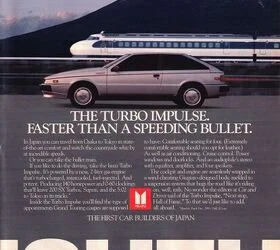
Contemporary reviews from the period suggest a generally positive reception for the I-Mark. By 1983, a significant 89 percent of I-Mark owners indicated they would repurchase the vehicle, a statistic that speaks to owner satisfaction, even if the car’s performance was not its strongest suit. Advertisements from the era sometimes depicted the Gemini Diesel sedan as a vehicle for "action-packed driving," a marketing message that might seem amusing today given the engine’s output, but which aimed to position the car as a practical and economical choice for everyday use.
While turbocharged diesel engines, offering more power, were available in some international markets for the Gemini, the U.S.-market I-Mark was limited to the naturally-aspirated version. For those seeking a deeper understanding of the vehicle’s dynamics, historical road tests provide valuable context on its driving characteristics and performance envelope.
The discovery of this 1982 Isuzu I-Mark Diesel sedan in a Colorado junkyard serves as a tangible reminder of Isuzu’s diverse automotive history in the United States. It represents a period of ambitious expansion, strategic partnerships, and engineering contributions that often go unrecognized. As these early Isuzu passenger cars fade further into obscurity, each surviving example, especially one as unique as this diesel sedan, becomes a valuable artifact, preserving a chapter of automotive heritage that deserves to be remembered. The story of Isuzu in America, though it ultimately pivoted to trucks, began with these humble yet significant passenger cars, and this I-Mark Diesel is a poignant final note in that particular narrative.