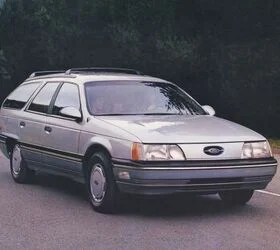
The 1986 Ford Taurus, a groundbreaking vehicle that redefined family transportation and marked a significant shift in American automotive design and engineering, offered an unprecedented level of customization for its era. While the initial introduction focused on its four distinct trim levels – L, GL, LX, and the short-lived MT5 – a deeper examination reveals a sophisticated web of optional features and Preferred Equipment Packages (PEPs) that allowed buyers to tailor their Taurus to an extraordinary degree. This extensive array of choices, largely absent in mass-market vehicles today, underscores Ford’s ambitious strategy to appeal to a diverse consumer base and solidify the Taurus’s position as a leader in its segment.
The Genesis of Choice: Beyond the Base Trims
Ford’s approach to the 1986 Taurus was not simply about offering a few distinct models; it was about empowering the consumer. The base L, the mid-range GL, and the upscale LX were the core offerings, each designed to appeal to different budget and feature preferences. However, the true depth of personalization lay in the plethora of individual options and meticulously curated PEPs. These packages, often building upon each other, represented a strategic move by Ford to bundle popular features, streamline the ordering process for dealers and buyers, and, importantly, drive up the average transaction price of the vehicle.
Exterior Personalization: Making a Statement
The visual identity of a Taurus could be significantly altered through a variety of exterior options. Lace-style aluminum wheels and finned "road wheels" were available across all trims, a clear indication that even the aesthetic appeal of the vehicle was considered a premium upgrade. Even the presence of wheel covers, standard on the LX, meant that any Taurus sporting alloy wheels had a higher initial purchase price, reflecting the desirability of these visual enhancements.
Metallic paint, a popular choice for adding depth and luster, was an available option for every trim level. This expanded the color palette considerably, moving beyond basic gloss finishes to more sophisticated hues. Complementing the paint, a decorative paint stripe was offered, allowing for further customization. The Exterior Accent Group, which added chrome and black trim to exterior moldings and windows, was a notable exception, being standard only on the top-tier LX model, further differentiating the premium trim.
Interior Comfort and Convenience: A Focus on the Driver and Passengers
Inside the 1986 Taurus, the emphasis on optional features continued, particularly in areas of comfort and convenience. While the LX trim came standard with air conditioning, this essential amenity was an optional extra for the L, GL, and MT5 models. For those seeking a more sophisticated climate control experience, the electronic climate control system was available, albeit exclusively on the LX and GL trims.
Power features were also a significant differentiator. Power locks and windows were standard on the GL, providing a solid baseline of convenience for that trim, while being optional for the L and MT5. The driver’s comfort was further enhanced with the option of powered seats, available for either the driver alone or for both the driver and front passenger across all trims.
Beyond these core features, Ford offered a range of specialized options. The popular moonroof, a symbol of premium motoring, was an optional extra, as was Ford’s "Twilight Sentinel" system, which automatically controlled headlights. For the safety-conscious buyer, a diagnostic alert light package was available, supplementing the federally mandated warning lamps with indicators for issues like a burnt-out headlamp, low oil, door ajar, and low washer fluid. Buyers also had the choice of a floor shifter for automatic transmission models, though it was often bypassed in favor of the standard column shifter.
Advanced Technology and Refined Touches
The 1986 Taurus also embraced emerging automotive technologies. The Insta-Clear heated windshield, a feature previously seen on the luxurious Lincoln Town Car, was available on all trims except the MT5, which required an analog RPM gauge due to its manual transmission setup. Keyless entry systems, an upgraded stereo system, and cruise control were all optional extras, further demonstrating Ford’s strategy of offering advanced features as add-ons.
The interior materials themselves offered a degree of choice. While the LX trim came standard with a leather interior, a fully vinyl interior was an option for all other trims, catering to a more budget-conscious buyer. Leather, however, was exclusive to the LX, reinforcing its premium status.
Practicality and Versatility: The Wagon’s Appeal
The Taurus wagon variant offered its own set of specific options designed to enhance its practicality. Front and rear floor mats were available as an option, allowing buyers to choose between two or four mats for greater interior protection. All wagons came standard with a rear-facing third-row seat, enabling seven-passenger capability, along with a load floor extender in the cargo area. For those anticipating heavy usage, a heavy-duty battery and a spare tire were optional across the entire Taurus line. The availability of four different tire sizes, all-season and ranging from 14- to 15-inch diameters, allowed for further personalization based on driving conditions and aesthetic preference.
The Strategic Framework: Preferred Equipment Packages (PEPs)
The true genius of Ford’s 1986 Taurus offering lay in its Preferred Equipment Packages (PEPs). These were meticulously designed bundles of options that aimed to simplify the ordering process while incentivizing buyers to opt for popular feature combinations. There were two PEPs for the L and GL trims, two for the LX, and three for the MT5, indicating a tiered approach to packaging that often increased in scope with higher package numbers.
L Trim PEPs: Entry-Level Enhancements
The L trim’s PEPs, 201A and 202A, were designed to significantly upgrade the base model. Both packages included the V6 engine, the Exterior Accent Group, and air conditioning, bringing essential comfort and style to the entry-level offering. Tinted glass, rocker panel moldings, and an AM/FM stereo were also common to both. The 202A package distinguished itself by adding tilt wheel, power windows, and power locks, representing a substantial leap in convenience and driver comfort.
GL Trim PEPs: Adding Value and Refinement
The GL trim featured PEPs 204A and 205B. These packages, despite their seemingly non-sequential numbering, both introduced air conditioning, power locks, cruise control, and a rear window defroster. The 205B package offered a more comprehensive suite of features, including cornering lamps, lighted entry, dual lighted visor mirrors, and a remote fuel door, elevating the GL’s appeal with added convenience and a touch of luxury.
LX Trim PEPs: Premium Touches for the Top Tier
Given that the LX already boasted a generous standard feature set, its PEPs, 207A and 208A, focused on adding further premium amenities. These packages included a tape player, premium sound system, cruise control, lighted entry, and a power driver’s seat. The 208A package went a step further, incorporating electronic climate control, a digital gauge cluster, keyless entry, and a powered antenna, pushing the boundaries of automotive technology for the era.
MT5 PEPs: Sporty Functionality and Comfort
The MT5, positioned as the sporty variant with its manual transmission and four-cylinder engine, also benefited from its own PEPs: 211A, 212A, and 213A. The most basic package, 211A, added air conditioning and a rear window defroster, along with larger tires, enhancing its performance and comfort credentials. The 212A package introduced cruise control, power locks, power windows, and tilt wheel, bridging the gap between sportiness and everyday usability. The top-tier 213A package offered an extensive array of features, including automatic lamps, cornering lamps, lighted mirrors, a cassette AM/FM stereo, premium sound, and a power driver’s seat, making the MT5 surprisingly well-equipped when fully optioned, albeit still distinct from the LX due to its powertrain.
Color Palette and Interior Harmony: A Mid-80s Aesthetic
The color options for the 1986 Taurus reflected the prevalent mid-1980s aesthetic, with a strong emphasis on earth tones. Ford offered 15 different paint colors, available on every trim. Notably, only six of these were gloss paints, subtly encouraging buyers to opt for the more sophisticated metallic finishes. The palette was dominated by various shades of beige and taupe, with black, white, silver, gray, red, and blue providing the primary non-earth-tone options. A surprising omission was any shade of green, a peculiar choice given the popularity of such colors in other automotive segments. Pearl white and orange tones were also absent.
The interior color choices mirrored this trend, with five options: gray, red, blue, beige, and taupe. Notably absent were white, stone, black, or green interiors, limiting the potential for stark contrast. Color coordination was clearly a priority for Ford, as evidenced by restrictions designed to prevent what they deemed "tacky" combinations. For example, taupe gloss cars were exclusively offered with a taupe interior, and Sandalwood Metallic was limited to a sand beige interior. While a black exterior with a taupe interior might have been questionable, Ford’s efforts to guide consumers towards aesthetically pleasing combinations were evident. A gloss white Taurus, however, offered the broadest flexibility, allowing buyers to choose from any of the five interior colors.
Broader Implications: The Taurus as a Catalyst for Change
The extensive customization options available on the 1986 Ford Taurus were more than just a collection of features; they represented a significant shift in how American automakers approached mass-market vehicle production. Ford recognized that a one-size-fits-all approach was becoming outdated. By offering such a deep well of choices, they not only appealed to a wider range of consumer preferences and budgets but also set a new benchmark for the industry. This level of personalization, unthinkable on many mass-market vehicles today, allowed buyers to imbue their Taurus with a sense of individuality and ownership that contributed to the model’s immense popularity.
The success of the Taurus, fueled in part by its adaptability and the perceived value of its optional packages, had a ripple effect. It demonstrated that consumers were willing to pay for personalized features and that a well-executed strategy of optional equipment could be highly profitable. This paved the way for more complex option lists and package structures in subsequent model years and across the automotive industry.
Looking back, the 1986 Ford Taurus was not just a car; it was a meticulously crafted proposition that offered a glimpse into the future of automotive consumerism. The intricate dance of trim levels, individual options, and strategic Preferred Equipment Packages painted a picture of a vehicle designed to be as unique as the person driving it. As the Taurus entered its first generation, it would continue to evolve, introducing sporty variants, undergoing interior redesigns, and even contributing to the revival of legendary nameplates, solidifying its legacy as a pivotal vehicle in American automotive history.