The transformation of a promising prototype into a reliable, safe, consistent, and cost-effective mass-market product hinges critically on the principles of precision and repeatability in engineering design. These twin pillars ensure that a manufacturing process performs identically every single time, eradicating variability and guaranteeing product integrity. At the Massachusetts Institute of Technology (MIT), this fundamental concept is not merely taught but deeply ingrained in students through course 2.70, "Fundamentals of Precision Product Design," where precision and repeatability are indeed "the name of the game."
The Imperative of Precision Engineering: Safety, Reliability, and Economic Impact
In the intricate world of modern engineering, the margin for error has diminished significantly. From aerospace components where a micron-level deviation can compromise structural integrity, to life-saving medical devices demanding absolute consistency, and high-performance automotive systems requiring flawless operation, precision is paramount. Repeatability in manufacturing processes ensures that every unit produced adheres to the exact specifications of the design, a critical factor for product safety, reliability, and consumer trust. The economic implications of failing to achieve these standards are vast, encompassing costly product recalls, warranty claims, reputational damage, and potential legal liabilities. Industry reports consistently highlight that a substantial portion of product failures and recalls can be traced back to insufficient precision in design or a lack of repeatability in manufacturing. For instance, studies by organizations like the American Society for Quality (ASQ) frequently underscore the billions of dollars lost annually by industries due to quality defects stemming from inadequate design and manufacturing controls. These figures underscore the profound responsibility engineers bear in ensuring that their creations perform as intended, without compromise.
Professor Alex Slocum, the Walter M. and A. Hazel May Professor of Mechanical Engineering and the driving force behind 2.70, articulates this gravity with stark clarity: "As an engineer, you have an extra responsibility to overlook nothing. If you miss something, someone could be hurt or die." This statement serves as a powerful ethical foundation for the course, elevating the technical challenge to a moral imperative. It resonates with historical instances of engineering failures, such as the Challenger space shuttle disaster, the collapse of the Tacoma Narrows Bridge, or numerous product recalls in the automotive and consumer electronics sectors. Each of these events, separated by decades and industries, collectively underscores the dire consequences of design oversights or manufacturing inconsistencies. They are poignant reminders that theoretical knowledge must always be coupled with rigorous application and an unwavering commitment to detail.
MIT’s Legacy in Practical Innovation and Educational Rigor
MIT has long been a crucible for engineering excellence, known for its emphasis on hands-on learning and problem-solving that directly addresses real-world challenges. Established in 1861, the institution’s charter explicitly focused on "the advancement, development, and practical application of science in connection with arts, agriculture, manufactures, and commerce." This foundational philosophy continues to permeate its curriculum, particularly in departments like Mechanical Engineering, which consistently ranks among the top globally. Course 2.70 is a quintessential example of this legacy, designed not merely to impart theoretical knowledge but to cultivate engineers who are immediately capable of tackling complex design and manufacturing hurdles. The course’s evolution reflects the increasing sophistication of modern engineering, moving beyond basic mechanics to embrace the nuanced demands of ultra-precision manufacturing and systems integration.
Professor Slocum’s approach to teaching, though serious in its underlying message, is famously engaging, even playful. He prefers the spelling "FUNdaMENTALs" for the first word of the class name, a deliberate choice to signal that rigorous learning can, and should, be an enjoyable and stimulating experience. This pedagogical philosophy is deeply rooted in his personal history, drawing inspiration from his mother, Mariana Polonsky Slocum, an MIT mathematics student. "She taught me, physics doesn’t care about your feelings," Slocum recounts. This pithy aphorism encapsulates a core tenet of engineering: objective reality, governed by immutable physical laws, must always dictate design choices. However, Slocum deftly transforms this apparent constraint into a catalyst for innovation. "I want [students] to understand that we are governed by the laws of physics, and that is a catalyst for creativity, not a hindrance. It is a hindrance if you forget that." This perspective encourages students to embrace physical principles as a framework within which boundless creativity can flourish, rather than an obstacle to overcome. It’s a call to master the rules so thoroughly that one can then innovate within and even push the boundaries of what is possible, always grounded in scientific truth.
Deconstructing 2.70: A Deep Dive into Methodology
At its core, 2.70 guides students through the principles of deterministic design, a methodology that aims to eliminate all sources of error and variability in a system. Unlike empirical or trial-and-error approaches, deterministic design seeks to predict and control every aspect of a machine’s behavior from first principles. This involves meticulous selection and assembly of machine elements to create robust precision machines, instruments, and systems. Students learn to choose materials, bearings, actuators, and sensors with an acute awareness of their individual performance characteristics and how they interact within a larger system. This level of detail is critical for designing components that operate within nanometer tolerances, as often required in fields like semiconductor manufacturing, advanced optics, or medical robotics.
A cornerstone of the course’s practical application is Slocum’s "Functional Requirements, Ergonomics and Environment, Design Parameters, Analysis, References, Risks, Countermeasures" (FRED PARRC) model. This structured framework provides students with a comprehensive checklist and a systematic approach to tackle complex design problems:
- Functional Requirements (F): Clearly defining what the product must do. This involves translating user needs and market demands into concrete engineering specifications.
- Ergonomics and Environment (E): Considering how users will interact with the product and the conditions under which it will operate. This includes factors like user comfort, ease of use, temperature, humidity, vibration, and dust – all of which can impact performance and reliability.
- Design Parameters (D): Identifying the physical characteristics and dimensions that will achieve the functional requirements, such as material properties, geometric tolerances, and component choices.
- Analysis (A): Employing engineering tools and simulations (e.g., finite element analysis, kinematic analysis) to predict product behavior and performance under various conditions, ensuring designs meet specifications.
- References (R): Consulting existing knowledge, patents, academic literature, and industry standards to leverage established solutions and avoid reinventing the wheel.
- Risks (R): Proactively identifying potential failure modes, safety hazards, and performance limitations. This involves thinking critically about what could go wrong at every stage of the product lifecycle.
- Countermeasures (C): Developing strategies and design modifications to mitigate identified risks, ensuring the product is robust, safe, and reliable even under unforeseen circumstances.
The FRED PARRC model is not just a checklist; it’s a dynamic thought process that instills a holistic view of design. By systematically addressing each element, students learn to anticipate problems before they arise, embedding resilience and reliability into their designs from the outset. This iterative process is further strengthened by a strong emphasis on peer review and evaluation, where students critically assess each other’s designs, identify potential flaws, and offer constructive feedback. This collaborative environment mirrors professional engineering practice, where design reviews are standard procedures for ensuring quality and catching errors early. It also hones students’ communication skills, an essential trait for engineers who must articulate complex technical ideas to diverse audiences.
Student Voices: Bridging Theory and Practice
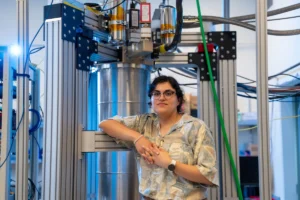
The impact of 2.70 on its students is profound, frequently described as a transformative experience that bridges the gap between theoretical knowledge and practical application. Mariia Smyk, a graduate student in mechanical engineering, offers a vivid characterization of the course’s intensity: "You get a lot of time working on problems that just pop up in engineering. To me, it felt very [representative] of the grad work that I was doing." She also notes that some students might describe the course as "creative chaos," a testament to the fast-paced, problem-centric nature of the learning environment. This "creative chaos" is, in fact, a deliberate pedagogical strategy. By immersing students in realistic, open-ended engineering challenges that often lack a single, obvious solution, the course simulates the ambiguity and complexity of real-world R&D. It forces students to think critically, iterate rapidly, and synthesize information from various sources, preparing them for the unpredictable nature of advanced engineering work. Despite the perceived chaos, students like Smyk consistently agree that the experience drives home the fundamental principles of precision design in an unforgettable way.
Adian Salazar, another graduate student, reflects on the boost in confidence and practical skills gained: "It definitely made me more confident knowing that I can look at what I’m designing and be very deliberate in taking steps toward mitigating the risks that anyone would face when they use a product." This statement encapsulates the course’s success in fostering a proactive, risk-aware mindset. Salazar’s ability to "apply all those really fundamental concepts that I learned in the more theory-heavy classes to real-world machines" highlights the course’s unique strength: transforming abstract equations and principles into tangible design decisions with real-world consequences. This translation of academic theory into practical, applicable knowledge is precisely what industry leaders seek in graduating engineers, especially in fields where product reliability and user safety are non-negotiable. The skills honed in 2.70—systematic risk assessment, deterministic design, and rigorous analysis—are directly transferable to careers in product development, manufacturing engineering, R&D, and quality assurance across a multitude of high-tech industries.
The Broader Impact: Shaping Future Engineers and Industry
The educational model championed by Professor Slocum in 2.70 extends beyond the classroom, holding significant implications for the broader engineering landscape and societal well-being. By producing engineers who are not only technically proficient but also deeply conscious of their ethical responsibilities and the critical importance of precision, MIT contributes directly to safer products, more efficient manufacturing processes, and accelerated technological innovation. In an era where product complexity is ever-increasing, and global competition demands unparalleled quality, the demand for engineers trained in these rigorous methodologies is at an all-time high. Industries ranging from medical device manufacturing, which faces stringent regulatory requirements, to advanced robotics and sustainable energy systems, all rely on a workforce capable of designing and building systems with extreme accuracy and repeatability.
The long-term impact of courses like 2.70 is evident in the careers of its alumni, who go on to lead design teams, found startups, and drive innovation in established corporations. Their training in mitigating risks and applying fundamental physics as a creative catalyst empowers them to tackle grand challenges, whether it’s developing next-generation prosthetics, designing more efficient spacecraft, or creating sustainable manufacturing solutions. By instilling a profound understanding that "physics doesn’t care about your feelings" but also that this objective reality is the very canvas for innovation, MIT’s 2.70 class ensures that its graduates are not just skilled technicians but thoughtful, responsible, and visionary engineers ready to shape a safer, more reliable, and technologically advanced future.