The 2026 Maker Faire Bay Area commenced its landmark 20th-anniversary celebration this Friday, transforming the regional landscape into a sprawling laboratory of creativity, engineering, and whimsical invention. What began in 2006 as a modest gathering of DIY enthusiasts has evolved into a global phenomenon, and the opening day of the 2026 edition proved that the "Greatest Show (and Tell) on Earth" has lost none of its original luster. With an expected attendance exceeding 20,000 guests over the weekend, the event serves as a critical junction for educators, engineers, artists, and hobbyists to exchange ideas that range from the highly technical to the purely aesthetic.
The atmosphere on Friday was characterized by a palpable sense of "joy and mayhem," a sentiment echoed by the organizers who likened the logistical complexity of the event to hosting a wedding for tens of thousands of attendees. Despite the scale, the core mission remains unchanged: celebrating the act of making and the people who dedicate their lives to the pursuit of "what if." On the first day alone, more than 300 exhibits were operational, showcasing everything from high-end robotics and industrial sculpture to interactive games and historical preservation.
Two Decades of Making: A Historical Context
To understand the significance of the 2026 Maker Faire Bay Area, one must look back at the trajectory of the maker movement over the last two decades. Launched by Make: magazine in 2006, the first Faire was held at the San Mateo County Event Center. It arrived at a pivotal moment when the democratization of technology—driven by the advent of open-source hardware like Arduino and the rising accessibility of 3D printing—was beginning to take hold.
Over the last 20 years, the Faire has weathered economic shifts, a global pandemic, and the rapid evolution of the tech industry. It has served as the launching pad for numerous startups and has significantly influenced STEM (Science, Technology, Engineering, and Mathematics) education curricula worldwide. The 2026 event represents a "homecoming" for many veteran makers who have been present since the inaugural year, while simultaneously welcoming a new generation of digital natives who view rapid prototyping and AI integration as standard tools of the trade.
Opening Day Chronology and Exhibit Highlights
The gates opened early Friday morning to a crowd that exceeded initial turnout projections. The first day of the Faire is traditionally geared toward students and educators, providing a more focused environment for interaction before the massive weekend crowds arrive. By midday, the venue was a hive of activity, with the "physician-recommended levels of excitement" mentioned by organizers manifesting in the form of crowded workshops and packed demonstration zones.

Interactive Engineering: Udder Mayhem
Among the most popular exhibits on Friday was "Udder Mayhem," a rhythm-based game that exemplifies the "alt-ctrl" (alternative controller) movement. In this installation, players take on the role of a barista, but instead of traditional buttons or touchscreens, they interact with four silicone udder teats. The goal is to prepare café lattes by squeezing the udders in time with a musical beat.
Technically, Udder Mayhem is a sophisticated marriage of software and hardware. The game was programmed using the Unity engine, while the physical controller interface relies on a Teensy 4.1 microcontroller. The Teensy 4.1 is favored in the maker community for its high-speed processing and abundant I/O pins, making it ideal for low-latency applications like rhythm games. The exhibit saw a steady stream of "repeat offenders"—players returning multiple times to defend their positions on the leaderboard—highlighting the addictive nature of well-executed, tactile gaming.
Robotics and Competition: Tiny Robot Soccer
In the robotics pavilion, "Tiny Robot Soccer" drew significant attention, particularly from the younger demographic. The exhibit features the "Sesame" robot, a palm-sized quadruped designed from the ground up by Dorian Todd. Todd’s creation has already garnered a significant following online, with over 1.1 million combined views on YouTube, but the Faire offered many their first chance to see the robots in physical action.

The soccer matches are played in teams of two, with participants using retro-style game controllers to navigate the quadrupeds. Unlike wheeled robots, quadrupedal movement requires complex kinematics to maintain balance and gait, making the Sesame robot a marvel of miniature engineering. The booth utilized a dynamic camera system to broadcast a "stadium view" on a large screen, complete with live scores and digital effects, creating an immersive e-sports atmosphere. Furthermore, the exhibit encouraged community participation by allowing "non-combat" robots weighing under two pounds to enter the field, fostering an environment of open-source testing and peer-to-peer learning.
The Legacy of the Droid Builders
A perennial favorite, the Bay Area Droid Builders returned with an updated fleet of astromechs and protocol droids. This group represents the pinnacle of collaborative hobbyism, where members share CAD files, 3D printing settings, and wiring diagrams to recreate iconic robots from the Star Wars franchise, such as R2-D2 and BB-8.
For 2026, the builders showcased droids with enhanced "movie-accurate" features, including advanced voice recognition and improved locomotion systems. Beyond the technical spectacle, the group is noted for its philanthropic efforts, frequently appearing at charity events and hospitals. Their presence at the Faire serves as a reminder that the maker movement is often driven by a shared love for pop culture and a desire to bring cinematic fantasy into the tangible world.

The Intersection of Art and Industry
Maker Faire has always been as much about "Art" as it is about "Tech," a fact underscored by the presence of large-scale sculptures and "Art Cars."
Nebula Rider: A Study in Stainless Steel
One of the most striking visual landmarks of the 2026 Faire is "Nebula Rider," a larger-than-life sculpture of a pegasus. Created by sculptor Adrian Landon, the piece is crafted entirely from stainless steel. Landon, known for his work with metal, describes the material as a substance of "infinite possibility and immediate execution."
Nebula Rider is designed to evoke a sense of fluid motion despite its rigid, industrial composition. While non-mechanical, the sculpture’s design suggests a state of flight, aiming to elevate the viewer’s perspective. This installation represents a trend within the maker community toward "Industrial Fine Art," where traditional blacksmithing and welding techniques are used to create emotive, high-concept pieces.

The Cuttlefish and Flash the Tortoise
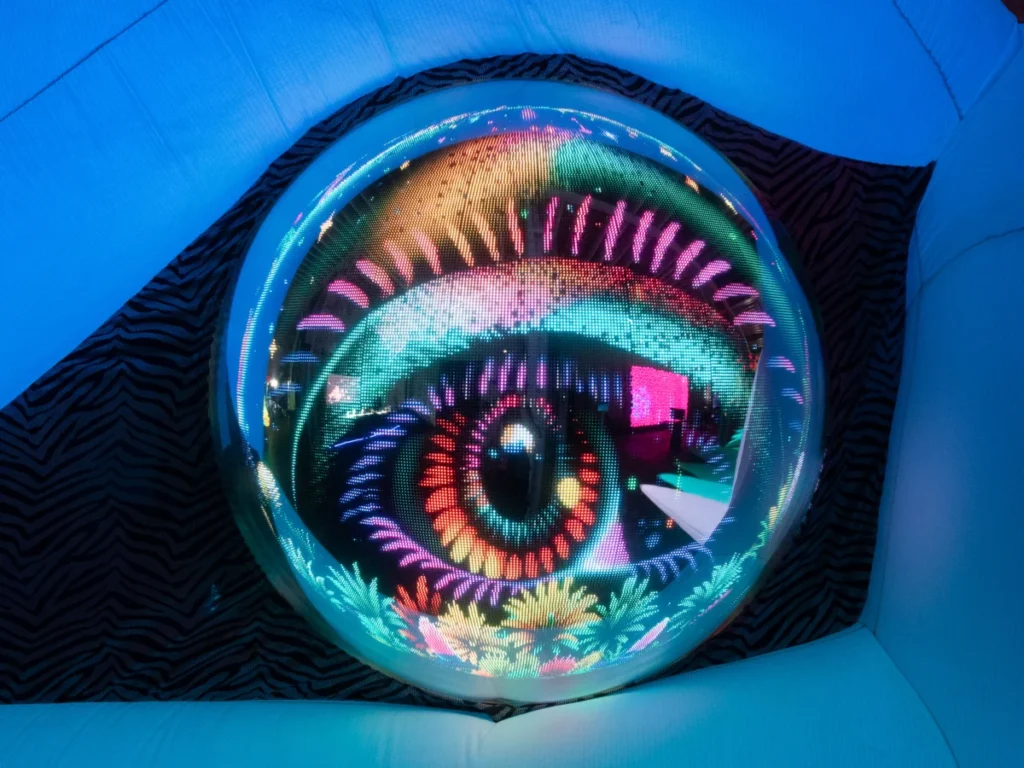
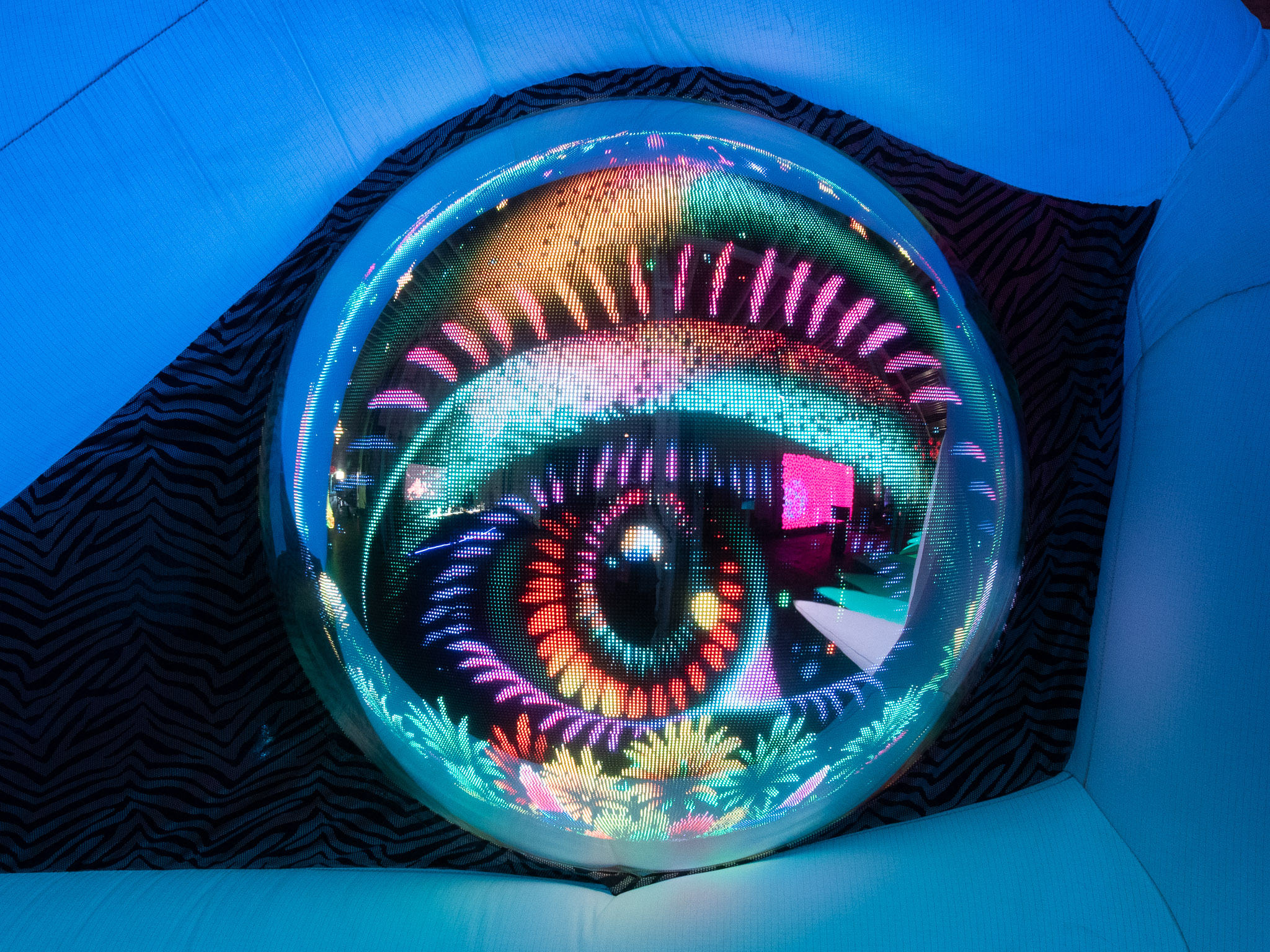
Adding to the visual spectacle are the animatronic and illuminated mobile installations. The "Cuttlefish" is a 35-foot-long inflatable art car that utilizes internal LED arrays to mimic the bioluminescent color-changing abilities of its biological namesake. Accompanying it is "Flash the Tortoise," a mobile unit constructed with custom-formed HDPE (High-Density Polyethylene) paneling.
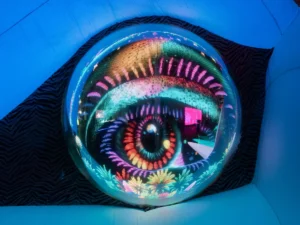
These installations feature an interactive component where attendees can "play the lights" using a connected piano or drum set. In the darkened halls of the exhibition space, these glowing giants create a surreal, underwater-esque environment, demonstrating how makers use light and sound as structural elements in their work.
Maritime History: The C.A. Thayer
Contrasting the high-tech robotics is the inclusion of the C.A. Thayer, a historic sailing vessel represented by educators from the San Francisco National Maritime Park Association. The exhibit offers a "step back in time," focusing on the "Age of Sail" and the maritime history of the Barbary Coast during the California Gold Rush. This inclusion highlights the Faire’s commitment to "traditional making"—the crafts and skills that built the modern world, such as woodworking, rigging, and navigation. It provides a necessary perspective, reminding attendees that today’s engineers are standing on the shoulders of the shipwrights and navigators of the 19th century.

Supporting Data and Economic Impact
The scale of Maker Faire Bay Area 2026 is supported by impressive data. According to previous economic impact reports for similar-scale events, the Faire contributes millions of dollars to the local economy through tourism, hospitality, and retail. Furthermore, the "Maker Movement" has become a significant driver in the hardware startup ecosystem. It is estimated that a significant percentage of hardware-based companies currently operating in Silicon Valley have founders or early employees who were influenced by Maker Faire.
In terms of education, the "Maker Educator" track at the Faire has become a vital resource for teachers. With the integration of the "Next Generation Science Standards" (NGSS) in many schools, the hands-on learning techniques demonstrated at the Faire are increasingly being adopted in classrooms to foster critical thinking and problem-solving skills.
Broader Impact and Future Implications
As the 2026 Maker Faire Bay Area moves into its weekend schedule, the broader implications of the event remain clear. The Faire is more than just a collection of cool gadgets; it is a testament to human ingenuity and the power of community. In an era often dominated by digital consumption and "screen time," the Faire promotes a return to "physicality"—the act of building, breaking, and repairing things with one’s own hands.

The 20th anniversary marks a transition point. As we look toward the next decade, the integration of AI, sustainable materials, and distributed manufacturing (like local 3D printing hubs) will likely redefine what it means to be a "maker." However, if the opening day of 2026 is any indication, the fundamental drive to create, share, and inspire remains as potent as it was twenty years ago. The "joy and mayhem" of the Bay Area Maker Faire continue to serve as a vital spark for the innovators of tomorrow.