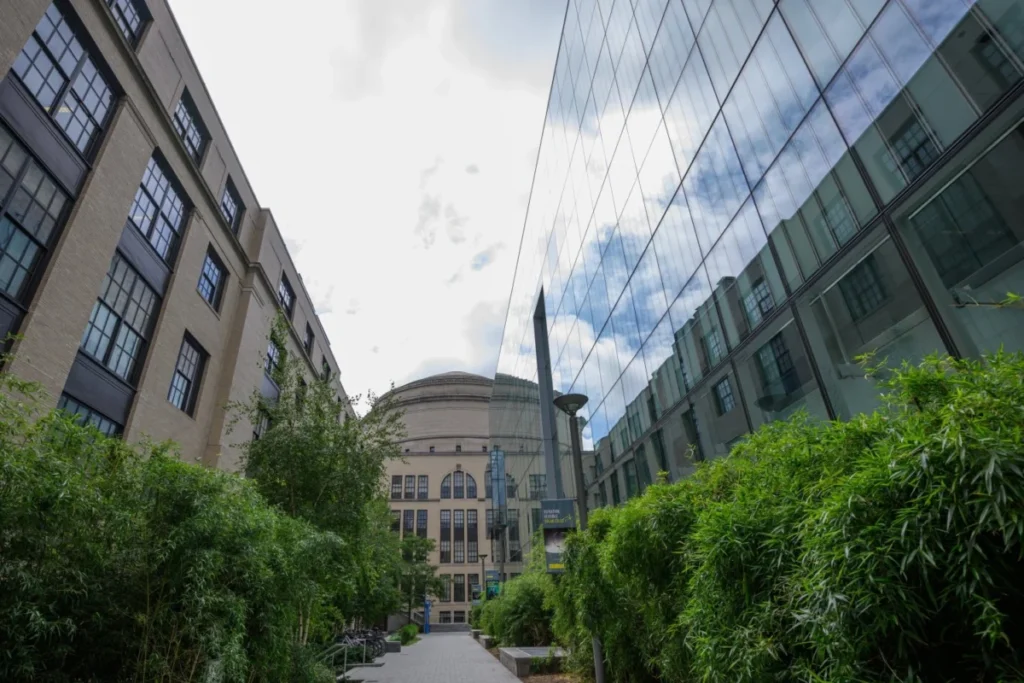
The Massachusetts Institute of Technology (MIT) has officially announced the launch of the MIT Quantum Initiative (QMIT) Postdoctoral Fellowship program, a strategic endeavor designed to catalyze interdisciplinary research and cultivate the next generation of pioneers in the rapidly evolving landscape of quantum science and technology. Supported by a significant grant from the Gordon and Betty Moore Foundation, this fellowship represents a cornerstone of MIT’s broader mission to bridge the gap between fundamental quantum theory and transformative real-world applications. By providing elite early-career researchers with the resources, mentorship, and collaborative environment necessary to explore the frontiers of the field, QMIT seeks to address some of the most complex scientific and societal challenges of the 21st century.
A Strategic Vision for the Quantum Era
The establishment of the QMIT Fellowship comes at a pivotal moment in the history of physical sciences. Quantum science has transitioned from a theoretical framework of the early 20th century into a robust technological engine capable of redefining computation, secure communication, and high-precision sensing. To maintain leadership in this global race, MIT launched the MIT Quantum Initiative (QMIT) in December 2025 as an Institute-wide strategic priority. The initiative serves as a unifying platform, bringing together the diverse expertise of researchers from across the campus to accelerate discovery and industrial application.
The new fellowship program is the latest extension of this vision. It is specifically tailored to encourage "cross-pollination"—the idea that the most significant breakthroughs in quantum technology will occur at the intersection of traditional disciplines. While quantum research has historically been the domain of theoretical and experimental physicists, the QMIT program explicitly invites scholars from chemistry, materials science, electrical engineering, and even the biological and Earth sciences to apply their unique perspectives to quantum problems.
Anantha Chandrakasan, MIT provost and the Vannevar Bush Professor of Electrical Engineering and Computer Science, emphasized the importance of attracting top-tier talent during this transformative period. He noted that quantum science and technology are opening entirely new pathways for solving intractable problems in materials development, sensing, and global communications. According to Chandrakasan, the fellowship program is a vital tool for MIT to attract the creative minds whose work will define the trajectory of the field for decades to come.
The Role of the Gordon and Betty Moore Foundation
The fellowship’s realization is made possible through the philanthropic support of the Gordon and Betty Moore Foundation. Named after the co-founder of Intel and his wife, the foundation has a long-standing history of supporting "high-risk, high-reward" fundamental science. Gordon Moore, the visionary behind Moore’s Law, understood that the advancement of electronics and computation depends on a deep understanding of the physical world at the atomic level.
By funding this postdoctoral program, the Moore Foundation is continuing that legacy. The grant allows MIT to offer competitive stipends and research budgets, ensuring that the fellows have the financial independence to pursue original, often unconventional, research paths. This support is critical at a time when the global competition for quantum talent is intensifying, with major tech corporations and national governments vying for the same pool of specialized researchers.
Interdisciplinary Frontiers: From Biology to Artificial Intelligence
One of the most distinctive features of the QMIT Fellowship is its commitment to interdisciplinary exploration. Danna Freedman, the Frederick George Keyes Professor of Chemistry and faculty director of QMIT, highlighted that the future of the field belongs to those who can combine deep quantum expertise with "new perspectives from other fields."
The program identifies several key areas where quantum science is expected to make a profound impact:
Quantum Biology and Earth Sciences
While quantum mechanics describes the behavior of atoms and subatomic particles, researchers are increasingly finding that these effects play a role in complex biological systems. The QMIT fellowship encourages research into "quantum biology," such as understanding how quantum coherence might influence photosynthesis or how certain species use quantum sensing for navigation. Similarly, applying quantum sensors to Earth sciences could lead to unprecedented precision in monitoring seismic activity or changes in the Earth’s gravitational field, providing new data for climate science and resource management.
Quantum Materials and Chemistry
The development of new materials is essential for building more stable and scalable quantum computers. Fellows will work on identifying and synthesizing quantum materials that exhibit unique properties, such as high-temperature superconductivity or topological insulation. In the realm of chemistry, quantum simulation offers the potential to model molecular interactions with a level of accuracy that is impossible for classical computers, potentially revolutionizing drug discovery and catalyst design.
The Convergence of AI and Quantum Science
The synergy between Artificial Intelligence (AI) and quantum computing is another area of intense focus. Quantum algorithms have the potential to accelerate machine learning processes, while AI can be used to optimize the design and error-correction protocols of quantum hardware. The QMIT program seeks to support researchers who are positioned at this high-tech nexus.
Chronology of the MIT Quantum Initiative
The launch of the fellowship program is part of a multi-year roadmap for quantum science at MIT. To understand the significance of this announcement, it is helpful to look at the timeline of the initiative’s development:
- Prior to 2025: MIT maintains a decentralized but world-class presence in quantum research through various departments and labs, including the Center for Ultracold Atoms (CUA) and the Research Laboratory of Electronics (RLE).
- December 2025: MIT officially launches QMIT as a strategic initiative. This move centralizes the Institute’s quantum efforts, providing a unified voice and a clear structure for industry partnerships and federal engagement.
- Early 2026: The Moore Foundation grant is secured, and the framework for the postdoctoral fellowship is finalized.
- Academic Year 2026: The inaugural cohort of QMIT Fellows will begin their appointments. These researchers will be embedded in labs across the campus, serving as "intellectual glue" between different research groups.
- Fall 2026: Applications for the second cohort of fellows will open, signaling the program’s long-term sustainability and growth.
The MIT Quantum Ecosystem: A Collaborative Network
Fellows selected for the QMIT program will not work in isolation. Instead, they will be integrated into one of the world’s most sophisticated scientific ecosystems. This network includes:
- The Research Laboratory of Electronics (RLE): A premier center for interdisciplinary research that has been at the heart of MIT’s technological innovations for decades.
- MIT Lincoln Laboratory: A federally funded research and development center that focuses on national security. Lincoln Lab provides fellows with access to state-of-the-art fabrication facilities and real-world challenges in quantum communication and sensing.
- The MIT-Harvard Center for Ultracold Atoms (CUA): A collaborative effort that pushes the boundaries of atomic physics, providing a foundation for quantum simulation and clock technology.
- Academic Departments: Fellows will have affiliations with the Departments of Physics, Chemistry, Materials Science and Engineering, and Electrical Engineering and Computer Science (EECS).
This collaborative environment is designed to foster mentorship. Fellows will have the opportunity to work with senior faculty who are leaders in their respective fields, while also mentoring graduate and undergraduate students, thereby strengthening the entire academic pipeline.
Data and Economic Implications of the Quantum Race
The investment in the QMIT Fellowship is reflective of a broader global trend. The quantum technology market is projected to grow from roughly $1 billion in 2023 to over $100 billion by the early 2040s, according to various industry analyses. This growth is driven by the anticipated "Quantum Advantage"—the point at which quantum computers can perform tasks that are impossible for the world’s most powerful supercomputers.
However, a major bottleneck to this growth is the "quantum talent gap." A report by McKinsey & Company recently noted that the demand for quantum-ready jobs outpaces the supply of qualified candidates by a significant margin. By establishing this fellowship, MIT is directly addressing this shortage. The program is not just an academic exercise; it is an economic and national security imperative. Quantum-resistant cryptography and ultra-sensitive quantum radars are among the technologies that will define the geopolitical landscape of the mid-21st century.
Official Responses and Broader Impacts
The leadership at MIT views the QMIT Fellowship as a catalyst for what they describe as "the impossible made possible." Ian Waitz, MIT’s vice president for research and the head of QMIT, remarked that quantum research is on the verge of enabling capabilities that were once relegated to science fiction. He described the fellowship as an investment in "outstanding postdoctoral scholars who will help bring tremendous new quantum capabilities to unforeseen, creative, and transformative applications."
The broader scientific community has responded to the announcement with optimism. Experts suggest that by focusing on interdisciplinary "boundary-crossers," MIT is setting a new standard for how quantum science should be taught and practiced. The traditional "siloed" approach to science is increasingly seen as an obstacle to the complex engineering required to build functional quantum systems.
As the inaugural QMIT Fellows prepare to begin their work in 2026, the expectations are high. These researchers are tasked with more than just publishing papers; they are expected to lay the groundwork for a new era of technology. Whether it is through the discovery of a new quantum material or the development of a more efficient quantum algorithm, the work done under the auspices of this fellowship will likely have a lasting impact on how society computes, communicates, and understands the physical universe.
In conclusion, the MIT Quantum Initiative Postdoctoral Fellowship is more than a scholarship; it is a strategic intervention in the global scientific landscape. By leveraging the philanthropic support of the Moore Foundation and the unparalleled intellectual resources of MIT, the program is poised to produce the leaders who will navigate the complexities of the quantum frontier, ensuring that the "extraordinary opportunities" of this field are fully realized for the benefit of society.