In the crushing depths of the Earth’s oceans, where volcanic activity creates environments that would be instantly lethal to most known life forms, a resilient microorganism is providing scientists with a new understanding of one of the most fundamental chemical processes on the planet. Researchers at the Max Planck Institute for Marine Microbiology in Bremen have successfully decoded how the deep-sea archaeon Methanocaldococcus infernus performs nitrogen fixation at temperatures exceeding the boiling point of water. This discovery not only sheds light on the evolutionary history of life but also holds profound implications for the future of sustainable agriculture and green biotechnology.
Nitrogen fixation is the biological process that converts atmospheric nitrogen gas (N2) into ammonia (NH3), a form of nitrogen that plants and animals can readily incorporate into proteins and DNA. While nitrogen makes up approximately 78 percent of the Earth’s atmosphere, it is largely inaccessible to the vast majority of biological life. The two nitrogen atoms in an N2 molecule are held together by a triple chemical bond, one of the strongest bonds in nature. Breaking this bond requires a massive input of energy and a specialized suite of biological tools.
The Extreme Biology of Methanocaldococcus infernus
The organism at the center of this study, Methanocaldococcus infernus, is a hyperthermophilic archaeon originally isolated from hydrothermal vent fluids. These "black smokers" on the seafloor emit mineral-rich water at temperatures that can reach several hundred degrees Celsius, though the microbes typically thrive in the slightly cooler zones where these fluids mix with seawater. Even in these peripheral zones, temperatures often hover around 90°C to 100°C.
Tristan Wagner, head of the Microbial Metabolism Research Group at the Max Planck Institute, sought to understand how the molecular machinery of this organism remains functional under such punishing conditions. Most proteins begin to denature—essentially "cooking" like the white of an egg—at temperatures far below the boiling point. For Methanocaldococcus infernus, however, these extreme temperatures are a requirement for life.
The research team managed to "tame" this elusive microbe in a laboratory setting, a feat that required recreating the high-pressure, oxygen-free, and high-temperature conditions of the deep sea. They successfully induced the organism to fix nitrogen at temperatures above 90°C, providing the first clear evidence of its metabolic efficiency in a controlled environment.
The Engine of Life: The Nitrogenase Enzyme
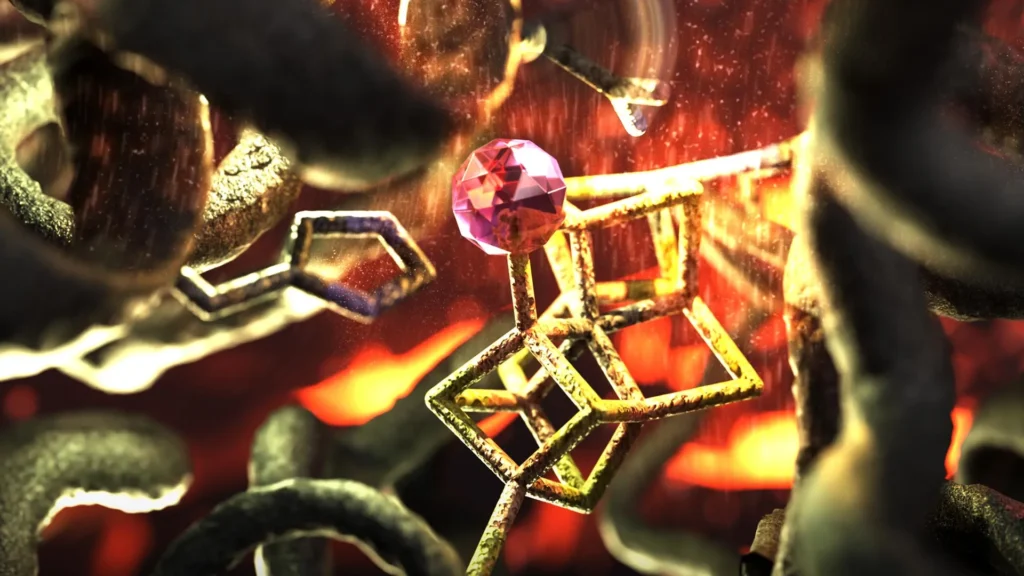
The biological catalyst responsible for breaking the nitrogen triple bond is an enzyme known as nitrogenase. In the hierarchy of biological molecules, nitrogenase is considered one of the most complex and sophisticated. Its functionality relies on metallocofactors—metal-containing clusters that serve as the "active site" where the chemical reaction takes place.
Historically, scientists have identified three primary types of nitrogenase based on the metals found in their cofactors: molybdenum (Mo), vanadium (V), and iron-only (Fe). The molybdenum-based nitrogenase is the most common and is known for its high catalytic efficiency. However, the relationships between these three types and their evolutionary origins have remained a subject of intense scientific debate.
The nitrogenase found in Methanocaldococcus infernus is unique. According to Wagner, it appears to be a structural hybrid, sharing characteristics with all three known forms of the enzyme. This suggests that the nitrogenase of this deep-sea archaeon may be a modern relative of the "ancestral nitrogenase"—the original blueprint from which all current nitrogen-fixing systems evolved billions of years ago.
Methodology: From the Deep Sea to the Synchrotron
Investigating an enzyme that functions at 90°C presented significant technical hurdles. The team, led by first author Nevena Maslać, had to perform every step of the isolation and purification process under strictly anaerobic (oxygen-free) conditions. Nitrogenase is famously sensitive to oxygen; even brief exposure can permanently destroy the delicate metal clusters at its core, rendering the enzyme useless for study.
Once the enzyme was isolated, the researchers observed its remarkable thermal stability. While standard enzymes from land-based bacteria would disintegrate at such heat, the Methanocaldococcus infernus nitrogenase only began to lose its structural integrity at 90°C, with significant portions remaining intact at 98°C. Interestingly, the enzyme was found to be inactive at room temperature, indicating that it is specifically "tuned" to the thermal energy of volcanic vents.
To visualize the enzyme at a molecular level, the team turned to the Institut de Biologie Structurale in Grenoble, France. Using a synchrotron—a massive circular particle accelerator—they generated high-intensity X-rays to perform X-ray crystallography. This allowed the researchers to map the enzyme’s structure at near-atomic resolution.
The structural analysis confirmed that this nitrogenase is the simplest version of the enzyme ever studied. Despite its simplicity, it contains the structural hallmarks of the molybdenum, vanadium, and iron-only families. This "minimalist" yet versatile design supports the theory that ancient life used a similar, multi-functional enzyme before specializing into the different versions seen in modern bacteria.
A Surprising Molecular State
The most significant breakthrough occurred when the researchers analyzed the molybdenum metallocofactor within the enzyme. While they confirmed the presence of molybdenum, the synchrotron data revealed something entirely unexpected: a "turnover" state that had never been seen before in a molybdenum-containing nitrogenase.
Previously, this specific intermediate state—a snapshot of the enzyme in the middle of the reaction—had only been observed in the less efficient vanadium and iron-only versions of the enzyme. The fact that it was caught in action within a molybdenum-based system suggests that all nitrogenases, regardless of their metal center, likely follow a universal chemical mechanism to rip apart the nitrogen molecule.
This discovery provides a "missing link" in the study of bio-catalysis. It suggests that the fundamental physics of nitrogen fixation have remained constant for billions of years, even as organisms adapted to different environments and evolved different metal preferences for their enzymes.
Chronology of Discovery and Research Milestones
The journey to this discovery spans several decades of marine exploration and laboratory innovation:
- Late 20th Century: Discovery of hydrothermal vents and the realization that life can exist without sunlight, fueled by chemical energy (chemosynthesis).
- Early 2000s: Isolation of Methanocaldococcus infernus from deep-sea samples, identifying it as a hyperthermophile.
- 2015-2020: Advancements in anaerobic laboratory techniques at the Max Planck Institute allow for the cultivation of extreme archaea under controlled conditions.
- 2021-2023: Wagner’s team successfully isolates the heat-resistant nitrogenase and begins the arduous process of crystallization.
- 2024: High-resolution synchrotron analysis in Grenoble reveals the hybrid structure and the "turnover" state, leading to the current publication.
Industrial and Environmental Implications
The implications of this research extend far beyond the realm of evolutionary biology. Currently, the world relies on the Haber-Bosch process to produce the ammonia needed for industrial fertilizers. This process, invented in the early 20th century, requires high pressures and temperatures (typically 400-500°C) and consumes approximately 1% to 2% of the world’s total energy supply annually. Furthermore, because it often uses natural gas as a hydrogen source, it is a significant contributor to global carbon dioxide emissions.
By understanding how nature performs this same reaction at much lower temperatures (90°C vs 500°C) and without the need for fossil fuels, scientists hope to develop "green" alternatives for ammonia production.
"The dream is to develop bio-inspired catalysts that can function under milder conditions," says Wagner. "If we can mimic the efficiency of these deep-sea enzymes, we could potentially revolutionize how we produce fertilizer, making it more local and less carbon-intensive."
Furthermore, Methanocaldococcus infernus is a methanogen, meaning it produces methane as a byproduct of its metabolism. In a future "green hydrogen" economy, such organisms could be utilized in bioreactors to convert hydrogen and carbon dioxide into methane or ammonia, providing a sustainable way to create fuels and chemicals.
Analysis of Agricultural Impact
The potential to engineer crops that can fix their own nitrogen—an idea Wagner speculates on—remains a "holy grail" of plant science. Currently, legumes like soy and peas have symbiotic relationships with nitrogen-fixing bacteria, but major cereal crops like wheat, corn, and rice do not. They require heavy applications of synthetic fertilizer.
The runoff from these fertilizers is a primary cause of eutrophication, where excess nutrients lead to oxygen-depleted "dead zones" in oceans and lakes. An agricultural system that utilizes the robust, heat-stable principles of archaeal nitrogenase could theoretically reduce the environmental footprint of global food production.
Final Perspectives
The study of Methanocaldococcus infernus serves as a reminder that the most extreme environments on Earth often hold the keys to understanding life’s most basic processes. By looking backward at an "ancestral" version of nitrogenase, the researchers at the Max Planck Institute have provided a roadmap for looking forward.
As the scientific community continues to grapple with the twin challenges of climate change and food security, the "extraordinary chemistry" of deep-sea microorganisms offers more than just academic interest. It provides a biological blueprint for a more sustainable industrial future, proving that even in the dark, boiling depths of the ocean, nature has already solved the problems we are just beginning to tackle.