The critical importance of mobility in early childhood development cannot be overstated. For infants and toddlers, the ability to move and explore is fundamental to honing physical coordination, fostering cognitive growth, and cultivating a sense of independence. However, for children facing certain health conditions, achieving this essential mobility often requires significant support from caregivers and specialized assistive devices. In response to this profound need, a groundbreaking initiative is leveraging the power of 3D printing and community collaboration to provide children with bespoke mobility solutions, bypassing traditional healthcare system bottlenecks and offering a pathway to enhanced autonomy and joy.
The Genesis of MakeGood: Addressing a Critical Gap
The story of MakeGood began in 2021 in the vibrant city of New Orleans. Noam Platt, the organization’s founder, was inspired to action when a local family approached him seeking assistance in designing a specialized chair for their son, who has cerebral palsy. This personal plea highlighted a significant gap in accessible, affordable, and customizable assistive technology for children. From its inception, MakeGood embraced 3D printing not just as a manufacturing method, but as a core tenet of its mission. The technology’s inherent ability to produce low-cost devices and facilitate rapid design iteration and customization proved to be an ideal fit for developing effective mobility aids. Furthermore, 3D printing enabled MakeGood to distribute manufacturing across a decentralized network of vetted makers, ensuring local production and faster delivery of these vital devices. The organization’s commitment extends beyond mere provision; assistive devices are supplied to families entirely free of charge, eliminating the often-arduous process of navigating insurance approvals and the complexities of the conventional durable medical equipment (DME) system.
"Our mission is to design high-quality, effective assistive technology that anyone can make for themselves," Platt articulated. "Everything we design can be made by individuals, skipping the insurance companies, the DME system, the healthcare system, etc. It really is about radical self-reliance." This philosophy underscores a commitment to empowering families and fostering a sense of agency in acquiring necessary mobility aids.
The Rise of the Vetted Maker Network

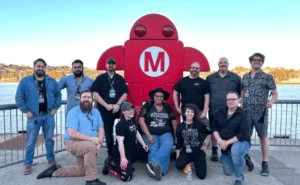
MakeGood’s innovative model hinges on its expansive network of over 1,100 makers. This diverse group ranges from passionate individual hobbyists who have embraced 3D printing to established full-service manufacturers seeking to contribute to their communities. These "vetted makers" are crucial to the organization’s success, forming the backbone of its decentralized production capabilities.
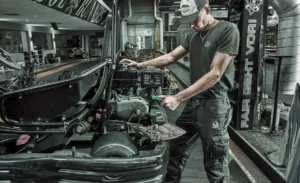
One such significant contributor to the MakeGood network is General Pattern Company, a fourth-generation, family-owned business specializing in molding and moldmaking, located in Blaine, Minnesota. While additive manufacturing has long been a part of General Pattern’s operational toolkit – employed for purposes such as Coordinate Measuring Machine (CMM) fixturing, part prototyping, and mold tooling – their involvement with MakeGood represents a dedicated expansion into community-focused additive manufacturing. The company’s established commitment to community service and outreach aligns perfectly with MakeGood’s altruistic objectives.
Andrew Fielder, a metrology engineer at General Pattern, initially discovered MakeGood while researching personal 3D printing projects. Recognizing the profound synergy between MakeGood’s mission and General Pattern’s corporate values, he presented the idea of the company becoming a designated manufacturer to CEO and third-generation owner, Denny Reiland.
"The reason I brought it to him was from what I’ve learned of Denny in the year I’ve worked here, is any excuse he has to give back to the community, he’s all about," Fielder explained. "It took about a minute of conversation with him, and he loved it." This swift endorsement from leadership highlights the company’s dedication to leveraging its expertise for social good.
Following Reiland’s enthusiastic approval, Fielder embarked on the rigorous capability tests required by MakeGood to achieve the "vetted maker" designation. This certification places Fielder on MakeGood’s interactive map of makers, enabling him to fulfill assistive device requests within approximately a 200-mile radius of his location in the Minneapolis region. Families in need submit their requests through the MakeGood portal, where local makers can then claim these projects and commence production.
"We make sure each vetted maker has a tuned printer by required test prints, and then we also require several photos," Platt elaborated on the vetting process. "At this touchpoint, we can screen for ill-fitting parts, warped prints, and other errors. We find very, very few problems." This meticulous quality control ensures that the devices produced meet MakeGood’s high standards for safety and functionality.

The Toddler Mobility Trainer (TMT): A Beacon of Independence
While MakeGood facilitates the design and production of a variety of assistive devices, its primary focus is on providing access to Toddler Mobility Trainers (TMTs). These innovative devices, often described as miniature wheelchairs, are specifically engineered to empower children with conditions such as cerebral palsy and spina bifida, or those with diverse physical abilities, to navigate their environment with greater ease and autonomy.
The need for such devices is particularly acute given the systemic challenges within traditional healthcare. "Many insurance companies deny families mobility devices, or make them wait five-plus years between supplying them with devices," Platt stated. "The TMT is a low-cost effective solution that fills those gaps." This stark reality underscores the critical role MakeGood and its network play in bridging crucial gaps in pediatric care.
Beyond its functional purpose, the TMT offers a profound level of autonomy that distinguishes it from conventional mobility aids. Unlike a stroller or a carrier, a TMT is designed to be operated by the child, granting them a newfound sense of control and independence.
"At this age, having something a little more age-appropriate makes a big difference to the kids," commented Marcy Krosch, senior vice president of sales at General Pattern. The aesthetic and functional appropriateness of the TMT can significantly impact a child’s self-perception and engagement with their surroundings.
Andrew Fielder further elaborated on the device’s developmental role: "The design is intended to be a kind of steppingstone into a full-sized mobility device." MakeGood reports that many children successfully transition from the TMT to a walker as they grow, with the 3D-printed devices playing a vital role in building the physical strength and confidence necessary for this progression.

The TMT design itself is a testament to collaborative innovation. It was conceived by Schuyler Livingston of LINK PBC, who responded to an initial Reddit post from Platt seeking a 3D printable version of an older, CNC-cut wooden design. "He put in the effort to design clever ways to assemble large components using a regular consumer 3D printer," Platt acknowledged, highlighting Livingston’s ingenuity in adapting the design for accessible manufacturing.
The TMT is specifically engineered for children aged 1 to 8 years. Its design is optimized for filament 3D printers with a minimum build volume of 256 x 256 x 256 mm. This specification allows for flexibility: larger printers can produce certain components, such as wheels, in a single print, while users with smaller machines can print these parts in sections. The Bambu Lab 3D printers have emerged as the most commonly utilized machines within the MakeGood maker network, prized for their reliability and performance.
"Part of the magic is that all of the printers work basically the same, ensuring repeatability," Platt noted, emphasizing the consistency achieved across different makers and machines. This uniformity is essential for maintaining quality and ensuring that the devices function as intended.
The Manufacturing Process: Precision and Personalization
The production of a TMT at General Pattern exemplifies the meticulous integration of 3D printing technology with a commitment to quality and personalized service. The company has successfully manufactured eight TMTs to date, utilizing a combination of its five Bambu 3D printers and Fielder’s personal machine at home. The printing process for the approximately 40 structural components required for each device is substantial, demanding roughly 330 hours of print time, spread across about 28 individual print jobs.
The primary material used for these structural components is PETG, chosen for its durability and ease of printing. For the cushioning and other softer elements, General Pattern employs either standard TPU or an innovative active-foaming TPU. This latter material offers a unique advantage: its density can be precisely controlled by adjusting the print temperature, allowing for customized cushioning levels.

Fielder shared an anecdote about the learning curve associated with the active-foaming TPU. "The material bonds super well to the build plate. Turns out, unfortunately too well. So I did ruin a build plate in the process," he admitted. However, a simple solution—applying a layer of blue painter’s tape to the build plate—rectified the issue for subsequent prints. This experience highlights the practical problem-solving inherent in additive manufacturing. The success with this material has been so significant that General Pattern now utilizes it for prototyping foam parts for its broader customer base, which are later produced through traditional injection molding.
The assembly of each TMT is remarkably straightforward, requiring only a few readily available off-the-shelf items: two bearings, two washers, and six bolts. James Meyer, a colleague from General Pattern’s metrology department, collaborates with Fielder on the assembly process. "With the two of us, it probably takes around an hour," Fielder estimated. He further described the intuitive assembly: "The parts dovetail and kind of slide into place, and then as you assemble it further, one component locks in another component." This user-friendly assembly design is crucial for the decentralized maker model, minimizing the need for specialized tools or extensive training.
Beyond the structural integrity and functional design, MakeGood actively incorporates a personal touch into the TMTs. Families requesting devices are encouraged to provide details about their child’s favorite colors and interests. Makers like Fielder then seek opportunities to integrate these preferences into the device’s aesthetics, transforming a functional aid into a cherished possession.
Broader Impact and Future Implications
The impact of MakeGood’s initiative extends far beyond the immediate provision of mobility devices. It represents a paradigm shift in how assistive technology can be developed and distributed, emphasizing community involvement, technological accessibility, and a human-centered approach.
General Pattern has set a tangible goal of producing one mobility device per month for a family within the MakeGood network, demonstrating a sustained commitment to the program. Fielder views this endeavor as a powerful showcase for additive manufacturing: "I think it’s a really good way for both manufacturers and hobbyists alike to be able to do something that’s not only a useful 3D print, but also something that shows the world some other uses of additive manufacturing."

Krosch of General Pattern expressed immense pride in the company’s involvement: "It makes me incredibly proud to be part of this company, and seeing our team committed to making a difference." This sentiment reflects the intrinsic reward derived from contributing to meaningful social impact.
Noam Platt envisions an even broader future for MakeGood and its network: "For the makers, this is a real opportunity to be a true hero to people in their communities. We are hearing that kids are becoming much more independent, and with mobility comes brain development as well. Perhaps the most important thing is that the chairs are fun! The colors and style fit into the lives of kids, and their friends love them. So now the kids go from being the ‘other’ to being the coolest one on the playground. We have heard from parents and clinicians that this is a revolutionary device that will change pediatric mobility outcomes for generations."
The implications of this initiative are far-reaching. By democratizing access to essential mobility aids through 3D printing and a dedicated network of makers, MakeGood is not only addressing immediate needs but also fostering a future where assistive technology is more responsive, personalized, and empowering for children with disabilities. The success of MakeGood and its partners like General Pattern serves as a compelling case study for how innovative technologies and community collaboration can converge to create profound and lasting positive change in the lives of vulnerable populations. The ripple effect of increased independence, enhanced developmental opportunities, and the sheer joy derived from a personalized, fun mobility device promises to transform pediatric mobility outcomes for years to come.