A groundbreaking research initiative led by Worcester Polytechnic Institute (WPI) has been awarded a substantial $3.3 million grant from the National Science Foundation’s (NSF) Growing Convergence Research program. This significant five-year, two-phase funding is set to propel an ambitious investigation into leveraging biological strategies—specifically those employed by diatoms, sea sponges, and plants—to extract valuable silica, rare earth elements (REEs), and other critical minerals from vast industrial waste streams like coal ash, red mud, and mine tailings. The project aims to achieve this with significantly reduced energy consumption and reliance on harsh chemicals, offering a potentially transformative solution to both waste management and critical mineral supply challenges.
The global industrial landscape generates colossal volumes of waste each year, much of which contains untapped resources crucial for modern technology and sustainable development. Coal ash, a byproduct of coal-fired power plants, red mud from aluminum production, and mine tailings left over from mineral extraction operations, represent not only significant environmental burdens but also vast, overlooked repositories of essential elements. Traditionally, these materials are relegated to landfills, impoundments, or massive waste piles, despite often containing concentrations of valuable materials that could alleviate burgeoning supply chain pressures and foster a more circular economy.
The Looming Challenge of Industrial Waste and Critical Mineral Scarcity
The dual imperatives of managing immense industrial waste and securing a stable supply of critical minerals present one of the defining challenges of the 21st century. Industrial processes, while vital for modern society, are inherently resource-intensive and generate enormous quantities of byproducts.
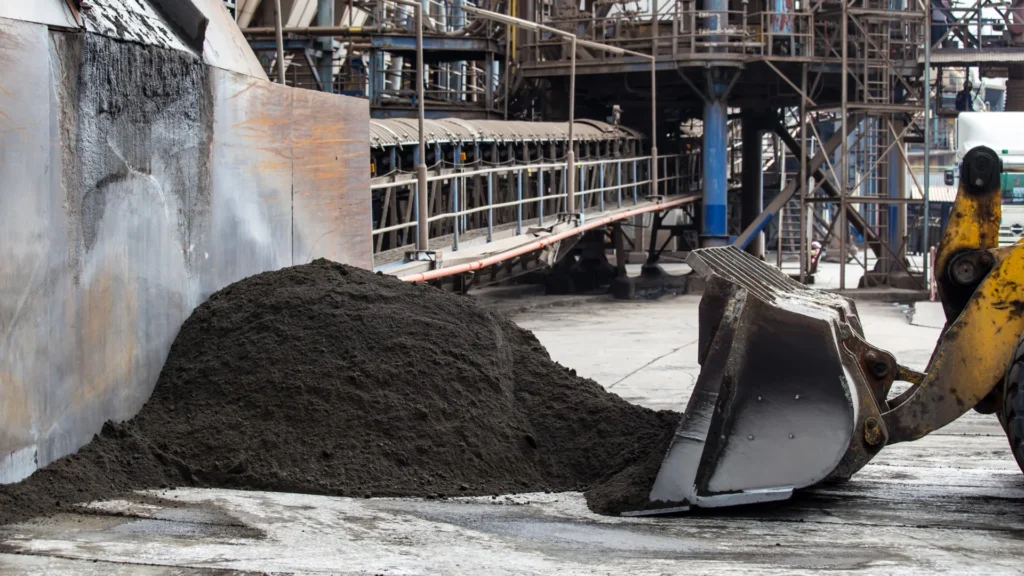
Coal Ash: A primary concern is coal ash, the residual material left after coal is burned for electricity. Globally, billions of tons of coal ash are produced annually, with the United States alone generating tens of millions of tons each year. This material is typically stored in surface impoundments or landfills. Beyond its sheer volume, coal ash can contain heavy metals and other contaminants that pose environmental risks, particularly if they leach into groundwater. However, it is also a rich source of silica and, notably, rare earth elements. Estimates suggest that U.S. coal ash landfills alone could harbor 11 million tons of REEs, valued at an astounding $8.4 billion—nearly eight times the nation’s current raw domestic reserves.
Red Mud: Another critical waste stream is red mud, or bauxite residue, generated during the refining of bauxite ore into alumina, a precursor to aluminum. For every ton of alumina produced, approximately one to two tons of red mud are created. This highly alkaline, finely grained material is typically stored in massive impoundments, posing significant land-use and environmental challenges due to its caustic nature and potential for dust emissions. Yet, red mud is also known to contain valuable elements, including iron, titanium, and, in some cases, rare earth elements.
Mine Tailings: The mining industry produces the largest volume of waste globally, with mine tailings being the primary byproduct. These are the finely ground rock and other materials left over after the target mineral has been extracted from ore. Tailings often contain residual amounts of the target mineral as well as other valuable elements that were not economically feasible to extract with previous technologies or were simply overlooked. Stored in large impoundments or heaps, tailings can pose long-term environmental risks, including acid mine drainage and dust pollution, while simultaneously holding significant untapped mineral wealth.
Other Silicon-Rich Wastes: Beyond these major categories, the project also targets concrete debris, waste glass, and metallurgical slag. These materials are abundant, silicon-rich, and often end up in landfills, representing missed opportunities for resource recovery. Many silicon-derived materials, essential for concrete, glass, ceramics, semiconductors, and silicones, currently require energy-intensive, high-temperature, and chemically demanding processes to produce from virgin resources.
The demand for rare earth elements and other critical minerals continues to surge, driven by the rapid expansion of electronics, clean-energy technologies (such as electric vehicles and wind turbines), advanced manufacturing, and national security applications. These minerals are indispensable components in everything from smartphones and medical devices to missile guidance systems and fighter jets. The supply chain for many of these critical minerals is highly concentrated, with a few nations dominating mining and processing, creating geopolitical vulnerabilities and economic risks for importing countries. Developing robust domestic sources and recycling capabilities is therefore a strategic imperative for many nations, including the United States.
A Bio-Inspired Paradigm Shift: Learning from Nature’s Engineers
At the heart of WPI’s innovative approach lies biomimicry—the practice of emulating nature’s designs and processes to solve human problems. The research team, led by Mingjiang Tao, associate professor in WPI’s Department of Civil, Environmental, and Architectural Engineering, seeks to adapt the remarkable biological strategies employed by simple organisms to extract and transform minerals.
Diatoms, Sea Sponges, and Plants: These diverse organisms have evolved elegant, low-energy methods for managing silicon. Diatoms, single-celled algae, construct intricate silica cell walls from dissolved silicon in water. Sea sponges, marine invertebrates, build elaborate skeletal structures of silica. Certain plants accumulate silica in their tissues. What these organisms share is the ability to collect dissolved silicon and form complex silica structures under relatively mild ambient conditions—low temperatures, neutral pH, and without harsh chemicals. They achieve this through specialized biological molecules (proteins, peptides) and organic scaffolds that precisely control the mineralization process, a phenomenon known as biosilicification.
The WPI team envisions translating these natural mechanisms into industrial processes. By identifying and synthesizing specific biomolecules or developing bio-inspired systems, they aim to create novel, lower-energy methods for breaking down silicon-rich industrial waste. This would not only facilitate the release of rare earth elements and other critical minerals trapped within these materials but also enable the conversion of the silica itself into useful, marketable products. This "whole-material approach" represents a significant departure from conventional extractive metallurgy, which often focuses solely on the target mineral, leaving behind large volumes of residue that still require disposal.
The Interdisciplinary Nexus and Collaborative Framework
The project’s ambitious scope necessitates a highly interdisciplinary approach, bringing together experts from a broad spectrum of scientific and engineering fields. The WPI core team comprises:
- Mingjiang Tao (Lead Principal Investigator): Associate Professor of Civil, Environmental, and and Architectural Engineering. Tao will oversee the entire project, coordinating the diverse research strands. His specific research focus will be on biosilicification—understanding how organisms form silica materials—and bio-enabled metallurgy for the recovery of rare earth elements from silicon-rich wastes. His leadership is crucial for integrating the biological and engineering aspects of the project.
- Carrick Eggleston (Co-Principal Investigator): Professor in the Department of Civil, Environmental, and Architectural Engineering, specializing in geochemistry. Professor Eggleston will lead the fundamental work on understanding and optimizing the complex chemical reactions involved in the breakdown and subsequent rebuilding of silicate materials. His research will delve into reaction pathways, rates of silicate dissolution, repolymerization, carbonation, glass formation, and silicone synthesis, providing the essential chemical foundation for the bio-inspired processes.
- Yan Wang (Co-Principal Investigator): The William B. Smith Professor of Mechanical and Materials Engineering, a renowned pioneer in battery recycling and sustainable manufacturing. Professor Wang will spearhead the development of bioengineered methods specifically for the recovery of rare earth elements and other critical minerals. His expertise in materials processing and sustainable manufacturing will be vital for translating laboratory discoveries into practical, scalable recovery technologies.
This core team is further augmented by collaborators from several leading institutions: George Mason University, the University of California San Diego, the University of Massachusetts Amherst, and the University at Buffalo. This multi-institutional collaboration ensures a diverse pool of expertise, including biology, geochemistry, materials science, metallurgy, engineering, computational chemistry, and artificial intelligence, all converging on a shared objective.
The National Science Foundation’s Growing Convergence Research program, which awarded this grant, specifically seeks to fund research that integrates knowledge, methods, and expertise from different disciplines to tackle grand societal challenges. This WPI-led project perfectly aligns with the NSF’s vision, addressing critical issues related to resource scarcity, environmental sustainability, and economic resilience through a fundamentally new scientific paradigm.
Accelerating Discovery with AI and Advanced Computation
A cutting-edge aspect of this research involves the strategic deployment of artificial intelligence (AI) and advanced computational modeling. The complexity of designing novel biomolecules and predicting their interactions with diverse silicon-rich waste materials is immense. AI and computational chemistry tools will be leveraged to:
- Design Specialized Biomolecules: AI algorithms can analyze vast datasets of biological molecules and their known interactions, allowing researchers to predict and design new biomolecules or modify existing ones that could effectively bind to, dissolve, or sequester specific elements from the waste streams.
- Predict Interactions: Computational models can simulate how these designed biomolecules will interact at the atomic and molecular level with various silicon-rich industrial waste matrices. This predictive capability can dramatically reduce the need for extensive, time-consuming laboratory experimentation.
- Speed Up Discovery: By rapidly screening potential biomolecules and process conditions in silico (via computer simulation), the team can identify the most promising approaches for mineral recovery and materials manufacturing much more quickly than through traditional trial-and-error methods. This accelerates the research timeline and increases the probability of success within the five-year grant period.
This integration of AI and computational power underscores the project’s forward-thinking nature, harnessing the latest technological advancements to solve complex materials science challenges.
A Phased Approach Towards Industrial Scalability
The "five-year, two-phase effort" outlines a structured progression from fundamental discovery to practical application.
- Phase One (Years 1-2.5): This initial phase will likely focus on fundamental research. This would involve in-depth characterization of various waste streams, detailed studies of natural biosilicification processes, identification and synthesis of candidate biomolecules, and initial laboratory-scale proof-of-concept experiments. The aim would be to establish the scientific principles and demonstrate the feasibility of bio-inspired dissolution and recovery methods for specific critical minerals and silica forms.
- Phase Two (Years 2.5-5): Building on the successes of Phase One, the second phase would shift towards optimization and scalability. This would involve refining the most promising biomolecular strategies, designing and testing small-scale bioreactors or processing units, and conducting techno-economic assessments. A critical component of this phase will be to study whether the developed technologies can be scaled economically and practically for industrial adoption. This includes evaluating energy inputs, chemical requirements, processing times, and the purity and yield of recovered materials, as well as the marketability of the transformed silica products.
The ultimate success of the project hinges not just on scientific breakthrough but also on the economic viability and practical implementability of the developed technologies. The researchers are committed to ensuring that their innovations can transition from the laboratory to real-world industrial settings, offering tangible solutions to pressing global issues.
Broader Impact and Strategic Implications
The potential implications of a successful outcome from this WPI-led research are profound and far-reaching, touching upon environmental sustainability, economic development, and national security.
Environmental Benefits:
- Waste Reduction: Converting vast quantities of industrial waste into valuable products would significantly reduce the volume of material ending up in landfills and impoundments, alleviating environmental pressures and mitigating risks of contamination.
- Lower Environmental Footprint: By utilizing lower temperatures and fewer harsh chemicals compared to conventional methods, the bio-inspired processes would inherently consume less energy, leading to a reduced carbon footprint for materials production.
- Sustainable Resource Management: This approach fosters a circular economy by transforming waste into a resource, reducing the reliance on virgin mining and its associated environmental disturbances.
Economic Opportunities:
- New Industries and Markets: The ability to extract critical minerals and convert silica into useful products could spawn entirely new industries and create new value chains from previously discarded materials.
- Job Creation: Research, development, and eventual industrial implementation of these technologies would create high-skill jobs in science, engineering, and manufacturing.
- Reduced Material Costs: Accessing critical minerals from waste streams could potentially lower the cost of raw materials for various high-tech industries.
Strategic and National Security Advantages:
- Strengthened Domestic Supply Chains: By providing a domestic source of critical minerals and rare earth elements, the project directly addresses supply chain vulnerabilities and reduces reliance on foreign suppliers, enhancing national economic and security independence.
- Technological Leadership: Pioneering these advanced bio-inspired recovery methods positions the United States at the forefront of sustainable materials science and critical mineral technologies.
Educational and Ecosystem Development:
- WPI graduate and undergraduate students will be integral to this multiyear project, gaining invaluable immersive STEM experience. This involvement will help train the next generation of scientists and engineers equipped to tackle complex sustainability challenges.
- The effort also aims to build a broader "bioengineered, silicon-based materials ecosystem." This involves connecting researchers, industry partners, policymakers, educators, and future innovators across multiple disciplines and sectors, fostering a collaborative environment for continued innovation and widespread adoption of these sustainable technologies.
In essence, the WPI-led project, backed by the National Science Foundation, represents a beacon of hope for transforming our relationship with industrial waste. By looking to nature’s elegant solutions and harnessing cutting-edge science and technology, researchers are paving the way for a future where waste is no longer a burden, but a valuable resource waiting to be unlocked, contributing to a more sustainable, secure, and prosperous world.