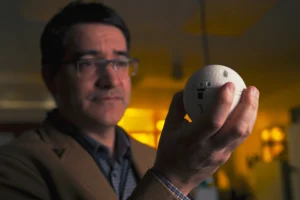
After more than 10 years at the helm of the Laboratory for Nuclear Science (LNS) at the Massachusetts Institute of Technology (MIT), Professor Boleslaw “Bolek” Wyslouch has announced his decision to step down from the directorship. His departure marks the end of a pivotal era for one of the nation’s most prestigious research institutions. While Wyslouch is relinquishing his administrative role as the head of LNS, he will remain deeply embedded in the MIT research ecosystem, transitioning to the position of director at the Bates Research and Engineering Center, a critical subgroup within the LNS framework. This move allows Wyslouch to return his primary focus to the engineering and scientific complexities of nuclear physics, particularly in the development of advanced instrumentation and international collaborative research.
Since his appointment as director in 2015, Wyslouch has been credited with steering the Laboratory for Nuclear Science through a period of unprecedented growth and technological evolution. Under his leadership, LNS has not only maintained its status as the largest university-based program of its kind in the United States but has also expanded its research volume and academic reach. His tenure was characterized by a strategic focus on interdisciplinary collaboration, the integration of artificial intelligence into fundamental physics, and the expansion of the lab’s research portfolio into previously untapped subfields.
A Legacy of Institutional Growth and Academic Excellence
The Laboratory for Nuclear Science was established in 1946, shortly after the end of World War II, to harness the momentum of the Manhattan Project and provide a dedicated environment for basic research in nuclear and high-energy physics. For nearly eight decades, it has served as a cornerstone of MIT’s scientific contributions. When Wyslouch took over in 2015, he inherited a storied institution, but one that faced the challenges of a rapidly changing global scientific landscape, where funding structures and technological requirements were becoming increasingly complex.
During his decade-long tenure, Wyslouch oversaw a significant increase in the laboratory’s research volume. This growth was not merely budgetary but reflected a broader expansion of the lab’s intellectual capital. Under his guidance, LNS supported the hiring of several new faculty members, ensuring that the next generation of physicists had the resources and mentorship necessary to succeed. Perhaps his most significant strategic achievement was the integration of low-energy nuclear physics into the LNS research agenda. Prior to his directorship, this was the only major subfield of nuclear physics in which the laboratory did not have a significant presence. By bringing this area into the fold, Wyslouch ensured that LNS became a truly comprehensive hub for nuclear research.
Nergis Mavalvala, the Dean of the MIT School of Science and the Curtis and Kathleen Marble Professor of Astrophysics, lauded Wyslouch’s contributions, noting that his leadership allowed LNS to flourish. Mavalvala highlighted that LNS scientists, under Wyslouch’s support, have remained world leaders in particle and nuclear physics, successfully navigating the demands of large-scale international collaborations that are essential to modern discovery.
Strengthening National and International Partnerships
One of the hallmarks of the Wyslouch era was the strengthening of ties between MIT and the broader network of national and international laboratories. Rick Peterson, the executive director of LNS, noted that Wyslouch’s vision for technical expertise facilitated new partnerships across the U.S. national laboratory system. This strategy enabled LNS to develop a permanent and influential presence at all major U.S.-based nuclear physics facilities, including Brookhaven National Laboratory, Thomas Jefferson National Accelerator Facility (Jefferson Lab), and Fermilab.
Beyond domestic borders, Wyslouch maintained a strong connection to CERN (the European Organization for Nuclear Research) in Geneva, Switzerland. His ability to bridge the gap between university-based research and massive international facilities has been vital for LNS’s participation in global experiments. Most recently, LNS has been actively engaged in competing for bids for the Department of Energy’s Genesis mission. This initiative represents a potential cornerstone of funding in the era of artificial intelligence, and LNS’s involvement is a testament to the forward-thinking administrative framework Wyslouch established.
The Intersection of Physics and Artificial Intelligence
In recent years, the field of physics has undergone a digital transformation, with data-intensive experiments requiring more sophisticated analytical tools. Recognizing this shift, Wyslouch played a central role in the successful bid for the National Science Foundation (NSF)-funded AI Institute for Artificial Intelligence and Fundamental Interactions (IAIFI). This institute, led by LNS scientists, serves as a collaborative bridge between MIT, Harvard, Northeastern, and Tufts universities.
The IAIFI supports more than 25 senior researchers across the fields of physics and AI, focusing on developing AI technologies that can help solve complex problems in fundamental physics while simultaneously using physics principles to improve AI algorithms. This dual-purpose approach has positioned MIT at the forefront of the "AI for Science" movement. The establishment of this institute is seen as a cornerstone of Wyslouch’s legacy, ensuring that LNS remains relevant in a future where machine learning and computational power are as important as particle accelerators.
Further bolstering the lab’s resources, the Center for Theoretical Physics (CTP), a part of LNS, recently received a $20 million donation from the Leinweber Foundation. This gift led to the creation of the Leinweber Institute within the CTP, providing long-term support for theoretical physics research and education. Such philanthropic milestones have provided LNS with the financial stability to pursue high-risk, high-reward scientific inquiries.
A Career Defined by Discovery: The Scientific Path of Bolek Wyslouch
Boleslaw Wyslouch’s journey to the directorship of LNS is a narrative of academic rigor and pioneering research. After completing his undergraduate studies in physics at the University of Warsaw in Poland in 1981, he moved to the United States to pursue his doctoral degree at MIT. He earned his PhD in 1987, beginning a lifelong association with the Institute. Following postdoctoral appointments at both LNS and CERN, he joined the MIT faculty in the Department of Physics in 1991.
In the realm of active research, Wyslouch is recognized as a founder and leader of the relativistic heavy ion program within the Compact Muon Solenoid (CMS) experiment at the Large Hadron Collider (LHC). His work focuses on the interactions between subatomic particles during high-energy collisions of heavy ions. These collisions are designed to recreate the conditions of the early universe, specifically the state of matter known as quark-gluon plasma.
Wyslouch’s contributions to the CMS experiment have been foundational. His research group discovered surprisingly strong collective effects in ion-ion, proton-proton, and proton-ion collisions. These findings challenged existing models of particle interaction and provided new insights into how hot plasma suppresses the production of high-energy jets, redistributing energy among slower particles. Before his work at the LHC, Wyslouch held leadership roles at Brookhaven National Laboratory, specifically with the PHOBOS project, which was also dedicated to the study of quark-gluon plasma.
Transition to the Bates Research and Engineering Center
As he steps down from the LNS directorship, Wyslouch will take the helm of the Bates Research and Engineering Center. Located in Middleton, Massachusetts, the Bates Center is a specialized subgroup of LNS that focuses on the design, engineering, and construction of complex scientific equipment. The transition is viewed as a "return to the roots" for Wyslouch, who has always maintained a keen interest in the technical and engineering aspects of physics.
At Bates, Wyslouch will oversee projects that include the development of advanced particle detectors for international facilities. The center is also increasingly involved in industry collaborations, applying nuclear science to practical technologies. These include next-generation battery systems, advanced accelerator technologies for medical use, and other applications that have a direct societal impact. Under his leadership, the Bates Center is expected to expand its role as an incubator for innovative technologies that bridge the gap between fundamental research and commercial application.
Cultural Impact and Community Building
While his scientific and administrative achievements are well-documented, those within LNS often point to Wyslouch’s impact on the laboratory’s culture as his most enduring contribution. Rick Peterson emphasized that Wyslouch fostered an environment where every individual—from undergraduate researchers to senior faculty—was valued for their unique contributions.
He was instrumental in developing new pathways for postdoctoral support, recognizing that postdocs are the engine of research in modern physics. By sponsoring community-building activities and promoting a culture of inclusivity, he ensured that LNS remained an attractive destination for global talent. His commitment to education was also recognized early in his career when he received the 2004 William W. Buechner Teaching Prize. His election as a fellow of the American Physical Society in 2013 and as a member of the American Academy of Arts and Sciences in 2024 further underscores the high regard in which he is held by his peers.
Implications for the Future of Nuclear Science at MIT
The departure of a long-standing director always prompts a period of reflection and transition. As MIT begins the search for Wyslouch’s successor, the Laboratory for Nuclear Science stands at a crossroads. The foundation laid over the last decade provides a robust platform for the next leader to build upon.
The integration of AI, the expansion into low-energy physics, and the deepening of ties with national laboratories have created a more resilient and versatile institution. However, the next director will face the challenge of navigating a shifting federal funding landscape and the increasing competition for global scientific talent. The continued success of the IAIFI and the Genesis mission bids will be critical benchmarks for the laboratory in the coming years.
Professor Wyslouch’s move to the Bates Center ensures that his expertise remains within the MIT community. His ongoing research at CERN and his new role in engineering leadership suggest that while his title may be changing, his influence on the field of nuclear science is far from over. As the scientific community looks toward the next decade of discovery—from the nuances of the quark-gluon plasma to the application of nuclear science in medical technology—the legacy of Boleslaw Wyslouch’s decade at the helm of LNS will undoubtedly serve as a guiding light.