Thomson, Georgia, is poised for a significant economic injection as Mayville Engineering Co. (MEC), a leading contract manufacturer, announced plans to invest approximately $26 million in a new metal fabrication facility. This strategic investment is projected to create approximately 140 new jobs in the region, marking a substantial expansion of MEC’s U.S. production network and reinforcing its commitment to supporting a diverse customer base across various industrial sectors. The project involves the refurbishment of an existing building located at 1048 Superior Way, with renovations and equipment investments slated to unfold in phases over the next several years, indicating a long-term commitment to the community and the state of Georgia.
MEC’s Strategic Vision and Expansion Rationale
Mayville Engineering Co., with a rich history dating back to its founding in 1945, has established itself as a pivotal player in the contract manufacturing industry. This latest expansion into Thomson, Georgia, is a testament to the company’s ongoing strategy to enhance its operational footprint, optimize its national manufacturing network, and increase its capacity to meet the evolving demands of its diverse clientele. The investment underscores MEC’s proactive approach to strengthening its supply chain capabilities and ensuring proximity to key markets.
Deep Dive into MEC’s Capabilities
MEC’s extensive portfolio of manufacturing services positions it as a comprehensive partner for various industries. These services include, but are not limited to, prototyping and tooling, which are critical for new product development and design validation. The company excels in production fabrication, utilizing advanced techniques to produce high-quality metal components. Beyond core fabrication, MEC offers specialized processes such as aluminum extrusion, a vital capability for lightweight structural components, and advanced coating services that enhance durability and aesthetic appeal. Its integrated approach also encompasses assembly services, providing turnkey solutions for complex products, and robust aftermarket support, ensuring long-term value for its customers.
MEC serves a broad spectrum of industries, reflecting its versatility and technical expertise. Its client roster includes manufacturers of commercial vehicles, which demand precision and durability for heavy-duty applications. The construction and access equipment sectors rely on MEC for robust components that withstand harsh operational environments. Agricultural equipment manufacturers benefit from MEC’s ability to produce components that meet the rigorous demands of modern farming machinery. The powersports products market, characterized by innovation and performance, also leverages MEC’s manufacturing prowess. Furthermore, MEC has strategically positioned itself to support companies operating in the burgeoning data center and critical-power markets, providing essential components for infrastructure that underpins the digital economy. This diversification across high-growth sectors mitigates risks and creates a stable demand for its specialized services.
Leadership Perspective
Jag Reddy, President and CEO of MEC, articulated the strategic significance of the new facility. "This new facility strengthens MEC’s national manufacturing network and expands our capacity to support customers across the industries we serve," Reddy stated. His comments highlight the dual objectives of this expansion: reinforcing the company’s logistical and production network across the United States and directly addressing the increasing demand from its customer base. This move is indicative of a broader industry trend where manufacturers are investing in domestic capacity to mitigate supply chain vulnerabilities exposed in recent years and to capitalize on reshoring initiatives. The Thomson facility will enable MEC to offer more localized support, reduce lead times, and enhance responsiveness, all critical factors in today’s competitive manufacturing landscape.
Thomson, Georgia: A Strategic Location for Growth
The selection of Thomson, Georgia, as the site for this significant investment was undoubtedly influenced by a confluence of strategic factors. Georgia has consistently ranked among the top states for business, lauded for its favorable economic climate, robust infrastructure, and a proactive approach to economic development. Thomson, specifically, offers a strategic location within the state, benefiting from excellent transportation links and a supportive local government eager to attract new industry.
Georgia’s Manufacturing Renaissance
Georgia has experienced a manufacturing renaissance in recent decades, attracting major investments from global corporations across various sectors, including automotive, aerospace, food processing, and machinery. The state boasts a strong workforce development pipeline, with technical colleges and universities actively collaborating with industries to tailor training programs to meet specific skill requirements. This focus on workforce readiness is a significant draw for companies like MEC, which require a skilled labor pool for specialized metal fabrication and assembly roles. The state’s logistical advantages are also unparalleled, featuring Hartsfield-Jackson Atlanta International Airport, one of the world’s busiest, and the Port of Savannah, a crucial gateway for international trade. These assets provide efficient access to raw materials and facilitate the distribution of finished products, critical considerations for a contract manufacturer serving a national customer base. Furthermore, Georgia’s robust network of interstate highways, including Interstate 20 which runs through Thomson, ensures seamless connectivity to key markets across the Southeast and beyond.
Local Economic Development Impact
For Thomson and McDuffie County, MEC’s investment represents a transformative opportunity. The creation of 140 new jobs will have a profound positive impact on the local economy, providing stable employment opportunities for residents and attracting new talent to the area. The influx of new workers and their families will stimulate local businesses, from retail and hospitality to housing and services. Local officials, while not directly quoted in the original brief, would logically express immense satisfaction with such an announcement. For instance, the Governor’s Office of Georgia’s economic development arm, along with local county and city leadership, would likely highlight the partnership with MEC as a testament to the region’s appeal for advanced manufacturing. They would emphasize the commitment to fostering a business-friendly environment and supporting companies that choose to invest in Georgia’s communities. The property tax revenue generated by the refurbished facility and the income taxes from the new jobs will also bolster local government budgets, allowing for improved public services and infrastructure.
The Investment Breakdown and Job Creation
The $26 million investment by MEC is slated for a phased implementation over several years. This phased approach allows for careful planning, adaptation to market conditions, and efficient allocation of resources, ensuring that the facility is brought online strategically and effectively. The refurbishment of the existing building at 1048 Superior Way suggests a commitment to revitalizing existing industrial infrastructure, which can often be a more sustainable and cost-effective approach than new construction on a greenfield site.
Phased Development and Workforce Needs
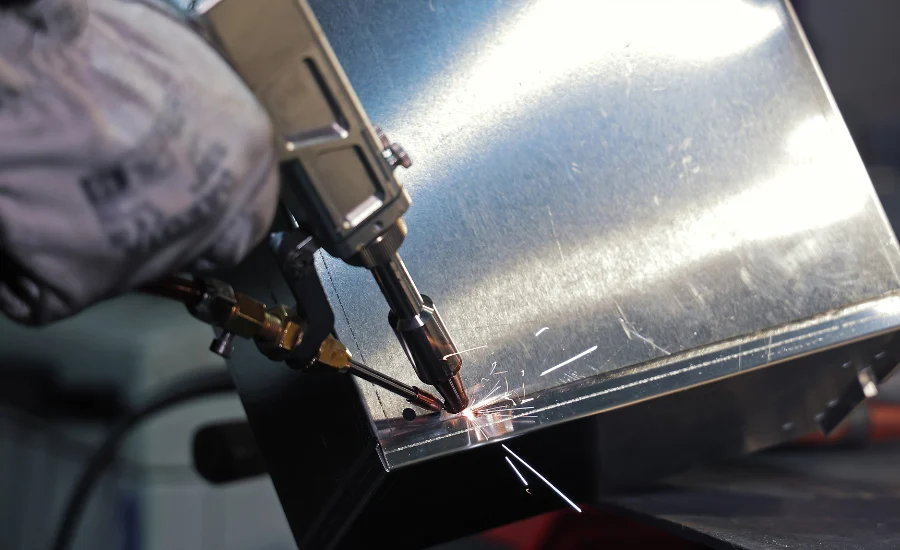
The initial phase will likely focus on structural integrity assessments, necessary building modifications, and the installation of foundational infrastructure for utilities and specialized manufacturing equipment. Subsequent phases will involve the procurement and installation of advanced metal fabrication machinery, including CNC (Computer Numerical Control) machines, laser cutters, welding robots, and automated assembly lines. The integration of such cutting-edge technology will ensure that the Thomson facility operates with high efficiency, precision, and adherence to stringent quality standards.

Hiring for the 140 new positions is expected to commence as the facility progresses through its development phases. The roles will span a wide range of skill sets, reflecting the diverse operational needs of a modern metal fabrication plant. Critical positions will include:
- Operators: Skilled professionals capable of running and monitoring sophisticated machinery, ensuring production targets are met with quality.
- Maintenance Personnel: Technicians responsible for the upkeep, repair, and preventative maintenance of complex equipment, crucial for minimizing downtime.
- Quality-Control Personnel: Experts who will implement and monitor quality assurance processes, ensuring that all manufactured components meet precise specifications and industry standards.
- Technical Roles: Engineers, CAD designers, and programmers who will support product development, process optimization, and automation.
- Management: Supervisory and administrative staff to oversee operations, logistics, human resources, and facility management.
MEC’s commitment to creating these jobs underscores the demand for skilled labor in the manufacturing sector. It is highly probable that MEC will collaborate with local educational institutions, such as technical colleges and workforce development programs, to develop customized training initiatives. This partnership would ensure that local residents have the necessary skills to fill these roles, thereby creating a sustainable pipeline of talent and fostering economic mobility within the community.
Anticipated Economic Multipliers
Economists often use multipliers to estimate the total economic impact of a new investment. For every direct job created in manufacturing, several indirect and induced jobs are typically generated in supporting sectors, such as logistics, local suppliers, retail, and services. A common multiplier for manufacturing is often cited between 1.5 and 2.5. If a conservative multiplier of 1.5 is applied to MEC’s 140 direct jobs, the total employment impact could be upwards of 210 jobs in the regional economy. Beyond job creation, the $26 million capital investment will generate economic activity during the construction and equipment installation phases, benefiting local contractors, suppliers, and service providers. The ongoing operational expenditures of the facility, including salaries, utility payments, and local purchases, will further contribute to sustained economic growth in Thomson and McDuffie County.
Broader Industry Context: Trends in Metal Fabrication and Contract Manufacturing
MEC’s expansion is not an isolated event but rather reflects several significant trends shaping the global manufacturing landscape. The metal fabrication industry, a cornerstone of industrial production, is undergoing continuous evolution driven by technological advancements, shifts in supply chain strategies, and increasing demand for customized solutions.
Technological Advancements Driving Demand
The industry is experiencing a rapid adoption of advanced manufacturing technologies. Automation, particularly through robotics in welding and material handling, significantly improves efficiency, consistency, and safety. Computer-aided design (CAD) and computer-aided manufacturing (CAM) software are integral to precision and rapid prototyping. The rise of additive manufacturing (3D printing) for specialized metal components, though still niche for large-scale production, is influencing design possibilities. Furthermore, the integration of Industry 4.0 principles, including the Internet of Things (IoT) for real-time monitoring and data analytics for predictive maintenance, is becoming standard practice in state-of-the-art facilities like the one MEC is developing. These technologies enable manufacturers to produce complex parts with greater accuracy, reduce waste, and accelerate time-to-market, which is crucial for MEC’s customers in fast-paced sectors like data centers and powersports.
Reshoring and Supply Chain Resilience
The COVID-19 pandemic and geopolitical tensions have highlighted the vulnerabilities inherent in extended global supply chains. As a result, there is a growing trend towards reshoring and nearshoring manufacturing operations, bringing production closer to end markets. This strategy enhances supply chain resilience, reduces lead times, mitigates logistical risks, and allows for greater control over quality and intellectual property. MEC’s investment in a U.S.-based facility aligns perfectly with this trend, positioning the company to capitalize on the increasing demand for domestically produced components and assemblies. Customers, particularly those in critical infrastructure sectors, are prioritizing suppliers with robust domestic capabilities to ensure continuity of supply. This strategic decision by MEC will likely be viewed favorably by its existing clients and could attract new business looking for reliable U.S.-based manufacturing partners.
Stakeholder Reactions and Future Outlook
The announcement of MEC’s investment is a positive development that will be welcomed by various stakeholders, from state economic development agencies to local community members.
Official Endorsements
While specific quotes from Georgia state officials are not provided in the original text, it is standard practice for the Georgia Department of Economic Development (GDEcD) to issue press releases praising such investments. Governor Brian Kemp, for example, would likely commend MEC for choosing Georgia, emphasizing the state’s skilled workforce, pro-business environment, and strategic location as key factors in attracting and retaining leading manufacturers. Such endorsements not only celebrate the immediate economic impact but also serve to market Georgia as an attractive destination for future industrial investments. Local government leaders in Thomson and McDuffie County would similarly express gratitude, highlighting the collaboration between MEC and local development authorities that made the project possible. They would likely speak to the long-term benefits, including community growth, infrastructure improvements, and enhanced quality of life for residents.
Community Anticipation
For the residents of Thomson and the surrounding areas, the prospect of 140 new jobs from a reputable company like MEC brings a sense of optimism and opportunity. The availability of diverse roles—from entry-level operator positions to skilled technical and management roles—provides pathways for career development and economic advancement. Beyond direct employment, the indirect benefits, such as increased business for local eateries, retailers, and service providers, will ripple through the community. Educational institutions in the region will likely see increased enrollment in relevant vocational and technical programs, as individuals seek to acquire the skills needed for these new manufacturing jobs. The long-term presence of MEC could also inspire further industrial development in the area, creating a positive feedback loop for sustained economic vitality.
Conclusion: A Landmark Investment for Regional and Sectoral Growth
Mayville Engineering Co.’s $26 million investment in a new metal fabrication facility in Thomson, Georgia, represents a landmark event for both the company and the region. It is a strategic move that will significantly enhance MEC’s manufacturing capabilities, strengthen its national network, and expand its capacity to serve critical industrial sectors. For Thomson and McDuffie County, this project signifies a substantial economic boost, creating 140 much-needed jobs and diversifying the local industrial base.
This expansion is also indicative of broader trends in the manufacturing sector, including the adoption of advanced technologies, a renewed focus on supply chain resilience through domestic investment, and the strategic importance of locations with robust infrastructure and a skilled workforce. As MEC embarks on the phased development of its Thomson facility, the ripple effects of this investment—from job creation and economic stimulus to enhanced industrial capabilities—are set to contribute significantly to Georgia’s manufacturing prowess and the economic prosperity of the Thomson community for years to come. The success of this project will further solidify Georgia’s reputation as a premier destination for advanced manufacturing and contract fabrication, promising a bright future for the region’s industrial landscape.