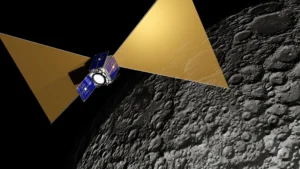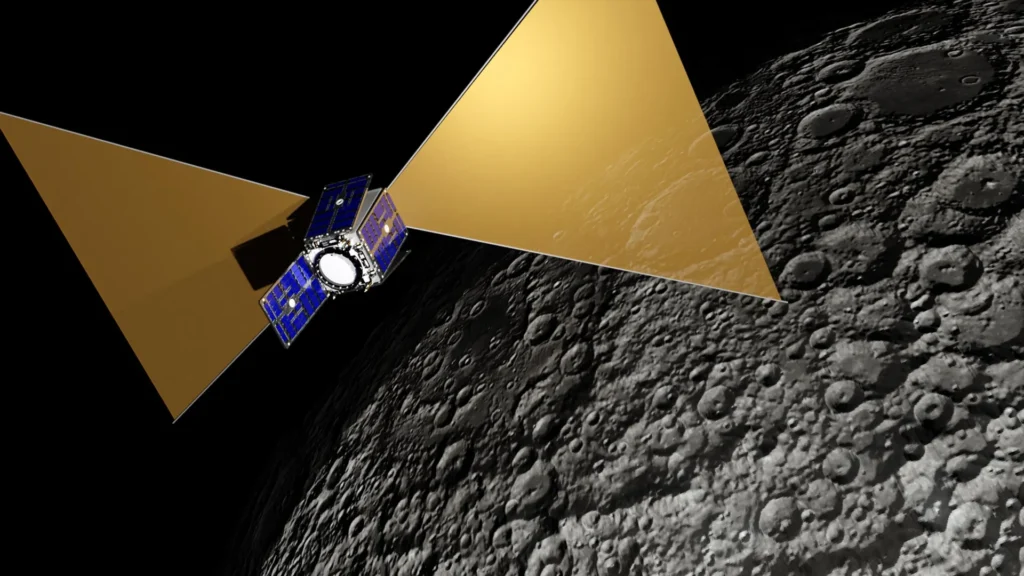
In an ambitious leap for space-based cosmology, a suitcase-sized satellite developed in the United Kingdom is poised to unlock the mysteries of the "Cosmic Dark Ages," a period of roughly 150 million years that remains one of the most significant gaps in our understanding of the universe. Known as CosmoCube, this compact spacecraft represents a paradigm shift in how astrophysicists observe the early cosmos. By utilizing the unique radio-quiet environment of the Moon’s far side, the mission aims to detect signals from the era before the first stars ignited, potentially reshaping our comprehension of dark matter and the fundamental structures of reality.
Mapping the Final Frontier of Cosmic History
The narrative of the universe is often told through its most luminous landmarks: the Big Bang, the formation of the first stars, and the assembly of massive galaxies. However, between the fading afterglow of the Big Bang—known as the Cosmic Microwave Background (CMB)—and the "Cosmic Dawn," when the first stars began to shine, lies a vast, unobserved epoch. During these 150 million years, the universe was a dark, cooling expanse of neutral hydrogen gas, influenced silently by the gravitational pull of dark matter.
CosmoCube’s primary objective is to observe this period by seeking out the "21-centimeter line," a specific radio signal emitted by hydrogen atoms. As these atoms transitioned between different energy states in the early universe, they released photons with a wavelength of 21 centimeters. Because the universe has been expanding for billions of years, these signals have been "redshifted" to much longer wavelengths, reaching Earth today as low-frequency radio waves between 10 and 50 MHz.
While the 21-centimeter signal is considered the "holy grail" of early-universe cosmology, it is notoriously difficult to detect. On Earth, the ionosphere—a layer of the upper atmosphere filled with charged particles—acts as a barrier, reflecting or distorting low-frequency radio waves from space. Furthermore, the modern world is saturated with human-made radio interference. FM radio broadcasts, television signals, and the burgeoning networks of telecommunications satellites create a "fog" of electronic noise that completely overwhelms the faint whispers from the Dark Ages.
The Lunar Far Side: A Natural Observatory
To escape this terrestrial cacophony, the international research team led by the University of Cambridge has identified the far side of the Moon as the only viable location for such sensitive measurements. Unlike the side of the Moon that faces Earth, the far side is shielded by the Moon’s own massive bulk, which acts as a natural physical barrier against radio interference from our planet.
The mission profile involves placing CosmoCube into a polar orbit around the Moon. During each two-hour orbit, the spacecraft will spend approximately 40 minutes behind the lunar body. In this "radio-quiet zone," the satellite will be shielded from Earth’s electronic noise, allowing its specialized antenna to listen to the cosmos in near-total silence. Over a planned two-year mission lifespan, researchers expect to accumulate approximately 1,000 hours of high-quality data. This duration is critical, as the signal is so faint that it must be painstakingly separated from the "foreground" noise generated by our own Milky Way galaxy, which can be thousands of times brighter than the target signal.
Technological Innovation in a Compact Package
CosmoCube’s design challenges the traditional notion that groundbreaking cosmology requires multi-billion-dollar, school-bus-sized observatories. The spacecraft utilizes the SSTL-21 platform, developed by Surrey Space Technology Limited (SSTL), a pioneer in the small-satellite industry. This platform is designed to be cost-effective and highly integrated, allowing a suite of sophisticated scientific instruments to fit within a volume no larger than a standard carry-on suitcase.
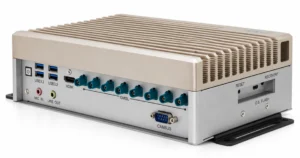
At the heart of the mission is a highly integrated miniature radiometer. This device employs Radio Frequency Systems on Chip (RFSoC) technology, which combines modern analog and digital processing onto a single semiconductor. This allows for extreme precision in signal processing while maintaining low power consumption—a necessity for a small satellite operating in the harsh environment of lunar orbit.
To ensure the integrity of the data, CosmoCube will use a "Dicke switched" calibrator. This system allows the satellite to constantly switch between observing the sky and measuring internal reference sources. By doing so, the electronics can identify and subtract any noise or drift generated by the spacecraft’s own systems. This self-calibration is essential because even a tiny fluctuation in the satellite’s internal temperature or voltage could be mistaken for a signal from the early universe.
Probing the Role of Dark Matter
Beyond mapping the distribution of hydrogen, CosmoCube is designed to investigate the "scaffolding" of the universe: dark matter. Although dark matter makes up about 27% of the universe’s energy density, it does not emit, absorb, or reflect light, making it invisible to traditional telescopes. Its existence is inferred through its gravitational effects on visible matter.
During the Cosmic Dark Ages, dark matter played a pivotal role. It provided the gravitational "wells" into which hydrogen gas fell, eventually reaching the densities required for nuclear fusion and the birth of the first stars. Professor Eloy de Lera Acedo, the lead author from Cambridge’s Cavendish Laboratory and the Kavli Institute for Cosmology, notes that the 21-centimeter emission will act as a tracer for this invisible process. By observing how the hydrogen gas behaved during this era, scientists can test different models of dark matter and understand how it influenced the transition from a dark, featureless void into the structured universe of galaxies seen today.
Collaborative Development and Mission Timeline
The CosmoCube project is a testament to international and cross-sector collaboration. Funded in part by the UK Space Agency, the mission involves a robust network of academic and industrial partners. While Cambridge provides the scientific leadership, the Science and Technology Facilities Council (STFC) RAL Space is spearheading the thermal and environmental testing.
Dr. Will Grainger of STFC RAL Space emphasized the engineering hurdles involved: "The satellite will experience extreme temperature fluctuations as it moves in and out of the Moon’s shadow. Our testing ensures that the payload can maintain the thermal stability required for such sensitive measurements."
The University of Portsmouth is contributing to the theoretical and data-analysis frameworks, while researchers from Malta and other EU nations provide additional expertise in radio astronomy and signal processing. The team recently presented their proposal to the European Space Agency (ESA) as part of the "mini Fast missions" call, targeting a total mission cost of less than 50 million Euros. If the current development pace continues, the team aims for a launch within the next five years.
Chronology of the CosmoCube Initiative
- Phase 1: Conceptualization and Feasibility (2020-2022): Researchers at the University of Cambridge identify the 10-50 MHz range as the key to the Dark Ages and recognize the lunar far side as the optimal site.
- Phase 2: Prototype Development (2023-2024): Laboratory prototypes of the radiometer and the RFSoC integration are built. Initial environmental testing begins at STFC RAL Space facilities.
- Phase 3: Publication and Funding (Late 2024): Details of the mission are published in Nature Astronomy, and the project receives foundational support from the UK Space Agency and the Kavli Foundation.
- Phase 4: Platform Integration (Target 2025-2026): Finalization of the SSTL-21 platform and integration of the scientific payload.
- Phase 5: Launch and Deployment (Target 2028-2029): CosmoCube is expected to launch as a secondary payload on a lunar-bound mission, entering lunar orbit to begin its two-year observation window.
Analysis of Global Implications
The success of CosmoCube would mark a significant milestone in the "democratization" of deep-space exploration. By proving that high-impact science can be achieved with small, low-cost platforms, the mission may encourage more focused, rapid-response missions to study specific astrophysical phenomena.
Furthermore, CosmoCube enters a competitive landscape of lunar exploration. The United States, China, and India are all actively planning or executing missions to the lunar far side. NASA’s LuSEE-Night (Lunar Surface Electromagnetics Experiment-Night) and the proposed FARSIDE array are similar initiatives aimed at exploiting the Moon’s radio silence. However, CosmoCube’s orbital approach offers a different vantage point, potentially allowing for a more comprehensive survey of the sky than a static lander could provide.
The mission also reinforces the United Kingdom’s position as a leader in space technology and fundamental physics. As Professor de Lera Acedo remarked, the project is a "UK success story," showcasing domestic capabilities in hardware, software, and advanced statistical analysis.
Conclusion: A New Window into the Dark
As we stand on the precipice of a new era of lunar exploration, CosmoCube represents a bridge between our current knowledge and the deepest reaches of cosmic time. If the mission successfully detects the 21-centimeter signal, it will provide the first direct evidence of how the universe evolved during its most mysterious phase.
By turning the Moon into a giant radio shield and utilizing cutting-edge miniature electronics, CosmoCube aims to answer fundamental questions about our origins. It seeks to explain not just when the first stars were born, but how the very "darkness" of the early universe held the blueprints for everything we see today. Should the mission succeed, the data gathered by this small, suitcase-sized satellite will be analyzed by generations of cosmologists to come, finally illuminating the dark ages of our cosmic history.