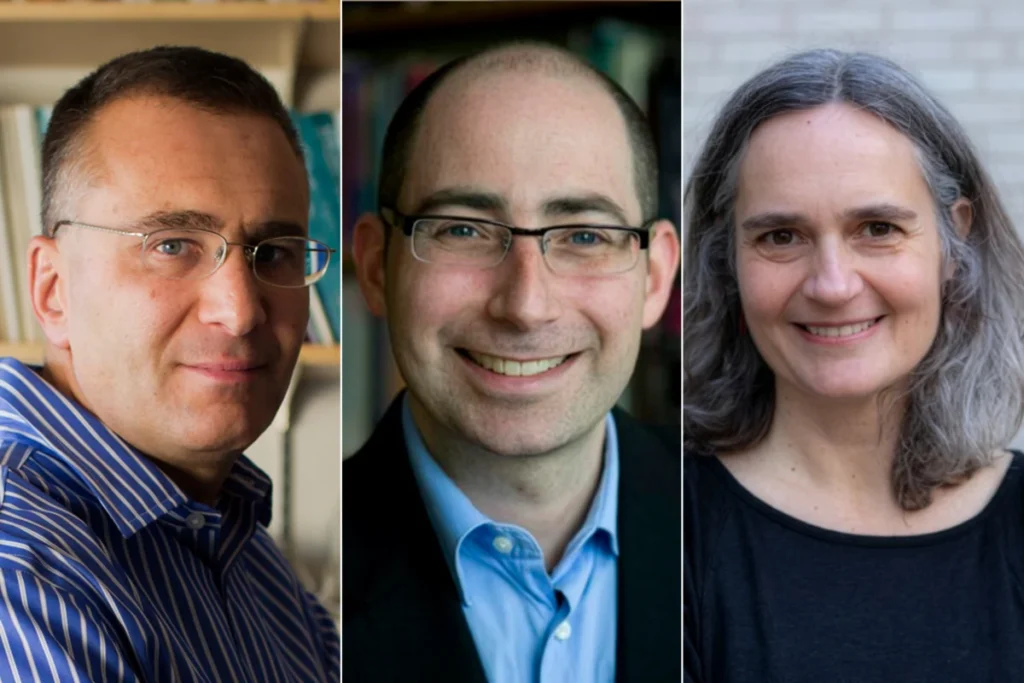
The Massachusetts Institute of Technology (MIT) is currently celebrating the 75th anniversary of its School of Humanities, Arts, and Social Sciences (SHASS), a milestone that marks the formal institutionalization of the humanities as a "co-equal" pillar of the institute’s world-renowned scientific and engineering curriculum. Founded in the shadow of the Second World War, the school has transitioned from a supporting "service" entity into a central component of the MIT identity. To commemorate this history and project the school’s future, MIT News recently convened a roundtable discussion with three distinguished faculty members: historian and physicist David Kaiser, anthropologist Heather Paxson, and economist Jonathan Gruber. The discussion highlighted how the school’s mission—to produce technically proficient leaders who are also ethically and socially aware—remains more relevant than ever in the age of artificial intelligence and global geopolitical shifts.
Historical Foundations: The Lewis Report and the Post-War Mandate
The origins of SHASS are rooted in the profound social upheaval of the 1940s. Following the conclusion of World War II, the MIT faculty convened a committee to reassess the institute’s educational principles. This effort culminated in the 1949 "Lewis Report," a three-year study that examined every facet of life at MIT, from residential housing and parking to the intellectual core of the undergraduate curriculum.
The Lewis Report arrived at a pivotal moment. The success of the Manhattan Project and other wartime technological breakthroughs had demonstrated the immense power of science and technology to reshape the world. However, the committee, led by Professor Warren K. Lewis, argued that such power required a corresponding level of social responsibility. They posited that for MIT to produce effective leaders in the "nuclear age," its graduates needed a toolkit that included more than just mathematical and technical prowess; they required an understanding of history, governance, economics, culture, and human expression.
David Kaiser, the Germeshausen Professor of the History of Science and a Professor of Physics, notes that the report was explicit in its demand that the new School of Humanities and Social Sciences (as it was originally named) be "co-equal" to the Schools of Science and Engineering. This was a radical departure for a technical institute, asserting that humanistic inquiry was not a peripheral interest but an essential component of a rigorous scientific education. In the late 1990s, the school officially added "Arts" to its title, reflecting the growing importance of music, theater, and visual arts in the campus culture.
The SHASS Requirement: A Core Pillar of the MIT Experience
Today, the influence of SHASS is felt by every undergraduate student at MIT. Regardless of their major—be it aerospace engineering or computer science—students are required to spend approximately one-quarter of their time, or eight classes over four years, studying subjects within SHASS. This requirement ensures that students engage with diverse fields such as linguistics, philosophy, political science, literature, and economics.
This commitment to a "well-rounded" education has fundamentally altered the profile of the MIT student body. Jonathan Gruber, the Ford Professor of Economics and an MIT alumnus, observed that during his time as an undergraduate in the 1980s, SHASS was often viewed by students as a secondary "service organization." However, as MIT began competing more directly with Ivy League institutions for the world’s top talent, the school’s humanities and social science offerings became a primary draw.
"Folks aren’t going to come here if they can’t have a well-rounded education," Gruber stated. He noted that the respect level for SHASS has improved dramatically over the decades, as students recognize that a science education devoid of social context is incomplete for those wishing to solve real-world problems.
Interdisciplinary Synergy and Academic Excellence
One of the unique characteristics of SHASS is its physical and intellectual proximity to the frontiers of science and technology. Unlike humanities departments at liberal arts colleges, SHASS faculty often work in direct collaboration with scientists and engineers, leading to a cross-pollination of ideas that is rare in higher education.
Heather Paxson, the William R. Kenan, Jr. Professor of Anthropology and Associate Dean for Faculty in SHASS, highlighted recent research in the social sciences that leverages technological tools. For example, political scientists at MIT are currently using artificial intelligence to study AI itself, specifically examining how chatbots provide information to citizens about elections and whether that information is biased. This research, conducted in collaboration with the Sloan School of Management, exemplifies the "social science at the frontier" approach that defines the school.
The interdisciplinary nature of the faculty is further embodied by David Kaiser, whose career spans both the History of Science and Physics. Kaiser’s historical research into the "marginal" figures of 1970s physics—documented in his book How the Hippies Saved Physics—actually informed his subsequent experimental work in physics. This feedback loop between historical inquiry and scientific practice suggests that the boundaries between the "two cultures" of science and humanities are, at MIT, remarkably porous.
Educational Philosophy: Mens et Manus in the Humanities
The MIT motto, Mens et Manus (Mind and Hand), is traditionally associated with laboratory work and engineering prototypes. However, SHASS faculty have successfully integrated this "learning by doing" philosophy into the humanities and social sciences.
Professor Paxson described a pedagogical exercise in her "Art Craft Science" course where students were tasked with making mozzarella cheese using poorly written instructions. The goal was not merely culinary; it was to force students to reflect on "tacit knowledge"—the skills and intuition that are not captured in a manual but are essential to both scientific experimentation and artisanal craft.
Similarly, Professor Kaiser emphasizes the importance of communication-intensive courses within the majors. In his physics classes, students are required to write essays on complex topics like time dilation or quantum theory. "Writing is thinking," Kaiser noted, explaining that students often find they do not truly understand a mathematical concept until they are forced to articulate it in a coherent, written argument. This focus on communication ensures that MIT graduates can not only solve complex equations but also explain their significance to policymakers and the public.
Broader Impact: Public Goods and Global Challenges
As SHASS enters its 76th year, its role in addressing global challenges is becoming increasingly prominent. The faculty argues that contemporary issues—ranging from climate change and pandemic preparedness to the regulation of artificial intelligence—cannot be solved through technical fixes alone. They require an understanding of human behavior, economic incentives, and ethical frameworks.
Jonathan Gruber, who was instrumental in the expansion of healthcare access in the United States, noted that his work relies on a "particularly MIT way" of approaching policy. While he uses sophisticated mathematical models to predict the effects of healthcare legislation, those models are useless without the communication skills to explain them to legislators. Gruber framed the mission of SHASS as a focus on the "public good." In an era of intense academic and professional pressure, SHASS encourages students to think beyond private gain and consider how their efforts benefit society as a whole.
The 75th Anniversary Conference: A Showcase of Innovation
To mark the anniversary, MIT is hosting a two-day conference on September 24th and 25th, 2024. The event features more than 40 speakers, including early-career scholars, distinguished faculty, and prominent alumni. The symposium is designed to showcase the breadth of the school, with sessions ranging from economic policy and anthropological field studies to a showcase by the Music and Theater Arts program featuring original compositions and dance performances.
The conference serves as both a retrospective of the school’s achievements and a manifesto for its future. By bringing together experts from disparate fields, the event aims to demonstrate that collaborative work across the humanities and sciences is the only way to tackle the persistent, "wicked" problems of the 21st century.
Conclusion: The Future of SHASS
The evolution of the School of Humanities, Arts, and Social Sciences from 1949 to 2024 reflects a broader shift in the philosophy of technical education. The "Lewis Report" proved prophetic in its assertion that the challenges of the nuclear age would require a new kind of citizen-scientist. Today, as society grapples with the implications of the digital and biotechnological revolutions, the "MIT experience" remains defined by this intersection of disciplines.
By maintaining a "co-equal" status for the humanities, MIT ensures that its technical innovations are grounded in an understanding of the human condition. As the 75th-anniversary celebrations conclude, the consensus among faculty and leadership is clear: the toolkit provided by SHASS—history, culture, ethics, and expression—is not an elective luxury, but an inescapable necessity for a responsible and educated leadership in a rapidly changing world.