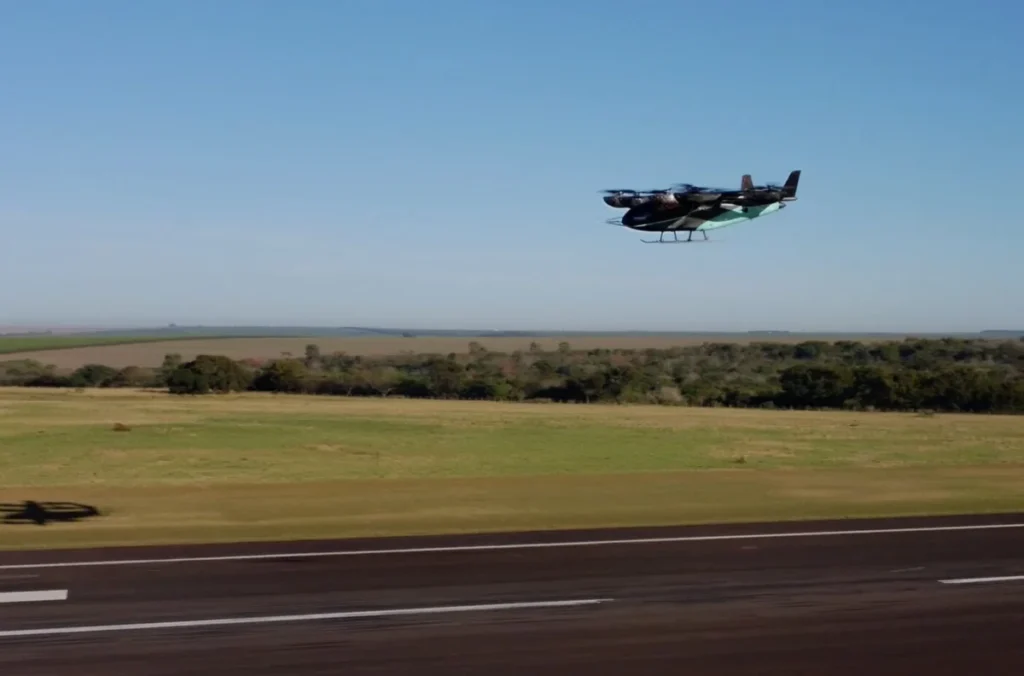
AUBURNDALE, Fla. – The Florida Department of Transportation (FDOT) is embarking on a significant initiative to streamline its airport permitting process, a strategic move designed to expedite the integration of electric air taxi services across the state. This proactive approach signals Florida’s ambition to become a leading hub for Advanced Air Mobility (AAM), a burgeoning sector poised to revolutionize urban and regional transportation.
FDOT’s commitment to this accelerated timeline was articulated by Carina Maloney, the department’s principal for air and ground system development, during a pivotal summit hosted by Eve Air Mobility, a prominent player in the electric vertical takeoff and landing (eVTOL) aircraft market. The event, held at Florida’s innovative SunTrax testing grounds, served as a crucial platform for industry stakeholders to discuss the future of AAM. Maloney candidly acknowledged the existing hurdles within Florida’s permanent and temporary airport permitting frameworks. "We recognize that the current permanent and temporary airport permitting process in the state of Florida is difficult to navigate," Maloney stated. "We recognize that, and we are working to streamline that, and working to put draft legislation in to hopefully make that a little bit easier." This proposed legislative reform is anticipated to be in place by next year, marking a significant shift in how new aviation infrastructure is approved.
The impetus behind these regulatory adjustments is clear: to position Florida as an early adopter and attractive market for companies like Eve Air Mobility, a subsidiary of Embraer. Eve is at the forefront of developing a four-passenger electric air taxi, a technology that promises to offer a faster, more sustainable, and potentially more accessible mode of transport, particularly for inter-city travel and connecting urban centers. Executives from Eve Air Mobility, present at the summit, underscored Florida’s strategic importance, identifying Orlando and Miami among their top five global markets. This strong interest from industry leaders like Eve highlights the substantial economic and logistical potential that AAM holds for the Sunshine State.
Maloney elaborated on the specific nature of the proposed changes, clarifying that they are primarily aimed at facilitating the development of small vertiports, which are the specialized landing and takeoff facilities envisioned for AAM aircraft. A key proposed amendment involves allowing required notification periods for these new facilities to run concurrently, a measure designed to significantly reduce the overall approval timeline. "It is state legislation we are working to change. We are working on draft language now to hopefully be able to change it next year," Maloney reiterated, emphasizing the department’s focused efforts on this legislative push.
Eve Air Mobility, through its chief commercial officer Megha Bhatia, shared ambitious projections for the state. Bhatia indicated that the company anticipates having approximately 325 air taxis operating in Florida by 2036. The envisioned primary use cases for these electric aircraft include flights connecting airports and vertiports to urban centers. The SunTrax facility itself, strategically located midway between Orlando and Tampa, serves as an example of the type of infrastructure that will support these new air routes. Furthermore, Eve is targeting the second quarter of 2028 for the commencement of public demonstrations of passenger flights, a significant milestone that will bring the reality of air taxi services closer to consumers.
The broader landscape of AAM development in Florida is also being shaped by federal initiatives. Several other electric aircraft developers are actively engaged in demonstrating their services under the federal eVTOL Integration Pilot Program (eIPP). This program, which includes New York and Florida among its selected states, provides a framework for collaboration between industry and government to address the complexities of integrating new aviation technologies. The participation of Florida in such programs underscores its proactive stance in fostering innovation and paving the way for a future where electric air taxis are an integral part of the transportation network.
The Strategic Imperative for Streamlined Permitting
The FDOT’s decision to overhaul its airport permitting process is not merely a bureaucratic adjustment; it is a strategic imperative driven by a confluence of factors. The rapidly evolving AAM sector demands agility and responsiveness from regulatory bodies. Companies developing eVTOL aircraft and the necessary ground infrastructure face significant capital investment and lengthy development cycles. Delays in permitting can translate into substantial financial losses and a loss of competitive advantage.
Florida, with its robust tourism industry, growing urban populations, and favorable climate for aviation, is exceptionally well-positioned to become a leader in AAM. However, realizing this potential hinges on the ability to swiftly and efficiently approve the construction of the necessary vertiports and related infrastructure. The current permitting process, as described by Maloney, is characterized by its complexity, which can deter investment and slow down deployment. By simplifying and accelerating this process, FDOT aims to create a more attractive and predictable environment for AAM operators.
Eve Air Mobility’s Vision for Florida
Eve Air Mobility’s presence at the SunTrax summit and its optimistic outlook on the Florida market highlight the specific impact of FDOT’s proposed changes. Eve’s four-passenger eVTOL aircraft is designed for urban air mobility, offering a sustainable and efficient alternative to ground transportation for short to medium-distance trips. The company’s projection of 325 aircraft in operation by 2036 in Florida indicates a significant commitment to the state’s AAM ecosystem.
The planned use cases, such as connecting major metropolitan areas like Orlando and Miami, address a critical need for improved connectivity in densely populated regions. These routes are often plagued by traffic congestion, leading to significant time and economic losses. Electric air taxis, with their ability to bypass ground-based traffic, offer a compelling solution. The planned public demonstrations in 2028 will serve as crucial public relations and operational validation events, building consumer confidence and showcasing the practical applications of this technology.
The SunTrax Facility: A Catalyst for Innovation
The choice of the SunTrax testing grounds for the Eve Air Mobility summit is also noteworthy. SunTrax, a state-of-the-art facility developed by FDOT, provides a unique environment for testing and demonstrating emerging transportation technologies, including autonomous vehicles and advanced aviation systems. Its strategic location between major population centers like Orlando and Tampa makes it an ideal proving ground for AAM solutions aimed at connecting these regions. The facility’s capabilities, including its infrastructure for testing drone and other aviation technologies, provide a tangible demonstration of Florida’s commitment to fostering innovation in the transportation sector. By hosting such events, SunTrax acts as a crucial nexus for collaboration between government, industry, and research institutions.
Broader Implications for Florida’s Economy and Environment
The acceleration of electric air taxi services in Florida carries profound implications for the state’s economy and environment. Economically, the development of an AAM ecosystem will create new jobs in manufacturing, operations, maintenance, and technology. It will also stimulate related industries, such as battery technology, software development, and advanced materials. Furthermore, improved transportation efficiency can boost productivity and attract new businesses and talent to the state.
Environmentally, electric air taxis offer a significant advantage over traditional aircraft and vehicles. They produce zero direct emissions during flight, contributing to improved air quality in urban areas and reducing the carbon footprint of transportation. This aligns with global efforts to combat climate change and build more sustainable cities. The quiet operation of eVTOL aircraft also promises to mitigate noise pollution, a common concern with traditional air traffic.
Addressing Potential Challenges and Future Outlook
While the move to streamline permitting is a positive step, the successful integration of AAM will involve addressing several other challenges. These include the development of robust air traffic management systems capable of safely integrating a large number of eVTOL aircraft into existing airspace, ensuring cybersecurity for networked aviation systems, and establishing clear regulatory frameworks for pilot training and certification. Public acceptance and education will also be critical to ensure widespread adoption.
The FDOT’s proactive stance, coupled with the commitment from leading companies like Eve Air Mobility and the support of federal initiatives, positions Florida as a frontrunner in the race to establish a viable and widespread electric air taxi network. The anticipated legislative changes by next year represent a critical turning point, signaling a commitment to innovation and a forward-thinking approach to transportation infrastructure. As the world moves towards more sustainable and efficient modes of travel, Florida appears poised to lead the charge in the AAM revolution. The coming years will be crucial in observing how these ambitious plans translate into tangible progress, ultimately reshaping the way people move within and between Florida’s vibrant cities. The continued collaboration between the state government, aviation manufacturers, and technology developers will be paramount in navigating the complexities and realizing the full potential of this transformative technology.