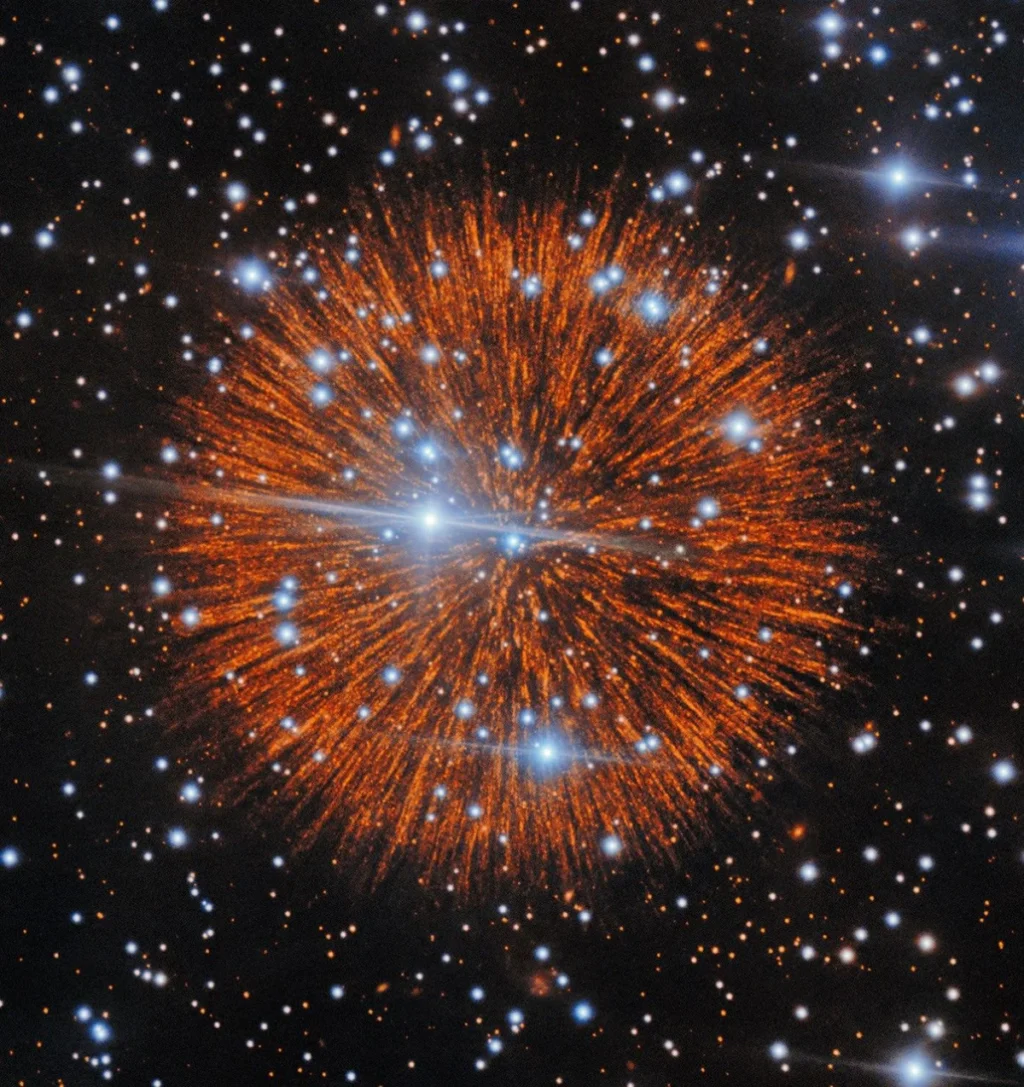
The universe continues to unveil its breathtaking spectacles, and the latest offering from the Astronomy Picture of the Day (APOD) program showcases Nebula Pa 30, a celestial phenomenon that resembles a vibrant, explosive firework against the backdrop of a star-filled abyss. Captured by the formidable Gemini North Telescope in Hawai’i, this image is more than just a visual marvel; it is a tantalizing clue to an astronomical event that occurred over eight centuries ago, baffling scientists then and continuing to do so today.
A Celestial Spectacle Echoing Through Time
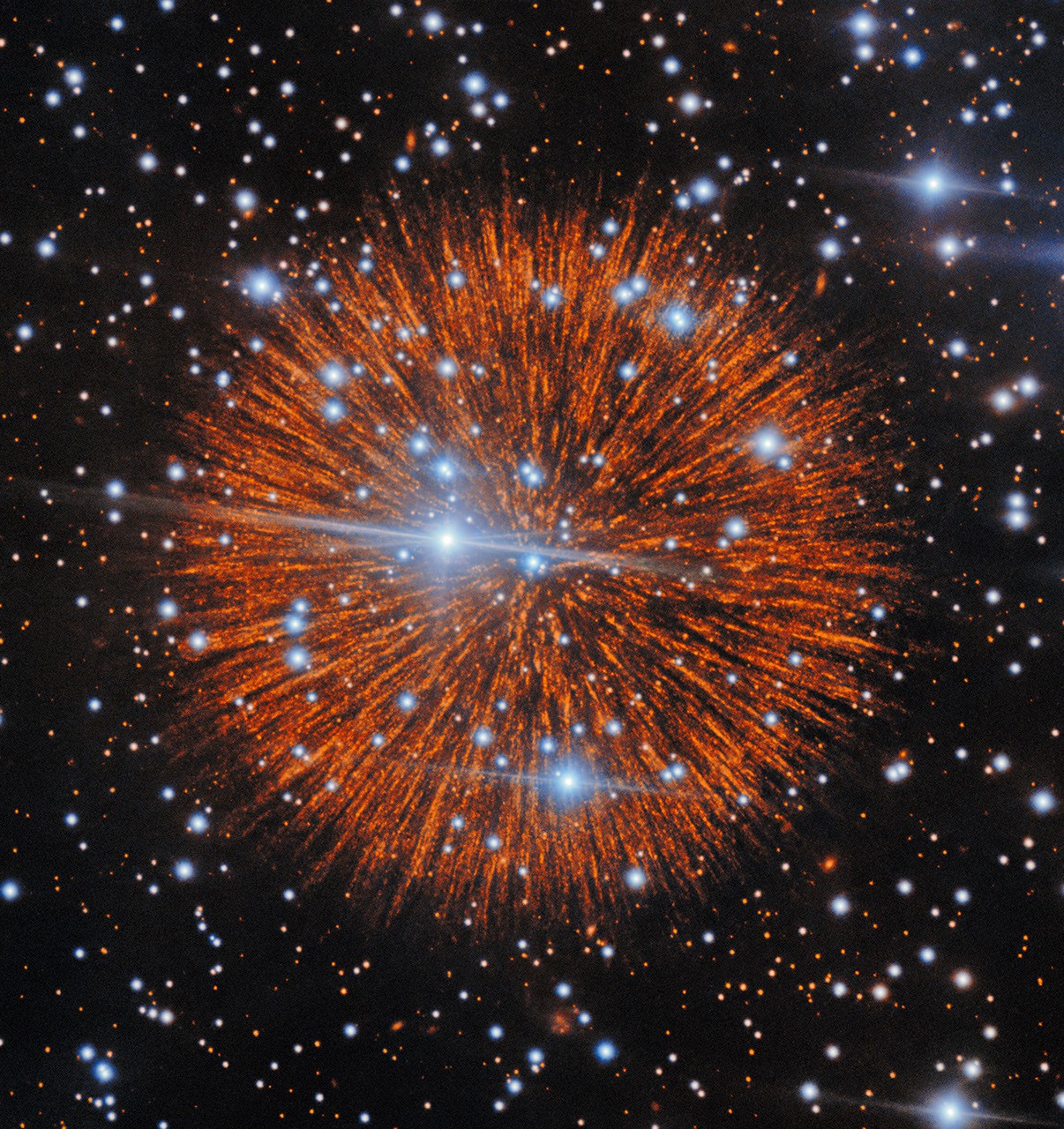
The striking visual of Nebula Pa 30, with its red, radially expanding plumes, might easily be mistaken for a festive pyrotechnic display. However, astronomers have identified it as the likely remnant of an ancient supernova explosion. The compelling connection lies in historical records from the year 1181, meticulously documented by Chinese, Japanese, and Arabic astronomers. These records speak of a "guest star," an exceptionally bright celestial object that appeared in the night sky and remained visible for an astonishing 185 days. It is widely believed that this ephemeral visitor was the supernova that gave birth to the intricate structure of Nebula Pa 30.
This supernova, classified as a Type Iax supernova, is a rarer and more peculiar type than its more common counterparts. Unlike typical supernovae that result from the complete collapse of a massive star, Type Iax supernovae are thought to arise from the complex interaction of two white dwarf stars. White dwarfs are the dense, collapsed cores of stars that have exhausted their nuclear fuel. The prevailing theory suggests that in this particular event, one white dwarf accreted material from its companion, pushing it over a critical mass limit. Instead of a complete detonation, this process may have led to a partial explosion, leaving behind a significant stellar remnant and a still-enigmatic nebula.
Unraveling the Mystery: The Gemini North Telescope’s Contribution
The Gemini North Telescope, a powerful instrument situated atop Mauna Kea in Hawai’i, provided the high-resolution imagery essential for studying Nebula Pa 30. Its advanced capabilities allowed astronomers to observe the fine details of the nebula, including the mysterious central star and the delicate filaments extending outwards. The central star, a subject of intense scientific interest, is exceptionally hot and emits a powerful stellar wind. This wind is believed to be the driving force behind the formation of the nebula’s radial filaments, sculpting the expelled stellar material into the observed structure.
A String of Cosmic Pearls: The Filaments and Knots
Examining the filaments of Nebula Pa 30 reveals an astonishing feature: pearl-like knots of matter strung along their lengths. These knots are not mere visual embellishments; they represent significant concentrations of material, each measuring approximately four light-days in diameter. To put this into perspective, four light-days is an immense distance, equivalent to the span of nearly 250 million miles. The presence of these knots suggests a complex and episodic ejection of material during the supernova event, or perhaps a later interaction with the expanding nebula. The precise mechanism by which these knots formed and are arranged remains a key area of ongoing research.
Historical Context: A Legacy of Celestial Observation
The story of Nebula Pa 30 is deeply intertwined with the history of astronomy. The accurate and detailed observations made by ancient astronomers underscore their remarkable skill and dedication. The fact that their records from 1181 align so closely with modern observations of a supernova remnant nearly a millennium later is a testament to the enduring nature of celestial phenomena and the continuity of scientific inquiry. These historical accounts serve as invaluable anchors, allowing astronomers to pinpoint the timing of such events and to connect them to observable cosmic remnants.
The recorded "guest star" of 1181 was a significant event, appearing as a new, bright star that outshone its celestial neighbors. Its sustained visibility for over half a year would have undoubtedly captured the attention and wonder of observers across different cultures. The rediscovery and identification of Nebula Pa 30 as the likely source of this ancient event is a triumph of modern astronomical detective work, linking historical eyewitness accounts with sophisticated telescopic observations.
The Enigma of Type Iax Supernovae
The classification of this supernova as Type Iax adds another layer of intrigue. These events are less understood than their more common Type Ia counterparts. While both involve white dwarfs, the exact mechanisms differ. Type Ia supernovae are crucial cosmological tools, used as "standard candles" to measure cosmic distances due to their consistent peak luminosity. Type Iax supernovae, however, exhibit a wider range of brightness and spectral characteristics, making them more challenging to interpret and utilize for cosmological purposes.
The prevailing hypothesis for Type Iax supernovae involves a partial deflagration of a white dwarf, where the star does not fully detonate but instead undergoes a significant explosion that expels a substantial portion of its mass. This is often theorized to occur when a white dwarf accretes material from a companion star, reaching a critical density and temperature that triggers a runaway nuclear fusion reaction. However, the precise conditions and outcomes can vary, leading to the observed diversity within this supernova class. The case of Nebula Pa 30 provides a unique opportunity to study the aftermath of such an event in unprecedented detail.
Implications for Stellar Evolution and Cosmic Understanding
The ongoing study of Nebula Pa 30 has significant implications for our understanding of stellar evolution, particularly the final stages of white dwarf stars and the diverse mechanisms that lead to supernovae. By analyzing the composition, structure, and dynamics of the nebula, astronomers can refine their models of these cataclysmic events.
Furthermore, understanding the formation of structures like the radial filaments and the "pearl-like knots" can shed light on the complex physical processes occurring during and after a supernova. These processes include shockwaves, stellar winds, and the interaction of expelled material with the interstellar medium. The extreme heat and powerful winds emanating from the central star are crucial factors in shaping the nebula, offering a window into the energetic environment created by such explosions.
The fact that this mystery has been unfolding for over 845 years, and continues to be a subject of investigation, highlights the vastness of cosmic time and the enduring quest for knowledge. Each new observation and analysis brings us closer to a complete understanding of this particular supernova and, by extension, the broader phenomena that shape our universe.
Expert Perspectives and Future Research
While the provided text does not include direct quotes from scientists involved in the observation or analysis of Nebula Pa 30, the credit attributions offer insight into the collaborative nature of such astronomical endeavors. The mention of T. Cunningham from the Center for Astrophysics – Harvard & Smithsonian as the Principal Investigator (PI) suggests leadership in the observational campaign. The image processing credits, including J. Miller and M. Rodriguez from the International Gemini Observatory/NOIRLab, T.A. Rector from the University of Alaska Anchorage, and D. de Martin and M. Zamani from NOIRLab, indicate a multidisciplinary effort involving data reduction and enhancement.
Future research will likely focus on more detailed spectroscopic analysis of the nebula’s composition to better understand the elements ejected during the supernova. Advanced simulations may also be employed to model the explosion and subsequent evolution of the nebula, attempting to replicate the observed features. The ongoing monitoring of the central star’s activity will also be crucial in understanding its role in maintaining the nebula’s structure.
A Continuous Journey of Discovery
Nebula Pa 30, as presented by APOD, serves as a potent reminder of the universe’s dynamic nature and its rich history. It is a testament to the power of scientific observation, both ancient and modern, in piecing together the grand narrative of cosmic evolution. The "fireworks" of Pa 30 are not merely a beautiful image; they are a lingering echo of an ancient cosmic drama, inviting us to continue exploring, questioning, and marveling at the wonders of the universe. The mystery of its formation, rooted in an event witnessed centuries ago, remains a compelling frontier in astrophysics, promising further revelations as scientists delve deeper into its celestial secrets.