Located at the strategic mouth of the Cape Fear River, Federal Point stands as a historic sentinel overlooking New Inlet, a crucial gateway to the river that once served as a lifeline for the colonial port of Brunswick and the bustling city of Wilmington. In 1861, Confederate forces recognized this commanding position and established an earthen-work fort, arming it with formidable coastal artillery. These defenses proved instrumental in keeping Wilmington’s port operational throughout much of the Civil War, a vital artery for the Confederacy until its eventual closure in February 1865. Today, this historically significant locale offers a different kind of allure, transforming into a prime destination for surf fishing and the rewarding pursuit of beachcombing. The optimal conditions for unearthing treasures from the sand, as local lore suggests, arrive just before low tide, particularly after a passing storm has churned the waters and reshaped the shoreline. It was under precisely these dynamic atmospheric conditions, during the twilight days of summer, that the author found themselves at Federal Point, accompanied by the Citizen Promaster JV3000, a timepiece that promised to be more than just a watch.
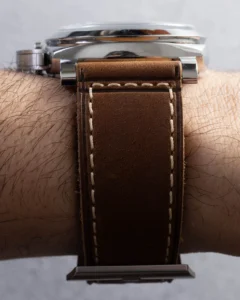
Citizen’s legacy in producing sailing watches dates back to 1985, a history that imbues the new WaveTracker with a deep understanding of maritime needs. However, this latest offering transcends the traditional sailing watch, potentially representing the brand’s most advanced watersports timepiece to date, especially for individuals who appreciate and rely on precise data. The WaveTracker features a robust 42.4mm stainless steel case, with a thickness of 13.9mm (often rounded to 14mm). While substantial, its dimensions are thoughtfully balanced, ensuring it does not feel overwhelming, even on a smaller wrist size of 6.5 inches. This comfortable wearability is further enhanced by a lug-to-lug measurement of 48.3mm. The accompanying rubber strap, a personal preference for the author, contributes significantly to the watch’s perceived lightness and wearability compared to the bracelet, which tends to increase the overall size and weight. With an impressive 200 meters of water resistance, the WaveTracker is equally adept at withstanding the deluge of spray from a high-speed racing catamaran as it is during diving excursions.

A Deep Dive into the WaveTracker’s Design and Functionality
The rubber strap on the WaveTracker is a standout feature. Eschewing the rigidity often found in comparable dive watches, such as some iterations of the Aqualand, it offers a supple and comfortable fit. The strap is meticulously designed with deep grooves on the underside for enhanced grip and ventilation, while the top features a recessed mid-section proudly displaying the Promaster branding. This thoughtful execution contributes to a secure and pleasant wearing experience. The vibrant orange-on-orange color scheme, while bold, is undeniably striking and, in this instance, proves to be a preferred aesthetic choice for the author, demonstrating that daring design choices can indeed be highly effective.
The watch is equipped with a bi-directional friction bezel, a crucial element for navigation and timing. This bezel features an aluminum insert meticulously marked with degrees, sitting nearly flush with the scratch-resistant sapphire crystal. For those not deeply involved in sailing, this particular scale might present a slight learning curve. The author expresses a preference for a more universally applicable elapsed time or 12-hour scale, or perhaps a split scale combining both functionalities. Beneath the regatta-themed rehaut lies a sophisticated black sunray dial. This dial is adorned with luminescent markers and hands, ensuring visibility in low-light conditions. Integrated into the dial at the noon position is a Memory-in-Pixel (MIP) display, and at the six o’clock mark, a complication indicator. To maintain a clean aesthetic, the dial text has been strategically positioned at the 9:00 and 3:00 positions, with the Promaster logo, water resistance rating, and Citizen Eco-Drive text completing the display.
The sunray dial’s design is both considered and practical. The inverted digital display remains remarkably legible, even when viewed through polarized sunglasses, a vital feature for any watch intended for use on or near the water. The hands, hour markers, and the complication indicator hand are all lumed. However, the luminescence is noted to be slightly less intense than typically observed on other Citizen Promaster dive watches, though it remains serviceable for early morning aquatic activities. A subtle yet useful touch is the small red backlight for the MIP display, activated by a pusher at the 4:00 position. This illumination is discreet enough not to disrupt night vision but bright enough to be easily read in darkness.

The Eco-Drive Heart: Caliber U812 and User Interface
At the core of the WaveTracker lies the Caliber U812, representing the pinnacle of Citizen’s Eco-Drive technology for tool watches. This solar-powered movement eliminates the need for battery replacements, converting both natural and artificial light into energy. The operational interface is designed for intuitive data access. The upper pusher is used to cycle through the various screens displaying the current complication settings. The lower pusher activates the red backlight for the MIP display. This backlight is designed to be almost imperceptible during daylight hours but provides sufficient illumination at night without causing eye strain or compromising dark adaptation. A single press of the crown toggles the MIP display between negative and positive modes, allowing for greater flexibility in viewing the digital information. Once the display mode is selected, the two pushers can be used to navigate through the available complications. The "SET" tab provides access to all individual settings, enabling further fine-tuning of the watch’s functions.
A Revolution in Analog-Digital Synchronization
A particularly noteworthy advancement highlighted by the author is the effortless synchronization of the analog and digital time displays. In contrast to the often-cumbersome process found on many ana-digi watches, such as the author’s beloved Aqualand, the WaveTracker offers a seamless experience. The analog time is set directly through the digital interface, with the watch hands automatically adjusting to reflect the precisely set time. This "revelation" of automatic hand movement marks a significant improvement, eliminating the frustration of misaligned second hands and making adjustments for daylight saving time a simple task rather than a dreaded chore. The author expresses a strong desire for this innovative technology to be integrated into a future iteration of the classic Aqualand design, indicating a significant market demand for such a fusion.
Navigational Tools and Data at Your Fingertips
The WaveTracker boasts an impressive array of complications, catering to a wide range of maritime and everyday needs. These include an alarm, chronograph, a distinct timer function (separate from the chronograph and alarm), a race timer, a perpetual calendar, world time, and a tide graph. The breadth of functionality is comparable to some G-SHOCK models, yet the WaveTracker’s interface is thoughtfully organized for practical maritime use. Each complication is accessed through a series of sub-menus, navigated by pressing the pusher at the 2:00 position. The calendar function, for instance, begins with a simple display of the date, then expands to show the digital readout of the date and time, followed by the full year, current timezone, and daylight saving status.

Among the suite of complications, the tide graph emerges as a particularly favored feature for the author. Living in an area with tidal influences, the ability to compare the watch’s readings with the actual tidal conditions proves to be an engaging and informative experience. The WaveTracker’s tide graph offers data for 203 locations worldwide. While the closest available location for the author was more than three hours away, this did not diminish the utility of the feature for observing general tidal patterns. The author describes a specific morning at Federal Point where the receding tide revealed a rich tapestry of marine detritus, including broken shells and discarded bivalve halves, scattered across the intertidal zone. This natural display, set against a backdrop of pelican sorties and the quiet scurry of sanderlings, provided a serene and evocative scene, enhanced by the watch’s ability to contextualize the ebb and flow of the sea.
A Compelling Companion for the Water-Centric Lifestyle
In the hypothetical scenario of embracing a life aboard a vessel, perhaps embarking on the Great Loop adventure, the Promaster WaveTracker would undoubtedly serve as an exceptional one-watch solution. Its comprehensive feature set, robust construction, and solar-powered efficiency make it an ideal companion for extended periods at sea. Even for those who do not live afloat, the WaveTracker proves to be an enjoyable and functional accessory for a variety of water-oriented activities. From fishing trips and beach excursions to simply spending time in, on, or near the water, its capabilities and aesthetic appeal make it a versatile choice.
The Citizen Promaster WaveTracker is available in several configurations. The orange variant on a rubber strap retails for $795. For those who prefer a blue dial paired with a stainless steel bracelet, the price is $850. A more luxurious option, featuring a gold-plated case and bracelet, is priced at $950. For further details and to explore the full range of Citizen’s offerings, interested parties are encouraged to visit the official Citizen website.

The historical significance of Federal Point, a site that once played a critical role in military strategy and maritime trade, now serves as a contemplative backdrop for modern exploration and technological appreciation. The evolution from a strategic military outpost to a locale for recreational pursuits mirrors the adaptability and enduring appeal of timekeeping instruments like the Citizen Promaster WaveTracker, which blends historical maritime functionality with cutting-edge technology for the contemporary adventurer. The watch’s capacity to provide precise data, from tide predictions to elapsed time, empowers users to engage more deeply with their environment, whether navigating treacherous waters or simply appreciating the subtle rhythms of the coast. This blend of history, nature, and technology makes the WaveTracker a compelling narrative on the wrist.