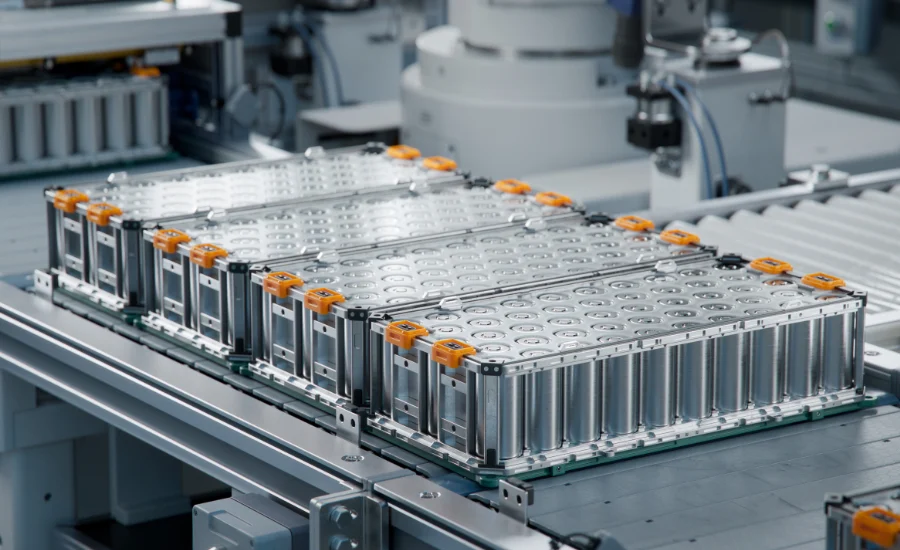
ANN ARBOR, Mich. – Wacker Chemical Corp., a global leader in silicones and polymers, has announced the introduction of a new suite of high-performance silicone materials specifically engineered to address the escalating challenges of thermal management, thermal runaway protection, and sophisticated assembly in the rapidly evolving landscape of integrated battery packs. The unveiling, timed with The Battery Show in Detroit, Oct. 12-15, underscores Wacker’s strategic focus on enabling safer, more efficient, and higher-performing electric vehicle (EV) and energy storage solutions. These innovations are particularly pertinent as battery designs transition from traditional module-to-pack configurations towards more integrated cell-to-pack architectures, demanding materials with unprecedented levels of performance and reliability.
Addressing the Core Challenges of Battery Design
The burgeoning demand for electric vehicles and renewable energy storage systems has placed immense pressure on battery technology, pushing the boundaries of energy density, charging speed, and longevity. However, these advancements are inextricably linked to the critical need for robust thermal management and stringent safety protocols. Lithium-ion batteries, while offering high energy density, are inherently susceptible to thermal events, including overheating and, in extreme cases, thermal runaway – a self-accelerating chemical reaction that can lead to fire or explosion. Wacker’s new materials directly confront these challenges, offering solutions across the battery pack lifecycle, from assembly and operation to critical safety interventions.
One of the standout innovations is ELASTOSIL CM 146 US A/B, a groundbreaking sprayable silicone coating designed to act as a crucial line of defense against thermal runaway propagation. This material remains flexible after curing, allowing for dynamic movement within the battery pack, but critically, it transforms into a hard ceramic shield at temperatures exceeding 600°C. This unique property provides an insulating barrier intended to protect surrounding cells and components during a localized thermal runaway event, preventing its spread throughout the entire battery pack. The ability to form a robust ceramic barrier at such high temperatures, while maintaining flexibility at ambient conditions, represents a significant leap in passive thermal protection. Traditional materials often struggle to balance these opposing requirements, either sacrificing flexibility for rigidity or failing to provide sufficient thermal resistance under extreme conditions. ELASTOSIL CM 146 US A/B’s dual functionality offers a critical safety enhancement, buying valuable time for detection and intervention, and significantly mitigating the risk of catastrophic failure in scenarios where a single cell might overheat.
For comprehensive battery potting applications, Wacker has introduced ELASTOSIL RT 7650 TC VS A/B. This low-viscosity, self-leveling silicone compound is specifically formulated to fill the intricate spaces within battery modules and packs, providing both thermal transfer capabilities and structural integrity. Its customizable thermal conductivity, ranging from 1.2 to 3.0 W/m·K, allows manufacturers to fine-tune the material’s heat dissipation properties based on specific battery designs and thermal requirements. Effective heat dissipation is paramount for lithium-ion batteries, as operating outside optimal temperature ranges can lead to accelerated degradation, reduced lifespan, and diminished performance. By efficiently transferring heat away from individual cells to a cooling system, ELASTOSIL RT 7650 TC VS A/B helps maintain battery performance, prolong cycle life, and enhance overall system safety. Furthermore, its two-part formulation offers primerless adhesion to common battery materials, simplifying the manufacturing process, reducing material consumption, and improving dispensing efficiency—factors crucial for high-volume EV production lines. The self-leveling characteristic ensures complete void filling, eliminating potential hot spots and enhancing the consistency of thermal management across the entire pack.
The third significant offering is SEMICOSIL PE 9351 TC VS A/B, a two-component hybrid adhesive targeting critical battery and electronics assembly challenges. This adhesive provides thermal conductivity up to 2.0 W/m·K, facilitating heat transfer at crucial interfaces. Its non-slump dispensing property ensures precise application, particularly important in complex, high-density designs. Coupled with room-temperature curing, this feature streamlines assembly processes, eliminating the need for energy-intensive heating steps and accelerating production cycles. The material also boasts UL 94 V-0 flame-retardant performance, meeting stringent safety standards for electronic components. This adhesive is strategically designed to support the industry’s ongoing transition towards increasingly integrated battery designs, specifically the shift from module-to-pack towards cell-to-pack (CtP) architectures. In CtP designs, individual cells are integrated directly into the battery pack structure, eliminating intermediate modules. While this approach offers benefits such as higher energy density, reduced weight, and simplified manufacturing, it also places greater demands on assembly materials to provide structural bonding, thermal management, and safety features in a more confined and thermally stressed environment. SEMICOSIL PE 9351 TC VS A/B is engineered to meet these exacting requirements, ensuring robust and reliable connections that can withstand the operational stresses of advanced battery systems.
The Broader Context: An Industry in Flux
The introduction of these advanced materials comes at a pivotal moment for the automotive and energy storage industries. The global electric vehicle market is projected to grow exponentially, with some estimates suggesting a compound annual growth rate (CAGR) exceeding 20% over the next decade. This rapid expansion is driving unprecedented innovation in battery technology, with a constant push for higher energy density, faster charging, and extended range, all while maintaining and improving safety standards.
Thermal management is not merely an auxiliary function but a core determinant of battery performance and safety. As Peter Zorney, senior director of WACKER’s Electronics and Automotive business segment for North and Central America, emphasized, "Thermal management is closely connected to both battery performance and the manufacturing process. Engineers have to consider how a material behaves during dispensing and curing, how it performs across operating temperatures and how effectively it supports the application over time while fulfilling increasingly demanding safety requirements." Zorney’s statement encapsulates the multi-faceted challenge material scientists face: developing compounds that not only perform under extreme operational conditions but also integrate seamlessly into high-speed, cost-sensitive manufacturing environments, all while meeting increasingly stringent safety regulations like UL 94 V-0 for flammability and UN 38.3 for transport safety.

The shift towards cell-to-pack (CtP) designs, pioneered by companies like CATL and increasingly adopted by major automakers, exemplifies the industry’s drive for efficiency and performance. By eliminating the module layer, CtP architectures can achieve a higher volumetric energy density, meaning more energy can be packed into the same space, leading to greater vehicle range or more compact battery designs. However, this integration also means that thermal stresses and potential thermal runaway events are more directly transmitted between cells, necessitating highly effective insulating and protective materials. Adhesives and potting compounds in CtP designs must not only provide structural integrity but also act as thermal pathways and fire barriers, a complex combination of properties that Wacker’s new offerings aim to deliver.
A Timeline of Innovation and Market Demand
Wacker Chemical Corp. has a long-standing history of innovation in silicone chemistry, a field that has found increasingly diverse applications across various industries. Over the past decade, as the electric vehicle market began its accelerated growth, Wacker, like many specialty chemical companies, intensified its focus on developing tailored solutions for automotive electronics and battery systems. This strategic pivot reflects a broader industry trend where material science companies are becoming indispensable partners in the development of next-generation EVs.
The development of materials like ELASTOSIL CM 146 US A/B, ELASTOSIL RT 7650 TC VS A/B, and SEMICOSIL PE 9351 TC VS A/B is the culmination of years of research and development, often in close collaboration with leading battery manufacturers and automakers. This iterative process involves understanding the evolving demands of battery technology, anticipating future architectural shifts, and engineering materials that can meet increasingly rigorous performance, safety, and manufacturing efficiency criteria. The presentation of these materials at The Battery Show, a premier industry event, serves as a timely marker of Wacker’s readiness to support the next phase of EV and energy storage innovation.
Implications for the Industry and Consumers
The implications of Wacker’s new silicone solutions are far-reaching, impacting battery manufacturers, automakers, and ultimately, consumers.
For battery manufacturers and automakers, these materials offer critical tools to enhance product safety and performance. The ELASTOSIL CM 146 US A/B coating provides an advanced layer of thermal runaway protection, potentially reducing the incidence and severity of battery fires, which remain a significant public concern and regulatory hurdle for EV adoption. The customizable thermal conductivity of ELASTOSIL RT 7650 TC VS A/B, coupled with its efficient dispensing properties, enables optimized thermal management, leading to batteries with longer lifespans, more consistent performance across varying climates, and faster charging capabilities. The SEMICOSIL PE 9351 TC VS A/B adhesive facilitates the adoption of advanced cell-to-pack architectures, which promise higher energy density and lower manufacturing costs, thereby contributing to more affordable and competitive EVs. The primerless adhesion and room-temperature curing features of these materials also translate directly into improved manufacturing efficiency, reduced cycle times, and lower production costs, which are vital for scaling EV production to meet global demand.
For consumers, these innovations translate into tangible benefits: safer electric vehicles with a reduced risk of thermal events, longer battery life, and more reliable performance over the vehicle’s lifetime. As battery technology continues to evolve, the underlying material science becomes increasingly crucial for ensuring that these advancements are implemented safely and sustainably. The UL 94 V-0 flame retardancy and enhanced thermal stability contribute directly to greater peace of mind for EV owners.
Furthermore, the continuous development of such specialized materials underscores the intense competition and innovation within the specialty chemicals sector, as companies vie to provide the foundational components for the future of mobility and energy. Wacker’s strategic focus on these high-growth segments positions it as a key enabler for the ongoing electric revolution. As the industry moves towards even higher energy densities and faster charging rates, the demands on thermal management and safety materials will only intensify, making solutions like those offered by Wacker Chemical Corp. indispensable for the continued progress and widespread adoption of electric transportation and renewable energy storage.