A groundbreaking study led by an international team of physicists, supported by the Foundational Questions Institute (FQxI), has unveiled a radical proposition: certain alternative theories to standard quantum mechanics, known as quantum collapse models, could imply a fundamental, albeit infinitesimally small, uncertainty in the very fabric of time itself. This profound finding, published in Physical Review Research, not only offers a novel perspective on the enigmatic relationship between quantum mechanics and gravity but also points towards a potential pathway for experimentally distinguishing these unconventional theories from the prevailing standard quantum mechanics. The research suggests that while this intrinsic temporal uncertainty would be far too minute to impact even the most advanced modern atomic clocks, its existence could serve as a crucial clue in the long-standing quest to unify the disparate realms of the quantum world and the gravitational universe.
The Quantum Realm: A Challenge to Reality
Quantum mechanics, the foundational theory describing the behavior of matter and energy at the atomic and subatomic scales, has consistently presented a picture of reality that profoundly challenges our everyday intuition. At its core lies the concept of superposition, where particles can exist in multiple states simultaneously—be it occupying several positions at once or possessing multiple spin orientations. This probabilistic existence is mathematically described by a "wavefunction," a comprehensive representation of all potential states and their associated probabilities for a given quantum system. For instance, an electron might exist in a superposition of being both here and there until an observation is made.
This inherent fuzziness stands in stark contrast to our macroscopic world, where objects are perceived to exist in a single, definite state at any given moment. To reconcile this discrepancy, standard quantum mechanics postulates the phenomenon of "wavefunction collapse." According to this widely accepted interpretation, the act of measurement or observation instantaneously forces a quantum system out of its superposition, causing its wavefunction to "collapse" into a single, definite outcome. This "measurement problem" has been a source of intense debate and philosophical inquiry among physicists for nearly a century, raising questions about the role of the observer, the nature of reality, and the boundary between the quantum and classical worlds. Is consciousness required for collapse? Does the universe branch into multiple realities with each measurement? These are questions that standard quantum mechanics, while incredibly successful in its predictive power, does not fully answer.
Beyond Standard Quantum Mechanics: The Rise of Collapse Models
Beginning in the 1980s, a distinct class of theories emerged to address the measurement problem without invoking an external observer or the complexities of multiple universes. These are known as quantum collapse models, or objective collapse theories. Unlike mere interpretations of quantum mechanics, which primarily offer different conceptual frameworks for understanding the theory’s implications while yielding identical experimental predictions to the standard model, collapse models go further. They propose a physical mechanism for spontaneous wavefunction collapse, independent of any measurement apparatus or conscious observer. This means they predict subtle physical effects that, at least in principle, could be measured, thereby making them testable against standard quantum mechanics.
One of the earliest and most influential objective collapse theories is the Ghirardi–Rimini–Weber (GRW) model, proposed in 1986. This model posits that particles undergo spontaneous, random localizations at an incredibly slow rate. While a single particle might collapse only once every hundred million years, a macroscopic object containing countless particles would experience a constant barrage of these collapses, effectively keeping it localized and preventing it from entering noticeable superpositions. The GRW model paved the way for more sophisticated theories, including the Continuous Spontaneous Localization (CSL) model, which envisions a continuous, stochastic "noise" field interacting with quantum systems, driving their collapse. These models aim to provide a unified description where quantum mechanics seamlessly transitions into classical physics without the need for an ill-defined "measurement" event.
Gravity’s Role in Quantum Collapse: The Diósi-Penrose Model
The research team, spearheaded by Nicola Bortolotti, a PhD student at the Enrico Fermi Museum and Research Centre (CREF) in Rome, Italy, delved into two specific collapse models. One of these was the renowned Diósi-Penrose model, named after Lajos Diósi (a co-author and FQxI member from the Wigner Research Center for Physics and Eötvös Loránd University, Budapest) and Sir Roger Penrose, the eminent British mathematical physicist and Nobel laureate. Sir Roger Penrose, known for his groundbreaking work in general relativity and cosmology, proposed a deep connection between quantum mechanics and gravity as early as the 1990s.
Penrose’s central idea is that gravity itself might be responsible for inducing wavefunction collapse. He argued that a quantum system in a superposition of two spatially separated states, each with a different mass distribution, would also be in a superposition of two different spacetimes. According to general relativity, each mass distribution creates its own gravitational field, subtly warping spacetime around it. Penrose suggested that such a superposition of spacetimes is inherently unstable. The energy difference between these two superposed gravitational configurations, he posited, creates a fundamental decoherence mechanism that forces the system to choose one definite state over a characteristic timescale related to this gravitational self-energy. In essence, gravity acts as an intrinsic "self-measurement" device, resolving quantum ambiguities for sufficiently massive objects. The Diósi-Penrose model provides a quantitative framework for this concept, linking the collapse rate to the mass and spatial separation of the superposed states.
The Research Unveiled: Linking Collapse to Gravitational Fluctuations
The international team, which included FQxI member Catalina Curceanu, research director at the Laboratori Nazionali di Frascati of the National Institute for Nuclear Physics (INFN-LNF) in Frascati, Italy, Kristian Piscicchia, at CREF and INFN-LNF, and Simone Manti of INFN-LNF, explored the implications of these models with a particular focus on their connection to gravity. "What we did was to take seriously the idea that collapse models may be linked to gravity," Bortolotti explained. "And then we asked a very concrete question: What does this imply for time itself?"
Beyond the Diósi-Penrose model, the researchers also examined the Continuous Spontaneous Localization (CSL) model. While CSL has traditionally been formulated independently of gravity, the team made a significant breakthrough by establishing, for the first time, a quantitative connection between the CSL model and gravitational fluctuations in spacetime. This was a crucial step, as it allowed them to explore the gravitational implications across a broader spectrum of collapse theories. By linking the stochastic collapse mechanism of CSL to the inherent fluctuations of the gravitational field, they provided a more unified perspective on how these models might interact with the fundamental structure of spacetime. Their rigorous mathematical framework allowed them to calculate the consequences of these gravitational links for fundamental physical quantities, especially time.
A Subtle Uncertainty in the Fabric of Time
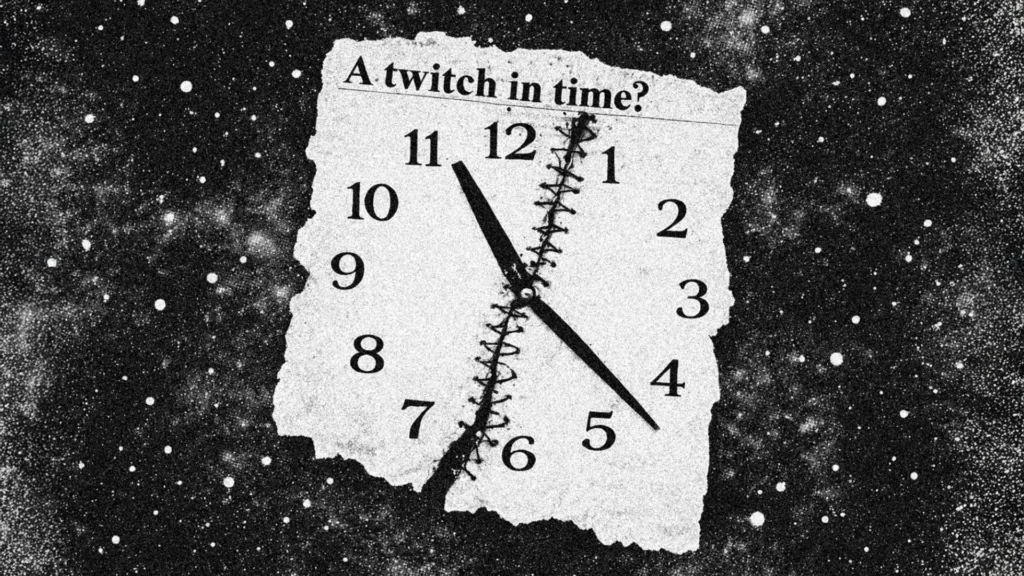
The calculations performed by Bortolotti and his colleagues yielded a striking and profound conclusion: if these quantum collapse models, particularly those with a gravitational underpinning, are accurate descriptions of nature, then time itself should possess an intrinsic, minuscule amount of uncertainty. This implies that there is a fundamental, irreducible limit to how precisely time can ever be measured, regardless of how perfect our clocks become. It’s not a matter of technological limitations, but rather a property embedded in the very fabric of spacetime, a consequence of the spontaneous localization processes that resolve quantum superpositions.
This predicted effect, however, is extraordinarily small. "Once you do the calculation, the answer is clear and surprisingly reassuring," Bortolotti stated. The intrinsic uncertainty in time is many orders of magnitude below anything that current or even foreseeable future technologies can measure. Catalina Curceanu emphasized this point: "The uncertainty is many orders of magnitude below anything we can currently measure, so it has no practical consequences for everyday timekeeping." Kristian Piscicchia further reassured, "Our results explicitly show that modern timekeeping technologies are entirely unaffected." To put this into perspective, if the most precise clocks currently operating were affected, their precision would have to be improved by factors of quadrillions—a level far beyond present capabilities.
Measuring the Unmeasurable: Current Timekeeping Precision
To understand the scope of this "unmeasurability," it’s essential to appreciate the extraordinary precision of modern timekeeping. The past few decades have witnessed a revolution in atomic clock technology, pushing the boundaries of precision to unprecedented levels. Today, the most advanced experimental optical atomic clocks, such as those based on strontium or ytterbium atoms trapped in optical lattices, can achieve fractional frequency instabilities of less than 1 part in 10^18. This means they would neither gain nor lose a second in tens of billions of years, a period longer than the age of the universe. For instance, the National Institute of Standards and Technology (NIST) in the U.S. and other laboratories worldwide have developed clocks that can measure time with such accuracy that they are sensitive to changes in gravitational potential caused by a mere centimeter difference in height.
These clocks are not just scientific curiosities; they are vital for a myriad of applications, including global positioning systems (GPS), which rely on precise time synchronization to determine location with high accuracy. They are also critical tools for fundamental physics research, enabling tests of general relativity, searches for variations in fundamental constants, and explorations of dark matter. The predicted intrinsic uncertainty in time stemming from collapse models is so small that it lies far, far beyond these current state-of-the-art capabilities. While current atomic clocks measure time with astonishing precision, revealing effects like gravitational time dilation, the proposed quantum uncertainty remains utterly imperceptible within our current technological grasp. This reinforces that while the theoretical implication is profound, its practical impact on our daily lives or even cutting-edge scientific endeavors is nonexistent for the foreseeable future.
The Unification Quest: Quantum Mechanics and Gravity
The work by Bortolotti’s team touches upon one of the most formidable and enduring challenges in theoretical physics: the reconciliation of quantum mechanics with Albert Einstein’s general theory of relativity. Quantum mechanics, with its probabilistic nature and discrete energy levels, excels at describing the microscopic world of particles, atoms, and forces like electromagnetism, the strong force, and the weak force. In contrast, general relativity, Einstein’s monumental theory of gravity, masterfully describes the macroscopic universe—planets, stars, galaxies, and the cosmos as a whole—by portraying gravity not as a force, but as a curvature of the four-dimensional fabric of spacetime caused by mass and energy.
Both theories have been rigorously tested and have proven remarkably accurate within their respective domains. The problem arises when physicists attempt to combine them into a single, overarching "theory of everything." The fundamental incompatibility lies in their treatment of time and space. In standard quantum mechanics, time is typically treated as an external, classical parameter, a fixed backdrop against which quantum events unfold. It is not a dynamical variable influenced by the quantum system under study. "In standard quantum mechanics, time is treated as an external, classical parameter that is not affected by the quantum system being studied," explains Catalina Curceanu.
General relativity, however, paints a radically different picture. Here, space and time are inextricably linked into a dynamic, flexible entity called spacetime. Spacetime is not a passive stage but an active participant, capable of bending, stretching, and warping in response to the distribution of mass and energy within it. This fundamental difference—time as a fixed parameter versus time as an integral, dynamic component of spacetime—is a major stumbling block in the path toward a unified theory of quantum gravity. Theories like string theory and loop quantum gravity are ambitious attempts to bridge this chasm, but a universally accepted framework remains elusive. The new results from the FQxI-supported team suggest that quantum collapse models, by intrinsically linking quantum processes to gravitational phenomena and hinting at a fluctuating nature of time, may offer a novel perspective or a crucial clue about how quantum physics, gravity, and the very concept of time might ultimately interlock within a deeper, more comprehensive theory.
Paving the Way for Experimental Verification
Beyond its theoretical implications, the research also offers a practical benefit: a potential avenue for experimentally testing these radical ideas. Since quantum collapse models predict measurable effects that diverge from the predictions of standard quantum mechanics, extremely precise experiments could eventually help determine whether these ideas describe something real in nature. While the predicted uncertainty in time is currently beyond detection, the gravitational coupling within these models can lead to other testable phenomena.
For instance, these models predict a tiny spontaneous emission of radiation from isolated quantum systems, a phenomenon that could be sought in highly sensitive experiments designed to detect faint electromagnetic signals. Another promising direction involves interferometry experiments with increasingly massive objects. As quantum systems become more massive, the collapse rate predicted by these models increases. Therefore, observing a deviation from standard quantum mechanics in the superposition behavior of relatively large particles (nanoparticles, for example) could provide direct evidence for collapse models. Experiments are already underway globally to push the boundaries of creating and maintaining quantum superpositions of larger and larger objects. While extremely challenging, such experiments could eventually provide the empirical data needed to either confirm or refute the physical reality of spontaneous collapse. The work of Bortolotti and his team, by providing a quantitative framework for the gravitational implications of these models, helps refine the predictions and guide the design of these future high-precision experiments.
Championing Foundational Physics
Catalina Curceanu underscored the critical importance of supporting research into these types of unconventional yet fundamental questions at the very foundations of physics. "There are not many foundations in the world which are supporting research on these types of fundamental questions about the universe, space, time, and matter," she noted, acknowledging the crucial role played by institutions like FQxI. The Foundational Questions Institute, by design, champions investigations into deep, speculative, and often interdisciplinary problems that challenge conventional paradigms in physics, cosmology, and the nature of reality.
This support is vital because such foundational research, while seemingly abstract, often leads to revolutionary breakthroughs and a deeper understanding of the universe. The study’s findings, even if the predicted effect is currently unmeasurable, represent a significant step in this ongoing intellectual journey. Curceanu concluded, "Our work shows that even radical ideas about quantum mechanics can be tested against precise physical measurements, and that, reassuringly, timekeeping remains one of the most stable pillars of modern physics." This dual message—the validation of bold theoretical exploration and the affirmation of the incredible stability of our most precise scientific tools—highlights the delicate balance and relentless pursuit of knowledge that characterizes contemporary physics. The research, partially supported through FQxI’s Consciousness in the Physical World program, exemplifies how probing the most basic tenets of reality can lead to unexpected connections and illuminate paths toward a more complete understanding of our universe.