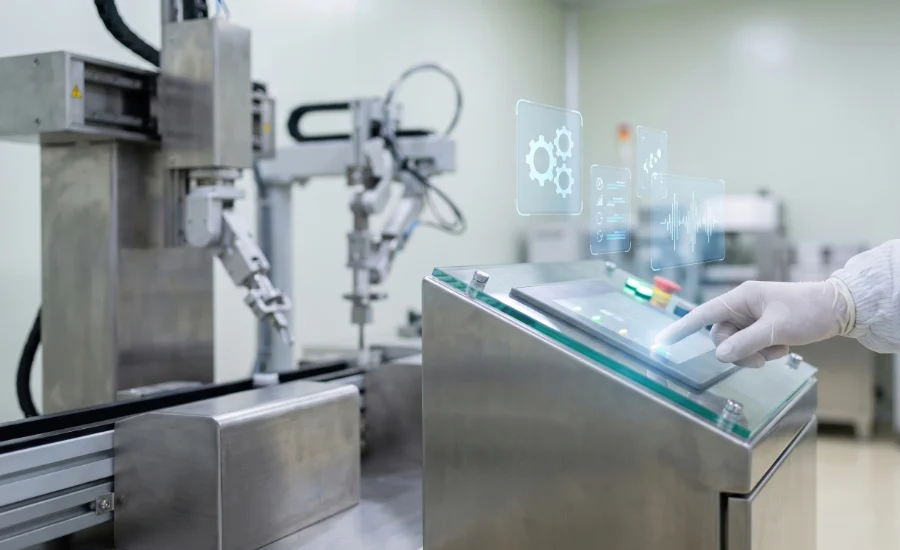
Amazon Web Services (AWS) has introduced an open-source Physical AI Toolchain, a groundbreaking initiative designed to empower manufacturers in developing, training, simulating, and deploying intelligent robots and autonomous machines within complex industrial environments. This comprehensive platform, built on AWS’s robust cloud infrastructure and deeply integrated with NVIDIA’s cutting-edge Physical AI technology, consolidates essential software and development resources. Its core objective is to facilitate the creation of machines capable of advanced perception, sophisticated decision-making, and dynamic adaptation to ever-changing operational conditions on factory floors and beyond.
Defining Physical AI and its Industrial Imperative
Physical AI represents the next frontier in artificial intelligence, extending beyond digital realms into the physical world. It imbues machines with the ability to interact intelligently with their surroundings, learn from experience, and perform tasks that traditionally required human dexterity and cognitive processing. Unlike conventional industrial automation, which relies on pre-programmed instructions, Physical AI-driven systems possess autonomy, perception, and adaptability. This shift is critical for manufacturers grappling with global supply chain complexities, labor shortages, and the increasing demand for customized products and flexible production lines. The integration of Physical AI promises to unlock unprecedented levels of efficiency, safety, and agility across diverse manufacturing sectors, from automotive and electronics to pharmaceuticals and logistics.
The urgency for such a toolchain stems from the current bottlenecks in robotics development. Traditionally, creating intelligent robots involved bespoke software development, extensive hardware prototyping, and arduous real-world testing—processes that are not only time-consuming and capital-intensive but also prone to errors. The AWS Physical AI Toolchain aims to abstract away much of this underlying infrastructure complexity, allowing engineers and developers to focus their efforts squarely on innovation and the unique challenges of their specific applications. As Uwem Ukpong, Vice President of AWS Industries, articulated, “Physical AI is going to touch every industry that moves, builds, or makes things, and our customers are moving fast to capture that opportunity. We built the Physical AI Toolchain on AWS because customers told us that too much of their engineering effort was going to infrastructure instead of innovation. We want to flip that.” This statement underscores AWS’s strategic intent to democratize access to advanced robotics capabilities, making sophisticated Physical AI development accessible to a broader spectrum of enterprises.
A Collaborative Foundation: AWS and NVIDIA’s Synergy
The partnership between AWS and NVIDIA is pivotal to the power and scope of this new toolchain. AWS brings its unparalleled cloud computing infrastructure, scalable machine learning services, and extensive suite of IoT and edge computing solutions. NVIDIA, on the other hand, contributes its specialized expertise in accelerated computing, AI simulation, and foundational models for robotics. This synergy creates a formidable platform that leverages the strengths of both tech giants. NVIDIA’s Physical AI technology, particularly its Isaac platform, provides the simulation environments and robotics-specific AI tools essential for developing and testing intelligent machines.
NVIDIA Isaac Sim, a robotics simulation and synthetic data generation platform built on the NVIDIA Omniverse platform, is integrated into the toolchain, offering highly realistic, physically accurate virtual environments. This allows for the rapid iteration and validation of robotic behaviors without the need for physical prototypes, significantly reducing development cycles and costs. Isaac Lab provides a framework for reinforcement learning for robotics, while GR00T and Cosmos represent NVIDIA’s advanced work in general-purpose foundation models for robotics, enabling robots to learn a wide array of manipulation skills and adapt to novel objects and environments. The combination of AWS’s scalable compute and data services with NVIDIA’s simulation and AI models creates an end-to-end ecosystem where complex robotic systems can be designed, trained, and refined with unprecedented speed and fidelity.
The Open-Source Advantage: Democratizing Robotics Development
A defining characteristic of the AWS Physical AI Toolchain is its open-source nature. This approach holds significant implications for the broader robotics and manufacturing industries. By making the toolchain open-source, AWS fosters a collaborative ecosystem, inviting developers, researchers, and companies worldwide to contribute, customize, and innovate upon the foundational components. This accelerates the pace of development, reduces vendor lock-in, and allows for greater transparency and flexibility.
The benefits of open-source in this context are multi-faceted:
- Reduced Barrier to Entry: Smaller companies and startups can access powerful tools without prohibitive licensing costs, fostering innovation from a wider talent pool.
- Community-Driven Innovation: A vibrant community can contribute code, share best practices, and develop specialized modules, leading to a more robust and versatile toolchain.
- Faster Iteration and Improvement: Bugs are identified and fixed more quickly, and new features are integrated at an accelerated pace due to collective effort.
- Standardization and Interoperability: Open standards can emerge, making it easier for different robotic components and software systems to communicate and integrate seamlessly.
- Transparency and Trust: The open nature allows users to inspect the code, understand its workings, and build trust in the platform’s reliability and security.
This open-source strategy positions the AWS Physical AI Toolchain as a potential standard for industrial robotics development, much like Linux became a standard for operating systems or TensorFlow for machine learning. Industry analysts suggest that this move could significantly de-risk robotics investments for manufacturers, providing a clear pathway for integrating advanced AI into their operations without having to reinvent the wheel.
The Five Pillars of Physical AI Development
The toolchain meticulously addresses the entire lifecycle of Physical AI development, broken down into five critical stages:
-
Synthetic Data Generation: Bridging the Reality Gap
Developing robust AI models for robotics requires vast amounts of high-quality training data. However, collecting real-world data from industrial environments is often expensive, time-consuming, and potentially dangerous. The toolchain tackles this challenge head-on with powerful synthetic data generation capabilities. Leveraging NVIDIA Isaac Sim, developers can create highly realistic, physically accurate virtual environments and simulate millions of hours of robot interaction and sensor data. This synthetic data, indistinguishable from real-world data for AI models, allows for rapid iteration and training of perception systems, manipulation skills, and decision-making algorithms, significantly reducing the need for costly real-world data collection and annotation. This capability is particularly crucial for edge cases and rare scenarios that are difficult to encounter and capture in physical environments. -
Model Training: Learning from Data and Experience
Once synthetic data is generated, the next stage involves training the AI models that will govern the robot’s behavior. The toolchain integrates Amazon SageMaker, AWS’s fully managed machine learning service, providing a scalable and efficient environment for model training. Developers can train robots using a variety of methods, including imitation learning (learning from human demonstrations in virtual or real environments) and reinforcement learning (where robots learn optimal behaviors through trial and error in simulated practice scenarios). SageMaker’s capabilities allow for distributed training across multiple GPU instances, enabling the rapid development of complex models, including large foundation models tailored for robotic manipulation tasks like grasping, rotating, and precise object handling. -
Simulation and Validation: Ensuring Safety and Performance
Before deploying any AI model to a physical robot, rigorous testing and validation are paramount. The toolchain provides advanced simulation environments where trained models can be thoroughly tested and validated against a wide range of scenarios, including challenging edge cases and potential failure modes. This virtual testing ground, often leveraging digital twin concepts, allows developers to assess the robot’s behavior, identify potential safety hazards, and fine-tune performance parameters without risking damage to expensive physical hardware or disrupting production lines. NVIDIA Isaac Sim’s high-fidelity physics engine ensures that the simulated results accurately reflect how the robot will behave in the real world, thereby accelerating the deployment process and improving operational safety.
-
Edge Deployment: Real-Time Intelligence in Action
Intelligent robots in industrial settings require real-time decision-making capabilities, often in environments with intermittent connectivity or where low latency is critical. The toolchain facilitates edge deployment using AWS IoT Greengrass, a service that extends AWS cloud capabilities to local devices. This allows trained AI models to run directly on the robots or on nearby edge gateways, enabling them to process data, make decisions, and execute actions autonomously, even when disconnected from the cloud. Edge deployment minimizes latency, reduces bandwidth requirements, and enhances the security and reliability of robotic operations, ensuring that robots can perform their tasks effectively in dynamic factory environments. -
Continuous Improvement: The Cycle of Adaptive Learning
The development of Physical AI is not a one-time event but an ongoing process of refinement and adaptation. The toolchain incorporates mechanisms for continuous improvement. Once deployed, operational data collected from the physical robots—such as sensor readings, task completion rates, and error logs—can be fed back into the system. This real-world data serves as invaluable feedback, allowing developers to retrain and update their AI models, address new challenges, and optimize performance over time. This MLOps (Machine Learning Operations) approach for robotics ensures that intelligent machines can adapt to changing production requirements, learn new skills, and continuously enhance their efficiency and effectiveness throughout their operational lifespan.
Core Technologies Underpinning the Solution
The AWS Physical AI Toolchain is a mosaic of powerful cloud and AI services:
- Amazon SageMaker: For scalable and managed machine learning model training, hyperparameter tuning, and deployment.
- Amazon EC2 GPU instances: Providing the necessary computational horsepower for intensive simulations and AI model training.
- AWS IoT Greengrass: Enabling seamless edge deployment of AI models and local processing for real-time robotic operations.
- Amazon Bedrock AgentCore: For orchestrating complex AI workflows and integrating different AI models and services.
- NVIDIA Isaac Sim: The cornerstone for high-fidelity robotics simulation and synthetic data generation.
- NVIDIA Isaac Lab: A framework for reinforcement learning research and development in robotics.
- NVIDIA GR00T: A general-purpose foundation model for humanoid robots and complex manipulation.
- NVIDIA Cosmos: A platform for connecting and orchestrating different AI models and services within the NVIDIA ecosystem.
Manufacturers have the flexibility to adopt the entire integrated development stack or select individual components that can seamlessly integrate with their existing robotics and automation systems, offering a modular and adaptable solution.
Transformative Applications Across Industries
The applications of the Physical AI Toolchain are vast and varied, promising to revolutionize numerous industrial processes:
- Collaborative Robots (Cobots): Enabling cobots to learn new assembly tasks through human demonstration, adapt to variations in parts, and safely interact with human co-workers, increasing flexibility and productivity on assembly lines.
- Autonomous Mobile Robots (AMRs): Enhancing AMRs for logistics and warehousing, allowing them to navigate complex environments, optimize routes in real-time, handle dynamic obstacles, and perform advanced pick-and-place operations with greater precision and autonomy.
- Humanoid Systems: Laying the groundwork for cognitive humanoid robots capable of complex manipulation, learning from experience, and performing a wider range of tasks in unstructured environments, potentially addressing labor shortages in demanding roles.
- Quality Inspection: Equipping robots with advanced perception capabilities to perform intricate quality inspections, identifying defects that are difficult for human eyes to spot, and adapting to new product variations.
- Maintenance and Repair: Developing robots that can autonomously inspect machinery, diagnose issues, and even perform minor repairs in hazardous or hard-to-reach locations.
Early Adopters and Their Innovative Endeavors
Several pioneering robotics developers are already leveraging the AWS Physical AI Toolchain to push the boundaries of intelligent automation:
- NEURA Robotics: This German company is at the forefront of developing cognitive humanoid robots. By utilizing the toolchain, NEURA Robotics is enhancing its robots’ ability to learn from experience, adapt to new environments, and perform complex tasks that require human-like intelligence and dexterity. Their focus on cognitive capabilities positions them to create truly versatile and adaptable robotic assistants.
- RLWRLD: This innovator is developing an ambitious 8.1-billion-parameter foundation model specifically for robotic manipulation. Such a large-scale model aims to imbue robots with a generalized understanding of object properties and interaction physics, enabling them to perform a wide array of manipulation tasks—from delicate grasping to precise rotation and handling of diverse objects—with minimal specific training for each new item. The AWS toolchain provides the scalable compute and data management necessary to train and refine such a massive model.
- Config: This company has established a formidable data pipeline containing over 200,000 hours of robot action data. This extensive dataset, combined with the synthetic data generation capabilities of the AWS toolchain, is being used to generate additional, diverse training scenarios. This approach dramatically accelerates the training process for new robotic skills and ensures that AI models are robust against a wider variety of real-world conditions, minimizing deployment risks.
Strategic Vision and Broader Industry Impact
The introduction of the AWS Physical AI Toolchain marks a significant milestone in the journey towards fully autonomous and intelligent industrial systems. By providing a comprehensive, open-source, and cloud-native solution, AWS is effectively lowering the barrier to entry for advanced robotics development. This move is expected to democratize access to sophisticated AI capabilities, fostering a new wave of innovation across the manufacturing sector.
Industry experts believe this toolchain will not only accelerate the development of more capable robots but also drive standardization within the fragmented robotics ecosystem. The integration of established cloud services with specialized robotics platforms creates a cohesive environment that streamlines complex workflows. This could lead to faster product development cycles, improved operational efficiency, enhanced worker safety by automating hazardous tasks, and greater flexibility in manufacturing processes, allowing companies to respond more rapidly to market changes and consumer demands.
The economic implications are substantial. Increased automation and intelligent robotics can boost productivity, reduce manufacturing costs, and potentially enable the reshoring of manufacturing operations to regions seeking to regain competitive advantage. However, this also brings challenges, including the need for a skilled workforce capable of developing, deploying, and maintaining these advanced systems. Educational institutions and training programs will need to adapt to equip the next generation of engineers and technicians with the necessary expertise in cloud computing, AI, and robotics.
Challenges and the Path Forward
While the Physical AI Toolchain offers immense promise, its widespread adoption will entail navigating several challenges. Integrating new, complex AI systems with existing legacy industrial infrastructure can be a significant hurdle for many manufacturers. The sheer volume of data generated by intelligent robots necessitates robust data management and cybersecurity protocols. Furthermore, ethical considerations surrounding autonomous decision-making in critical industrial applications, as well as the societal impact on employment, will require careful attention and ongoing dialogue.
Nevertheless, the AWS Physical AI Toolchain represents a pivotal step forward. By providing a unified, scalable, and open-source platform, AWS is empowering manufacturers to harness the full potential of Physical AI, paving the way for a more automated, intelligent, and resilient future for industrial production worldwide. The ongoing collaboration between cloud providers, AI specialists, and robotics innovators will be crucial in overcoming these challenges and fully realizing the transformative vision of intelligent manufacturing.