In the quiet suburbs of Edina, Minnesota, a fifth-grade classroom led by veteran educator Allison Knoph is challenging the traditional boundaries of elementary education by proving that computer science is not merely a technical skill, but a foundational pillar of modern literacy. During the month of October, the most vibrant and vocal area of Knoph’s classroom is not the playground or the lunch table, but the creative writing station. Here, students are not just tethered to notebooks and pencils; they are immersed in Experience CS, a comprehensive, standards-aligned computer science curriculum designed to weave computational thinking into the fabric of core subjects like mathematics, science, and the arts.
The atmosphere is one of focused chaos, characterized by the sounds of laughter and collaborative problem-solving. As students navigate their programming projects, they are tasked with building digital characters, scripting narratives, and testing the comedic timing of jokes they have written into their code. For Knoph, the "giggling" that often erupts from the creative writing station is far from a distraction. Instead, she views it as a vital indicator of engagement and deep learning. This integration of computer science into the humanities represents a significant shift in pedagogical strategy, aiming to demystify technology and empower students to become creators rather than just consumers of digital content.
The Architecture of Experience CS
Experience CS is a curriculum specifically tailored for students in grades 3 to 8, covering the critical developmental window between ages 8 and 14. Developed with the support of the Raspberry Pi Foundation, the program is designed to be accessible to teachers who may not have a background in software engineering. The curriculum is divided into thematic units that align with existing educational standards, making it easier for schools to adopt without overhauling their entire schedules.
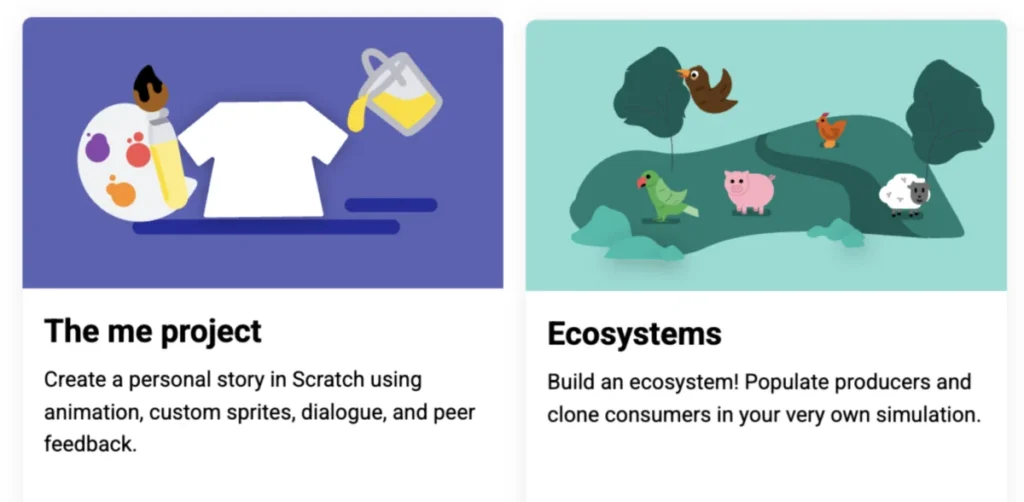
In Knoph’s classroom, two specific units have been implemented with varying degrees of success: "The Me Project" and "Ecosystems." "The Me Project," designed for children ages 9 to 10, focuses on identity and storytelling. It serves as a digital extension of the language arts curriculum, allowing students to use code to express their personal narratives. The unit provides a structured framework—signposts that students must hit—but the content remains entirely up to the individual. For example, while one student might meet the basic requirements and move on, another might spend weeks perfecting a multi-scene interactive story complete with custom sound effects and complex character arcs.
Conversely, the "Ecosystems" unit, intended for slightly older students (ages 12 to 13), presents a more rigorous challenge. It requires a deeper understanding of biological systems and the ability to simulate those systems through code. Knoph observed that while the "gung-ho" students—those with a natural affinity for logic and complexity—thrived in this unit, it highlighted the importance of developmental placement. The contrast between the two units underscores a fundamental truth in educational technology: for computer science to be effective in the elementary years, it must be contextualized within subjects that students are already passionate about.
Levelling the Playing Field: The Peer Support Model
One of the most profound impacts of integrating computer science into the general curriculum is its ability to reveal hidden talents in students who may struggle with traditional academic tasks. Knoph has observed a recurring phenomenon where students who face difficulties in reading or traditional writing often excel in the logical, sequential world of programming.
In one notable instance, a student who struggled with literacy emerged as a classroom leader during the Experience CS lessons. This student possessed an intuitive grasp of program sequencing—understanding how a series of commands must be ordered to achieve a specific outcome. Within a week, the social dynamics of the classroom shifted. Classmates who typically excelled in reading found themselves walking to this student’s desk to ask for help with their code.
This peer support model is not something Knoph has to engineer; it develops organically as students encounter bugs and logic errors. This "figuring it out" mentality, established early in the school year, creates a psychological safety net that persists through the spring. When a student encounters a difficult math problem or a complex writing prompt later in the year, the resilience they developed while debugging a program becomes a transferable skill. The classroom mantra becomes "We can figure it out," a phrase that transforms the teacher from a sole source of knowledge into a facilitator of discovery.
The Minnesota Context: A Crisis of Access
The urgency of Knoph’s work is underscored by the current state of computer science education in Minnesota. Despite being home to several major technology and medical device companies, the state ranks near the bottom of the United States in terms of computer science access for public school students. According to the 2023 State of Computer Science Education report, only 34 percent of Minnesota’s public high schools offer a foundational computer science course. This is significantly lower than the national average of 60 percent.
This disparity creates a "missing middle" in the workforce and leaves many students unprepared for the modern economy. For teachers like Knoph, the solution is to introduce these concepts long before students reach high school. By embedding computer science into the fifth-grade experience, educators can ensure that every student has at least some exposure to computational thinking, regardless of whether their future high school offers specialized electives. This "early and often" approach is seen by many education advocates as the only way to close the digital divide and ensure equitable access to high-paying tech careers.
Coding in the Age of Artificial Intelligence
A common critique of teaching coding in primary schools is the rise of Artificial Intelligence (AI). With tools like ChatGPT and GitHub Copilot capable of generating functional code in seconds, some argue that learning the syntax of programming is becoming obsolete. However, Knoph and the proponents of Experience CS argue the opposite: in the age of AI, comprehension is more important than ever.
The ability to generate code is no longer a barrier to entry, but the ability to read, judge, and debug that code remains a rare and valuable skill. Knoph illustrates this point through the lens of her son’s robotics team. The students who truly understood the underlying logic of their code were able to adapt when the robot performed an unexpected maneuver during a competition. In contrast, the students who had simply "dropped in" AI-generated code without understanding it were left helpless when things went wrong.
The goal of elementary computer science is not necessarily to turn every child into a professional software engineer. Rather, it is to teach computational thinking—the ability to break down complex problems into smaller, manageable parts (decomposition), recognize patterns, and create step-by-step solutions (algorithms). These are the same skills required for high-level writing and scientific inquiry. In Knoph’s view, debugging a story for narrative flow and debugging a program for logic are "closer cousins than most people think."
Overcoming Barriers to Implementation
If the benefits of computer science education are so clear, why aren’t more schools adopting it? Knoph identifies three primary barriers for elementary teachers: time, cost, and the "fear of the unknown."
Elementary educators are already tasked with meeting rigorous standards in reading, math, and social studies. Adding a new, standalone subject is often impossible. This is why the integration model of Experience CS is so effective; it allows teachers to meet existing standards through a new medium. Furthermore, the program is free, removing the financial hurdles that often prevent underfunded districts from accessing high-quality tech curricula.
Perhaps the most significant barrier, however, is the anxiety teachers feel about being asked a question they cannot answer. In a traditional classroom, the teacher is expected to be the expert. In a coding environment, the roles are often reversed. Knoph encourages her colleagues to embrace this vulnerability. By saying "I don’t know, let’s figure it out together," teachers model the very resilience and curiosity they want to instill in their students.
Conclusion: A New Standard for Literacy
As the educational landscape continues to evolve, the definition of literacy must evolve with it. The success of the Experience CS program in Edina serves as a blueprint for how schools can bridge the gap between traditional academics and the digital future. By fostering a classroom culture where "giggling" over a creative project is seen as a sign of success and where students are empowered to teach one another, educators like Allison Knoph are doing more than just teaching code. They are teaching children how to think, how to persist, and how to navigate a world where technology is the primary language of innovation.
The ultimate goal is to move the needle in states like Minnesota, ensuring that the 34 percent access rate becomes a relic of the past. As more ten-year-olds begin to say "We can figure it out" in response to a broken line of code, the foundation is laid for a more resilient, capable, and technologically literate generation. The creative writing station in Edina may be the loudest place in the room, but it is also where the future is being written, one line of code at a time.