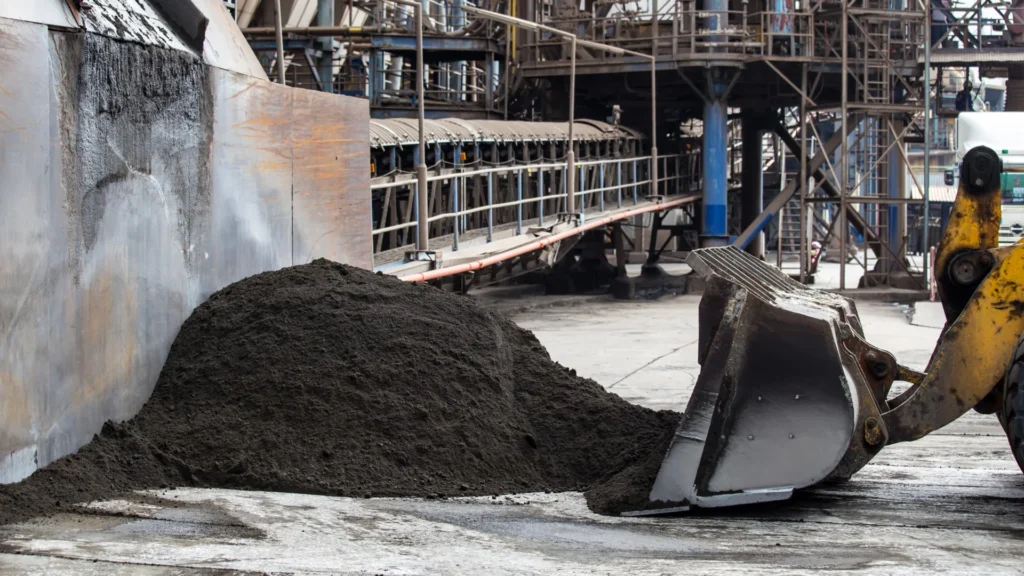
Industrial waste streams, traditionally viewed as costly disposal challenges, are increasingly recognized as untapped reservoirs of valuable materials. Coal ash, red mud, and mine tailings, often synonymous with environmental burdens, contain significant quantities of silica, rare earth elements (REEs), and other critical minerals essential for modern technology and national security. A groundbreaking research initiative, spearheaded by Worcester Polytechnic Institute (WPI), has secured a substantial $3.3 million award from the National Science Foundation’s (NSF) Growing Convergence Research program to explore an innovative paradigm: leveraging biological strategies employed by organisms like diatoms, sea sponges, and plants to recover these resources with vastly reduced energy consumption and reliance on harsh chemicals.
A Holistic Approach to Waste Transformation
This ambitious five-year, two-phase endeavor is under the expert leadership of Mingjiang Tao, an associate professor in WPI’s Department of Civil, Environmental, and Architectural Engineering. He is joined by co-principal investigators Professors Carrick Eggleston and Yan Wang, alongside a multidisciplinary consortium of researchers from esteemed institutions including George Mason University, the University of California San Diego, the University of Massachusetts Amherst, and the University at Buffalo. The collaborative nature of this project underscores the NSF’s emphasis on "convergence research," which brings together disparate fields to tackle complex, societal problems.
Professor Tao articulates a vision that extends beyond mere mineral recovery. "Recovering critical minerals is only part of the opportunity," he states. "We want to develop a process that uses as much of each waste stream as possible, separating strategically important elements while converting the remaining material into useful products. That whole-material approach could fundamentally change how industries manage waste and obtain essential resources." This philosophy represents a significant departure from traditional waste management, shifting from disposal to comprehensive resource utilization, effectively turning liabilities into assets.
The Dual Imperative: Waste Reduction and Resource Security
The project is strategically designed to address two interconnected global challenges. Firstly, the production of many silicon-derived materials — ubiquitous in concrete, glass, ceramics, semiconductors, and silicones — is notoriously energy-intensive and chemically demanding, requiring high temperatures and substantial processing. This energy footprint contributes significantly to industrial emissions and resource depletion. Simultaneously, industries worldwide generate colossal volumes of silicon-rich waste, including coal ash residue from power generation, red mud from alumina production, mine tailings from mineral extraction, construction debris like concrete and waste glass, and metallurgical slag from metal refining.
The sheer scale of these waste streams is staggering. Globally, billions of tons of industrial waste are generated annually. For instance, coal ash production in the United States alone amounted to approximately 70 million tons in 2021, much of which is stored in landfills and impoundments. Red mud, a byproduct of bauxite refining, is produced at a rate exceeding 150 million tons per year globally, accumulating in vast, environmentally challenging ponds. Mine tailings, the residue from ore processing, are generated in quantities that dwarf other industrial wastes, with some estimates suggesting several billion tons annually worldwide. These materials often occupy vast land areas, pose risks of groundwater contamination, and represent a significant environmental legacy.
Despite their classification as waste, these materials frequently contain useful silicon, critical minerals, and, crucially, rare earth elements (REEs). A compelling estimate, for example, suggests that U.S. coal ash landfills harbor approximately 11 million tons of REEs, valued at an astonishing $8.4 billion. This figure is nearly eight times the nation’s current raw domestic reserves, highlighting the immense untapped potential. Rare earth elements and other critical minerals are indispensable for a myriad of advanced technologies, ranging from high-performance magnets in electric vehicles and wind turbines to catalysts in petroleum refining, specialized alloys, advanced electronics (smartphones, computers), and critical defense systems. The secure and stable supply of these minerals is a pressing concern for industrialized nations, particularly given the geopolitical complexities surrounding their global production and supply chains, which are currently dominated by a few key players.
Nature’s Blueprint: A Cleaner Extraction Methodology
To unlock these hidden treasures, the WPI-led team is turning to the elegant and efficient processes perfected by nature over millennia. Diatoms, single-celled algae, are renowned for their intricate, silica-based cell walls. Sea sponges construct complex skeletal structures from silica. Certain plants also bioaccumulate silicon. These organisms achieve the collection of dissolved silicon and the construction of complex silica structures under remarkably mild conditions — ambient temperatures and pressures, and without the need for harsh, corrosive chemicals. They achieve this through the use of specialized biological molecules and organic scaffolds that precisely control mineral precipitation.
The research team aims to decipher and adapt these natural processes to create low-energy, environmentally benign methods for breaking down silicon-rich industrial waste. The overarching goal is twofold: first, to liberate the rare earth elements and other critical minerals physically or chemically trapped within the material matrix, making them available for recovery; and second, to convert the liberated silica itself into valuable, marketable products. This "whole-material" approach not only extracts high-value elements but also minimizes residual waste, embodying principles of circular economy and industrial symbiosis.
A Convergence of Disciplines: AI, Biology, and Materials Science
The project’s success hinges on its profoundly interdisciplinary nature, integrating expertise from biology, geochemistry, materials science, metallurgy, civil and environmental engineering, computational chemistry, and artificial intelligence. This convergence allows researchers to tackle the problem from multiple angles, leveraging advanced tools and methodologies.
A key innovative aspect of the research involves the application of advanced computational modeling and artificial intelligence (AI). Researchers plan to utilize these powerful tools to design specialized biomolecules — proteins, peptides, or other organic compounds — that can specifically interact with silicon-rich waste materials. AI algorithms will be employed to predict how these biomolecules will interact with the complex chemical structures found in coal ash, red mud, and mine tailings, identifying optimal binding sites, reaction pathways, and conditions for mineral dissolution or transformation. This predictive capability could dramatically accelerate the discovery process, allowing the team to identify the most promising biological approaches for mineral recovery and materials manufacturing much more quickly and efficiently than traditional trial-and-error laboratory methods.
As the lead principal investigator, Professor Mingjiang Tao will provide overarching management and coordination for the project. His specific research focus will be on biosilicification — understanding and harnessing the biological processes by which organisms form silica materials — and bio-enabled metallurgy, which seeks to use biological agents to facilitate the recovery of rare earth elements from these silicon-rich waste streams.
Professor Carrick Eggleston, a distinguished professor in the Department of Civil, Environmental, and Architectural Engineering with extensive expertise in geochemistry, will lead the foundational work on understanding and optimizing the chemical reactions. His team will delve into the intricate mechanisms by which silicate materials break down and, crucially, how they can be subsequently rebuilt into useful products. This includes examining reaction pathways and rates associated with silicate dissolution, repolymerization (forming new silicate structures), carbonation (reacting with CO2 to form carbonates), glass formation, and even silicone synthesis. His work is critical to both releasing the desired elements and transforming the bulk material.
Professor Yan Wang, the William B. Smith Professor of Mechanical and Materials Engineering, brings his widely recognized pioneering work in battery recycling and sustainable manufacturing to the project. He will spearhead the development of bioengineered methods specifically for the recovery of rare earth elements and other critical minerals. His expertise in material processing and resource recovery will be instrumental in translating the biological insights into practical, scalable extraction techniques.
From Research to Reality: Scaling and Economic Viability
A crucial component of the five-year project involves assessing the scalability and economic viability of these nascent technologies for industrial application. While laboratory success is foundational, the true impact of this research will be realized if the developed processes can be implemented practically and affordably at an industrial scale. This involves engineering considerations, cost-benefit analyses, and lifecycle assessments to ensure that the "cleaner approach" remains economically competitive and environmentally superior throughout its operational lifespan.
If the WPI-led approach proves successful and scalable, its implications could be transformative. It promises to open entirely new avenues for converting vast volumes of industrial waste, currently an environmental and economic burden, into high-value, marketable products. This paradigm shift holds multifaceted benefits:
- Reduced Dependence on Virgin Resources: By extracting critical minerals from waste, the project could significantly lessen the global reliance on newly mined resources, reducing the environmental disturbance associated with mining operations, such as habitat destruction, water pollution, and extensive land use.
- Lower Environmental Footprint: The use of biological processes, operating under mild conditions, inherently has a lower energy consumption and significantly reduces the need for hazardous chemicals compared to conventional pyrometallurgical or hydrometallurgical methods. This translates to reduced greenhouse gas emissions, decreased water pollution, and safer operational environments.
- Strengthened Domestic Supplies: For nations like the United States, which are heavily dependent on foreign sources for many critical minerals and REEs, this research offers a pathway to bolster domestic supply chains. Increased domestic production enhances economic security, reduces geopolitical vulnerabilities, and fosters national resilience in key technological sectors.
- New Industries and Job Creation: The development and deployment of these innovative waste-to-resource technologies could stimulate the creation of new industries, fostering economic growth and generating skilled jobs in the green technology sector.
Cultivating Future Innovators and a Sustainable Ecosystem
Beyond its direct research outcomes, the project is deeply committed to educational enrichment and ecosystem building. Graduate and undergraduate students from WPI will be integral participants in this multiyear endeavor, gaining invaluable hands-on experience in interdisciplinary STEM research through the university’s renowned immersive learning approach. This direct involvement ensures the training of the next generation of scientists and engineers equipped to tackle complex sustainability challenges.
The initiative explicitly aims to foster a broader "bioengineered, silicon-based materials ecosystem." This vision extends beyond the immediate research consortium, seeking to connect researchers across diverse fields, engage industry partners in developing and adopting these technologies, inform policymakers to create supportive regulatory frameworks, and inspire educators to integrate these cutting-edge concepts into curricula. By bridging sustainability, biotechnology, materials science, data science, and artificial intelligence, this WPI-led project is not just pursuing scientific discovery; it is actively working to lay the groundwork for a more circular, resource-efficient, and sustainable industrial future.