The global scientific community continues its relentless pursuit of understanding, marked by a recent surge of discoveries spanning quantum physics, materials science, environmental conservation, and fundamental nuclear research. These advancements underscore the iterative and often challenging nature of scientific progress, where breakthroughs emerge from persistent experimentation, rigorous replication, and the patient unraveling of complex questions that can take years or even decades to fully address. From manipulating quantum particles to developing sustainable materials and achieving new benchmarks in precision measurement, researchers worldwide are pushing the boundaries of what is known, continually refining the methods and evidence that form the bedrock of scientific knowledge. These latest findings, as highlighted by institutions and researchers globally, demonstrate the profound impact of dedicated research on both our fundamental understanding of the universe and the potential for transformative technological and societal applications.
Unlocking the Quantum Realm: Advances in Fundamental Physics and Computing
Recent weeks have seen significant strides in the enigmatic field of quantum mechanics, a domain that continues to challenge conventional understanding and promises revolutionary technologies. One such breakthrough involves the prevention of quantum tunneling, a phenomenon where particles can pass through energy barriers that classical physics dictates they should not be able to overcome. Scientists have reportedly achieved this feat by using a magnetic field that a quantum particle never physically crossed, demonstrating an unprecedented level of control over quantum states. This discovery, centered on the principle of magnetic flux, has profound implications for quantum computing and sensing, as controlling unwanted quantum tunneling is crucial for maintaining the coherence and stability of quantum bits (qubits). The ability to precisely manipulate quantum phenomena without direct interaction could lead to more robust quantum processors and more sensitive measurement devices, accelerating the development of quantum technologies.
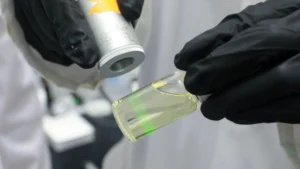
Furthering the quest for practical quantum applications, researchers have made headway in engineering quantum materials. An ultraviolet laser technique has been developed to create new defects in diamonds without disturbing existing quantum centers. These nitrogen-vacancy (NV) centers in diamonds are critical for quantum sensing and memory due to their stable quantum properties even at room temperature. The ability to precisely introduce new defects, which can serve as additional qubits or sensing nodes, opens pathways for fabricating more complex and scalable quantum devices. This precision engineering of quantum materials is essential for scaling up quantum systems from theoretical models to functional hardware.
In the realm of quantum communication, significant progress has been reported in achieving genuine entanglement without destroying photons. A team of scientists successfully entangled 13 qubits, a notable increase in the number of entangled particles while preserving the delicate quantum states of the photons involved. Entanglement, often described as "spooky action at a distance," is a cornerstone of quantum communication and computing, allowing for highly secure information transfer and powerful computations. The non-destructive nature of this entanglement is vital for building efficient quantum networks where photons can carry quantum information over long distances without degradation. Building on this, IonQ, a leader in quantum computing, announced a world-first achievement of 1,000 entanglements per second in a quantum memory link. This incredible speed of entanglement generation and preservation is a critical step towards building distributed quantum computing systems and a global quantum internet, enabling instantaneous and unhackable communication.
The application of quantum science extends beyond computing and communication into the fundamental mysteries of the cosmos. A smart US tool has been developed to significantly reduce the tuning time for quantum devices employed in the hunt for elusive dark matter. Dark matter, which constitutes about 27% of the universe’s mass, interacts weakly with ordinary matter, making its detection incredibly challenging. Quantum sensors, with their extreme sensitivity, are considered promising avenues for detecting hypothetical dark matter particles. This new tool automates and accelerates the calibration process, allowing researchers to explore a wider range of dark matter candidates and enhance the efficiency of these critical experiments, potentially bringing us closer to solving one of cosmology’s greatest puzzles.
Adding another layer to our understanding of the quantum world, a novel "camera" has been reported to capture atomic shockwaves before a quantum bit fully forms inside a crystal. This unprecedented imaging capability provides a real-time glimpse into the incredibly fast and complex processes that govern quantum state formation. Understanding these transient atomic-level dynamics is crucial for optimizing the performance and stability of qubits, providing insights that could lead to more robust and reliable quantum hardware. This kind of direct observation allows scientists to study the very genesis of quantum information, offering a powerful new diagnostic tool for quantum material science.
Further progress in quantum communication was marked by scientists making 90% identical photons. For robust quantum communication networks, it is essential to have photons that are indistinguishable from each other, as this property is vital for maintaining coherence and enabling successful entanglement distribution. Achieving such a high degree of photon identity represents a significant step towards creating scalable and efficient quantum networks, paving the way for future quantum internet infrastructure.
Finally, a 3D light field technique has allowed scientists to unlock electron states that were once considered impossible to reach. By precisely shaping light in three dimensions, researchers can exert fine-grained control over the quantum states of electrons within materials. This innovative method opens up new avenues for manipulating material properties at the quantum level, potentially leading to novel electronic devices, advanced catalysts, and a deeper understanding of fundamental electron behavior in various media.
Innovations in Materials Science and Chemistry
The realm of materials science and chemistry continues to yield practical and environmentally significant breakthroughs. In an effort to address plastic waste and enhance material properties, researchers have discovered that incorporating bamboo waste can make plastic 173% tougher. Beyond increased durability, this bamboo-enhanced plastic also demonstrates the ability to block unwanted signals in smartphones, suggesting potential applications in electromagnetic shielding. This innovation offers a dual benefit: a sustainable way to utilize agricultural waste and a method to create stronger, more functional plastics for various industries, from consumer electronics to construction. The environmental implications are substantial, offering a path to reduce reliance on virgin plastics and promote a circular economy for materials.
In chemistry, a light-driven method has been developed that uses elusive hydrogen atoms to transform chemicals without the need for traditional metal catalysts. Many industrial chemical processes rely on expensive and often environmentally problematic metal catalysts. This new photocatalytic approach offers a greener and more sustainable alternative, enabling complex chemical reactions using readily available hydrogen and light energy. Such advancements are crucial for developing more eco-friendly manufacturing processes and reducing the carbon footprint of the chemical industry.
The fundamental understanding and manipulation of material properties also saw significant progress. Scientists found that a tiny change in crystal size can flip a material’s magnetic ground state. This discovery highlights the critical role of nanoscale dimensions in determining macroscopic properties. Understanding this size-dependent magnetic behavior is vital for designing advanced magnetic materials for data storage, spintronics, and other high-tech applications where precise control over magnetic states is paramount. Similarly, breakthroughs in superconductivity continue to intrigue. Researchers have found a "ghost" of superconductivity that persists even after the state itself vanishes, a phenomenon observed in certain materials. Superconductivity, the ability of materials to conduct electricity with zero resistance, typically disappears above a certain critical temperature or magnetic field. The discovery of a "ghost" state suggests that some aspects of superconducting correlations might endure, offering new insights into the mechanisms of high-temperature superconductivity and potentially guiding the development of new superconducting materials.

Further deepening the understanding of this exotic state, scientists have caught a type-I superconductor breaking time-reversal symmetry. Time-reversal symmetry is a fundamental principle in physics, implying that the laws of physics are the same whether time flows forward or backward. Its breaking in a conventional type-I superconductor, which was previously thought unlikely, challenges existing theories and could lead to a re-evaluation of our understanding of superconductivity itself. This finding opens new avenues for theoretical exploration and experimental verification, potentially leading to a more complete picture of these extraordinary materials.
Finally, in the realm of display technology, the working principles of electrophoretic e-ink displays have been further elucidated. These displays, known for their low power consumption and paper-like readability, create images without a backlight by manipulating charged pigment particles. Recent research has refined our understanding of how these microcapsules and electric fields orchestrate the movement of pigments to form crisp, static images. This detailed comprehension aids in improving refresh rates, color fidelity, and overall performance of e-ink technology, which is increasingly vital for e-readers, digital signage, and low-power smart devices.
Ecological Insights and Conservation Milestones
Amidst the breakthroughs in physical and chemical sciences, significant ecological news emerged from the Seychelles. A recent study revealed that the giant tortoise count on one Seychelles island has hit a remarkable 183,000. This impressive population surge is a testament to successful conservation efforts and highlights the resilience of these iconic reptiles. Giant tortoises play a crucial role in island ecosystems, acting as "ecosystem engineers" by dispersing seeds and shaping vegetation. The recovery of their population signifies a major victory for biodiversity conservation and offers valuable lessons for other endangered species programs globally. It demonstrates that sustained conservation strategies, coupled with favorable environmental conditions, can lead to remarkable ecological restoration.
Precision and Power: Developments in Nuclear Science
Nuclear science continues its pursuit of both fundamental understanding and technological precision. China has reportedly beaten the world’s first nuclear clock with a six-fold stability edge in early tests. Nuclear clocks, which use the transitions within an atomic nucleus rather than electron transitions (as in atomic clocks), promise an even higher degree of precision. This enhanced stability achieved by Chinese researchers represents a significant leap in timekeeping technology, potentially leading to clocks so accurate they would lose only a second over hundreds of billions of years. Such ultra-precise clocks have far-reaching applications, from improving GPS navigation and satellite communication to testing fundamental physics theories, including general relativity, and enabling next-generation quantum computing synchronization.
A poignant reminder of past nuclear events also surfaced, with a study revealing that microscopic nuclear fuel particles from Chernobyl remain intact after 40 years. This long-term stability of radioactive particles within the exclusion zone has significant implications for environmental monitoring, waste management, and understanding the long-term radiological hazards of nuclear accidents. The finding underscores the enduring legacy of such events and the need for continuous surveillance and innovative solutions for remediation and safety. It reinforces the importance of meticulous long-term studies to assess the true environmental and health impacts of nuclear contamination.
In fundamental particle physics, the world’s first electron-ion collider has received its 45,000-pound magnet storage stands. This massive piece of infrastructure is a critical component of the Electron-Ion Collider (EIC), an ambitious project designed to probe the fundamental structure of matter. The EIC will accelerate and collide electrons with ions, providing unprecedented insights into the strong nuclear force and the internal structure of protons and neutrons. The installation of these colossal magnet stands marks a significant milestone in the construction of this facility, which promises to unlock new secrets about the building blocks of the universe and advance our understanding of quantum chromodynamics.
Celebrating Scientific Excellence: The 2026 Nobel Prizes
The scientific year was also marked by the prestigious Nobel Prizes, recognizing groundbreaking contributions that have shaped our world. The Nobel Prize in Chemistry for 2026 was awarded to two scientists for providing a solution to a century-old mystery. While specific details of the mystery were not provided in the original announcement, Nobel Prizes in chemistry often honor fundamental discoveries in molecular science, chemical reactions, or material synthesis that have wide-ranging applications in medicine, industry, and environmental science. Such a recognition typically highlights research that has fundamentally altered our understanding of chemical processes or enabled new pathways for drug development, energy conversion, or material fabrication, resolving long-standing challenges that have perplexed scientists for generations.
Similarly, the 2026 Nobel Prize in Physics was awarded to the creator of the world’s largest neutrino telescope. This likely refers to a significant advancement in astrophysics or particle physics, specifically related to the detection and study of neutrinos. Neutrino telescopes, such as the IceCube Neutrino Observatory, are instrumental in detecting these elusive subatomic particles, which originate from cosmic events like supernovae and active galactic nuclei. The work recognized by the Nobel Committee would undoubtedly have opened new windows into the universe, allowing scientists to study extreme cosmic phenomena, probe the origins of cosmic rays, and potentially uncover new physics beyond the Standard Model. This award underscores the importance of large-scale experimental physics in pushing the boundaries of our cosmic knowledge.
The Broader Implications: A Tapestry of Progress
Collectively, these diverse scientific announcements paint a vivid picture of human ingenuity and persistence. The advances in quantum mechanics, from preventing tunneling to enhancing entanglement, are laying the groundwork for a future powered by quantum computing and communication, promising unprecedented computational power and unbreachable security. Innovations in materials science offer solutions to pressing environmental challenges, such as plastic waste, while enabling greener industrial processes and more efficient technologies. The remarkable recovery of the giant tortoise population serves as an inspiring testament to the efficacy of dedicated conservation efforts, reminding us of our responsibility to protect Earth’s biodiversity. Meanwhile, progress in nuclear science, from hyper-precise clocks to powerful particle colliders, continues to refine our understanding of time and the fundamental constituents of matter, with profound implications for technology and cosmology.
The awards of the Nobel Prizes further highlight the profound societal impact of fundamental research, celebrating individuals whose sustained efforts have yielded transformative insights and tools. These discoveries, though diverse in their fields, are united by the core principles of scientific inquiry: meticulous observation, rigorous experimentation, critical analysis, and the relentless pursuit of knowledge.
Conclusion: The Enduring Quest for Knowledge
The journey of science is rarely a linear path of sudden epiphanies but rather a complex tapestry woven from countless experiments, countless hours of data analysis, and an unwavering commitment to questioning and re-evaluating. The breakthroughs highlighted here—from the infinitesimal world of quantum particles to the vastness of ecological recovery and cosmic neutrinos—exemplify this ongoing process. They are not merely headlines but milestones in humanity’s collective effort to understand, innovate, and improve the world. As researchers continue to build upon these findings, test their validity, and explore their implications, the boundaries of scientific knowledge will undoubtedly continue to expand, offering new solutions, new perspectives, and new mysteries to unravel in the perpetual quest for understanding.