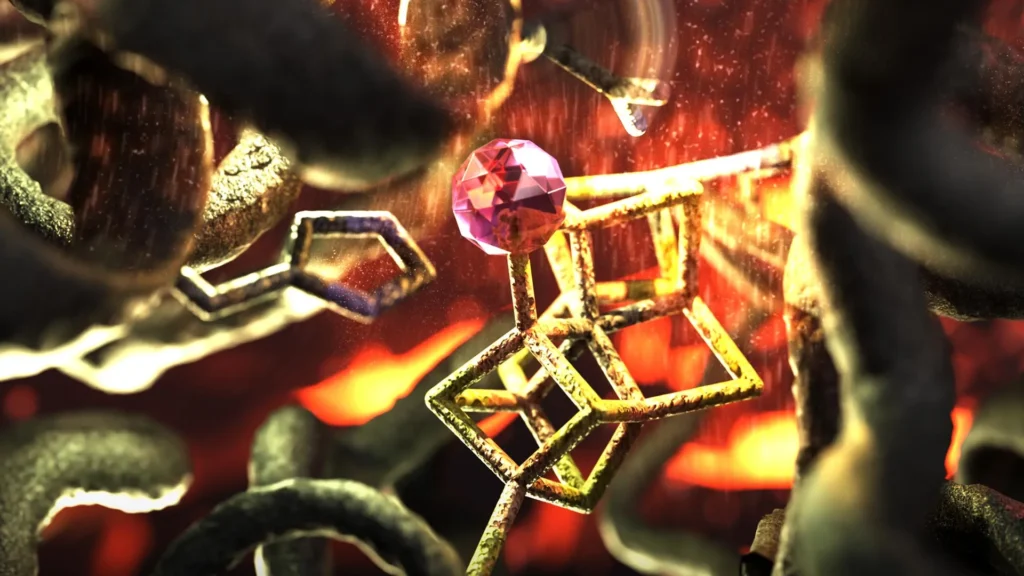
Microorganisms are capable of some extraordinary chemistry, operating at the fundamental nexus of life and geological processes. One of the most profound examples of this microbial ingenuity is nitrogen fixation, a process that masterfully converts inert nitrogen gas (N₂) into forms living organisms can actually utilize. This biochemical marvel is indispensable for life on Earth, given that nitrogen constitutes approximately 78 percent of the planet’s atmosphere. However, despite its atmospheric abundance, plants and animals cannot directly assimilate N₂ because the two nitrogen atoms are joined by an exceptionally strong chemical triple bond, rendering the gas biologically inaccessible. This inherent challenge necessitates a biological solution to sustain life’s intricate web.
Certain specialized microorganisms have, through aeons of evolution, developed elegant mechanisms to circumvent this formidable chemical barrier. They possess the enzymatic machinery to cleave this robust N₂ triple bond, transforming it into ammonia (NH₃), which then serves as a crucial building block for all biological molecules—from proteins and nucleic acids to vitamins and hormones. Among these remarkable organisms is the deep-sea archaeon Methanocaldococcus infernus, a true extremophile thriving in the most hostile environments imaginable. This archaeon inhabits volcanic marine ecosystems, specifically around hydrothermal vents, where vent fluids can reach blistering temperatures far exceeding the boiling point of water, often above 100°C due to immense hydrostatic pressure. Understanding how such an organism performs a complex process like nitrogen fixation under these extreme conditions has long been a scientific enigma.
Researchers in Tristan Wagner’s laboratory at the Max Planck Institute for Marine Microbiology in Bremen embarked on an ambitious quest to unravel the secrets of M. infernus‘s nitrogen fixation. Their first significant hurdle was to "tame" this elusive microbe in a laboratory setting, a feat that itself represents a considerable scientific achievement given the organism’s specialized and demanding environmental requirements. Once cultivated, they successfully induced it to fix N₂ at temperatures exceeding 90°C, pushing the boundaries of what was previously thought possible for enzymatic activity. "How do they do it, in such heat? And how can the enzyme splitting the N₂ triple bond work under these conditions?" Wagner mused, encapsulating the profound questions driving their investigation. The ability to observe and manipulate this process in a controlled environment opened unprecedented avenues for detailed molecular analysis.
The Indispensable Role of Nitrogen in Life and the Atmospheric Paradox
Nitrogen is a fundamental element, a cornerstone of all known life forms. It is a critical component of amino acids, which are the building blocks of proteins, and nucleic acids, the genetic material (DNA and RNA) that dictates cellular function and heredity. Beyond these, nitrogen is integral to ATP, the primary energy currency of the cell, and various other essential biomolecules. Yet, paradoxically, the vast reservoir of nitrogen in Earth’s atmosphere remains largely unavailable to most organisms. The N₂ molecule is notoriously unreactive due to its incredibly stable triple bond, requiring a substantial energy input to break it. This "nitrogen paradox" highlights the indispensable role of nitrogen fixation as the gateway for atmospheric nitrogen to enter the biosphere, initiating the global nitrogen cycle.
Historically, this biological limitation has had profound implications for agriculture and human civilization. For millennia, agricultural productivity was constrained by the availability of fixed nitrogen in the soil. Farmers relied on natural processes like lightning strikes and nitrogen-fixing bacteria in legume root nodules, or labor-intensive methods such as crop rotation and the application of animal manure. The early 20th century witnessed a paradigm shift with the development of the Haber-Bosch process, an industrial method that synthesizes ammonia from atmospheric nitrogen and hydrogen gas under high temperature and pressure. While a monumental achievement that has been credited with feeding billions and averting widespread famine, the Haber-Bosch process is incredibly energy-intensive, consuming an estimated 1-2% of the world’s total energy supply and contributing significantly to global greenhouse gas emissions. Furthermore, the overuse of synthetic nitrogen fertilizers can lead to environmental degradation, including eutrophication of waterways, soil acidification, and the release of nitrous oxide (N₂O), a potent greenhouse gas. This context underscores the critical importance of understanding and potentially harnessing natural biological nitrogen fixation pathways.
Nitrogenase: The Enzyme That Makes Nitrogen Fixation Possible
At the heart of biological nitrogen fixation lies the enzyme nitrogenase. This remarkable molecular machine is widely regarded as containing one of the most complex metallocofactors known in biology. Metallocofactors are intricate metal-containing helper molecules that bind to enzymes, serving as essential catalytic centers for their activity. The extraordinary complexity of nitrogenase is a direct reflection of the extreme chemical challenge it overcomes: splitting the N₂ triple bond.
The most extensively studied and highest-performing nitrogenases rely on a molybdenum-based metallocofactor, specifically the iron-molybdenum cofactor (FeMo-co). However, nature’s ingenuity is diverse, and other versions of nitrogenase exist, utilizing vanadium or solely iron in their active sites. Scientists globally are engaged in an intensive effort to decipher the precise mechanisms by which these different nitrogenases operate, how their metal centers facilitate the breaking of the N₂ triple bond, and how they are evolutionarily related. Unraveling these details holds the key to potentially mimicking or enhancing this process for biotechnological applications.
A Nitrogenase Built for Extreme Heat: Unraveling an Ancient Mechanism
The nitrogenase discovered in Methanocaldococcus infernus presents a particularly intriguing case. "The nitrogenase found in Methanocaldococcus infernus is remarkable because it seems to share traits of the molybdenum, vanadium, and iron forms," Wagner explained. This unique hybrid characteristic suggests a profound evolutionary significance. "This type of nitrogenase could be similar to a common nitrogenase ancestor, the ancient system all of them evolved from. Thus, it could deliver common principles in the nitrogenase reaction," he hypothesized. This archaeal enzyme could therefore serve as a molecular Rosetta Stone, offering insights into the primordial origins and fundamental operating principles of nitrogen fixation across diverse life forms.
The research team successfully isolated the nitrogenase directly from M. infernus, a meticulous and challenging process requiring specialized techniques to maintain the enzyme’s integrity. What they found was truly extraordinary: the enzyme exhibited an unusual and robust resistance to heat. The protein structure only began to destabilize and break apart at a remarkable 90°C, and a significant portion remained intact even at 98°C. This extreme thermostability is a testament to the organism’s adaptation to its scorching deep-sea habitat.
"This proves that this enzyme is designed to function under conditions in which most proteins would rapidly decay, like egg white cooked in hot water," stated first author Nevena Maslać from the Max Planck Institute for Marine Microbiology. She further elaborated on its unique thermal profile: "It is not active at room temperature. Rather, we show that it only produces ammonia at high temperatures. Its extreme stability allowed us to study states of the nitrogenase that are usually difficult to capture." This observation is crucial, as many enzymes lose their structural integrity and catalytic activity at elevated temperatures, making M. infernus‘s nitrogenase a truly exceptional biocatalyst. Its ability to maintain functionality under such extreme heat provides a stable platform for detailed mechanistic studies that are often hindered by the fragility of other nitrogenase variants.
A Near-Atomic Look at Nitrogenase: The Power of Synchrotron Science
To delve into the intricate details of this thermostable enzyme, the researchers did not need to return to the deep-sea vents. Instead, they employed a sophisticated interdisciplinary approach, combining cutting-edge techniques in microbial physiology, native enzyme purification, biochemistry, and structural biology. A critical aspect of their methodology was maintaining strictly oxygen-free conditions throughout every experimental step. Oxygen is a potent inhibitor and can irreversibly damage the delicate metallocofactors within nitrogenase, rendering the enzyme inactive. This requirement necessitated specialized anaerobic chambers and handling procedures, adding another layer of complexity to the research.
The team achieved the crucial step of crystallizing the enzyme, a prerequisite for high-resolution structural analysis. These crystals were then transported to the Institut de Biologie Structurale in Grenoble, France, home to a powerful synchrotron facility. A synchrotron is a large, circular particle accelerator that generates extremely intense X-ray beams. By directing these powerful X-rays at the enzyme crystals, researchers can deduce the molecular structure of the protein at near-atomic resolution through X-ray diffraction. This technique allowed them to meticulously map out the precise arrangement of atoms within the nitrogenase, revealing its three-dimensional architecture and the crucial details of its active site.
The structural analysis yielded groundbreaking insights. The nitrogenase from M. infernus was found to be the simplest known example of the enzyme yet studied, showcasing a streamlined design. Remarkably, it also combined structural features from all three major nitrogenase families: the molybdenum, vanadium, and iron-only forms. This structural amalgamation strongly supports the hypothesis that ancient nitrogenases, those that existed early in Earth’s history, may have more closely resembled this archaeal enzyme than the more specialized nitrogenases found in bacteria today. This discovery provides a tangible link to the evolutionary past of one of life’s most fundamental processes.
With the structural blueprint in hand, the researchers then focused on confirming the identity of the metallocofactor. Based on preliminary biochemical analyses, they anticipated a molybdenum metallocofactor. "Our search for the molybdenum was technically extremely challenging and required the experts at the synchrotron to push their instrument to its absolute limits," Wagner recounted, highlighting the demanding nature of detecting specific metal atoms within complex protein structures at such high resolution.
Scientists Capture an Unexpected Molecular State: A Universal Mechanism?
The rigorous measurements at the synchrotron confirmed the expected molybdenum signal, but they also delivered a significant and surprising discovery. "We were stunned to look at a so far unobserved state in a molybdenum-containing nitrogenase!" Wagner exclaimed, underscoring the unexpected nature of the finding.
This previously unobserved state, termed a "turnover" state, had only been detected in vanadium and iron-only nitrogenases in prior studies. Such states are believed to represent critical intermediate stages in the complex cascade of reactions that ultimately cleave the N₂ triple bond. The discovery of this same "turnover" state in a molybdenum-containing enzyme, particularly one with such ancestral characteristics, carries profound implications. It suggests that all forms of nitrogenase, despite their variations in metal cofactors and evolutionary lineages, may employ a common, underlying mechanistic pathway to break apart the exceptionally strong nitrogen molecule. This unification of mechanism across diverse nitrogenase types offers a simplified, yet powerful, framework for understanding this complex biological reaction.
From Deep-Sea Microbes to Future Biotechnology and Sustainable Agriculture
The implications of understanding nitrogen fixation, particularly from such an evolutionarily significant and thermostable enzyme, extend far beyond the extreme environments of deep-sea vents. Nitrogen-fixing microorganisms like M. infernus are not only crucial for converting nitrogen into ammonia but also play an important, albeit sometimes overlooked, role in Earth’s carbon cycle. For instance, methanogens, a group of archaea to which M. infernus belongs, are responsible for producing a substantial portion—up to half—of the methane found in the atmosphere, a potent greenhouse gas. This dual role underscores the interconnectedness of global biogeochemical cycles and the significant impact of microbial activity.
In the future, the insights gleaned from M. infernus‘s nitrogenase could pave the way for revolutionary biotechnological applications. Researchers envision exploring these organisms and their enzymes as robust biological systems for converting readily available gases, such as N₂ and CO₂, into valuable industrial products. This could include the sustainable production of ammonia for fertilizers and methane for energy, potentially using green hydrogen as an environmentally friendly energy source for these processes. This vision aligns perfectly with the growing global demand for sustainable chemical synthesis and reduced carbon footprints.
Wagner further speculates on a truly transformative agricultural future: "And what if crops could one day obtain nitrogen directly from atmospheric N₂?" Such an advance would fundamentally revolutionize global agriculture. By engineering crops to fix their own nitrogen, humanity could dramatically reduce its reliance on industrial fertilizers, primarily those produced by the energy-intensive Haber-Bosch process. This shift would not only curtail the massive energy consumption and associated greenhouse gas emissions linked to fertilizer production but also mitigate the pervasive environmental damage caused by excess fertilizer use, such as harmful algal blooms (eutrophication), freshwater contamination, and biodiversity loss. The economic and environmental benefits of such a breakthrough would be monumental, contributing significantly to global food security and environmental sustainability.
While the prospect of engineered nitrogen-fixing crops remains a long-term goal, the immediate impact of this study is equally profound. As Wagner concludes, "For now, the study provides something more fundamental: an updated molecular view of one of biology’s most remarkable chemical reactions." This research stands as a testament to the enduring power of basic scientific inquiry, revealing the elegant solutions devised by life in Earth’s most extreme corners. By peeling back the layers of complexity surrounding M. infernus‘s nitrogenase, scientists have not only gained unprecedented insights into an ancient biochemical pathway but have also opened new frontiers for designing a more sustainable and resource-efficient future. The journey from deep-sea microbes to a potential global biotechnological revolution has only just begun.