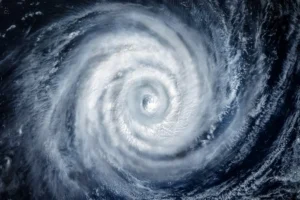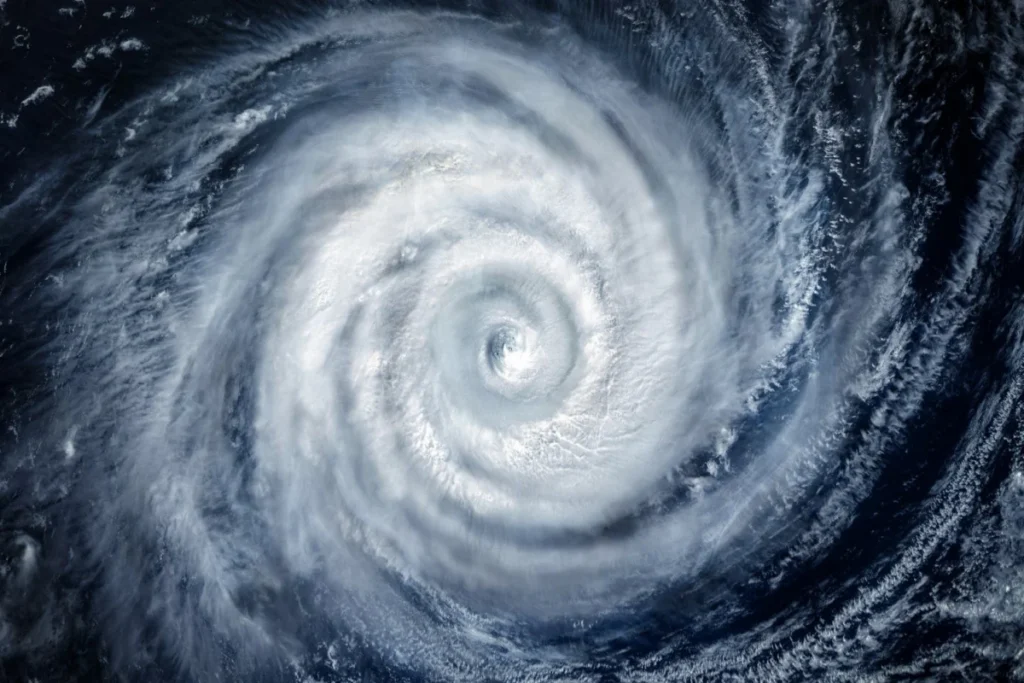
A rapidly warming planet is demonstrably accelerating the frequency and intensity of extreme weather phenomena, manifesting as catastrophic floods, devastating hurricanes and cyclones, and wildfires exacerbated by prolonged droughts. Despite this clear and present danger, the foundational tools relied upon by local communities, emergency response agencies, public safety departments, and the critical insurance and risk markets have largely failed to keep pace. These existing frameworks often lack the sophisticated, up-to-date data and advanced modeling capabilities necessary to accurately predict how these complex events will evolve, leaving populations and economies vulnerable. Recognizing this critical gap, the Massachusetts Institute of Technology (MIT) launched its ambitious Climate Grand Challenges initiative in 2022, a concerted, institution-wide effort designed to fast-track science-based solutions to the planet’s most pressing climate problems. Among the five pivotal research areas selected was "Preparing for a New World of Weather and Climate Extremes," a project specifically engineered to develop cutting-edge tools aimed at evaluating and mitigating a location’s specific vulnerabilities to a spectrum of climate-related threats, including flooding, cyclones, and increasingly prevalent humid heat waves.
The Genesis of Innovation: MIT’s Climate Grand Challenges
The Climate Grand Challenges initiative, conceived in 2022, was a strategic response to the undeniable acceleration of climate change impacts and the growing chasm between scientific understanding and actionable real-world solutions. MIT leadership recognized that addressing climate change demanded a multidisciplinary, collaborative approach, transcending traditional academic silos. The "Preparing for a New World of Weather and Climate Extremes" project, co-led initially by Paul O’Gorman, the Robert R. Shrock Professor of Earth and Planetary Sciences, and Kerry Emanuel, MIT Professor (post tenure) in the Department of Earth, Atmospheric and Planetary Sciences, brought together an expansive network of researchers from diverse fields. Over the past four years, this collaborative spirit has yielded significant dividends, with more than 40 faculty and student researchers contributing to 29 published research papers. Beyond academic output, the initiative has produced tangible digital tools and comprehensive datasets that are either already in active use or nearing deployment, marking a crucial transition from theoretical research to practical application. These individual projects are meticulously designed to span the entire spectrum of disaster preparedness and response, encompassing improved forecasting methodologies, sophisticated risk assessment models, practical on-the-ground planning frameworks, and blueprints for resilient infrastructure development.
Evelyn Wang, MIT’s vice president for energy and climate, whose office has been instrumental in funding and supporting all the Grand Challenges since 2024, underscored the urgency and impact of the work. "Communities across the United States and around the world are already confronting the consequences of extreme weather," Wang stated, highlighting the immediate relevance of the research. "Through the Climate Grand Challenges, an interdisciplinary team at MIT is advancing the science, technologies, and practical strategies needed to help communities anticipate these risks and build greater resilience." This statement encapsulates the dual mandate of the initiative: to deepen scientific understanding while simultaneously empowering communities with the tools to adapt and thrive in a changing climate.
Unraveling Scientific Uncertainties: Forecasting the Unpredictable
A core pillar of the "Weather and Climate Extremes" initiative is the relentless pursuit of reducing scientific uncertainties in forecasting extreme weather events. Professor Paul O’Gorman and his team are at the forefront of this endeavor, meticulously refining the science behind predicting phenomena such as the devastating floods experienced in Central Texas and Pakistan last year. These events, often described as "unprecedented" or "record-breaking," are becoming alarmingly commonplace. "There have been a lot of unprecedented, record-breaking events," O’Gorman noted, emphasizing the imperative to understand "how they are changing as the climate warms, and how they’re changing in different regions."
- Deep Dive into Rainfall Dynamics: The Role of Humidity
One critical area of O’Gorman’s research has focused on deciphering the complex relationship between extreme rainfall events and a warming climate. Conventional climate models have often predicted that extreme rainfall increases less significantly in summer compared to other seasons across large parts of the United States and Europe. O’Gorman’s team has made a groundbreaking discovery, revealing that these seasonal shifts are not solely dependent on the absolute amount of water vapor in the atmosphere, typically measured by specific humidity. Crucially, they found that how close the atmosphere is to its saturation point, quantified by relative humidity, plays a far more significant role than previously understood. "We found that changes in relative humidity played a big role, which was something that hadn’t been appreciated before, and something we need to take into account," O’Gorman explained.
Modeling relative humidity, however, presents substantial challenges. It is influenced by a myriad of factors, including intricate air circulation patterns, the differential warming rates of land versus ocean, soil moisture content, and the presence and type of vegetation. This complex interplay makes accurate prediction a formidable task. "It’s a complex story, but this helps us understand precipitation patterns," O’Gorman concluded, highlighting the team’s progress in untangling these atmospheric complexities, which is vital for improving flood forecasts and regional climate projections.
- Mastering Hurricane Risks, Confronting Convective Storms
Complementing O’Gorman’s work, Professor Kerry Emanuel has dedicated his research to developing superior methods for estimating the risks associated with extreme hurricanes and severe convective storms, which include thunderstorms and tornadoes. Emanuel’s contributions to hurricane modeling are particularly notable. "For hurricanes, we’re pretty much there. We can reproduce the statistics of real hurricanes extremely well just using coarse-grained weather data that has no hurricanes in it," he affirmed. This level of predictive accuracy for hurricanes represents a significant scientific achievement, offering invaluable insights for coastal communities and disaster preparedness agencies.
However, Emanuel cautioned that the same level of precision has yet to be achieved for severe convective storms. "We’re not close to being there," he admitted, despite these storms posing an immense threat. He underscored their escalating impact: "in the last decade have cost more lives and more damage than hurricanes." This stark assessment highlights a critical area for ongoing research, given the widespread devastation caused by tornadoes, derechos, and other intense thunderstorm phenomena across various regions, particularly in the central and southeastern United States. The average annual cost of severe convective storms in the U.S. alone has often surpassed that of hurricanes in recent years, reaching billions of dollars annually in insured losses and infrastructure damage.
The profound impact of Emanuel’s research is already influencing practical applications. He cited the company First Street, which leverages his methodologies to provide critical environmental risk guidance to a diverse array of stakeholders, including local governments, insurance providers, real-estate developers, and online real-estate platforms. This company offers detailed, property-specific risk assessments for various environmental hazards across the United States, directly translating advanced scientific models into actionable information for private property owners and urban planners.
Bridging the Gap: From Science to Community Resilience
Beyond enhancing scientific forecasting, a crucial phase of the Grand Challenge, spearheaded by Miho Mazereeuw, an associate professor in MIT’s Department of Architecture and a leading expert in resilient design, focuses on translating complex scientific modeling and data collection into accessible, actionable tools for on-the-ground planners. This initiative acknowledges that even the most accurate predictions are of limited value if they cannot be effectively utilized by the communities most at risk.
- Actionable Tools for Local Planners
Mazereeuw’s team has collaborated closely with community leaders and residents in vulnerable areas, including Boston and Broward County, Florida, both regions facing significant climate change impacts. These collaborations have resulted in the development of innovative interactive web-based tools that simplify the complex process of planning for impacts such as flooding across a broad spectrum of potential scenarios.
Aditya Barve, a research scientist in Mazereeuw’s Urban Risk Lab, articulated the core challenge: "When an extreme event happens, there is a gap between scientific knowledge and actionable public information." This gap manifests at multiple levels, from the immediate need to disseminate real-time information to affected populations during a crisis to the long-term imperative of collecting robust data for strategic planning and effectively communicating those plans to communities. "The idea is to target the gap through tools in community emergency data collection, proactive recovery planning, and AI-assisted tools for at-scale visualization of future climate impacts, so that communities are prepared when something happens," Barve explained.
A key achievement of the team has been making sophisticated flood modeling outputs readily usable by a wider array of stakeholders. Traditional flood models often require specialized software or extensive technical expertise, which can significantly impede decision-making across various city departments. The new tools bypass these hurdles. "Users can ask practical questions, such as which schools are likely to stay driest across different flood scenarios, and receive answers grounded in flood models and city datasets within seconds," Barve highlighted. This democratized access to critical information empowers city planners, school districts, and emergency managers to make informed decisions rapidly, potentially saving lives and minimizing damage.
- Strategic Recovery: Rebuilding for a Better Future
Mazereeuw also emphasized the often-overlooked aspect of post-disaster recovery planning. While most municipalities maintain comprehensive emergency response plans, very few proactively develop recovery plans that include crucial elements like housing solutions before an event occurs. This oversight can lead to chaotic, inefficient, and often inequitable recovery processes. Mazereeuw argued that if communities strategize how recovery can serve as a catalyst for building a better, more resilient future for their city, they can more effectively leverage the substantial emergency relief funding that becomes available after a disaster. "In almost all cases, the resources available after a disaster are much larger," she noted. "By having a plan in place, those resources can fit the vision of the place moving forward." This proactive approach transforms recovery from merely restoring the status quo to an opportunity for transformative urban development and enhanced resilience against future shocks.
Securing the Future: Adapting Energy Infrastructure
The pervasive impacts of extreme weather extend far beyond direct community damage, significantly threatening critical infrastructure, particularly the energy sector. Associate Professor Michael Howland, the Jeffrey Cheah Career Development Professor of Civil and Environmental Engineering at MIT, is leading a team dedicated to analyzing these impacts on energy infrastructure. His collaborators include Jessika Trancik, a professor in the MIT Institute of Data Systems and Society (IDSS), and Saurabh Amin, the Edmund K. Turner Professor in Civil Engineering at MIT. The team’s primary focus is on the electrical power system, aiming to optimize decisions regarding the placement and sizing of new energy infrastructure in an era of unprecedented climatic and technological change.
- The Dual Challenge: Renewables and Climate Impacts
Howland underscored the dual pressures currently reshaping electrical power systems. First, the rapid proliferation of renewable energy sources, such as wind and solar, coupled with advanced storage technologies, is fundamentally altering grid dynamics. Second, large-scale changes in weather patterns and the increasing frequency of extreme events, driven by climate change, are introducing new vulnerabilities. "Each of these would independently push our electrical power system potentially outside of what we are used to," Howland explained. "And their combined, synergistic impacts could be even larger because they are occurring simultaneously." This synergistic effect presents a formidable challenge for grid planners, requiring innovative solutions that integrate climate science with energy systems engineering.
The convergence of climate modeling and grid-infrastructure work has already yielded accelerated practical insights into how societies can simultaneously adapt to climate change and mitigate its causes. Such advanced modeling can inform infrastructure decisions in ways that are not always immediately apparent through conventional planning.
- Optimizing Grid Resilience: A Case Study in Texas
Howland provided a compelling example from their optimization model for siting power resources in Texas. The model surprisingly recommended placing a significant number of wind power plants along the Gulf Coast. "If you look at an average wind speed map," he elaborated, "you would say this doesn’t make much sense because it’s really windy in northwest Texas on average, and much less windy along the Gulf Coast."
However, the model’s counterintuitive recommendation was rooted in a deeper understanding of meteorological patterns. It revealed that the typical daily cycle of winds along the Gulf Coast is complementary to those in northwest Texas. By distributing wind farms across both locations, the combined generation tends to smooth out intermittencies, creating a more stable and reliable power supply. Furthermore, this distributed approach better complements solar power generation, easing the burden on the grid. "Now, we’re trying to take it further not just by smoothing the generation, but actually aligning it with the time- and space-varying electricity demand so that we can reduce storage, transmission, and other backup generation needs," Howland stated.
This ongoing research holds immense promise for utility grid planners and regulators, offering actionable information for the strategic siting and sizing of various electrical infrastructure resources. The ultimate goal, Howland concluded, is to "continuously push on model realism and accuracy to eventually make it more of a practical and useful tool for grid planners." The broader implication is a more resilient, efficient, and sustainable energy system capable of withstanding the shocks of a changing climate while simultaneously accelerating the transition to renewable energy.
Global Implications and the Path Forward
The work undertaken by MIT’s Climate Grand Challenges, particularly the "Preparing for a New World of Weather and Climate Extremes" initiative, carries profound global implications. The escalating costs of climate-related disasters are staggering. According to the National Oceanic and Atmospheric Administration (NOAA), the United States alone experienced 28 separate billion-dollar weather and climate disasters in 2023, totaling an estimated $92.9 billion in damages. Globally, the insurance industry faces ever-increasing payouts, with major re-insurers reporting record losses from natural catastrophes. Beyond economic figures, the human toll is immense, marked by displacement, food insecurity, and loss of life, particularly in vulnerable developing nations.
- Escalating Global Costs and Human Impact
The past decade has seen a dramatic increase in the intensity and frequency of heatwaves, droughts, and extreme precipitation events across continents. Pakistan’s devastating floods in 2022, which displaced millions and caused over $30 billion in damages, and the recurrent flash floods in regions like Central Texas, serve as stark reminders of the immediate and catastrophic consequences. Wildfires, fueled by prolonged droughts and higher temperatures, have ravaged vast areas from California to Australia and the Mediterranean, leading to unprecedented air quality crises and destruction of ecosystems. The global average temperature continues to rise, with 2023 confirmed as the hottest year on record, signaling a trajectory towards even more extreme weather in the coming decades. These trends underscore the critical need for the advanced predictive and resilience-building tools being developed at MIT.
- The Long Road to Adaptation: Policy and Practice
Professor Emanuel aptly described the process of applying these scientific breakthroughs in the real world as "like steering a supertanker," acknowledging the inherent slowness of systemic change in political, economic, and civic decision-making. However, he expressed optimism that progress will inevitably come. The specific and detailed information generated by the Weather and Climate Extremes Grand Challenge, and other similar projects globally, provides an indispensable foundation for guiding policy, investment, and urban planning decisions.
The broader impact of this research extends to international cooperation on climate adaptation, informing global frameworks for disaster risk reduction, and guiding investments in climate-resilient infrastructure. As the world grapples with the accelerating effects of climate change, the insights and tools emerging from institutions like MIT are not merely academic exercises; they are vital instruments for safeguarding human lives, protecting economies, and ensuring a more resilient future for communities worldwide. The journey is long, but the critical groundwork laid by these interdisciplinary efforts offers a beacon of hope in the face of escalating climate threats.