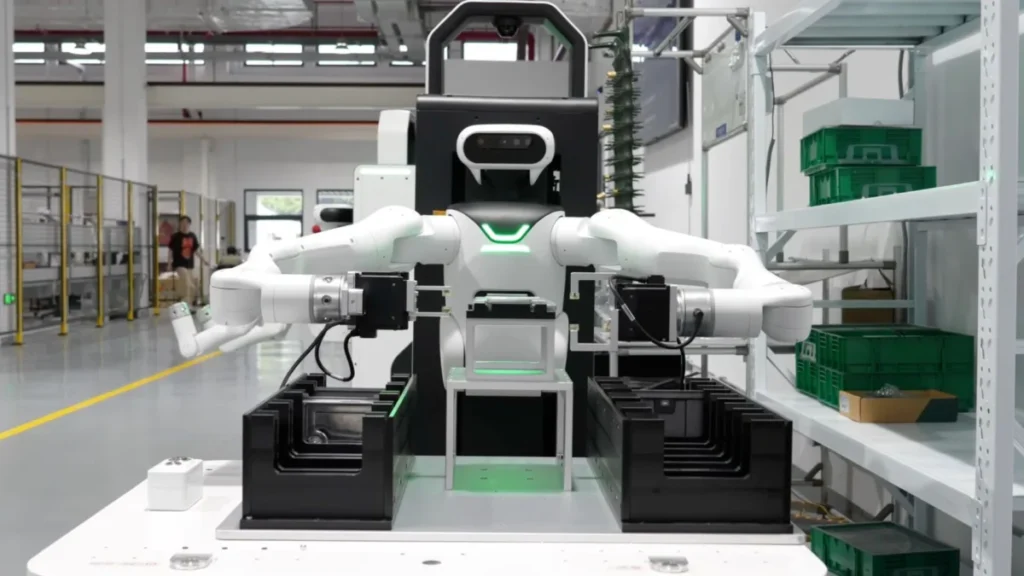
Shanghai, China – Chinese robotics innovator JAKA Robotics has made a significant stride in the industrial automation landscape, unveiling two new flagship industrial robots at the 26th China International Industry Fair (CIIF 2026) in Shanghai. The launches, featuring the heavy-duty Kargo50 wheeled humanoid and the high-payload Zu50 collaborative robot arm, are set to broaden JAKA’s extensive portfolio, targeting critical applications across factory automation, advanced material handling, and sophisticated manufacturing operations. These new additions underscore a strategic push towards more integrated and intelligent robotic solutions, further solidifying JAKA’s position at the forefront of the global robotics industry.
The unveiling at CIIF 2026, one of Asia’s most influential trade shows for industrial technology, provided a platform for JAKA to showcase its expanded capabilities and commitment to driving the future of smart factories. The Kargo50, a robust wheeled humanoid, is engineered for heavy-duty material handling, designed to autonomously transport substantial loads and materials within complex industrial environments. Complementing this, the Zu50 collaborative robot arm boasts an impressive 110-pound (50-kilogram) payload capacity, positioning it as a versatile tool for demanding tasks that require both strength and precision in human-robot collaborative settings. These innovations are not merely isolated products but integral components of JAKA’s overarching vision for a seamlessly integrated, AI-powered manufacturing ecosystem, highlighted by the debut of its JAKA EVO embodied intelligence operating system in 2025.
Expanding JAKA’s Robotic Ecosystem: Kargo50 and Zu50 in Detail
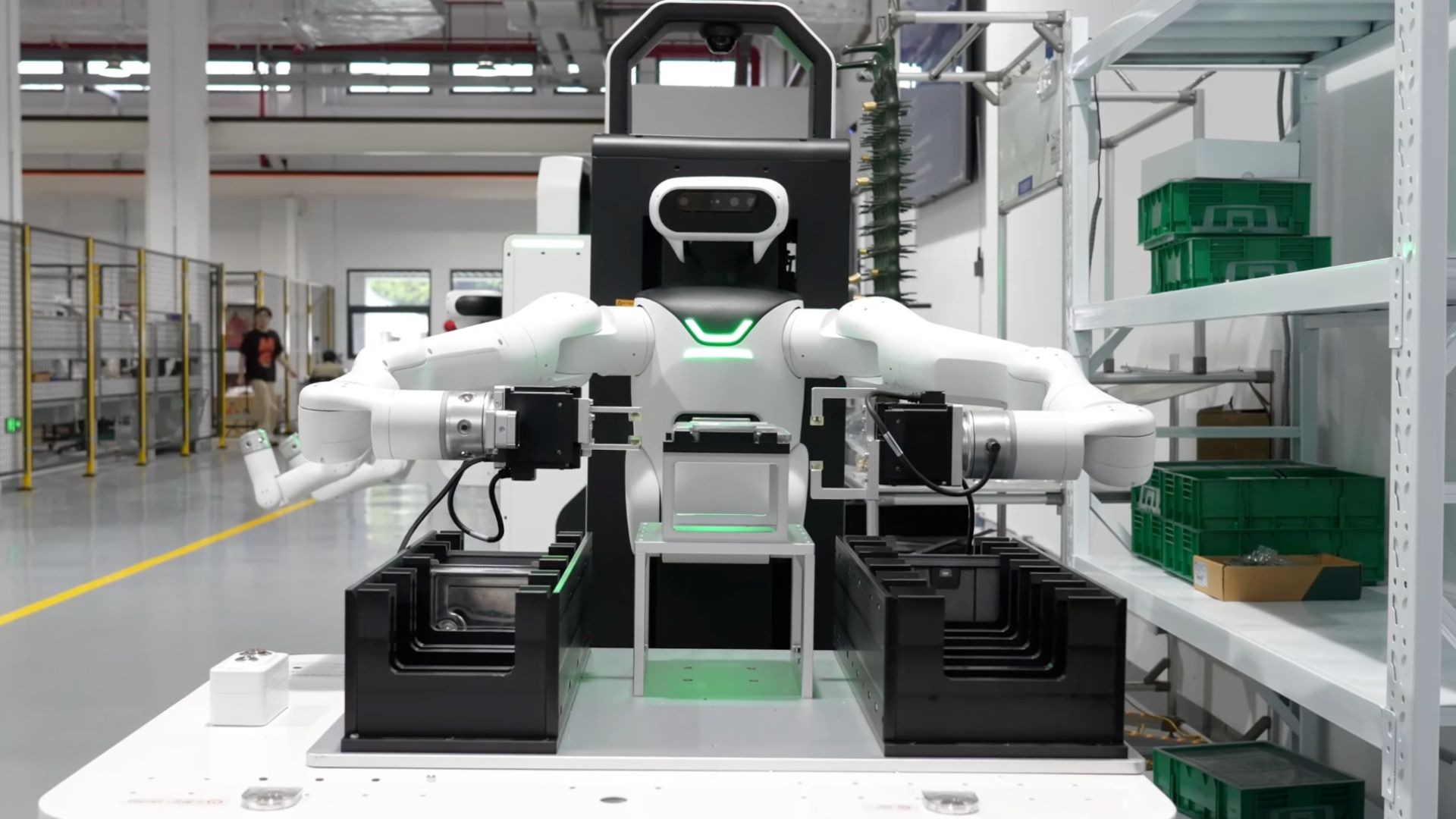
The Kargo50 represents an evolution of JAKA’s successful Kargo line of wheeled humanoids, scaling up its material handling capabilities for heavier industrial applications. While detailed technical specifications regarding its precise payload figures beyond "heavy-duty" remain to be fully disclosed, its design philosophy centers on extending the reach and efficiency of mobile robotic logistics. In a manufacturing environment, the Kargo50 is intended to autonomously move large totes, components, and raw materials between various workstations, assembly lines, and storage areas. This capability is crucial for optimizing internal logistics, reducing manual labor dependency, and enhancing throughput in facilities where efficient material flow is paramount. Unlike traditional Automated Guided Vehicles (AGVs) or Autonomous Mobile Robots (AMRs) that typically follow predefined paths or navigate open spaces with payloads on top, a wheeled humanoid like the Kargo50 suggests a more articulated design, potentially enabling it to interact with its environment in a more sophisticated manner, perhaps even picking up and depositing items from different heights or orientations. This flexibility can lead to more dynamic and adaptive production workflows.
Building upon its experience with existing solutions, JAKA highlighted the operational success of its smaller Kargo10 wheeled humanoid. This earlier model has already achieved large-scale commercial deployment in diverse sectors, including automotive parts manufacturing and high-end electronics factories. Real-world implementation has demonstrated tangible benefits, with on-site engineering support contributing to a dramatic reduction in the cycle time for handling a standard tote, plummeting from an initial 105 seconds to an optimized 28 seconds. Furthermore, the company reported a significant improvement in deployment efficiency, with the integration of the Kargo10 into new operating scenarios now taking an average of 57 days, a testament to JAKA’s efforts in streamlining robotic integration into complex factory environments. Such improvements are critical for return on investment and broader adoption of automation technologies.
The second major launch, the Zu50, signifies a substantial upgrade to JAKA’s collaborative robot arm portfolio. With its 110-pound (50-kilogram) payload capacity, the Zu50 enters a segment of the cobot market typically dominated by heavier-duty industrial robots. This high payload capability makes it suitable for a wider array of demanding tasks that previously required larger, caged industrial robots, thereby expanding the possibilities for human-robot collaboration in heavy lifting, machine tending, palletizing, and even complex assembly operations involving weighty components. The Zu50 boasts a maximum reach of 2,100 millimeters, providing ample workspace flexibility. A key technical enhancement lies in its integrated joint modules, which feature a high-power-density drive and control system. This design not only contributes to its impressive payload capacity but also enables up to 50 percent higher axis speeds, translating into faster cycle times and improved overall productivity for industrial applications. The integration of drive and control within the joint modules also simplifies robot design, reduces cabling, and potentially enhances reliability and ease of maintenance.
JAKA’s Vision for Embodied Intelligence: From Pi to EVO
The new industrial robot launches at CIIF 2026 are part of a broader, more ambitious strategy by JAKA Robotics to integrate advanced robotics with sophisticated artificial intelligence, particularly in the domain of embodied intelligence. Just months prior, in June, JAKA had already made headlines with the unveiling of "Pi," a compact humanoid robot. Standing 1.22 meters tall and weighing 92 pounds (42 kilograms), Pi represents JAKA’s foray into general-purpose humanoid robotics, a field that holds immense potential for versatile applications beyond traditional factory settings. While Pi is distinct from the industrial-focused Kargo50 and Zu50, its development underscores JAKA’s commitment to exploring and developing advanced robotic forms that can interact with the world in more human-like ways, leveraging a deep understanding of perception, cognition, and physical manipulation.
Central to JAKA’s strategy for achieving this advanced level of robotic capability is JAKA EVO, an embodied intelligence operating system introduced in 2025. This sophisticated architecture is designed to enable seamless cooperation between diverse robotic platforms and to execute complex manufacturing tasks that require more than just isolated robotic movements. JAKA EVO’s layered architecture distributes processing across three distinct but interconnected tiers: cloud-based intelligence, edge computing, and dedicated motion control.
The cloud model serves as the high-level brain, responsible for managing complex cognitive functions such as perception, comprehensive task planning, dynamic skill selection, and crucial decision-making when exceptions or unforeseen circumstances arise. This allows robots to adapt to changes in their environment, learn from experience, and handle variability in production processes. The edge model acts as an intermediary, combining a rules engine with advanced motion planning and force-control functions. This layer handles real-time, localized processing, translating high-level commands from the cloud into actionable robotic movements while ensuring safety and precision. Finally, a dedicated motion controller operates at an impressive frequency of 1,000 Hz, providing the ultra-responsive, precise control necessary for the physical execution of tasks. This high-frequency control is critical for intricate manipulations, smooth trajectories, and immediate reaction to environmental feedback, crucial for both speed and safety in industrial settings.
Demonstrating Coordinated Intelligence at CIIF 2026
The capabilities of JAKA EVO and the potential for multi-robot coordination were vividly demonstrated at JAKA’s exhibition booth at CIIF 2026. The centerpiece was a dynamic factory workcell featuring two-wheeled humanoids (presumably Kargo series robots) cooperating to handle an engine assembly. In this choreographed sequence, one robot efficiently transported the engine to a designated position within the workcell. Simultaneously, or in a precisely timed sequence, the second robot then proceeded to tighten screws on the engine before both units seamlessly returned to their respective starting points. This demonstration was more than a mere showcase of individual robot capabilities; it illustrated a coordinated workflow designed to execute complex sequences of industrial tasks. It highlighted the shift from single-robot automation to multi-robot collaboration, where machines work in concert, sharing information and coordinating actions to achieve a common goal. This level of synchronized operation is fundamental to the concept of "lights-out" manufacturing and highly flexible smart factories, where efficiency gains come from optimizing entire processes rather than just individual steps.
JAKA’s Journey and Impact on Industrial Robotics
Founded in 2014, JAKA Robotics has rapidly emerged as a significant player in the global robotics arena, particularly distinguishing itself in the collaborative robotics segment. From its inception, the company has focused on developing robots that are intuitive, flexible, and safe enough to work alongside human operators, a core tenet of the collaborative robotics movement. This focus allowed JAKA to carve out a niche in a market traditionally dominated by heavy industrial robots. Its dual operational segments – collaborative robotics and embodied intelligence – reflect a strategic vision to not only provide advanced hardware but also the intelligent software necessary to make these robots truly autonomous and adaptable.
The company’s rapid growth is indicative of the surging demand for automation solutions worldwide. The global industrial robotics market, valued at approximately $45 billion in 2022, is projected to grow at a Compound Annual Growth Rate (CAGR) of over 10% in the coming years, driven by factors such as labor shortages, increasing manufacturing costs, and the push towards Industry 4.0 and smart manufacturing initiatives. Within this, the collaborative robot market is experiencing even faster growth, with projections often showing a CAGR above 20% due to their versatility, ease of integration, and lower upfront costs compared to traditional industrial robots.
China, in particular, has become the world’s largest market for industrial robots, with significant government support and investment in advanced manufacturing. Chinese robotics firms like JAKA are at the forefront of this domestic innovation, not only serving the massive local market but also increasingly expanding their global footprint. JAKA’s sustained investment in R&D, culminating in products like the Kargo50, Zu50, and the JAKA EVO system, positions it as a key contributor to China’s "Made in China 2025" initiative, which aims to transform the country into a high-tech manufacturing powerhouse.
Statements and Industry Reactions
While official statements from JAKA Robotics executives regarding these specific launches were not immediately available, industry observers and analysts have been quick to recognize the significance of the developments. An inferred statement from a JAKA spokesperson might emphasize: "The unveiling of Kargo50 and Zu50 at CIIF 2026, powered by our JAKA EVO system, marks a pivotal moment for JAKA Robotics and for the future of industrial automation. We are not just launching new robots; we are presenting a complete ecosystem designed to enable factories to achieve unprecedented levels of flexibility, efficiency, and intelligence. Our commitment to embodied intelligence allows us to move beyond isolated tasks, enabling true collaboration between machines and with humans, driving the next generation of smart manufacturing."
Industry analysts are likely to echo this sentiment. "JAKA’s latest product launches, particularly the high-payload Zu50 cobot and the heavy-duty Kargo50, demonstrate a clear strategy to address the evolving needs of manufacturers," noted an expert in robotics market trends. "The combination of robust hardware with a sophisticated embodied intelligence operating system like JAKA EVO positions them strongly in a competitive market. The ability to coordinate multiple diverse robotic platforms for complex tasks is a key differentiator and a significant step towards truly autonomous and adaptive production lines."
Broader Implications and Future Outlook
The advancements showcased by JAKA Robotics at CIIF 2026 have profound implications for the future of manufacturing. The ability of robots to not only perform individual tasks but also to coordinate their actions intelligently marks a significant step towards fully autonomous factories. This layered architecture of JAKA EVO, distributing intelligence between cloud, edge, and motion control, is a blueprint for how complex robotic systems will operate in the future, allowing for both high-level strategic planning and instantaneous, precise execution.
Such integrated robotic systems can lead to:
- Increased Productivity and Efficiency: By automating complex multi-step processes, bottlenecks can be eliminated, and throughput significantly improved.
- Enhanced Flexibility: Factories can quickly reconfigure production lines and adapt to changing product demands with programmable and versatile robots.
- Improved Safety: Robots can take over dangerous or ergonomically challenging tasks, reducing the risk of injury to human workers.
- Reduced Operational Costs: Automation can lead to lower labor costs, reduced waste, and optimized resource utilization.
- Data-Driven Optimization: The intelligence gathered by these systems can provide valuable insights for continuous process improvement.
However, challenges remain. The initial investment in such advanced robotic systems can be substantial, and the complexity of integration, especially for smaller and medium-sized enterprises (SMEs), can be a barrier. JAKA’s reported efforts to streamline deployment, as seen with the Kargo10, indicate an awareness of these challenges. The future of industrial robotics will likely see continued advancements in human-robot interaction, making cobots even more intuitive and easier to program. Dexterous manipulation, advanced sensor fusion, and further integration of AI for predictive maintenance and quality control will also be key areas of development.
In conclusion, JAKA Robotics’ unveiling of the Kargo50, Zu50, and the capabilities of its JAKA EVO system at CIIF 2026 represents more than just new product introductions. It signifies a mature strategic vision for advanced manufacturing, where intelligent, collaborative robots work in harmony, guided by sophisticated AI, to create highly efficient, flexible, and adaptive production environments. As the global push towards Industry 4.0 intensifies, JAKA’s latest innovations are poised to play a crucial role in shaping the factories of tomorrow.