A groundbreaking new study by a team of researchers suggests that the universe might not be as perfectly uniform and symmetric as previously assumed, posing a significant challenge to the long-standing "standard cosmological model." The findings indicate that the cosmos could be asymmetric or "lopsided," meaning its properties are not identical in every direction. This revelation, centered on what is known as the cosmic dipole anomaly, demands a fundamental re-evaluation of the universe’s structure and dynamics, potentially forcing scientists to rethink the very equations that describe its existence.
For decades, the standard cosmological model, often referred to as the Lambda-CDM (Lambda-Cold Dark Matter) model, has served as the cornerstone of modern cosmology. This model posits that the universe is largely composed of dark energy (Lambda), which drives its accelerating expansion, and cold dark matter, an invisible substance that provides gravitational scaffolding for galaxies. A crucial assumption underpinning Lambda-CDM is the Cosmological Principle, which states that the universe is isotropic (looks the same in all directions) and homogeneous (is uniform when averaged on large scales). This principle simplifies Einstein’s equations of general relativity, leading to the Friedmann-Lemaître-Robertson-Walker (FLRW) metric, which describes a uniformly expanding universe. The elegance and predictive power of the FLRW description have made it indispensable for understanding everything from the Big Bang to the formation of cosmic structures.
However, recent astronomical observations have begun to unveil a series of "tensions" – persistent disagreements in data – that cast doubt on this idealized vision of a uniform universe. These discrepancies, though subtle, are accumulating to a point where they can no longer be easily dismissed as mere statistical fluctuations. The latest paper, published by the collaborating scientists, directly addresses one of the most profound of these tensions: the cosmic dipole anomaly. The authors conclude that this anomaly presents a serious and perhaps insurmountable challenge to the Lambda-CDM model, suggesting that the universe might be inherently anisotropic.
Understanding the Cosmic Microwave Background (CMB) and its Dipole
To appreciate the significance of the cosmic dipole anomaly, it’s essential to understand the Cosmic Microwave Background (CMB). Discovered accidentally in 1964 by Arno Penzias and Robert Wilson, the CMB is the relic radiation left over from the Big Bang – essentially the oldest light in the universe. It provides a snapshot of the cosmos when it was only about 380,000 years old, a time when it had cooled enough for electrons and protons to combine into neutral atoms, allowing photons to travel freely for the first time. The CMB is remarkably uniform across the entire sky, varying by only one part in a hundred thousand. This extraordinary uniformity has historically been a strong piece of evidence supporting the Cosmological Principle and the FLRW model.
Detailed measurements by missions like COBE (Cosmic Background Explorer), WMAP (Wilkinson Microwave Anisotropy Probe), and most recently Planck, have meticulously mapped these tiny temperature fluctuations in the CMB. These minute anisotropies are crucial, as they represent the primordial seeds from which all cosmic structures – galaxies, clusters, and superclusters – eventually grew.
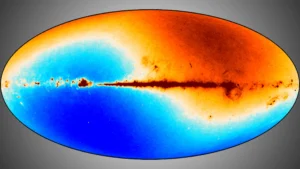
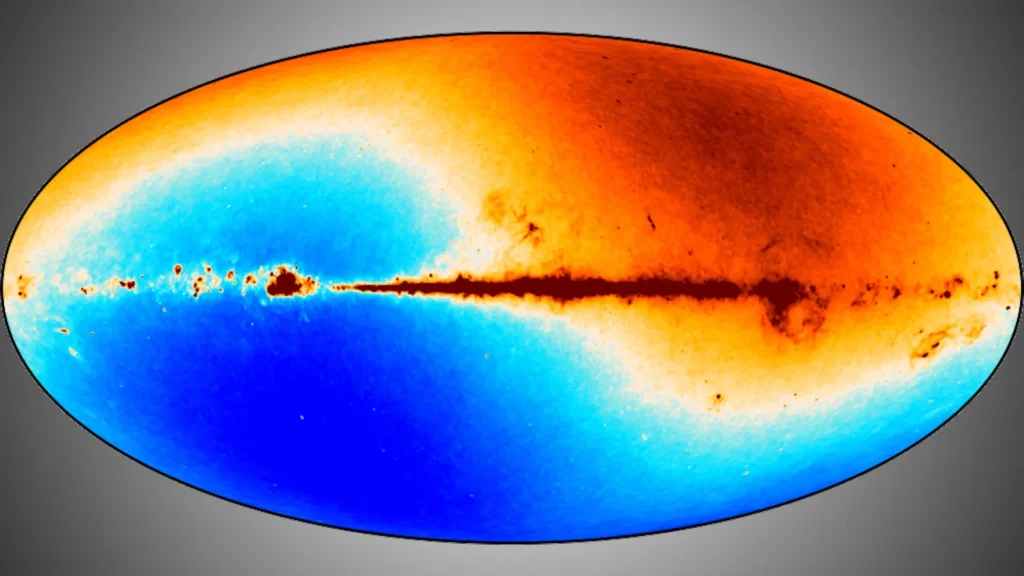
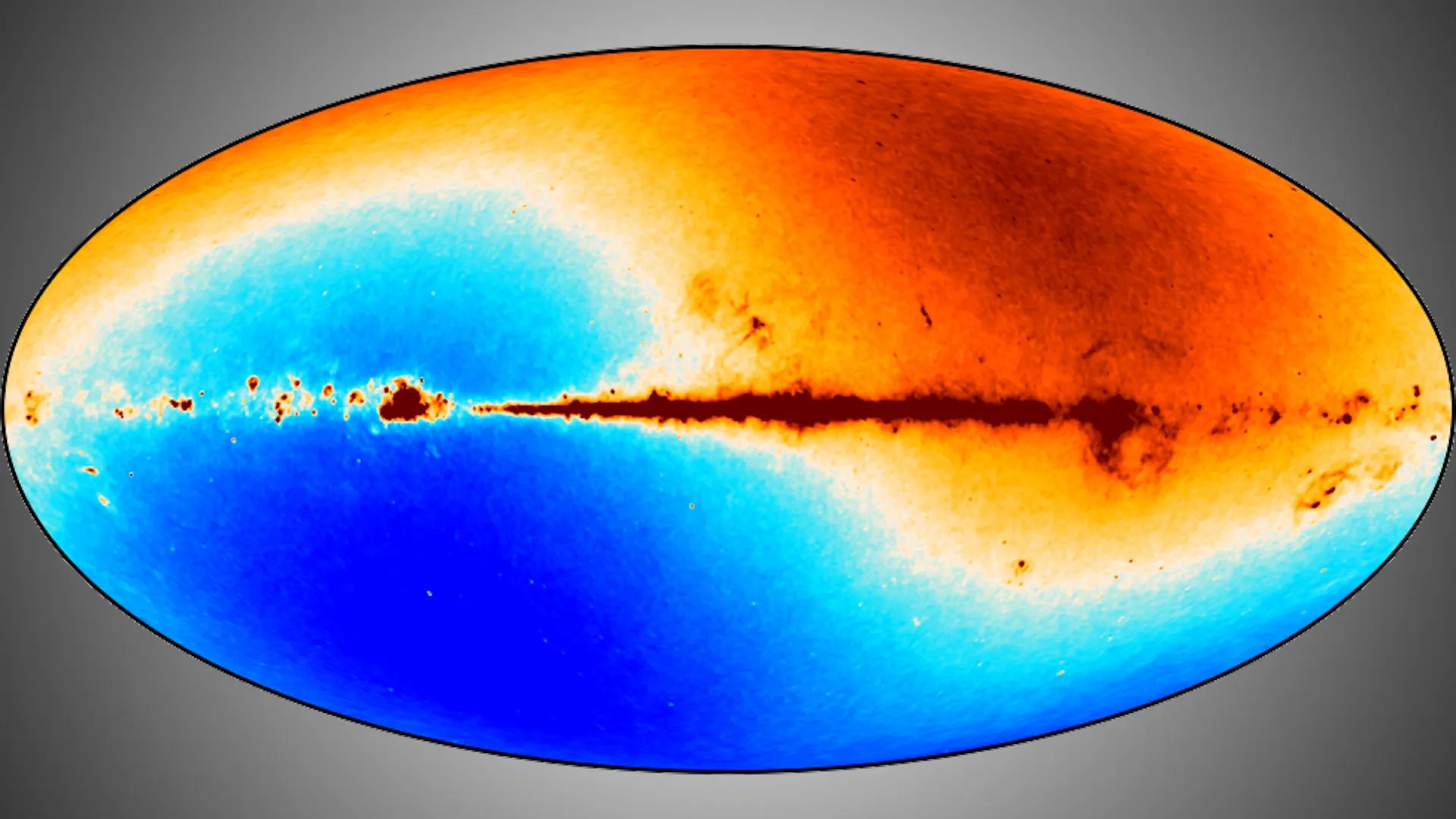
However, within this near-perfect uniformity, there exists a much larger temperature variation known as the CMB dipole anisotropy. This dipole appears as a distinct hot spot on one side of the sky and a corresponding cold spot on the opposite side, with a temperature difference of about one part in a thousand. For decades, this CMB dipole has been interpreted as a purely local phenomenon, attributed to the motion of our Solar System, and indeed our entire Milky Way galaxy, relative to the CMB rest frame. As our galaxy rushes through space, we observe the CMB photons ahead of us to be blueshifted (hotter) and those behind us to be redshifted (cooler). This "kinematic dipole" is entirely consistent with the standard model and does not, in itself, challenge the notion of a uniform universe.
The Ellis-Baldwin Test and the Cosmic Dipole Anomaly
The real challenge emerges when this expected kinematic dipole is compared with observations of matter distribution in the distant universe. In 1984, astrophysicists George Ellis and John Baldwin proposed a critical test: if the FLRW assumption of a symmetric universe is correct, then any observed dipole in the distribution of distant astronomical sources – such as radio galaxies, quasars, or other large-scale structures – should directly correspond to, and be consistent with, the kinematic CMB dipole. This is because our motion relative to the CMB frame should also manifest as an apparent directional preference in how we perceive the distribution and brightness of distant objects. In simpler terms, if we’re moving, objects ahead should appear slightly brighter/denser, and objects behind slightly dimmer/sparser, in a way that aligns with the CMB dipole. This became known as the Ellis-Baldwin test.
For many years, the necessary data to perform such a precise test was unavailable. However, with the advent of large-scale sky surveys and increasingly sensitive telescopes and satellites, cosmologists now possess vast catalogues of distant astronomical sources. Studies have meticulously analyzed the distribution of hundreds of thousands, even millions, of radio galaxies and quasars across the sky. These sources are chosen for their extreme distances, ensuring that any observed dipole is truly cosmological and not merely a spurious "clustering dipole" caused by the uneven distribution of closer, less representative objects within our local cosmic neighborhood.
The recent study, building upon these extensive datasets, has rigorously applied the Ellis-Baldwin test, and the outcome is stark: the universe fails the test. The observed variation, or dipole anisotropy, in the distribution of distant matter does not match what is predicted by the CMB’s kinematic dipole. Crucially, the observed dipole in distant objects appears significantly stronger and/or misaligned compared to what would be expected solely from our local motion relative to the CMB. This discrepancy, dubbed the cosmic dipole anomaly, implies a deeper, intrinsic anisotropy in the universe itself, rather than just an effect of our motion.
What lends further credence to these findings is the consistency of the results across different observational methodologies and wavelengths. Whether using terrestrial radio telescopes like the Karl G. Jansky Very Large Array (VLA) in conjunction with surveys like the NRAO VLA Sky Survey (NVSS) for radio galaxies, or analyzing mid-infrared data from satellites such as WISE (Wide-field Infrared Survey Explorer) for quasars, the same anomalous dipole persists. This multi-messenger validation strengthens the conclusion, ruling out instrumental biases or specific observational effects as the sole cause of the anomaly.
The Hubble Tension: Another Crack in the Standard Model
The cosmic dipole anomaly is not an isolated problem. It joins other significant disagreements in cosmological data, most notably the Hubble tension. Named after Edwin Hubble, who in 1929 famously discovered that the universe is expanding, this tension refers to a persistent and growing discrepancy in measurements of the universe’s current expansion rate, known as the Hubble constant (H0).
The Hubble tension emerged in the 2000s and has intensified with more precise data from missions like the Hubble Space Telescope and, more recently, the Gaia satellite. Broadly, measurements of H0 derived from observations of the early universe (primarily from the CMB, as measured by Planck) yield a value of approximately 67-68 kilometers per second per megaparsec (km/s/Mpc). In contrast, measurements from the local, more recent universe, using "distance ladders" based on standard candles like Type Ia supernovae and Cepheid variable stars, consistently yield a higher value, around 73-74 km/s/Mpc. This seemingly small difference represents a statistically significant disagreement, well beyond what can be explained by measurement uncertainties.
While the Hubble tension points to a potential flaw in the Lambda-CDM model’s evolutionary predictions or its fundamental parameters, the cosmic dipole anomaly is arguably even more profound. The Hubble tension might be resolved by tweaking parameters or introducing new, exotic particles or fields within the existing FLRW framework. The cosmic dipole anomaly, however, directly challenges the underlying assumption of isotropy, threatening to unravel the very foundations of the FLRW description.
Implications: Back to Square One?
The implications of the cosmic dipole anomaly are truly monumental. If the universe is indeed anisotropic on large scales, it means that the Cosmological Principle, a bedrock assumption for nearly a century, is incorrect. This would necessitate abandoning not just the Lambda-CDM model, but the FLRW metric itself, which has served as the conceptual framework for most of modern cosmology.
Such a shift would require physicists to "go back to square one," as the original article states, forcing a re-evaluation of how Einstein’s equations of general relativity are applied to the cosmos. Instead of a simple, elegant, and isotropic universe, cosmologists might have to grapple with more complex, anisotropic, or even inhomogeneous spacetime metrics. This could lead to a paradigm shift comparable to the move from Newtonian physics to Einstein’s relativity.
The scientific community, while acknowledging the existence of such anomalies, has often shown a natural reluctance to discard a highly successful model that has explained a vast array of observations. The Lambda-CDM model, despite its tensions, has provided a coherent narrative for cosmic evolution, from the Big Bang to the formation of galaxies. However, the increasing precision and consistency of the data supporting the cosmic dipole anomaly make it increasingly difficult to ignore.
Inferred reactions from the broader astronomical community would likely involve a mix of skepticism, intense scrutiny, and a renewed drive for further observations. Leading cosmologists would undoubtedly seek to replicate these findings with even more diverse datasets and independent analyses, while theoretical physicists would begin to explore alternative models – perhaps those incorporating large-scale flows, global rotations, or even fundamental directional preferences in the universe’s initial conditions or its distribution of dark energy. Some might argue for the inclusion of new physics that breaks isotropy on large scales, such as a directional dark energy component or an intrinsic cosmic flow.
The Future of Cosmology: New Data and AI
The coming years promise an avalanche of new astronomical data, which will be critical in either confirming or refuting these radical implications. Upcoming missions and observatories are poised to provide unprecedented insights into the large-scale structure of the universe:
- Euclid: The European Space Agency’s Euclid mission, launched in 2023, will map the 3D distribution of billions of galaxies across more than a third of the sky, providing crucial data on dark matter and dark energy, and enabling more precise tests of cosmic isotropy.
- SPHEREx (Spectro-Photometer for the History of the Universe, Epoch of Reionization, and Ices Explorer): NASA’s SPHEREx mission, expected to launch in the mid-2020s, will conduct an all-sky survey in near-infrared, mapping the distribution of galaxies and providing insights into the early universe and cosmic inflation.
- Vera C. Rubin Observatory (formerly LSST): This ground-based telescope, currently under construction in Chile, will conduct the Legacy Survey of Space and Time (LSST), observing the entire southern sky every few nights. Its enormous dataset will revolutionize studies of transient phenomena, dark energy, and the large-scale structure, offering unparalleled statistical power to test cosmological models.
- Square Kilometre Array (SKA): An international effort to build the world’s largest radio telescope, the SKA will probe the universe with unprecedented sensitivity and resolution, from the epoch of reionization to the distribution of neutral hydrogen across cosmic history. Its ability to map faint radio sources across vast volumes will be invaluable for further scrutinizing the cosmic dipole anomaly.
These next-generation observatories will generate datasets so vast and complex that their analysis will increasingly rely on advanced computational techniques, including artificial intelligence (AI) and machine learning. AI algorithms are particularly adept at identifying subtle patterns, correlations, and anomalies within massive datasets that might be imperceptible to human analysis. Machine learning could be employed to:
- Refine anomaly detection: More precisely identify and characterize the cosmic dipole and other tensions.
- Explore alternative models: Rapidly test the viability of anisotropic or inhomogeneous cosmological models against observed data.
- Simulate complex scenarios: Run simulations of universes with different fundamental properties to see which best matches the observed cosmos.
- Uncover hidden relationships: Discover new connections between different cosmological datasets that could lead to breakthroughs.
The potential impact of confirming the cosmic dipole anomaly and fundamentally altering our understanding of the universe’s shape would be truly immense, reverberating throughout fundamental physics. It could lead to new theories of gravity, a revised understanding of dark energy and dark matter, and a completely new cosmological model that better reflects the intricate, and perhaps lopsided, reality of our cosmos. The universe, it seems, is far more mysterious and complex than our current models suggest, and the journey to unravel its true nature has just taken an exciting, and perhaps unsettling, new turn.