The Raspberry Pi Computing Education Research Centre, a joint venture between the University of Cambridge and the Raspberry Pi Foundation, has announced a landmark research initiative aimed at reshaping how artificial intelligence (AI) is taught in secondary schools across England, Scotland, and Wales. The study seeks to address a critical gap in current digital literacy frameworks by focusing on the ethical implications and environmental sustainability of AI technologies. Targeted specifically at computing teachers working with students aged 11 to 14 (Key Stage 3 in England and Wales, and S1–S3 in Scotland), the project invites educators to become active participants in the co-creation of a new curriculum designed to prepare the next generation for a world increasingly dominated by automated systems.
This initiative arrives at a pivotal moment for the UK education system. As generative AI tools like ChatGPT and image-creation software become ubiquitous, the pressure on schools to move beyond functional literacy toward critical evaluation has intensified. The study’s primary objective is to investigate how young people perceive and learn about the impacts of AI on individuals, society, and the planet. By involving teachers in a design-based research approach, the Centre aims to develop teaching materials that are not only academically rigorous but also practically applicable in diverse classroom settings.
The Landscape of AI Literacy in UK Schools
The necessity of this research is underscored by recent data highlighting the rapid adoption of AI among children. According to a report by Ofcom, more than half of UK residents aged 8 to 17 are now utilizing AI tools in their daily lives, often for homework assistance, creative endeavors, or entertainment. However, while technical proficiency is rising, there is growing concern among experts that "critical AI literacy"—the ability to understand the ethical, social, and environmental consequences of these tools—is lagging.
In preparation for this study, the Raspberry Pi Computing Education Research Centre conducted an extensive scoping literature review to assess the current state of AI ethics education for lower secondary students. The findings, which have been accepted for publication at the upcoming Frontiers in Education conference in October, revealed a significant imbalance in what is currently being taught. Most existing educational interventions focus heavily on fairness, privacy, and algorithmic bias. While these are vital topics—helping students understand how unrepresentative datasets can lead to discriminatory outcomes—other fundamental ethical concepts are frequently overlooked.

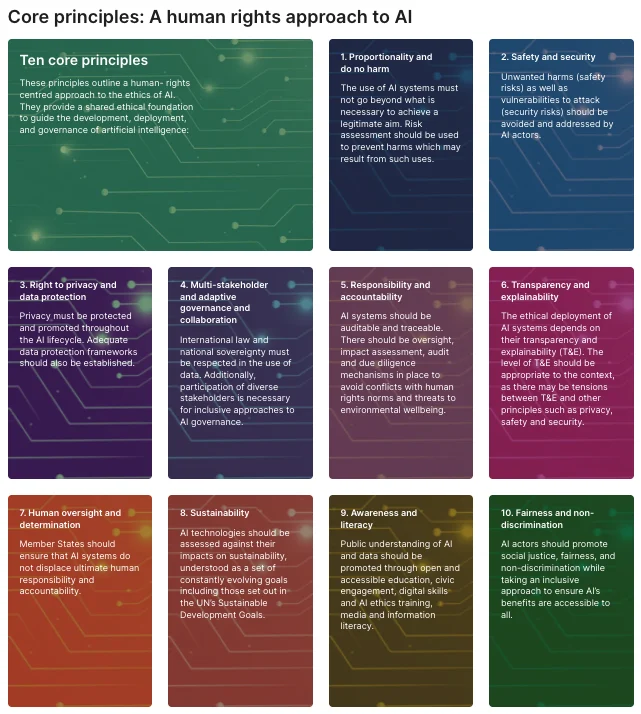
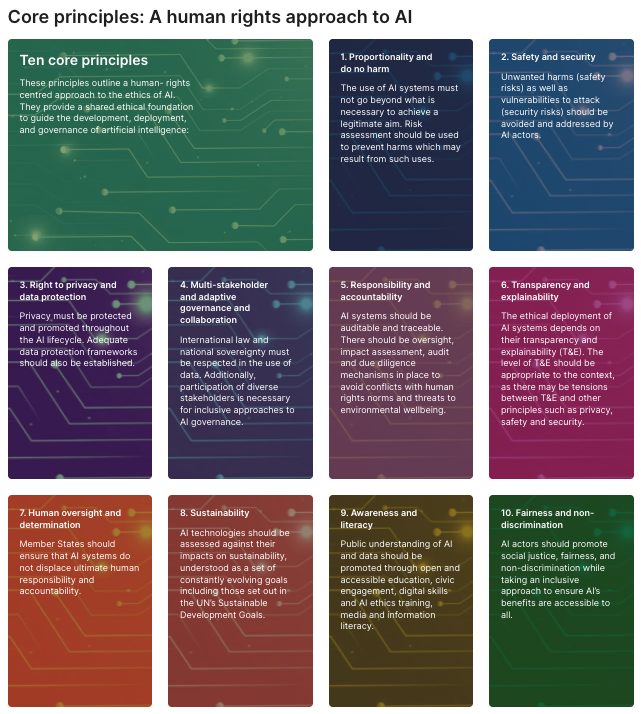
The research team utilized the ten principles established in UNESCO’s Recommendation on the Ethics of Artificial Intelligence as a benchmark for their analysis. These principles include:
- Proportionality and Do No Harm
- Safety and Security
- Right to Privacy and Data Protection
- Multi-stakeholder and Adaptive Governance and Collaboration
- Responsibility and Accountability
- Transparency and Explainability
- Human Agency and Oversight
- Awareness and Literacy
- Fairness and Non-discrimination
- Sustainability
The Centre’s review found that while fairness and privacy are well-represented in current curricula, concepts such as "proportionality" (the question of whether an AI solution is appropriate for a given problem) and "governance" (how AI systems are regulated) are rarely addressed. Most strikingly, the theme of sustainability was almost entirely absent. Only one intervention identified in the review directly addressed the environmental impact of AI itself, a glaring omission given the massive energy and water requirements of modern data centers.
Addressing the Environmental and Social Impact
The new study seeks to bridge these gaps by prioritizing the social and ethical impact of AI from a sustainability perspective. In the context of AI, sustainability refers to more than just "green" energy; it encompasses the long-term viability of resources, the ethical sourcing of hardware components, and the carbon footprint associated with training large language models (LLMs).
Experts have noted that training a single large-scale AI model can emit as much carbon as five cars over their entire lifetimes. Furthermore, the infrastructure required to support global AI usage demands significant amounts of water for cooling data centers and rare earth minerals for hardware production. By integrating these topics into the computing curriculum, the Raspberry Pi Foundation aims to foster a more holistic understanding of technology.
The study will encourage students to engage in ethical reasoning through real-world examples. This might include discussing the labor conditions of data annotators in developing nations or the trade-offs between the convenience of AI-driven automation and the environmental cost of maintaining the necessary server farms. The goal is to move students away from viewing AI as a "magic" black box and toward seeing it as a physical infrastructure with tangible global consequences.

Methodology and Teacher Collaboration
The research project employs a "design-based research" (DBR) methodology, a framework that emphasizes the collaborative development of educational interventions between researchers and practitioners. This approach ensures that the resulting curriculum is grounded in the realities of the classroom.
Participating teachers will be required to:
- Attend two intensive in-person workshops in Cambridge to explore AI ethics and sustainability frameworks.
- Collaborate with researchers to co-design a unit of work consisting of several lessons tailored for 11- to 14-year-olds.
- Implement the co-designed lessons in their own classrooms.
- Participate in evaluation activities, including surveys, interviews, and the submission of student work samples.
Recognizing the administrative and financial pressures on schools, the Raspberry Pi Foundation has committed to supporting participants by covering travel and accommodation costs for the Cambridge workshops, as well as providing funds for supply cover to ensure that teachers can participate without disrupting their school’s operations.
Chronology of the Project
The timeline for the research initiative is structured to align with the academic calendar and upcoming international academic milestones:
- September 2024: Formal call for participants and opening of the registration process for computing teachers in England, Scotland, and Wales.
- October 2024: Presentation of the initial scoping literature review at the Frontiers in Education conference. This presentation will provide the theoretical foundation for the study’s focus on the UNESCO principles.
- Late 2024 / Early 2025: Execution of the first co-design workshops in Cambridge. Teachers and researchers will begin drafting the lesson units.
- Spring Term 2025: Pilot phase. Teachers will deliver the new AI ethics and sustainability lessons to their students, collecting data on engagement and comprehension.
- Mid-2025: Evaluation and refinement phase. The research team will analyze survey data and interviews to determine the effectiveness of the curriculum.
- Late 2025: Publication of findings and broader release of the developed teaching resources to the global computing education community.
Broader Implications for Education and Policy
The implications of this study extend beyond the classroom. As the UK government continues to refine its national AI strategy, the role of education in building a resilient and informed workforce has become a central pillar of policy discussions. By focusing on ethics and sustainability, the Raspberry Pi Foundation is aligning its work with broader global movements, such as the UN Sustainable Development Goals and the UK’s own Net Zero targets.
Educational experts suggest that teaching AI ethics is not merely about preventing "bad" technology use; it is about empowering students to be informed citizens. In a future where AI may influence everything from job recruitment to healthcare and criminal justice, the ability to question the "fairness" and "proportionality" of an algorithm is a fundamental democratic skill.
Furthermore, this study addresses the "digital divide" in a new way. While access to hardware was the primary concern of the last decade, the current divide is often characterized by the gap between those who consume AI and those who understand its inner workings and societal costs. By providing teachers with the tools to demystify AI, the Centre is helping to ensure that all students, regardless of their background, can participate in the conversation about how technology should be governed.
Official Statements and How to Participate
Katharine Childs, a key researcher at the Raspberry Pi Computing Education Research Centre, is leading the outreach for the project. The Centre has emphasized that the study is an opportunity for teachers to "help shape the way we teach young people about ethical issues around AI." The Foundation believes that teachers are the best-placed experts to determine how complex topics like "algorithmic governance" can be translated into age-appropriate lessons.
The project is currently seeking expressions of interest from secondary school computing teachers. Interested parties are encouraged to register through the official Raspberry Pi Foundation application portal. The Foundation has stressed that no prior expertise in AI ethics is required, as the workshops are designed to build that capacity among the cohort of participating educators.
As the study progresses, it is expected to provide a blueprint for how computer science education can evolve to meet the challenges of the 21st century. By moving sustainability from the periphery to the center of the computing curriculum, the Raspberry Pi Foundation and the University of Cambridge are setting a new standard for responsible technology education in the UK and beyond.