MIT engineers have forged a groundbreaking new aluminum alloy, poised to redefine the capabilities of additive manufacturing. This novel material not only possesses exceptional heat tolerance but also achieves strength levels vastly superior to conventional aluminum, marking a significant leap forward in materials science and engineering. Rigorous testing has demonstrated that components manufactured from this alloy exhibit a strength five times greater than those produced using standard aluminum manufacturing techniques, opening a vista of new possibilities across numerous high-demand industries.
A Fusion of Computational Power and Material Discovery
The genesis of this remarkable alloy lies in a sophisticated methodology that intricately blends advanced computer simulations with cutting-edge machine learning algorithms. This synergistic approach dramatically accelerated the arduous process of discovering the optimal elemental composition. Traditionally, identifying such a precise blend would have necessitated the exhaustive evaluation of over one million potential material combinations. However, the machine learning model proved instrumental in narrowing this astronomical figure to a mere 40 highly promising options, from which the researchers definitively identified the ideal formula.
This accelerated discovery phase is a testament to the power of modern computational tools in materials science. By analyzing vast datasets of elemental properties and their interactions, the machine learning system was able to uncover subtle patterns and non-linear relationships that would have eluded traditional simulation methods. This intelligence allowed the researchers to pinpoint specific elemental combinations and concentrations that promote the formation of a microstructure crucial for enhanced strength.
Upon successfully printing the alloy using additive manufacturing techniques, the team subjected it to rigorous mechanical testing. The results not only met but, in many cases, exceeded the predictions made by their computational models. The printed metal demonstrated performance parity with the most robust aluminum alloys currently available, alloys that are typically produced through more energy-intensive and time-consuming traditional casting methods. This successful validation underscores the efficacy of the machine learning-driven design process and the suitability of 3D printing for producing high-performance materials.
Unlocking Lighter, Stronger Components: Industrial Ramifications
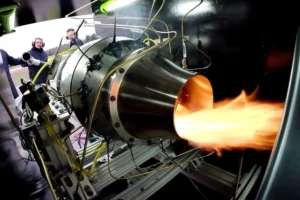
The potential industrial impact of this new printable aluminum alloy is immense. The research team envisions its application in the creation of components that are simultaneously stronger, lighter, and more resilient to extreme temperatures. A prime example of such an application is in the aerospace sector, specifically for fan blades in jet engines.
Currently, fan blades are predominantly manufactured from titanium or advanced composite materials. Titanium, while strong, is more than 50 percent heavier than aluminum and can incur costs up to ten times higher. Advanced composites, while offering a good strength-to-weight ratio, can present their own manufacturing complexities and cost considerations. The introduction of a high-strength, heat-resistant, and printable aluminum alloy could offer a compelling alternative, leading to substantial weight reductions in aircraft.
"If we can utilize a lighter, high-strength material, this would translate into considerable energy savings for the transportation industry," stated Mohadeseh Taheri-Mousavi, who spearheaded the research during her tenure as a postdoctoral associate at MIT. Taheri-Mousavi is now an assistant professor at Carnegie Mellon University, continuing her impactful work in materials science. The reduction in fuel consumption due to lighter aircraft components is a critical objective in the ongoing drive for greater sustainability in aviation. For every kilogram of weight saved on an aircraft, significant fuel savings can be realized over the lifespan of the aircraft.
The benefits of this innovative alloy, however, extend far beyond the realm of aviation. John Hart, the Class of 1922 Professor and head of MIT’s Department of Mechanical Engineering, emphasized the broader applicability of this breakthrough. "Because 3D printing allows for the production of complex geometries, material savings, and the enablement of unique designs, we see this printable alloy as something that could also be utilized in advanced vacuum pumps, high-end automobiles, and cooling devices for data centers," Hart explained.
In the automotive industry, lighter components directly contribute to improved fuel efficiency and enhanced performance. The ability to 3D print intricate designs could also revolutionize the manufacturing of high-performance engines and chassis components, allowing for greater customization and optimization. For data centers, which consume vast amounts of energy for cooling, more efficient and heat-resistant cooling devices could lead to significant operational cost reductions and a smaller environmental footprint.
From Classroom Challenge to Materials Breakthrough: A Chronological Perspective
The intellectual lineage of this significant advancement can be traced back to a pivotal moment in 2020. Mohadeseh Taheri-Mousavi, then a student at MIT, enrolled in a course taught by Greg Olson, a professor of the practice in the Department of Materials Science and Engineering. This course was dedicated to the application of computational simulations in the design of high-performance alloys. Alloys, by definition, are metallic substances composed of two or more elements, with their properties being intrinsically linked to the specific proportions and arrangements of these constituent elements.
During the course, Professor Olson presented students with a formidable challenge: to develop a printable aluminum alloy that surpassed the strength of any existing material. The inherent strength of aluminum is largely dictated by its microstructure, particularly the size, density, and distribution of microscopic crystalline defects known as "precipitates." Generally, a higher density of smaller, more closely spaced precipitates leads to a stronger and more resilient metal.
The students, armed with sophisticated simulation tools, diligently explored various combinations of elements and their concentrations, aiming to predict which mixtures would yield the strongest alloy. Despite their extensive modeling efforts, this initial classroom endeavor did not result in a design that outperformed existing printable aluminum alloys. This outcome, rather than being a definitive end, served as a powerful catalyst, prompting Taheri-Mousavi to reconsider her approach and explore more advanced computational strategies.
"At some point, there are a multitude of factors that contribute non-linearly to a material’s properties, and you can easily become lost," Taheri-Mousavi reflected on the limitations of purely simulation-based approaches. "With machine-learning tools, they can guide you to where you need to focus your attention, indicating, for instance, that these two elements are primarily controlling a specific feature. This allows for a far more efficient exploration of the design space." This realization marked a crucial turning point, shifting the research focus towards leveraging the pattern-recognition capabilities of machine learning.
Harnessing Machine Learning for a Redesigned Aluminum
In the subsequent, more formal study, Taheri-Mousavi built upon the foundation laid by the classroom project, deploying machine learning methodologies to embark on a systematic search for a stronger aluminum alloy. These powerful tools excelled at sifting through vast quantities of data pertaining to elemental properties, uncovering intricate patterns and relationships that often remain hidden from conventional simulation techniques.
The machine learning system, by analyzing a significantly reduced set of just 40 candidate compositions, successfully identified an alloy design characterized by a substantially higher proportion of small precipitates compared to previous attempts. This refined microstructure directly translated into enhanced material strength, a performance metric that demonstrably surpassed the outcomes achieved through over a million simulations conducted without the aid of machine learning.
To bring this novel alloy into physical existence, the researchers deliberately eschewed conventional casting methods. Instead, they opted for additive manufacturing, commonly known as 3D printing. Traditional casting involves pouring molten metal into a mold and allowing it to cool slowly. This gradual cooling process permits precipitates to grow larger, which inherently compromises the material’s strength.
The research team demonstrated that additive manufacturing techniques, specifically laser bed powder fusion (LBPF), allow the metal to cool and solidify at a significantly accelerated rate. In the LBPF process, layers of fine metal powder are selectively melted by a laser. The rapid solidification that follows each layer’s melting is critical. This rapid freezing effectively preserves the fine precipitate structure that was precisely predicted by the machine learning model, thereby locking in the material’s superior strength.
"Sometimes, we must consider how to make a material compatible with 3D printing," observed Professor Hart. "In this instance, 3D printing opens up an entirely new avenue due to the unique characteristics of the process, particularly its rapid cooling rate. The very rapid freezing of the alloy after it is melted by the laser is what creates this exceptional set of properties." This mutualistic relationship between the material design and the manufacturing process is a hallmark of modern engineering innovation.
Empirical Validation: Testing Confirms Record-Breaking Strength
To rigorously validate their theoretical design, the researchers commissioned the production of a batch of printable metal powder based on their newly formulated alloy. This specialized powder, a precise combination of aluminum and five additional elements, was then dispatched to collaborators at Paderborn University in Germany. There, using their advanced LPBF equipment, small test samples of the alloy were meticulously printed.
These printed samples were subsequently returned to MIT for comprehensive mechanical testing and detailed microscopic analysis. The experimental results provided irrefutable confirmation of the machine learning predictions. The printed alloy exhibited a fivefold increase in strength when compared to a cast version of the same material. Furthermore, it demonstrated a 50 percent improvement in strength over aluminum alloys that had been designed using conventional simulation methods alone.
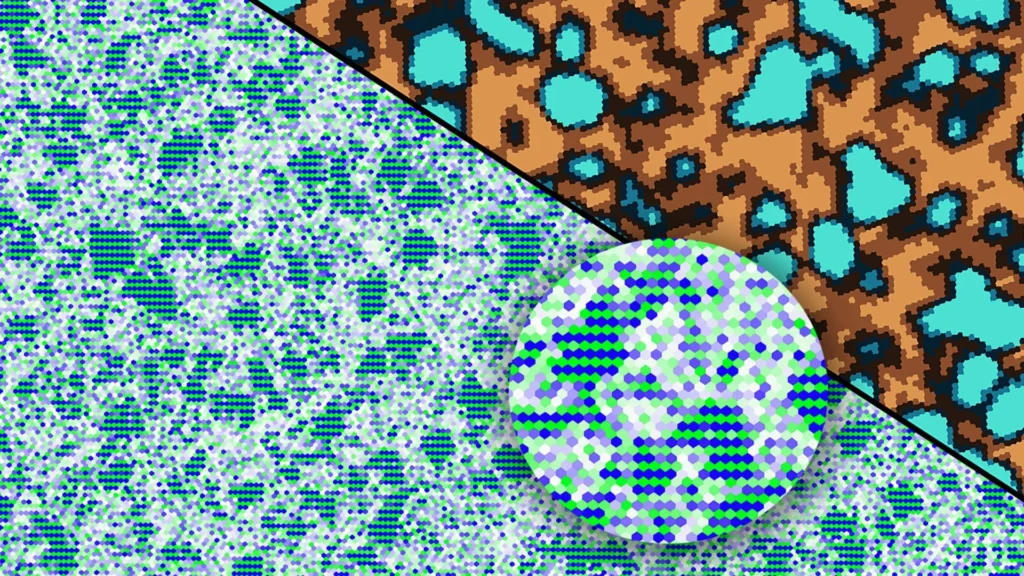
Microscopic imaging provided crucial insights, revealing a remarkably dense population of uniformly small precipitates within the alloy’s microstructure. Beyond its exceptional strength, the material also displayed impressive thermal stability, remaining structurally sound and maintaining its properties at temperatures up to 400 degrees Celsius. This is a significant achievement for aluminum-based materials, which typically experience a marked degradation in strength at such elevated temperatures.
The success of this initial phase has spurred the research team to further refine their approach. They are currently applying the same machine learning techniques to explore and enhance other critical properties of the alloy, potentially expanding its application range even further.
"Our methodology opens new doors for anyone looking to engage in 3D printing alloy design," Taheri-Mousavi articulated with evident enthusiasm. "My dream is that one day, passengers looking out their airplane window will see fan blades of engines made from our aluminum alloys." This forward-looking vision underscores the profound impact this innovation could have on making air travel more efficient, sustainable, and cost-effective. The journey from a classroom challenge to a world-changing materials breakthrough highlights the power of interdisciplinary research, computational innovation, and a relentless pursuit of engineering excellence.