Garrett, a watch industry professional, traditionally advised clients to stay within their smartphone’s ecosystem for seamless smartwatch integration, with a notable exception: Garmin for serious fitness tracking, particularly for runners. This long-held perspective, viewing smartwatches as mere phone extensions and mechanical watches as a path to digital detachment, has been significantly challenged by Garmin’s latest MARQ collection. The author’s personal journey, from a budget-friendly Xiaomi smartwatch in high school to a deep appreciation for mechanical timepieces, now finds a compelling intersection with Garmin’s high-end offering, sparking renewed interest in the smartwatch category.

A Return to Smartwatch Interest: The Genesis of the MARQ
The rise of smartwatches coincided with the author’s high school years, a period marked by accessible technology like the affordable Xiaomi smartwatch. This device, a fraction of the cost of contemporary models, offered essential features such as phone notifications, step counting, and sleep tracking, making it an attractive proposition for a student with limited disposable income. This early experience, however, was eventually superseded by a fascination with mechanical watches, leading to the retirement of the smartwatch. For years, the author remained a keen observer of the smartwatch market, but without a personal inclination to re-engage, until the opportunity arose to experience the newest generation of Garmin’s MARQ series.
MARQ Series: The Apex of Luxury and Technology
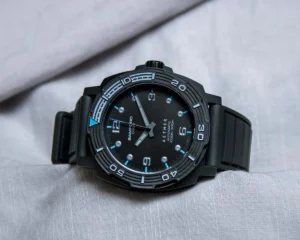
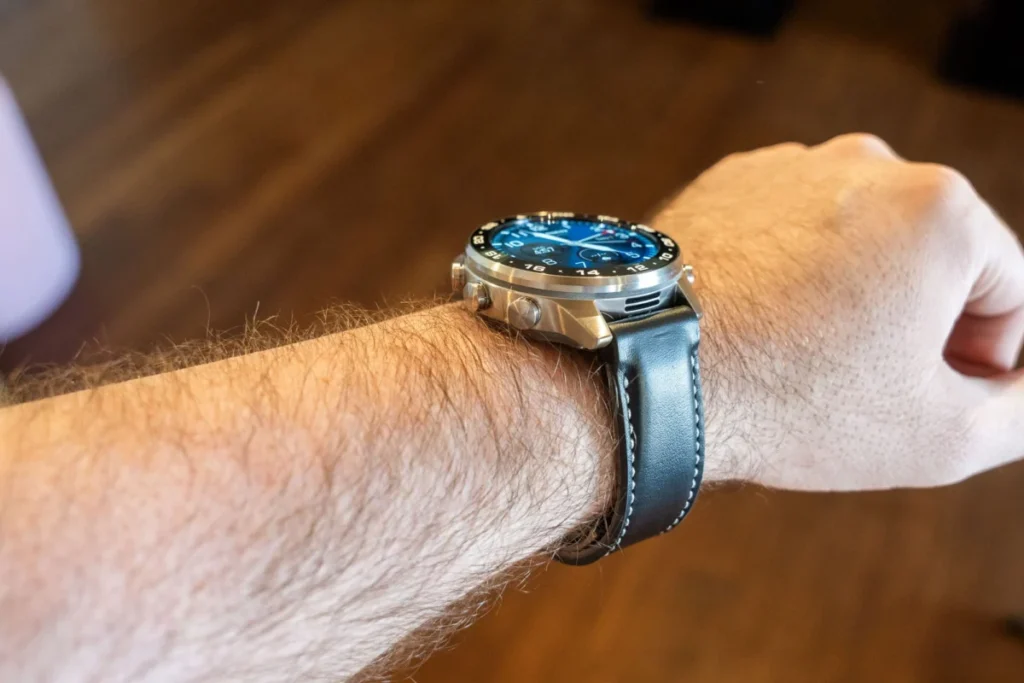
Garmin’s MARQ series is positioned as the brand’s "top-of-the-line" offering, meticulously engineered to bridge the gap between traditional luxury timepieces and advanced smartwatches. The design philosophy incorporates elements highly valued in haute horlogerie, such as a grade 5 titanium case, a ceramic bezel insert, refined brushed finishing, and a robust sapphire crystal. These materials and finishes, according to the author’s extensive experience handling watches across a wide spectrum of price points and craftsmanship, rival the finest smartwatches encountered. The ceramic bezel inserts exhibit consistent color saturation and well-defined, legible numerals and indices. It is noteworthy that all MARQ models, including the Diver variant, feature a fixed, non-rotating bezel, a design choice that aligns with the aesthetic and functional considerations of certain traditional watchmaking disciplines.

Powering the Expedition: Beneath the Luxury Exterior
While the MARQ series shares significant aesthetic and material kinship with mechanical watches, its internal "movement" is a sophisticated computer system. This technological core boasts processing power that, by some metrics, surpasses that of the systems that enabled the Apollo moon missions. Technologically, the MARQ features a 1.4-inch borderless AMOLED touchscreen, an integrated heart rate sensor, magnetic charging capabilities, and an internal battery capable of sustaining up to 18 days of operation in "expedition mode." However, the hardware is only one facet of the MARQ’s advanced functionality. The latest generation incorporates Garmin’s inReach technology, providing satellite communication capabilities, comes preloaded with comprehensive global maps, and includes a built-in flashlight. These integrated features are designed to enable users to embark on outdoor adventures immediately upon unboxing their new device, eliminating the need for extensive preparation or supplementary equipment.
Field Testing in Mallorca: A Hands-On Encounter
The author had the opportunity to attend an exclusive Garmin event in Mallorca, where members of the global media were invited to experience the new MARQ models firsthand. This immersive event included practical field testing and in-depth briefings on Garmin’s product strategy and the MARQ line’s specific positioning within their extensive catalog. From the outset, the MARQ made a strong impression, distinguishing itself from earlier smartwatch iterations. However, two significant considerations emerged during this hands-on evaluation.

The Dimension Dilemma: Size and Wearability
The first notable aspect is the substantial size of the Garmin MARQ. Measuring 46mm in diameter and 15mm in thickness, it presents as one of the largest watches the author, with a 6.5-inch wrist, has ever worn. Despite its imposing dimensions, the watch’s design, featuring a relatively flat case back and carefully sculpted lugs, contributes to surprisingly comfortable wearability. This ergonomic consideration is crucial for a device intended for extended use during active pursuits.
Strap Versatility: Tailoring to the Task
The MARQ collection offers a diverse array of strap options, each meticulously paired with specific models to complement their intended aesthetic and function. The Diver and Athlete variants are outfitted with fitted silicone straps, designed for water resistance and athletic performance. The Adventurer and Aviation models feature either leather or a hybrid leather/silicone construction, offering a blend of durability and style. The Golfer and Commander editions come equipped with woven jacquard nylon straps, emphasizing a refined yet rugged appeal. Among these, the author found the cut-to-size silicone strap on the Diver model particularly impressive. With 15mm of adjustment, it provides ample room to accommodate wrist swell during activity or to fit comfortably over a wetsuit, a critical feature for aquatic enthusiasts.

Integrated Illumination: The Unexpected Utility of a Watch-Mounted Flashlight
During the event, the author observed numerous instances where attendees utilized the built-in flashlight function, a feature initially perceived as a mere novelty. The practical applications became evident: locating dropped items in dimly lit environments or reading menus in low-light conditions. This feature’s utility lies in its constant accessibility. Unlike a handheld flashlight, which requires manual retrieval and often occupies a hand, a wrist-mounted light is always available. This convenience streamlines situations where immediate illumination is needed, reducing the number of items to manage and minimizing the risk of dropping essential tools during critical moments. The author’s initial skepticism about the flashlight’s utility quickly dissolved into an appreciation for its pragmatic design.
Beyond Notifications: The MARQ as a "Smart Tool Watch"
For someone who has historically eschewed smartwatches, the MARQ collection has been a revelation. While smartwatches are fundamentally designed as extensions of smartphones—delivering notifications, tracking health metrics, and offering emergency communication—the MARQ transcends this paradigm. It functions less as a digital accessory and more as an intelligent tool watch. Beyond its conventional smartwatch capabilities, the MARQ distinguishes itself through its advanced, purpose-built features. The inclusion of preloaded global maps is a prime example. This feature allows users to purchase the watch, unbox it at a trailhead, and immediately access detailed topographical data essential for navigation in unfamiliar terrains, whether hiking, biking, or running. This level of integrated preparedness fundamentally alters the user experience, positioning the MARQ as a reliable companion for exploration.

Addressing the Price Point: Value Proposition for the Active Lifestyle
The final, and perhaps most significant, consideration is the MARQ collection’s price point. The new models range from $2,500 to $3,100 USD. This investment places the MARQ in a competitive bracket with highly desirable mechanical watches, such as pre-owned Rolex Black Bays or Omega Speedmasters, or even specialized instruments like the Breitling Emergency, which shares a similar adventure-oriented ethos. While the MARQ is undeniably an expensive device, its value proposition is directly tied to the user’s engagement with its advanced functionalities. Conversations with existing Garmin users and observations across social media reveal a common thread: a pronouncedly active lifestyle. The MARQ, in the author’s experience, feels purpose-built for individuals who prioritize movement and outdoor pursuits, catering to hikers, cyclists, runners, and those committed to improving their physical well-being.
A Renewed Curiosity: The Future of Smartwatch Integration
As the author approaches their late twenties, a growing consciousness about personal health and fitness has emerged. While acknowledging that an expensive smartwatch is not a panacea for achieving better physical condition, the MARQ collection has undeniably piqued curiosity. The prospect of exploring how such a sophisticated device can influence one’s active lifestyle is compelling. This experience marks a significant shift, transforming the author from a smartwatch skeptic into someone genuinely "smartwatch-curious" for the first time in over a decade. A more comprehensive review of the Garmin MARQ is anticipated following extended hands-on usage, promising deeper insights into its performance and impact on daily life and outdoor endeavors. Further details on the new MARQ models are available on Garmin’s official website.

Garrett, the author of this piece, is a multifaceted individual with a passion for photography and a penchant for collecting a diverse range of items, including backpacks, bourbon, everyday carry (EDC) gear, and watches. Originally hailing from Kentucky, Garrett has recently relocated to New York City, embracing new experiences and urban adventures. When not indulging his existing collections and hobbies, he dedicates his time to planning future explorations and endeavors. His background in the watch industry provides a unique lens through which to evaluate the intersection of traditional craftsmanship and cutting-edge technology, as exemplified by his assessment of the Garmin MARQ collection.