Since its inception in 1997, Urwerk has consistently challenged the conventions of mechanical watchmaking. Co-founders Felix Baumgartner and Martin Frei have forged an unmistakable brand identity, characterized by their pioneering satellite hours, wandering displays, and retrograde indications. While their creations have frequently drawn inspiration from the celestial ballet of astronomy, the latest marvel, the UR-300 Time Quantum, pivots its gaze from the cosmos to the enigmatic realm of the microscopic, exploring the fundamental concepts of particles and energy. This groundbreaking timepiece introduces an entirely novel display architecture, one that dynamically dismantles and reconfigures itself with each passing hour, echoing the discrete transitions observed in the quantum world.

The very name, "Time Quantum," alludes to the scientific principle of a distinct, indivisible unit of energy or matter. To grasp the conceptual underpinnings of this latest creation by Baumgartner and Frei, one might find resonance in the scientific exploration of time itself. As scientific inquiry delves deeper, the nature of time appears increasingly complex and, dare we say, stranger. Urwerk masterfully employs the behavior of atoms and energy-charged particles as a conceptual framework for its new display. This approach draws a profound parallel between the inherent reorganisation of matter at its most fundamental level and the intricate mechanical transformations that unfold within the UR-300. It is crucial to note that the watch’s mechanism does not aim to reproduce or explain the intricacies of quantum physics; rather, it translates the abstract notion of a sudden change of state into a tangible, meticulously engineered mechanical sequence.
From Celestial Orbits to Atomic Reconfiguration: Urwerk’s Evolving Display Philosophy
The wandering-hour indication has long been Urwerk’s signature complication, a hallmark of its avant-garde approach. Across numerous collections, including the highly acclaimed UR-120, UR-150, and UR-230, rotating hour satellites have gracefully traversed graduated minute scales to signify the passage of time. The UR-300 Time Quantum adopts this foundational principle but reimagines its execution with a novel approach. In this new iteration, the hour indicators are not arranged on a traditional rotating carousel. Instead, they are integrated into a newly developed modular structure that undergoes a complete configuration change every 60 minutes. This represents a significant evolution from their previous orbital designs, moving towards a more integrated, almost self-assembling display.
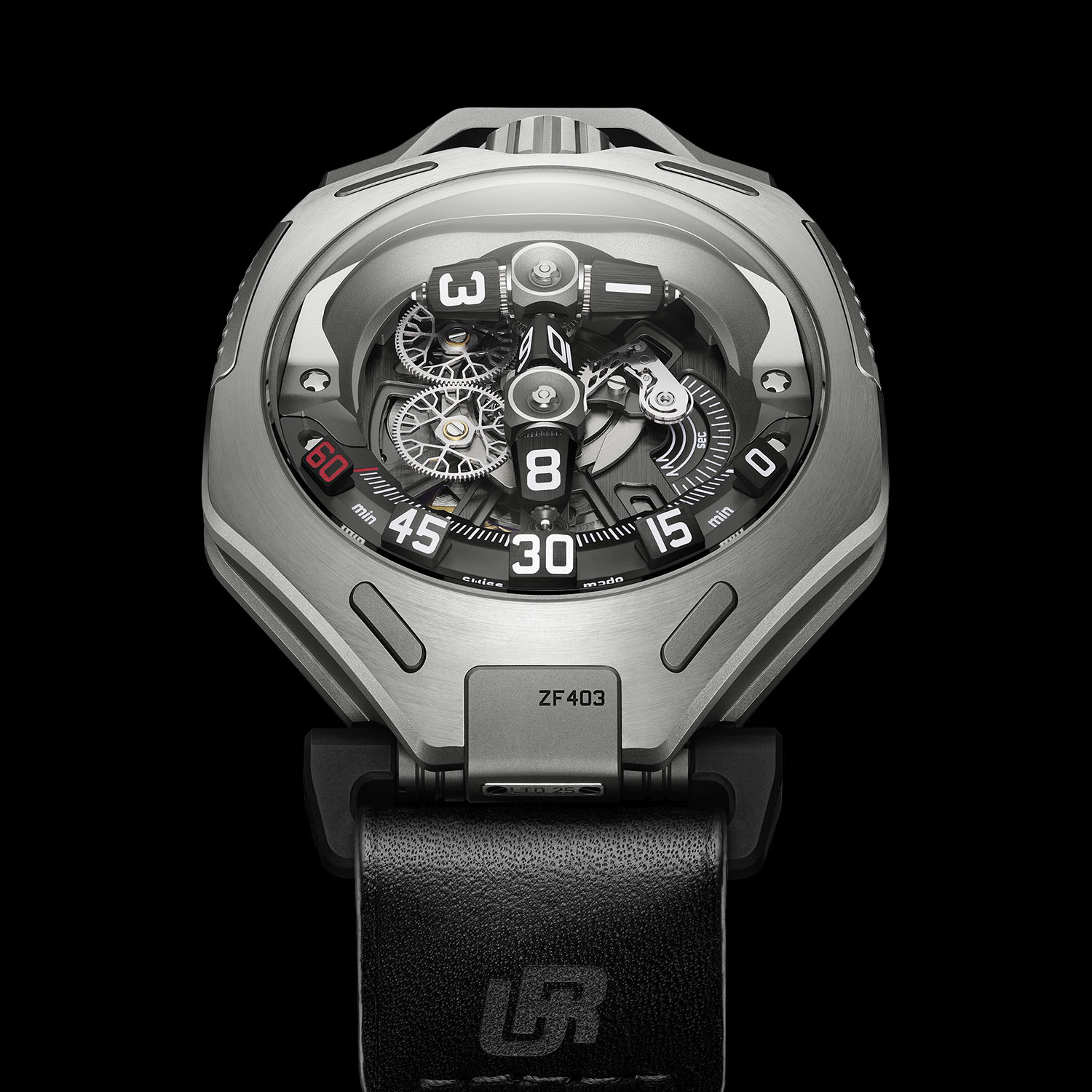
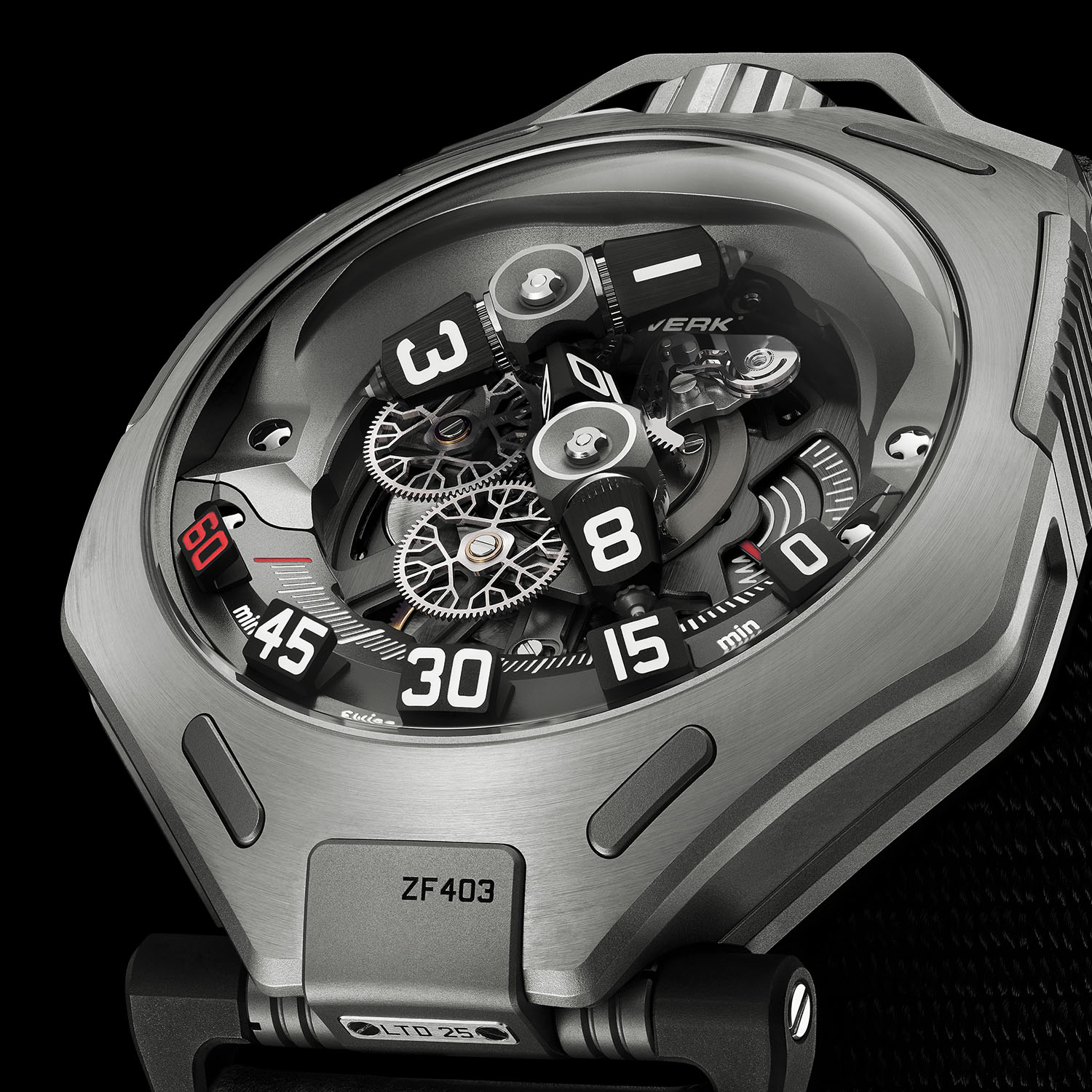
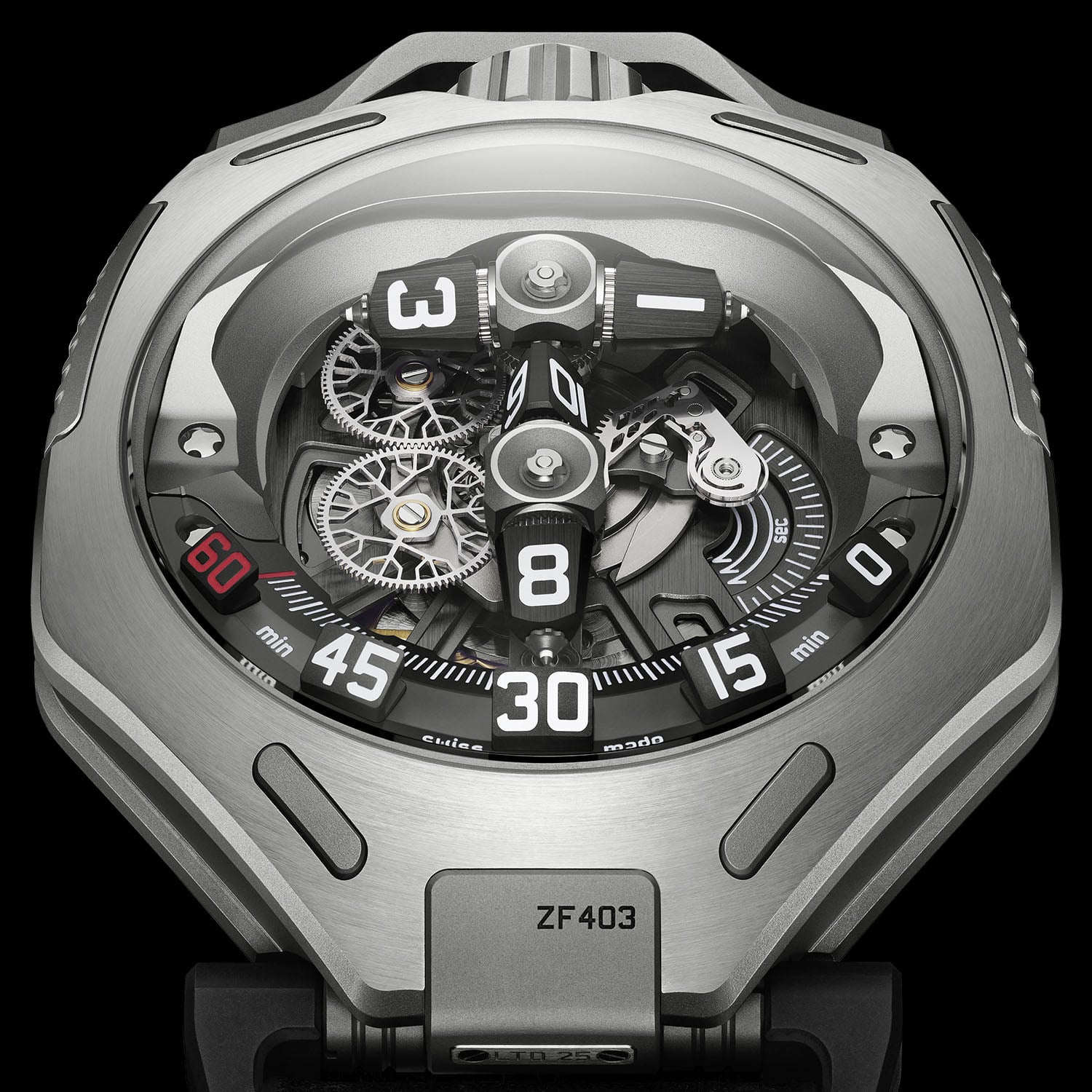
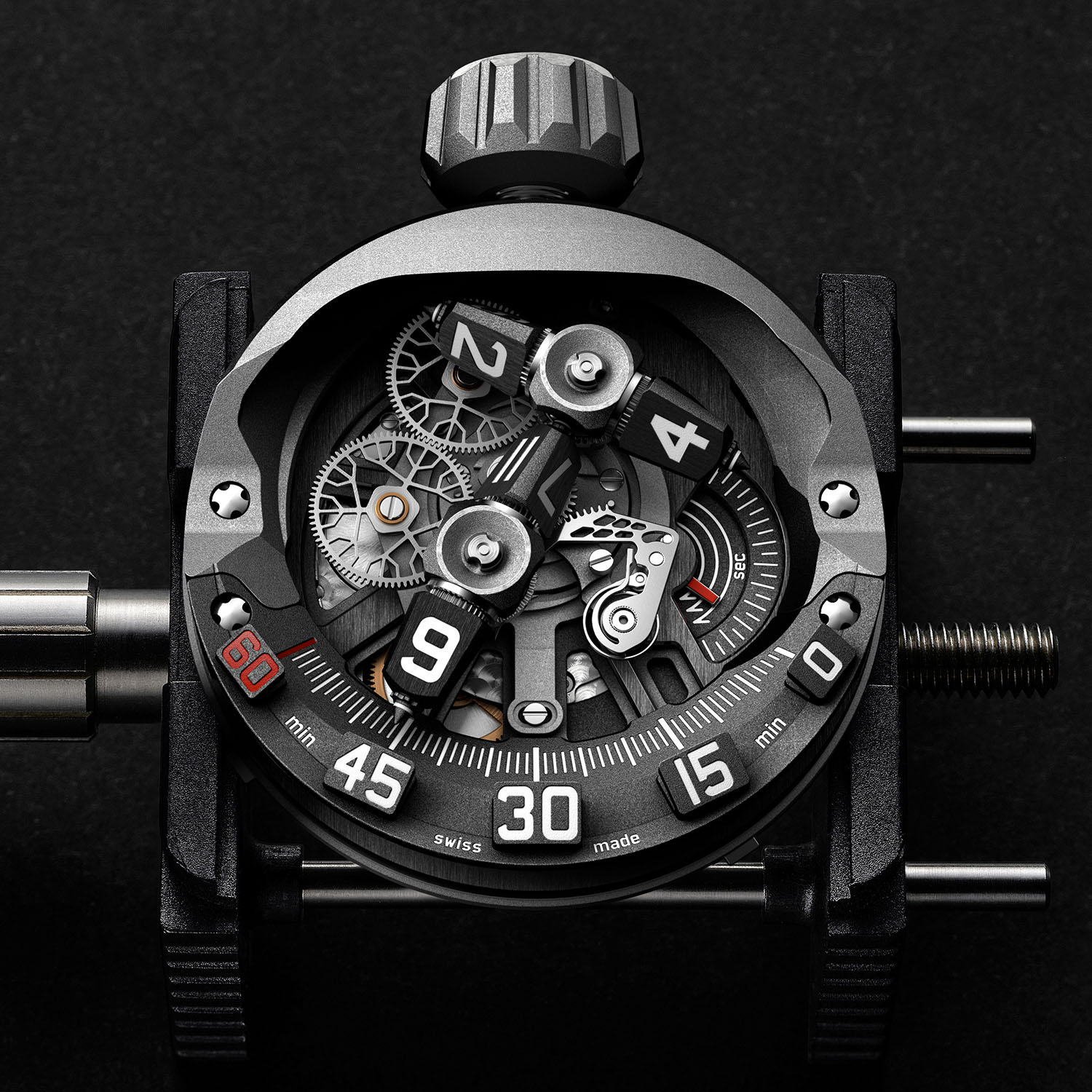
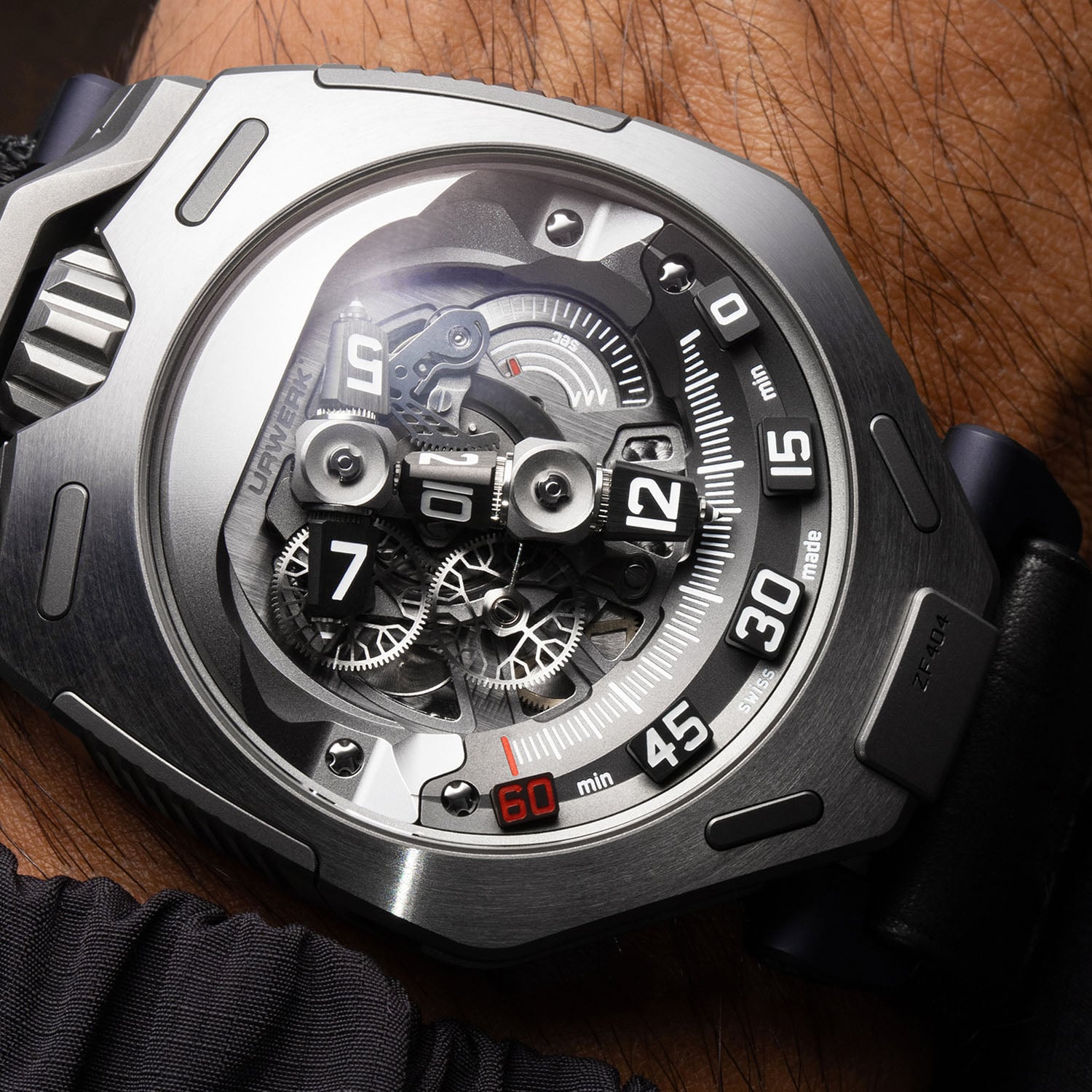
Beneath the protective sapphire crystal, two linear hour modules converge to form a distinctive T-shaped frame. Each arm of this T-frame is equipped with a three-sided rotating hour prism at its extremity. These four prisms, through their individual faces, collectively provide the twenty-four-hour indications. The lower portion of the T-frame serves as the active hour display. This component embarks on a journey along a curved, 108-degree minute scale, sweeping from 0 to 60. The very geometry of the T-frame is meticulously engineered to dictate the precise relationship between the dynamic hour display and the continuous minute indication.
The true spectacle unfolds as the indicating prism reaches the terminus of the minute scale. At this juncture, a precisely orchestrated sequence of three simultaneous operations is initiated. The T-frame undergoes an instantaneous jump forward, simultaneously rotating by 72 degrees. This movement strategically positions the next hour prism at the commencement of the minute track. Concurrently, the crossbar of the T pivots around its central axis, assuming the role of the new stem. The previous stem, in turn, rotates in the opposite direction, transforming into the subsequent crossbar. Finally, in a synchronized ballet of micro-mechanics, all four prisms rotate, revealing the numeral corresponding to the new hour. In essence, the entire display reconfigures itself through a single, coordinated motion involving the hour modules, prisms, and the T-frame. Following this dramatic transition, the newly presented hour indicator commences its measured progression along the minute scale.
Engineering the Spectacle: Overcoming Mechanical Challenges
The visual poetry of the UR-300 Time Quantum’s display is underpinned by a series of formidable engineering challenges. An instantaneous jump involving multiple intricately moving components necessitates a delicate balance of energy. It requires sufficient force to complete the transition decisively, yet not so much that it leads to component recoil or undue stress on the movement. Furthermore, the achievement of such precision demands exceptionally tight tolerances within the gear trains and moving parts. These tolerances must be robust enough to withstand sudden accelerations without introducing excessive play or compromising transmission efficiency.
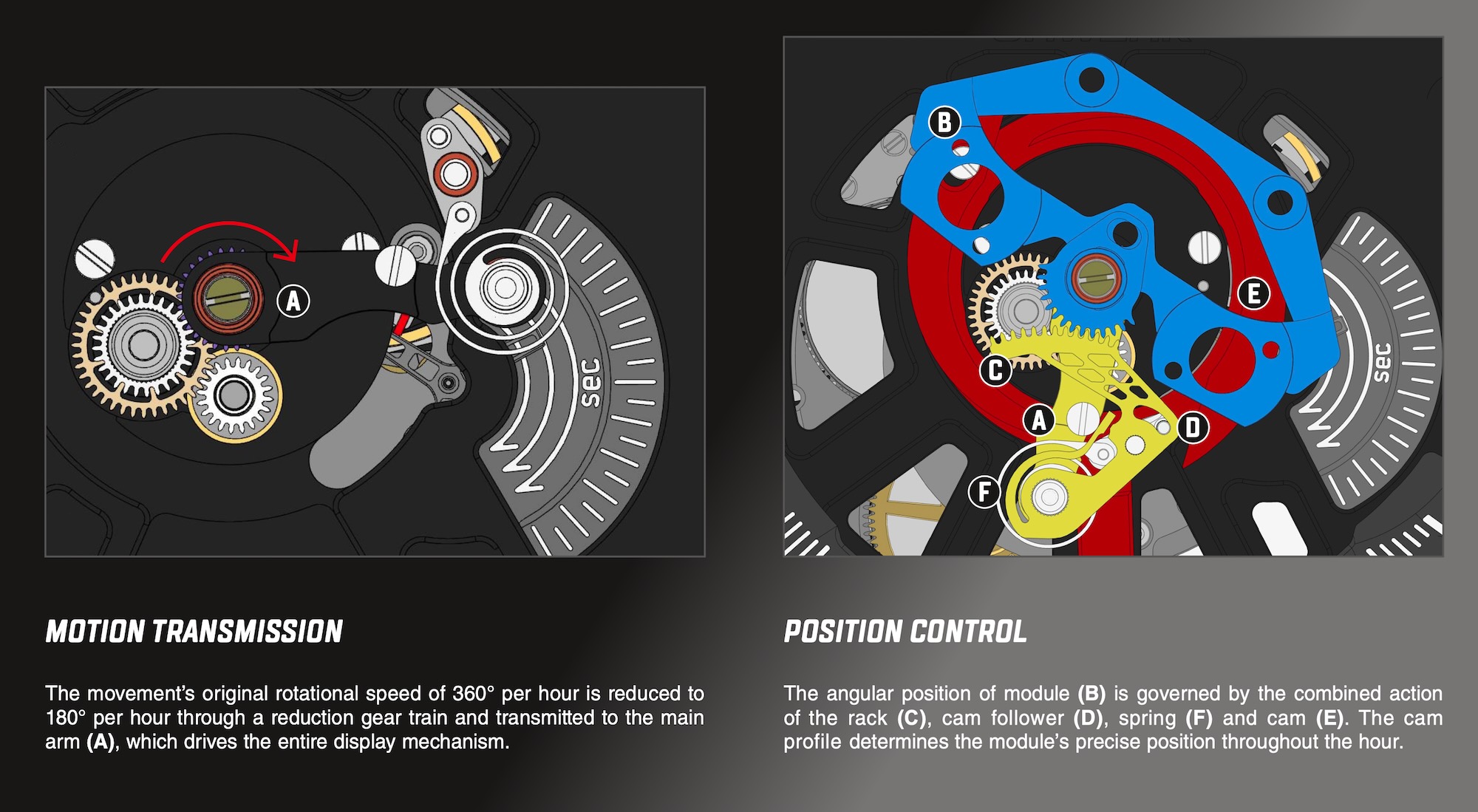
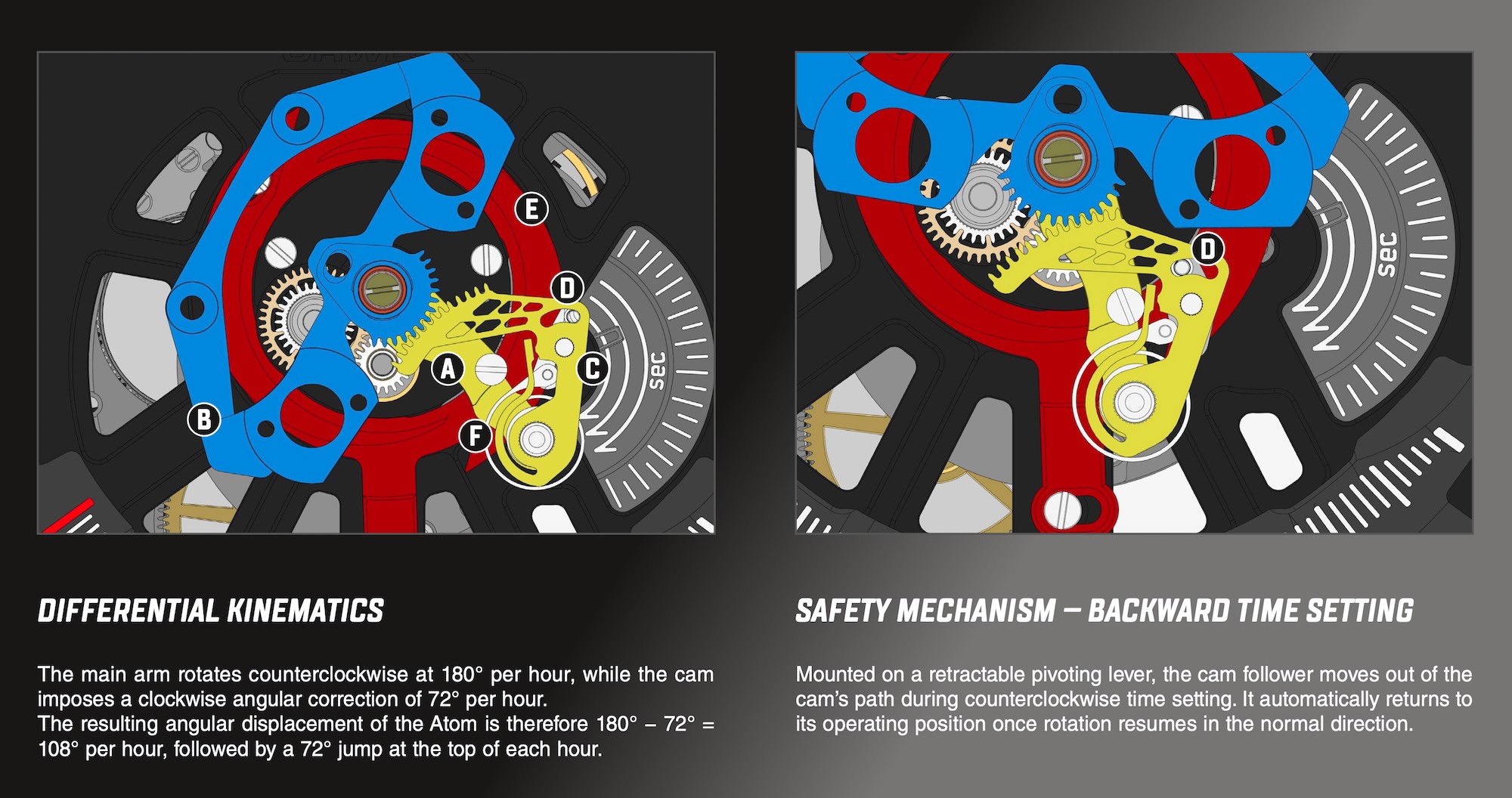
Urwerk’s technical documentation, aptly titled "For the Nerd in You," provides a fascinating glimpse into the movement’s intricacies. It reveals that the initial rotational speed of the movement, 360 degrees per hour, is meticulously reduced to 180 degrees and then transmitted to the main arm. This arm rotates in a counterclockwise direction. Simultaneously, a cam engages in a clockwise correction of 72 degrees per hour. The net effect of these opposing forces is that the hour display advances by 108 degrees over the course of an hour, culminating in the decisive 72-degree jump at the hour change. The precise angular positioning of the module throughout this process is governed by a sophisticated system comprising a rack, cam follower, spring, and cam. The intricate profile of the cam is the mastermind behind the module’s position during the hour, seamlessly coordinating the continuous movement with the abrupt, instantaneous transition.
Beyond the primary function, Urwerk has demonstrated exceptional foresight in addressing the practicalities of setting the watch. A cleverly integrated safeguard allows for setting the time backward without forcing the positioning mechanism through its standard operating sequence. When the time is adjusted in reverse, a retractable pivoting lever disengages the cam follower from the cam’s path. Upon resuming normal rotational direction, the follower seamlessly returns to its operating position, ensuring the integrity of the complex mechanism. This attention to detail underscores Urwerk’s commitment to both innovation and user experience.
As is characteristic of many Urwerk creations, the true genius lies not merely in achieving an unusual indication but in ensuring its unfailing reliability, hour after hour, day after day. This commitment to enduring performance is a testament to the brand’s dedication to horological excellence.
The UR-30.01V Movement: A Symphony of Innovation and Precision
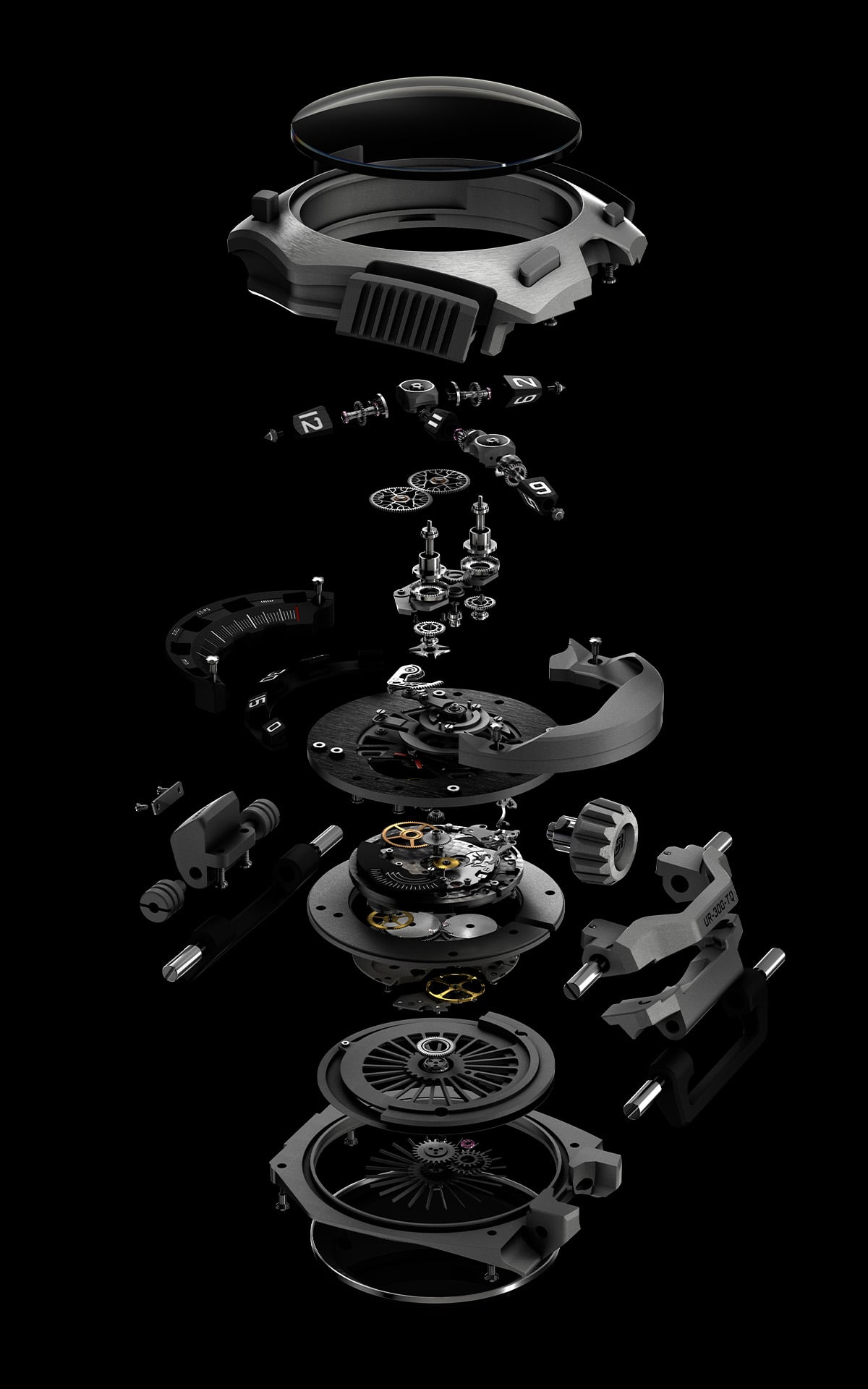
Powering the UR-300 Time Quantum is the automatic UR-30.01V calibre. This movement, built upon a Vaucher base and enhanced with an in-house developed display module, features Urwerk’s signature Dual Flow Turbines. These turbines play a critical role in regulating the winding of the movement. They meticulously manage the energy supplied to the double mainspring barrel, striking a delicate equilibrium between the substantial energy demands of the complex jumping mechanism and the imperative of maintaining a practical power reserve.
The power reserve stands at 40 hours. While this may not be considered exceptionally long by contemporary standards, it is important to contextualize this figure within the demanding requirements of the UR-300’s unique display. Urwerk’s watches have historically operated within a power reserve range that rarely exceeds 50 hours, with notable exceptions like the EMC Time Hunter. However, the mechanism of the UR-300 must not only meet the energy needs of its reconfiguring display but also ensure that the instantaneous change does not compromise the watch’s regular running accuracy.
The movement incorporates a Swiss lever escapement and a monometallic balance wheel, oscillating at a frequency of 28,800 vibrations per hour. The intricate components responsible for the hour display are crafted from a diverse array of materials. This selection includes beryllium copper, brass, anodised aluminium, ARCAP AP1D, titanium, and parts processed using LIGA (Lithographie, Galvanoformung, Abformung) technology, a high-precision microfabrication technique for nickel components. This varied material palette is dictated by the distinct demands placed upon each component. Requirements range from structural rigidity and low mass to achieving precise geometries and ensuring reliable interaction between the moving parts. The finishing techniques employed are equally meticulous, encompassing circular and straight graining, Côtes de Genève, and chamfered, polished screw heads, all contributing to the movement’s aesthetic appeal and functional integrity.
The Titanium Enclosure: A Robust Canvas for Innovation
The UR-300 Time Quantum is housed within a robust Grade 5 titanium case, offering a water resistance of 30 meters. The substantial dimensions of the case – measuring 45.2mm in width, 58.8mm in length, and 18.25mm in thickness – are a necessity, providing the ample space required to accommodate the four hour prisms, their intricate moving supports, and the complex mechanism that facilitates the T-frame’s dynamic configuration changes. The crown is strategically positioned at the top of the case, designed for integrated protection.
Two distinct versions of the UR-300 Time Quantum were introduced at its launch. The "Titan" model features a case crafted entirely from Grade 5 titanium. In contrast, the "AlTiN" edition boasts a striking finish achieved through a Physical Vapor Deposition (PVD) coating. Both iterations utilize sapphire crystals treated with an anti-reflective coating for optimal legibility and are supplied with sophisticated NATO-style straps.
The production of the UR-300 Time Quantum is strictly limited, with 25 pieces allocated for each version. The retail price for this horological marvel is set at CHF 168,000, exclusive of any applicable taxes. This exclusivity and the cutting-edge technology embedded within each timepiece position the UR-300 as a significant offering for discerning collectors and enthusiasts of avant-garde watchmaking.
Broader Implications and Urwerk’s Enduring Legacy
The introduction of the UR-300 Time Quantum signifies more than just a new watch; it represents a continuation of Urwerk’s philosophy of pushing the boundaries of what is mechanically and aesthetically possible. By drawing inspiration from the microscopic world, the brand reinforces its commitment to conceptual depth in its creations. This move from astronomical inspiration to quantum concepts suggests a potential broadening of Urwerk’s thematic explorations in future endeavors.
The successful implementation of such a complex, dynamically reconfiguring display has significant implications for the watchmaking industry. It demonstrates that even the most abstract scientific principles can be translated into tangible, functional mechanical art. The engineering solutions developed for the UR-300 could potentially influence future developments in complication design, particularly in areas requiring instantaneous, multi-component transitions.
For collectors, the UR-300 offers a unique proposition: a timepiece that is not only technically brilliant but also conceptually profound. Its limited production run ensures its rarity and potential for appreciation as a significant piece in Urwerk’s already distinguished history. The price point, while substantial, reflects the immense research, development, and artisanal skill invested in bringing such an ambitious vision to life.
Urwerk’s trajectory since 1997 has been one of consistent innovation and a refusal to conform. The UR-300 Time Quantum stands as a powerful testament to this legacy, inviting wearers and observers alike to contemplate the nature of time and the astonishing ingenuity of mechanical engineering, all while marveling at a display that seems to defy the very passage of moments.