Kairos Power has commissioned a cutting-edge automated inspection and laser-marking system for its nuclear fuel pebbles, ushering in a new era of quality control and traceability crucial for the development and future deployment of its advanced reactor technology. This sophisticated system, now fully operational at the company’s Manufacturing Development Campus in Albuquerque, New Mexico, represents a significant leap forward in ensuring the integrity and performance of nuclear fuel, a cornerstone for the safe and efficient operation of next-generation reactors. The facility meticulously measures individual fuel pebbles against stringent manufacturing specifications, records their unique characteristics, and engraves each one with an indelible tracking code, establishing an unparalleled level of accountability from fabrication through operational life.
This strategic advancement directly addresses a formidable practical challenge inherent in developing pebble-based nuclear reactors: the necessity of maintaining consistent manufacturing quality across tens of thousands of individual fuel elements while simultaneously tracking each one throughout rigorous testing phases and eventual operational cycles. The system’s capabilities are not merely an incremental improvement but a foundational development, positioning Kairos Power to meet ambitious testing targets, including a near-term goal of 70,000 inspected pebbles for upcoming hardware platforms, such as its second Engineering Test Unit (ETU). Crucially, this same robust inspection and tracking infrastructure is designed to support the future Hermes 2 demonstration plant in Oak Ridge, Tennessee, underscoring its pivotal role in the company’s pathway to commercialization.
The Imperative of Precision: Addressing Challenges in Advanced Nuclear Fuel
Kairos Power is at the forefront of developing fluoride salt-cooled, high-temperature reactor (FHR) technology. This innovative design leverages the inherent safety characteristics of molten salt coolants, which operate at atmospheric pressure, eliminating the risk of pressure-driven accidents and allowing for passive heat removal. FHRs are also designed to achieve very high operating temperatures, making them suitable not only for efficient electricity generation but also for a wide array of industrial heat applications, such as hydrogen production or desalination, areas where traditional light water reactors are less effective.
Central to Kairos Power’s FHR design are spherical fuel elements, commonly referred to as pebbles. These pebbles encapsulate Tristructural-isotropic (TRISO) fuel particles, which are microscopic kernels of uranium, carbon, and oxygen encased in multiple layers of ceramic materials. This layered coating acts as a robust miniature containment vessel, capable of withstanding extreme temperatures and pressures, thereby preventing the release of fission products even under severe accident conditions. The use of pebbles facilitates continuous online refueling, which can lead to higher capacity factors and more efficient fuel utilization compared to traditional batch refueling processes in conventional reactors.
However, the advantages of pebble-bed reactors come with a unique set of manufacturing and operational challenges. A single FHR core can contain hundreds of thousands, if not millions, of these individual fuel pebbles. Ensuring the consistent quality, geometry, and material composition of each pebble is paramount for predictable reactor physics, efficient heat transfer, and long-term structural integrity. Historically, quality control for nuclear fuel has often relied on batch-level sampling and statistical analysis. For advanced reactors employing pebble fuels, this approach is insufficient. Any deviation in a single pebble’s dimensions, density, or surface integrity could potentially impact reactor performance or, in extreme cases, compromise safety. The need for individual traceability—knowing the exact characteristics and history of every fuel element—becomes an absolute requirement for robust safety cases and regulatory approval. The new automated system directly addresses this critical need, moving beyond statistical inference to direct, individual verification.
Unveiling the Automated Inspection and Laser-Marking System
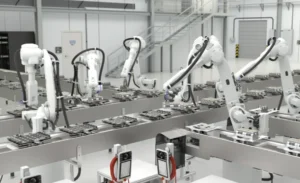
The newly commissioned system at Kairos Power’s Manufacturing Development Campus in Albuquerque serves as a central hub for its iterative fuel development and manufacturing processes. Before these meticulously crafted pebbles are introduced into testing platforms or prepared for transport to nuclear facilities, the automated line subjects them to an exhaustive series of quality checks, far exceeding the capabilities of manual or batch-based inspections.
The automated inspection process begins with precise physical measurements. The system accurately determines each pebble’s diameter, geometry, and density in real time, confirming compliance with exacting manufacturing specifications. These parameters are not arbitrary; they are critical for ensuring optimal neutronics (how neutrons interact with the fuel), efficient heat transfer within the reactor core, and the structural integrity of the pebble matrix itself. Deviations in size or shape could affect flow dynamics of the coolant, while variations in density could alter reactivity and burnup rates.
Following these macroscopic checks, high-precision lasers are deployed to scan the exterior surface of each pebble at the micron level. This ultra-fine inspection is designed to assess the structural integrity of the graphite matrix, identifying even the most minute imperfections such as micro-cracks, surface irregularities, or coating defects that might compromise the TRISO particles within. Such micron-level scrutiny is vital because even tiny flaws could potentially propagate under reactor operating conditions, leading to the premature release of fission products. By automating these checks, Kairos Power achieves not only unparalleled speed and consistency in processing thousands of pebbles but also significantly reduces the potential for human error inherent in manual inspection. This automation generates a continuous stream of standardized measurements, forming individual records that are invaluable for engineers to identify manufacturing variations, pinpoint root causes, and implement data-driven improvements in subsequent production campaigns.
Laser Engraving for Individual Traceability: The Birth of a Digital Twin
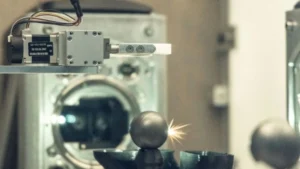
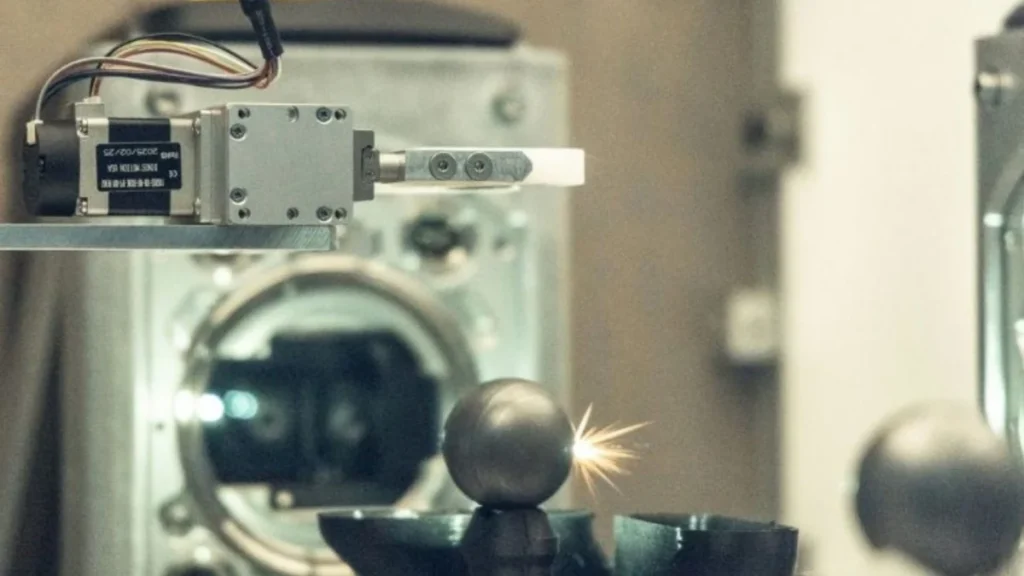
Perhaps the most transformative aspect of this new system is its laser engraving capability, which creates a permanent, individual identity for each fuel pebble. After successfully passing all inspection criteria, each pebble proceeds to an infrared laser engraving station. Here, the system etches three redundant data matrix codes—similar to miniaturized QR codes—into the graphite surface. These markings, approximately half a millimeter deep, are robust enough to withstand the handling and operational environments without degradation.
The redundancy of three identical codes is a deliberate design choice, providing an extra layer of reliability. Should one code be partially obscured or damaged during handling or in-reactor operations, the other two can still be read, ensuring continuous traceability. Each of these unique codes serves as a direct link to an individual digital record. This record contains a comprehensive dossier for that specific pebble, including its precise dimensions, density measurements, the specific production batch it originated from, and its complete inspection status. Furthermore, additional markings strategically placed around the data matrix codes allow optical systems to identify different pebble types even if the primary data matrix is compromised, adding another layer of operational flexibility and error mitigation.
This concept of linking a physical fuel element to a comprehensive digital record effectively creates a "digital twin" for each nuclear fuel pebble. This profound level of traceability is set to become increasingly important as Kairos Power scales up its fuel development and testing activities. Engineers can now track individual pebbles through every stage: downstream handling, various testing environments (both non-nuclear and eventually nuclear), and ultimately, through their entire operational life within a reactor. This capability transcends mere inventory management; it allows for unprecedented insights into the performance of specific fuel elements, enabling a deeper understanding of fuel behavior under various conditions. The company also anticipates these permanent markings will be instrumental in distinguishing between different pebble types (e.g., fresh fuel, reprocessed fuel, or different enrichment levels), improving the accuracy of fuel-consumption measurements, and significantly strengthening material accountability—a critical aspect for nuclear safeguards and non-proliferation during reactor operations. Kirby Boone, a senior engineer on Kairos Power’s fuel team, emphasized this strategic advantage, stating, "By automating our quality control and laser-engraving processes in-house, we are building the foundational capabilities and traceability required to support our iterative approach to fuel development." He further elaborated that the system is designed to generate invaluable data that will inform and optimize future manufacturing and handling systems, not only for the Hermes 2 plant but also for the company’s planned commercial fleet.
Driving Development: From Engineering Tests to Demonstration Plants
The immediate impact of this automated line is the processing of fuel pebbles for Kairos Power’s ongoing hardware demonstrations. The near-term target of 70,000 inspected fuel elements is a substantial volume, critical for populating testing platforms that include the second Engineering Test Unit (ETU). These ETUs are vital non-nuclear test beds designed to validate the performance of reactor components, systems, and operational procedures under prototypic conditions, albeit without actual nuclear fuel or fission. The pebbles produced and meticulously inspected by this new system will be used in these ETUs to test fuel handling mechanisms, core loading and unloading procedures, and to gather data on flow dynamics and thermal performance, ensuring that every aspect of the reactor’s design performs as expected before the introduction of nuclear materials.
Looking further ahead, the system is explicitly designed to support the Hermes 2 demonstration plant in Oak Ridge, Tennessee. Hermes 2 is not merely a test rig; it is intended to be a first-of-a-kind, fully operational fluoride salt-cooled, high-temperature reactor. Its successful deployment and operation are paramount for demonstrating the commercial viability and regulatory licensability of Kairos Power’s technology. The in-house development of this sophisticated inspection infrastructure is a strategic decision, allowing Kairos Power to integrate lessons learned from each production campaign directly into refining its manufacturing processes. This iterative approach ensures continuous improvement, progressively optimizing fuel fabrication methods and scaling capabilities in preparation for the significantly larger-scale fuel production required for commercial deployment. The data generated from Hermes 2 will be invaluable in proving the long-term performance and safety of the fuel pebbles under actual reactor conditions, a critical step for gaining regulatory approval for subsequent commercial reactors.
Strategic Implications and Broader Industry Impact
The commissioning of Kairos Power’s automated fuel pebble inspection and tracking system carries profound strategic implications for both the company and the broader advanced nuclear industry.
Enhanced Safety and Licensing: The ability to individually inspect and track every fuel pebble provides an unprecedented level of assurance regarding fuel quality and performance. This granular data will be instrumental in developing robust safety cases, demonstrating to regulatory bodies like the Nuclear Regulatory Commission (NRC) that Kairos Power has a comprehensive understanding and control over its fuel cycle. This enhanced confidence in fuel integrity directly contributes to improved safety margins and is expected to facilitate faster and more predictable licensing processes, a significant hurdle for many advanced reactor developers.
Optimizing Fuel Cycle Management: Individual pebble traceability enables precise tracking of fuel consumption and burnup within the reactor. This detailed information can lead to more efficient fuel utilization, potentially extending fuel cycle lengths and reducing the volume of spent fuel. Furthermore, it significantly strengthens material accountability, a crucial aspect for non-proliferation efforts by ensuring that nuclear materials can be tracked throughout their lifecycle. Such granular data could also enable more sophisticated and optimized fuel reloading strategies, further enhancing reactor performance and economics.
Manufacturing Excellence and Scalability: The automated system is a testament to Kairos Power’s commitment to manufacturing excellence. By collecting standardized data on each pebble, the company can perform continuous process monitoring and identify subtle trends or deviations in manufacturing. This data-driven approach allows for rapid feedback and iterative improvements to production processes, leading to higher yields, reduced waste, and more consistent product quality. Crucially, the system is designed for scalability, establishing a robust foundation for the high-volume manufacturing of nuclear fuel that will be necessary for the widespread deployment of FHRs. This capability is vital for building a resilient domestic nuclear fuel supply chain, a strategic national priority.
Broader Advanced Reactor Landscape: Kairos Power’s innovation sets a new standard for quality control and traceability in advanced nuclear fuel fabrication. As the nuclear industry transitions towards a new generation of reactor designs, many of which utilize novel fuel forms, robust and automated quality assurance systems will be critical. This development aligns with and supports broader initiatives by the U.S. Department of Energy (DOE) aimed at accelerating advanced reactor development and establishing domestic capabilities for advanced nuclear fuel. It serves as a blueprint for how other advanced reactor developers might approach their own fuel manufacturing challenges, contributing to the overall maturation and industrialization of the advanced nuclear sector. Industry experts are likely to view this as a significant de-risking step for pebble-bed reactor technology, addressing a long-standing challenge with an innovative, modern solution.
The Path Forward: From Innovation to Commercialization
The deployment of this automated inspection and laser-marking system embodies Kairos Power’s "rapid iterative development" philosophy. By bringing key manufacturing and quality control capabilities in-house, the company can quickly implement lessons learned from each design and production cycle, continuously refining its processes and improving its products. This agility is critical for accelerating the development timeline for complex nuclear technologies.
The ultimate goal for Kairos Power is the commercial deployment of its FHR technology, contributing significantly to a clean, reliable, and secure energy future. The advanced capabilities provided by this new system are not just about manufacturing fuel; they are about building trust, ensuring safety, and demonstrating the meticulous control necessary to operate nuclear facilities. As the company progresses from the Hermes 2 demonstration plant to its planned commercial fleet, this automated system will serve as a foundational element, ensuring the highest standards of fuel quality and traceability, and potentially influencing the benchmarks for nuclear manufacturing standards across the industry. This is more than a technical achievement; it is a strategic investment in the future of nuclear energy.