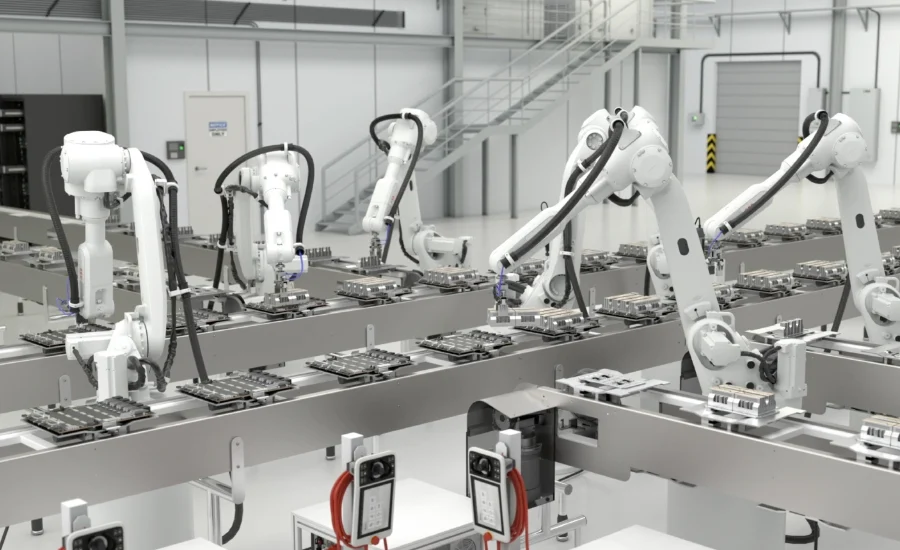
ABB Robotics, a global leader in industrial automation, has unveiled its latest innovations: the IRB 1700 and IRB 1700ID industrial robots. Launched from Auburn Hills, Michigan, these new compact models are engineered to redefine performance benchmarks in precision manufacturing, offering substantial improvements in speed, accuracy, and operational efficiency across critical sectors such as electronics and automotive assembly. The introduction of this new robot family signifies a strategic response to the escalating demands faced by modern manufacturers, who are constantly pressured to increase output, maintain impeccable quality, and simultaneously drive down production costs.
Elevating Performance in High-Precision Manufacturing
The IRB 1700 and IRB 1700ID are designed to deliver up to 20% shorter cycle times compared to other comparable robots currently available on the market. This significant increase in speed translates directly into higher throughput and enhanced productivity for manufacturers, providing a crucial competitive advantage in fast-paced industries. Available in five distinct variants, the robots offer a versatile payload capacity range from 6 to 12 kilograms, accommodating a wide array of tasks and material handling requirements within a compact footprint.
At the core of their advanced capabilities are ABB’s state-of-the-art OmniCore controllers. These powerful control systems enable the robots to achieve path repeatability down to an exceptional 0.03 millimeter, a level of precision critical for delicate and complex assembly operations where even microscopic deviations can lead to defects. Furthermore, the robots boast impressive joint speeds of up to 700 degrees per second, allowing for rapid movements and quick transitions between tasks, thereby minimizing idle time and maximizing operational efficiency.
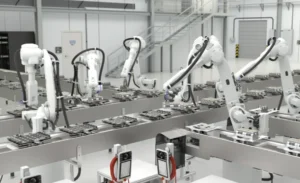
The application scope for the IRB 1700 family is extensive and diverse, targeting key areas of modern manufacturing. These include, but are not limited to, high-speed material handling, intricate arc welding, precision deburring and sanding for surface finishing, efficient machine tending for automated production lines, and the increasingly vital assembly of AI server racks – a burgeoning segment driven by the global expansion of artificial intelligence and data infrastructure.
Addressing Industry Challenges: Speed, Accuracy, and Cost Efficiency
Craig McDonnell, managing director of ABB Robotics’ Business Line Industries, articulated the strategic imperative behind the new product line. "Precision manufacturing across sectors from electronics, automotive, to general industries is facing the pressure to produce more, while maintaining quality and reducing operating costs," McDonnell stated. "The IRB 1700 family addresses these challenges with a new level of speed, accuracy, reliability and energy efficiency. It gives manufacturers and system integrators a flexible platform for high-performance automation." This statement underscores ABB’s understanding of the evolving landscape of manufacturing, where the convergence of speed, precision, and sustainability is no longer an aspiration but a necessity.
Manufacturers today operate in an environment characterized by fluctuating material costs, labor shortages, and stringent quality standards. The ability to automate tasks with robots that are not only fast and accurate but also cost-effective to operate and maintain becomes paramount. The IRB 1700 and IRB 1700ID robots are engineered with these multifaceted challenges in mind, offering solutions that contribute to both the top-line growth through increased output and bottom-line savings through reduced operational expenditures.
Technological Advancements and Operational Benefits
Beyond raw speed and precision, the new ABB robots introduce significant advancements in energy efficiency and maintenance. ABB reports that the IRB 1700 family consumes up to 15% less power than its predecessor, the IRB 1600 model, when operating with the same payload and OmniCore controller. This reduction in energy consumption is a critical factor for manufacturers aiming to lower their carbon footprint and achieve sustainability goals, in addition to directly translating into substantial savings on electricity bills over the robots’ operational lifespan.
Maintenance schedules have also seen a remarkable improvement, with service intervals for oil changes extending to an impressive 20,000 hours. This extended interval significantly reduces downtime, increases overall equipment effectiveness (OEE), and lowers the total cost of ownership (TCO) by minimizing the frequency and cost of routine servicing. For high-volume production environments, every hour of uptime saved is a direct contribution to profitability.
The physical design of the IRB 1700 also reflects an emphasis on efficiency and space optimization. It boasts a footprint 50% smaller than its predecessor, making it an ideal choice for factories and production lines where floor space is at a premium. This compact design allows for denser robot cell layouts, maximizing the utilization of available manufacturing real estate and facilitating more flexible and modular production systems.
Integrated Software Ecosystem for Enhanced Automation

The capabilities of the IRB 1700 and IRB 1700ID are further amplified by their seamless integration with ABB’s comprehensive robot programming and AI-enabled software portfolio. This ecosystem includes:
- RobotStudio: ABB’s industry-leading software for offline programming and simulation. RobotStudio allows manufacturers to design, test, and refine robot applications in a virtual environment before deployment, drastically reducing commissioning times and minimizing risks on the factory floor. This capability is crucial for optimizing complex movements and ensuring efficient workflow.
- AI Robot Trainer: Leveraging artificial intelligence, this tool enables robots to learn and adapt to new tasks more quickly and intuitively. For applications requiring nuanced movements or handling of variable parts, AI Robot Trainer can significantly reduce the programming effort and improve the robot’s ability to handle unforeseen variations, pushing the boundaries of what automated systems can achieve.
- OmniCore EyeMotion: This vision-guided robotics solution integrates advanced camera systems with the OmniCore controller, allowing robots to "see" and interpret their environment. This enables highly accurate pick-and-place operations, quality inspection, and adaptive manufacturing processes, where robots can adjust their movements based on real-time visual feedback.
- Automatic Collision-Free Path Planning: A critical feature for safety and efficiency, this software automatically calculates optimized robot paths that avoid collisions with other robots, machinery, or fixed obstacles within the workspace. This not only enhances safety for human operators working alongside robots but also maximizes throughput by ensuring smooth, uninterrupted operation.
These software tools collectively transform the IRB 1700 family from mere hardware into intelligent, adaptive, and highly efficient automation solutions, capable of addressing the complex demands of modern manufacturing.
Broader Impact and Implications for Manufacturing
The launch of the IRB 1700 and IRB 1700ID robots carries significant implications for the global manufacturing landscape:
1. Driving Productivity and Competitiveness: The promise of 20% shorter cycle times is not just a technical specification; it’s a direct pathway to increased production volumes and reduced per-unit costs. For industries like electronics, where product lifecycles are short and demand is volatile, faster production capabilities can mean the difference between market leadership and obsolescence. In automotive, it facilitates the rapid scaling of new vehicle platforms, particularly in the burgeoning electric vehicle (EV) sector.
2. Enabling Reshoring and Nearshoring Initiatives: As global supply chains face increasing disruptions and geopolitical uncertainties, many companies are exploring reshoring or nearshoring their manufacturing operations. Advanced automation, like that offered by the IRB 1700 family, makes it economically viable to manufacture in higher-labor-cost regions by significantly reducing dependence on manual labor and optimizing production efficiency.
3. Advancing Sustainability Goals: The 15% reduction in energy consumption is a tangible step towards more sustainable manufacturing. As companies worldwide commit to reducing their carbon footprint, robots that offer superior energy efficiency become a crucial component of their environmental strategy. This also aligns with the broader Industry 4.0 vision of intelligent, resource-efficient factories.
4. Transforming the Workforce: While automation often raises concerns about job displacement, the reality is more nuanced. Robots like the IRB 1700 are designed to handle repetitive, ergonomically challenging, or dangerous tasks, freeing human workers to focus on higher-value activities such as robot programming, maintenance, quality control, and strategic decision-making. This necessitates a workforce upskilling, fostering a new generation of skilled automation specialists.
5. Fostering Innovation in Emerging Industries: The specific mention of AI server rack assembly highlights the robots’ relevance to rapidly growing, high-tech sectors. The demand for robust, high-performance computing infrastructure is soaring, and automating the precise and reliable assembly of these complex components is vital for scaling production efficiently.
6. Setting New Industry Standards: By pushing the boundaries of speed, precision, and efficiency in a compact form factor, ABB is setting new benchmarks for industrial robots in the light assembly and precision manufacturing segments. This will likely spur further innovation across the robotics industry, benefiting manufacturers globally.
Historical Context and ABB’s Legacy in Robotics
ABB has a storied history in industrial robotics, dating back to the 1970s with the introduction of the world’s first microprocessor-controlled electric industrial robot, the IRB 6. Over decades, ABB has consistently been at the forefront of robotic innovation, expanding its portfolio to include a wide range of robots for various applications, from heavy-duty material handling to delicate collaborative tasks. The OmniCore controller, introduced in recent years, represents a significant leap in motion control technology, offering unparalleled precision, speed, and connectivity – capabilities that are fully leveraged by the new IRB 1700 family. This continuous evolution underscores ABB’s commitment to empowering industries with cutting-edge automation solutions that meet the demands of an ever-changing global economy.
Looking Ahead: The Future of Precision Automation
The launch of the IRB 1700 and IRB 1700ID robots is more than just a product introduction; it’s a testament to the ongoing evolution of industrial automation. As industries continue to embrace digital transformation and the principles of Industry 4.0, the demand for intelligent, flexible, and efficient robotic solutions will only grow. These new robots, with their blend of high performance, energy efficiency, and advanced software integration, are well-positioned to be key enablers for manufacturers striving to achieve operational excellence, boost competitiveness, and build more resilient and sustainable production systems for the future. They represent a critical step in the journey towards fully autonomous and adaptive factories, where precision, speed, and cost-effectiveness are seamlessly integrated into every aspect of production.