Painesville, Ohio – Avery Dennison, a global leader in materials science and manufacturing, has announced the launch of a new portfolio of pressure-sensitive adhesive tapes specifically engineered to elevate assembly efficiency and provide critical thermal and electrical protection within the burgeoning battery energy storage systems (BESS) sector. This strategic product introduction addresses some of the most pressing challenges facing the rapidly expanding energy storage industry, from mitigating the risks of thermal runaway to ensuring high-voltage insulation and streamlining manufacturing processes. The innovative suite of tapes is designed to integrate seamlessly into the production of lithium iron phosphate (LFP) cell modules, packs, and containerized units, promising to set new benchmarks for safety and operational efficiency in battery manufacturing.
The Crucial Role of Battery Energy Storage Systems in a Global Energy Transition
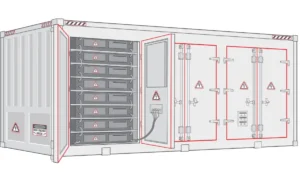
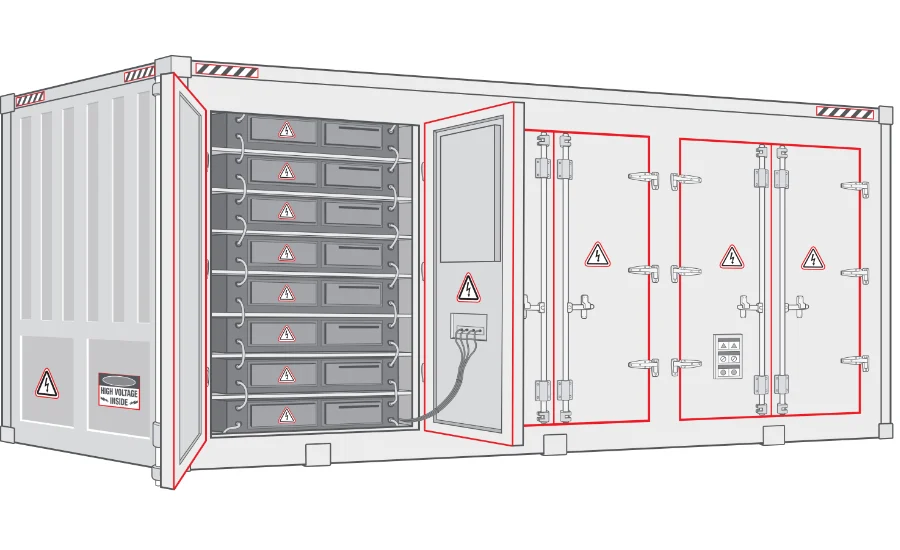
Battery energy storage systems are foundational to the global transition towards renewable energy and a more sustainable future. They serve as vital components in a variety of applications, including grid stabilization, the seamless integration of intermittent renewable sources like solar and wind, electric vehicle charging infrastructure, and reliable backup power solutions for commercial and residential use. At their core, these systems typically rely on lithium iron phosphate (LFP) cells, favored for their compelling balance of safety, cost-effectiveness, and long cycle life compared to other battery chemistries. These individual cells are meticulously grouped into larger modules, which are then assembled into robust packs, and ultimately integrated into containerized units for deployment across diverse environments.
The integrity and performance of these complex assemblies hinge significantly on the materials used for bonding, insulation, and protection. Within this intricate architecture, pressure-sensitive adhesives play an indispensable role in securing and isolating critical components such as individual cells, thermal barriers, and electrical connections. The demands on these adhesive materials are exceptionally high, requiring not only strong, reliable bonding but also sophisticated properties to withstand extreme temperatures, high electrical voltages, and the rigors of automated manufacturing environments. The global BESS market is experiencing exponential growth, with projections from various industry analysts indicating it could reach over $150 billion annually by 2030, driven by aggressive decarbonization goals and advancements in battery technology. This rapid expansion underscores the urgent need for advanced material solutions that can enhance safety, improve efficiency, and reduce overall costs.
Addressing Critical Challenges in BESS Design and Manufacturing
The growth of the BESS market, while promising, has historically been complicated by several inherent challenges in design, material selection, and manufacturing:
Mitigating Thermal Runaway Propagation: A Paramount Safety Concern
One of the most critical and potentially catastrophic challenges in battery energy storage systems is thermal runaway propagation. This phenomenon occurs when a cell’s internal temperature rapidly increases, leading to an uncontrollable exothermic reaction. If unchecked, this heat can quickly transfer to adjacent cells, triggering a cascading failure that can engulf an entire module or pack in seconds, posing severe risks of fire or explosion. The industry has long sought robust solutions to contain and prevent this propagation, with regulatory bodies like UL and IEC continually evolving safety standards (e.g., UL 9540A for thermal runaway fire propagation) to mandate enhanced protection.
Traditional approaches often involve the use of thermal barriers made from materials such as mica sheets, aerogel pads, and ceramic paper. While these materials are effective in principle at isolating heat, they frequently present significant handling and assembly difficulties. They are inherently fragile, prone to shedding fibers, crumbling, or breaking during transportation, cutting, and integration into battery packs. This fragility not only increases material waste but also complicates automated assembly processes and can compromise the integrity of the thermal barrier itself. Manufacturers have been actively searching for solutions that can integrate these delicate yet essential materials more effectively and durably within the constrained spaces of battery modules, thereby improving both safety and manufacturing yield.
Ensuring High-Voltage Electrical Integrity: A Non-Negotiable Requirement
Modern battery energy storage systems operate at increasingly high voltages, often exceeding 1,000 volts DC, to improve efficiency and reduce current losses across the system. This necessitates exceptionally robust electrical insulation to prevent short circuits, arcing, and other electrical failures that could lead to system malfunction, damage, or pose serious safety hazards. Components such as individual cells, busbars (which distribute electrical current), cooling plates essential for thermal management, and the outer module housings all require reliable dielectric protection. The selection of insulating materials is paramount, as they must maintain their dielectric strength and breakdown voltage even under prolonged electrical stress, varying temperatures, mechanical vibrations, and environmental exposure inherent in operating BESS. Compliance with stringent international standards, such as GB/T 1408.1-2016 (a Chinese national standard) and ASTM D3755 (an American Society for Testing and Materials standard), is not just a regulatory requirement but a critical validation of a material’s ability to perform under extreme electrical loads without compromising safety or performance.
Driving Assembly Efficiency and Automation: The Imperative for Scalability
The global demand for batteries has spurred the development of "gigafactories" and highly automated assembly lines designed for mass production. In this context, traditional liquid adhesives, while offering strong bonds, often present significant bottlenecks. They typically require specialized mixing, precise dispensing equipment, and, most critically, extended cure times. These steps add complexity, increase manufacturing cycle times, and introduce potential for errors, thereby hindering the efficiency and scalability of automated production. With manufacturers striving for faster production speeds and lower per-unit costs, the industry is actively seeking "no-cure" solutions that can provide instant bonding, integrate seamlessly into automated processes, and offer precision for tight tolerances.
Avery Dennison’s Comprehensive Solution Portfolio for BESS

In response to these multifaceted challenges, Avery Dennison has meticulously developed a new portfolio of pressure-sensitive adhesive tapes, engineered to address these critical needs head-on. This innovative range is designed to optimize battery assembly, enhance safety features, and contribute to the overall reliability and longevity of BESS.
Advanced Thermal Runaway Protection with Flame Tough™ Adhesives:
At the forefront of the new portfolio are tapes featuring Avery Dennison’s proprietary Flame Tough™ flame-retardant adhesive properties. These acrylic- and rubber-based adhesives represent a significant leap forward in thermal management for BESS. Unlike the standalone, fragile thermal barrier materials, Flame Tough adhesives are designed to integrate seamlessly with mica sheets, aerogel pads, and ceramic paper. By securely bonding these delicate materials, they prevent shedding, crumbling, and breakage during handling and assembly, issues that have long plagued battery manufacturers. This capability allows for the creation of robust, multilayer thermal solutions that can be effectively manufactured into compact and durable battery packs. The advanced chemical composition of these adhesives works to either form a protective char layer, absorb heat, or release non-combustible gases when exposed to high temperatures, effectively slowing or preventing the propagation of thermal runaway. This integrated approach not only enhances the safety profile of battery modules but also improves manufacturing yield by reducing waste and rework associated with damaged thermal barriers.
Uncompromising Electrical Insulation with Volt Tough™ Dielectric Tapes:
For electrical protection, Avery Dennison introduces its Volt Tough™ dielectric tapes. Specifically formulated to insulate components in high-voltage BESS, these tapes are engineered to perform reliably in systems that routinely operate beyond 1,000 volts DC. Their application extends across critical areas, including the insulation of individual cells, the busbars that connect them, cooling plates essential for thermal regulation, and the outer module housings. The materials used in Volt Tough tapes undergo rigorous testing to validate their performance against industry-recognized standards. This includes testing for breakdown voltage and dielectric strength using methods such as GB/T 1408.1-2016 and ASTM D3755. These comprehensive tests ensure that the tapes can withstand high electrical stress without failure, providing a robust layer of protection against short circuits and electrical arcing, thereby significantly enhancing the operational safety and reliability of the entire battery system.
Driving Assembly Efficiency and Automation with Instant Bonding:
A cornerstone of Avery Dennison’s new portfolio is its emphasis on streamlining the manufacturing process. The pressure-sensitive tapes offer instant bonding capabilities, completely eliminating the need for mixing, specialized dispensing equipment, and, crucially, the extended cure times typically associated with liquid adhesives. This "no-cure assembly" feature is a game-changer for high-volume battery production facilities. By reducing processing steps and cycle times, manufacturers can significantly boost throughput and reduce operational costs. A senior executive from Avery Dennison’s industrial solutions segment, who preferred not to be named, highlighted this advantage, stating, "Our goal was to remove complexity and speed up production without compromising on safety or performance. These tapes deliver instant adhesion, allowing manufacturers to move parts immediately to the next stage of assembly, a critical factor in today’s demanding production environments."
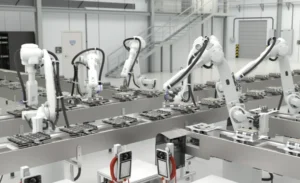
Furthermore, these tapes are perfectly suited for integration into automated assembly lines. Their consistent thickness and predictable performance ensure reliable application through robotic systems. The ability to precision die-cut these tapes provides dimensional accuracy, which is paramount for meeting the tight tolerances required in sophisticated battery module designs. To further aid automation and quality control, Avery Dennison offers colored variants of its tapes. These colored options can be easily detected by machine vision systems, enabling rapid and accurate placement verification, defect detection, and overall enhancement of automated quality assurance processes, thereby reducing manual inspection requirements and improving manufacturing reliability.
Market Impact and Broader Implications for the Energy Storage Sector
The introduction of Avery Dennison’s new adhesive portfolio comes at a pivotal moment for the battery energy storage market. The demand for safer, more efficient, and cost-effective battery solutions is escalating as countries worldwide accelerate their clean energy initiatives and invest heavily in grid modernization.
Enhanced Safety Standards and Consumer Confidence:
By providing superior thermal runaway protection and high-voltage insulation, these tapes are poised to significantly enhance the safety profile of BESS. Reducing the risk of thermal events and electrical failures is paramount for consumer confidence, regulatory approval, and the widespread adoption of energy storage technologies. This commitment to safety aligns with global efforts to standardize and improve battery safety protocols, potentially influencing future regulatory guidelines for BESS manufacturing.
Accelerating Renewable Energy Integration and Grid Stability:
More reliable and durable BESS contribute directly to the stability and efficiency of renewable energy grids. By ensuring the longevity and performance of battery systems, Avery Dennison’s solutions support the seamless integration of intermittent solar and wind power, helping to overcome the intermittency challenges of these energy sources and accelerate the global energy transition. This directly impacts the resilience of national power grids and supports the broader climate change mitigation efforts.
Economic Advantages through Manufacturing Optimization:
The instant bonding and automation-friendly features of these tapes translate directly into tangible economic benefits for battery manufacturers. Reduced cycle times, lower equipment costs (as there’s no need for curing ovens or complex liquid dispensing systems), decreased material waste due to less product damage, and improved quality control all contribute to a lower total cost of ownership and a faster return on investment for manufacturing facilities. This efficiency gain is crucial as the industry strives to scale up production to meet unprecedented demand and drive down the cost of energy storage.
Innovation in Materials Science and Competitive Landscape:
This launch solidifies Avery Dennison’s position as a key innovator in advanced materials science, particularly in high-growth, high-stakes industries like energy storage. It demonstrates the company’s ability to translate complex material science into practical, high-performance solutions that address critical industry pain points. This move also signals a potential shift in the broader industrial adhesives market, encouraging further innovation in specialized, performance-driven bonding solutions that cater to the evolving demands of advanced manufacturing.
Future Outlook for Battery Technology and Adhesives:
As battery technologies continue to evolve, so too will the demands on ancillary materials. The development of solid-state batteries, for instance, could introduce new requirements for bonding and thermal management. Avery Dennison’s commitment to ongoing research and development in this sector suggests further innovations can be expected, potentially in areas such as lightweighting, enhanced thermal conductivity, or even more integrated smart adhesive solutions with embedded sensors. The ability of these tapes to simplify complex assemblies and enhance safety positions them as a foundational component for the next generation of battery energy storage systems, paving the way for a more secure and sustainable energy future. This strategic product launch from Avery Dennison represents a significant step forward in enabling the safer, more efficient, and robust production of battery energy storage systems, directly contributing to the advancement of renewable energy infrastructure globally.