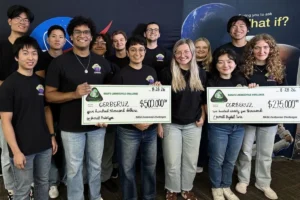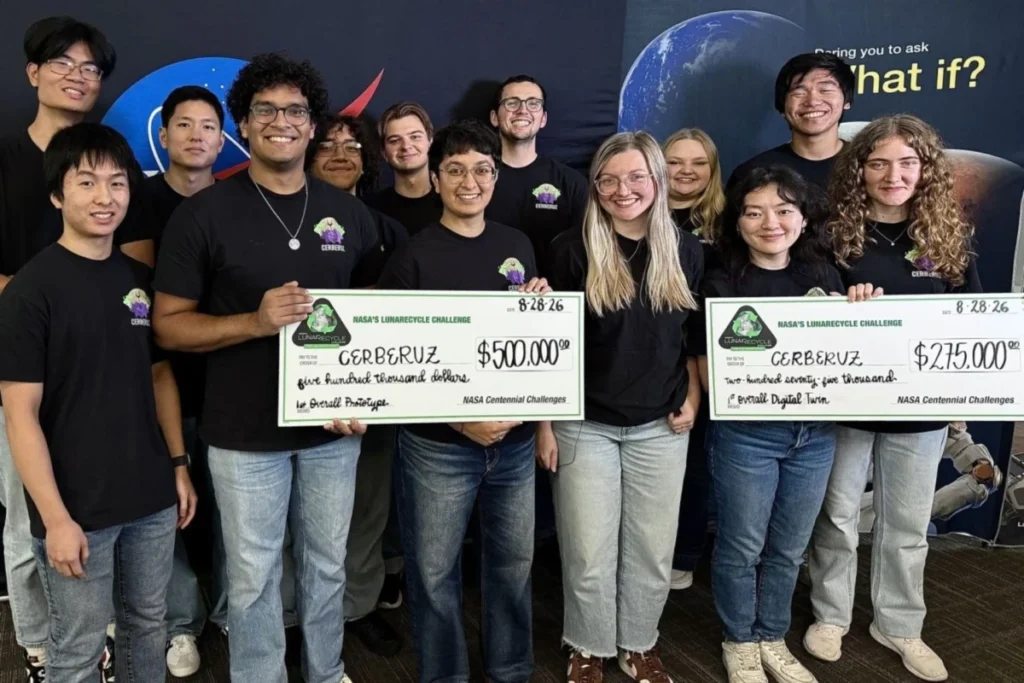
A groundbreaking innovation from an MIT student team has decisively addressed one of the most pressing logistical and environmental challenges facing humanity’s return to the Moon: waste management. The Composites for Extraterrestrial Recycling By Engineering the Reuse and Upcycling of Zotek (CERBERUZ) team clinched first prize in both the Prototype and Digital Twin tracks of NASA’s LunaRecycle Challenge, developing a sophisticated system capable of transforming otherwise unusable lunar refuse into vital, high-quality composite materials. This achievement marks a significant leap towards establishing a truly sustainable and self-sufficient human presence on the lunar surface, mitigating the astronomical costs and logistical complexities associated with resupplying a permanent outpost from Earth.
The Lunar Logistics Imperative: Confronting the Waste Challenge
Humanity’s renewed ambition to establish a permanent presence on the Moon, spearheaded by NASA’s Artemis program, envisions more than just transient visits. It foresees long-duration missions, scientific outposts, and ultimately, permanent settlements. Such an endeavor demands state-of-the-art spacecraft, advanced life-support systems, and specialized infrastructure. Crucially, it also necessitates a radical rethinking of supply chains and resource management, particularly concerning waste.
Every kilogram of material launched from Earth to the Moon carries an exorbitant price tag, often estimated to be in the tens of thousands of dollars, or even higher, once all development, launch, and operational costs are factored in. This makes every item a precious commodity, and discarding anything a costly inefficiency. A lunar outpost, receiving a continuous stream of supplies – from food packaging and spare parts to scientific equipment and habitat components – would inevitably generate a significant volume of waste. Without effective recycling and reuse mechanisms, this could rapidly accumulate into unsightly and environmentally problematic "lunar landfills," undermining the very sustainability goals of future missions.
The challenge extends beyond mere volume. The unique lunar environment, characterized by extreme temperatures, vacuum, and abrasive regolith, imposes severe constraints on traditional waste disposal methods. Incineration would require oxygen and generate undesirable byproducts. Burying waste could contaminate lunar soil. Shipping it back to Earth is economically unfeasible. Therefore, the ability to convert waste into useful resources on-site – a concept known as In-Situ Resource Utilization (ISRU) – becomes not just an advantage, but a fundamental requirement for long-term lunar habitation. This pressing need underpinned NASA’s initiative to solicit innovative solutions from the global scientific and engineering community.
NASA’s Centennial Challenges: Fostering Innovation for Deep Space
The LunaRecycle Challenge is part of NASA’s broader Centennial Challenges series, a program designed to engage the public and stimulate innovation in areas critical to the agency’s future missions. These challenges set ambitious goals, often addressing technological gaps that conventional research and development pathways might overlook or take longer to resolve. By offering significant prize money, NASA encourages diverse teams – from universities and small businesses to independent innovators – to develop groundbreaking solutions.
The LunaRecycle Challenge specifically tasked participants with designing and developing systems capable of reusing, recycling, or upcycling space waste to enhance the sustainability of extended lunar missions. A key aspect of the challenge was to envision solutions that not only tackled the unique conditions of deep space but also held potential for applications back on Earth, fostering a dual benefit from the developed technologies. The challenge spanned several phases over approximately two years, encouraging iterative design, prototyping, and rigorous testing. Teams were evaluated on their technical feasibility, innovation, scalability, and ability to operate under simulated extraterrestrial conditions. The CERBERUZ team’s journey through this demanding competition exemplified the spirit of innovation NASA sought to inspire.
CERBERUZ: Engineering a Closed-Loop Lunar Economy
The CERBERUZ system, standing for Composites for Extraterrestrial Recycling By Engineering the Reuse and Upcycling of Zotek, represents a sophisticated approach to transforming lunar waste into valuable materials. Its core principle is to create new composite parts from a diverse array of discarded items, effectively closing the loop on material consumption for a lunar outpost.
The process begins with the separation of non-biological waste into two primary streams: thermoplastics and everything else. This initial sorting is crucial for optimizing the subsequent steps. All materials are then subjected to a meticulous grinding process, reducing them to a fine powder. This pulverization increases the surface area and ensures a more uniform mixture.
The powder mixture is then loaded into an advanced injection molding machine. Here, the thermoplastics are melted, acting as a binder, while the remaining, non-melting materials are suspended within the molten plastic. This creates a homogeneous composite feedstock. This mixture is then injected into a mold, where it cools and solidifies, producing high-quality composite parts. The beauty of this approach lies in its ability to quickly and reliably replicate a wide array of useful components, from tools and structural elements to replacement parts for outpost maintenance.
George Lordos, a research scientist in the MIT Department of Aeronautics and Astronautics and System Design and Management, and the lead advisor for the CERBERUZ team, highlighted the strategic importance of this capability. "Waste packaging materials will inevitably accumulate when a lunar outpost is built, and at the same time, outpost construction and maintenance will require a steady supply of new materials, including replacement parts," Lordos explained. "Recycling waste materials into such parts can help reduce materials needed to be launched from Earth." This directly translates into substantial cost savings and increased mission autonomy.
The Zotek Innovation: Tackling the Unrecyclable
A particularly notable aspect of the CERBERUZ approach is its innovative treatment of Zotek F30, a closed-cell thermoset foam widely utilized in aerospace packaging due to its lightweight and protective properties. On Earth, mixed thermoplastics and thermoset foams like Zotek F30 pose significant recycling challenges, with no widely established solutions. The CERBERUZ team devised a unique strategy to incorporate Zotek into their process, utilizing it not as a waste product to be disposed of, but as a reinforcing filler within the molten feedstock.
This is a critical breakthrough, as Zotek presents a peculiar engineering challenge due to its extremely low density. José Soto, a graduate student in AeroAstro and the team’s pre-processing lead, illustrated this challenge: "We had big shipments of Zotek coming in, and one person can carry them on their head like it’s nothing. The box is the size of a person." Despite its bulk, a large volume of Zotek yields very little mass, making its disposal particularly space-intensive. By transforming it into a functional component of new materials, CERBERUZ eliminates this logistical headache and extracts value from what would otherwise be a cumbersome waste stream.
The team meticulously designed the entire process with the severe constraints of off-world operations in mind. Unlike many terrestrial recycling methods that rely on water-intensive processes or chemical depolymerization, CERBERUZ employs purely mechanical methods powered by electricity. This eliminates the need for scarce lunar water resources and avoids the generation of secondary chemical waste, which would be difficult to manage in an isolated lunar environment. This design philosophy ensures that packaging and other materials delivered to a lunar outpost can become a local, self-sustaining source of manufacturing feedstock, empowering astronauts to produce needed items on demand, from materials readily available.
Lanie McKinney, a graduate student in AeroAstro and the CERBERUZ team lead, underscored this practical, mission-oriented design philosophy. "We set out to build something that would actually make sense on the moon, not just in a lab," McKinney stated. "That means no water and no chemicals you can’t replace. Every design choice we made was driven by those constraints. And we don’t want to recycle just for recycling’s sake; we want to make useful things. Part of how we framed the problem was to create a system that can process nearly any feedstock and turn it into a wide array of components, giving more utility than producing a single item." This holistic approach ensures versatility and maximum utility for future lunar inhabitants.
DEIMOS: The Digital Twin for Intelligent Lunar Manufacturing
Complementing the physical recycling system, the CERBERUZ team developed DEIMOS, an acronym for Digital Environment for Intelligent Modeling of Operational Systems. DEIMOS is a sophisticated digital twin of their injection molding machine, designed to optimize manufacturing processes in the resource-limited lunar environment.
Using extensive data collected during actual production runs, DEIMOS models how different combinations of recycled materials and various part geometries will behave during the manufacturing process. It can predict crucial factors such as mold fill, potential warpage, and shrinkage risk. This predictive capability is invaluable for astronauts, allowing them to simulate manufacturing outcomes and assess the performance of recycled materials before committing limited resources – energy, time, and feedstock – to physically producing a part on the Moon. In an environment where every mistake carries significant consequences, DEIMOS provides an essential layer of risk mitigation and efficiency optimization. This dual-track win – for both the physical prototype and the digital simulation – highlights the comprehensive nature of the CERBERUZ solution.
The MIT Space Resources Workshop: A Legacy of Lunar Innovation
The CERBERUZ team emerged from the vibrant and highly successful MIT Space Resources Workshop, a co-curricular initiative that serves as a hub for students passionate about designing, building, and testing systems to support future Moon and Mars exploration. Founded in 2017, the workshop has quickly gained recognition for its ability to assemble interdisciplinary teams that consistently tackle and conquer grand challenges in NASA-sponsored competitions. This track record of success underscores MIT’s commitment to advancing space exploration through practical, hands-on engineering.
The CERBERUZ team itself exemplifies this interdisciplinary strength, bringing together undergraduate and graduate students from four distinct MIT departments: Aeronautics and Astronautics, Mechanical Engineering, Electrical Engineering and Computer Science, and Materials Science and Engineering. This cross-pollination of expertise was critical for addressing the complex challenges inherent in developing an advanced recycling system for deep space. The team benefited from the guidance of Professor Jeffrey Hoffman, a former NASA astronaut with invaluable experience in space operations, and George Lordos, whose research expertise provided crucial academic and technical mentorship.
Lordos particularly praised the team’s leadership: "What impresses me most about this team is the quality of leadership," he remarked. "Lanie McKinney has been an outstanding team lead, and the co-leads – Palak Patel on manufacturing and materials characterization, Lilly Etzenbach on the digital twin, and José Soto on pre-processing – have each built and managed subteams doing cutting-edge research in lunar sustainability." This strong leadership structure, combined with the diverse talents of the entire team, was instrumental in their success.
A Two-Year Journey to Triumph and Future Investment
The first-place victory caps nearly two years of intensive work and dedication from the CERBERUZ team. Their journey began with selection as a Phase 1 winner in 2025, a testament to the initial promise of their concept. They then successfully advanced through Phase 2, earning milestone prizes in both the Prototype and Digital Twin tracks, continuously refining their system and demonstrating its growing capabilities. The final demonstration in summer 2026 solidified their position as the leading innovators in the challenge.
Over the course of the competition, the CERBERUZ team accumulated an impressive $925,000 in prize money. This substantial sum is not merely a reward for their efforts but represents a strategic investment in the future of space resources development. The team intends to reinvest their winnings directly into the MIT Space Resources Workshop, funding essential equipment, enhancing facilities, and supporting future student teams. This reinvestment will enable successive generations of MIT students to tackle increasingly complex challenges in lunar and Martian exploration, ensuring a continuous pipeline of innovation for NASA and the broader space community. These advances are pivotal in transforming a temporary return to the Moon into something more permanent – a sustainable human presence, built to last.
Broader Implications: Shaping the Future of Space and Earth
The CERBERUZ system’s success holds profound implications, extending far beyond the immediate context of lunar waste management.
Lunar Sustainability and In-Situ Resource Utilization (ISRU): At its core, CERBERUZ directly supports the long-term sustainability of lunar missions. By enabling on-site manufacturing from waste, it dramatically reduces the logistical dependence on Earth, a critical step towards genuine self-sufficiency for lunar outposts. This aligns perfectly with the broader concept of In-Situ Resource Utilization (ISRU), where local resources (like regolith, ice, and now, waste) are used to create what is needed, minimizing launch mass and maximizing mission longevity. This paradigm shift could accelerate the timeline for permanent lunar bases and pave the way for more ambitious deep-space exploration.
Economic Impact: The cost savings associated with reduced shipments from Earth are immense. By converting waste into usable parts, CERBERUZ offers a tangible economic benefit to space agencies and private companies involved in lunar operations. This could foster the development of new lunar industries, where recycling and manufacturing become central to the lunar economy, creating new opportunities for commerce and scientific endeavors beyond Earth.
Environmental Stewardship: Just as critical as the economic and logistical benefits is the environmental impact. By preventing the accumulation of waste on the lunar surface, CERBERUZ contributes to preserving the pristine beauty and scientific integrity of Earth’s closest celestial neighbor. This aligns with principles of responsible space exploration and prevents the creation of "lunar landfills" that could detract from future scientific observation or tourism.
Earth Applications and Inspiration: The principles and technologies developed for CERBERUZ are not confined to the Moon. The challenge explicitly encouraged solutions with terrestrial relevance, and CERBERUZ delivers on this. Its innovative approach to processing mixed thermoplastics and difficult-to-recycle thermoset foams like Zotek F30 could inspire and inform new recycling solutions on Earth. As global waste generation continues to be a pressing environmental concern, breakthroughs in handling complex waste streams, especially those with no established recycling pathways, offer significant potential for improving circular economy practices on our home planet.
Finally, the achievement serves as a powerful source of inspiration. José Soto articulated this dual impact: "If we’re able to reduce the amount of waste that’s inevitably going to be left on the moon, rather than letting it pile up like a landfill," he said, "we can preserve both the beauty of the moon and make exploration more efficient and sustainable. And perhaps we can inspire people back on Earth to take another look at our trash and find more ways to recycle or reuse it." The CERBERUZ team’s triumph not only provides a concrete solution for lunar living but also ignites imagination, demonstrating that with ingenuity and collaborative spirit, even the most daunting challenges, whether in space or on Earth, can be transformed into opportunities for innovation and sustainability.
The CERBERUZ team, led by Lanie McKinney, Palak B. Patel, Lilly Etzenbach, and José Soto, also included Sophia Augier, Sophie Berkvist, Ariella Blackman, Keira Boone, Constantine Bulavenko, Seth Burrowes, Andrew Chen, Alex Chen, Chris Choe, Johnson Cristales, Brady Cruse, Hillel Dei, Natalie Hatzigeorgiu, Intia Ibnah, Avishai Jeselsohn, Mollie Johnson, Uma Kirk, Christopher Kwon, Jessica Meza, Juan Orrego, Giuliana Pertuz, Jordan Prawira, Brandy Romine, Dustin Wang, Madison Wood, and Adrian Yang, whose collective efforts brought this visionary project to fruition.