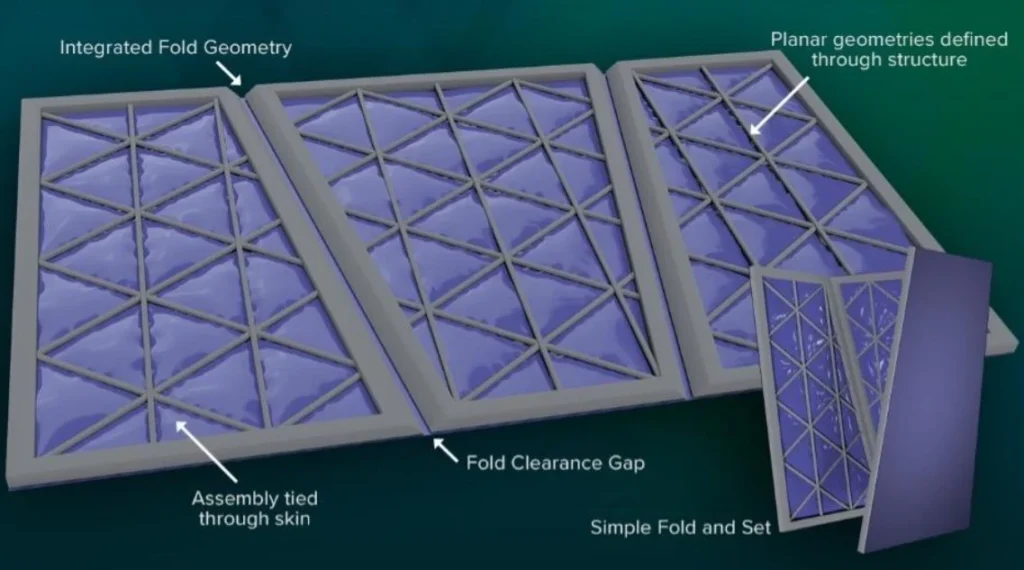
Researchers at the U.S. Department of Energy’s (DOE) Manufacturing Demonstration Facility (MDF) at Oak Ridge National Laboratory (ORNL) have unveiled a groundbreaking hybrid 3D printing methodology that promises to dramatically reshape the landscape of manufacturing. This innovative process seamlessly merges origami-inspired design principles with advanced hybrid composite materials, eliminating the need for traditional molds and enabling the creation of lightweight, cost-effective, and highly adaptable structures with unprecedented speed. The breakthrough, detailed by lead researcher Steven Guzorek, represents a significant leap forward in additive manufacturing, offering a path to more efficient, scalable, and complex component production.
The Genesis of a Mold-Free Revolution
The development of this novel technique stems from a desire to overcome inherent limitations in traditional composite manufacturing, which often relies on costly and time-consuming molding processes. Composites, known for their superior strength-to-weight ratios, are crucial in industries ranging from aerospace and automotive to sporting goods and defense. However, their fabrication can be labor-intensive and restrict design freedom.
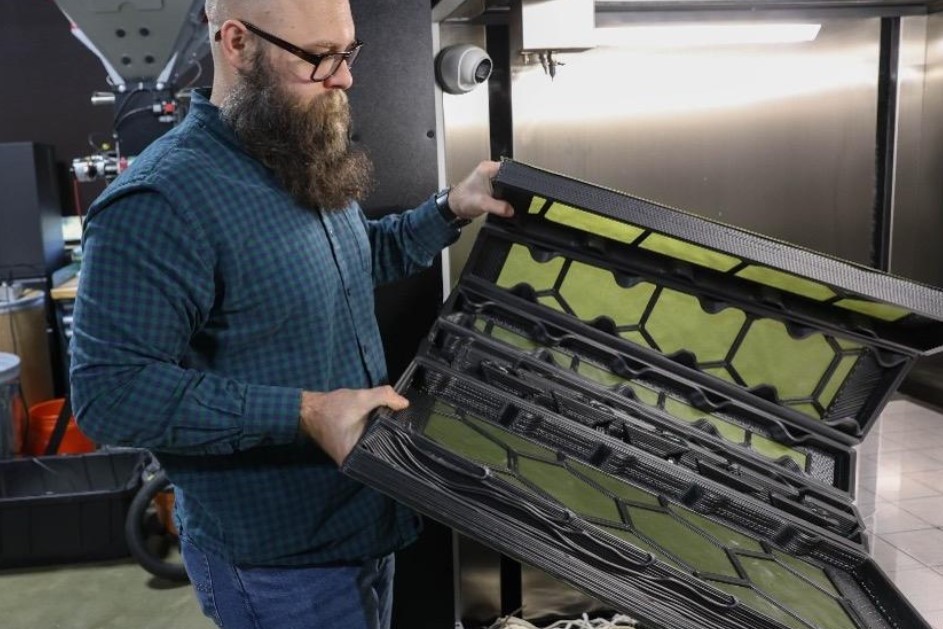
ORNL’s initiative sought to address these challenges by integrating additive manufacturing with the inherent structural efficiency of folded geometries, drawing inspiration from the ancient art of origami. The core concept involves depositing specialized materials directly onto flexible fabric substrates, allowing for the creation of intricate, pre-designed foldable structures that can transition from a flat state to a complex three-dimensional form without the need for post-processing or assembly steps traditionally associated with mold-based fabrication.
A Hybrid Approach to Material Science and Design
At the heart of this innovation lies the strategic use of hybrid composite materials. These are not monolithic structures but rather carefully orchestrated combinations of reinforcing elements and matrix materials, designed to achieve specific performance characteristics. The ORNL method employs a multi-stage additive process:
-
Fabric Substrate: The process begins with a base layer of high-strength, flexible fabric. This can range from robust nylon to advanced materials like glass fiber or resin-infused composite fibers. This fabric serves as the foundational scaffold, providing initial structural integrity and a surface for material deposition.
-
Integration Layer: A crucial intermediate layer, often composed of materials like polyurethane, is then deposited. This layer acts as a bonding agent, ensuring compatibility and robust adhesion between the fabric substrate and subsequent composite layers. This step is critical for molecular-level bonding, which is key to the overall strength and durability of the final structure.
-
Composite Material Deposition: Finally, reinforcing composite materials are precisely applied. These can include lightweight yet strong carbon fiber-reinforced acrylonitrile butadiene styrene (ABS) for applications requiring reduced mass and excellent structural performance. For enhanced stiffness, greater geometric control, and superior durability, thermoset formulations such as styrene- or epoxy-based resins are utilized. The precise deposition of these materials, guided by the origami-inspired design, dictates the folding behavior and the final three-dimensional shape.
"This method fuses material science with transformative design principles," explains Steven Guzorek, lead researcher on the project. "By applying origami-inspired principles to hybrid composites, we are improving the efficiency and scalability of large-structure manufacturing and achieving forms unattainable with traditional additive approaches."
The Power of Foldable Structures: Beyond Traditional Manufacturing
The ability to create structures that can be manufactured flat and then folded into their final three-dimensional configuration offers a paradigm shift in production and logistics. Traditional manufacturing often requires complex assembly lines and significant post-processing to achieve intricate geometries. This new method bypasses many of these steps.
The integration layer ensures that the deposited composite materials bond effectively at the molecular level with the fabric substrate. This creates a unified and robust structure where the reinforcing elements are intrinsically linked to the flexible base. This molecular-level adhesion is paramount, preventing delamination and ensuring the structural integrity of the folded form.
The design flexibility afforded by this technique is immense. By pre-programming fold geometries and structural reinforcement patterns into the digital model, researchers can dictate how the flat composite panel will transition into its intended 3D shape. This allows for the creation of complex internal structures and precise articulation, akin to the intricate folds of origami, but with the strength and durability of advanced composite materials.
Quantifiable Gains: Time and Cost Reductions
The impact of eliminating molds and simplifying the manufacturing process is substantial and has been quantified through rigorous testing. In a direct comparison with conventional mold-based composite manufacturing, the ORNL researchers found remarkable improvements:
- Fabrication Time Reduction: The mold-free hybrid 3D printing process reduced fabrication time by an astonishing 95% for printing a unique design. This dramatic acceleration in production speed can significantly shorten product development cycles and increase manufacturing throughput.
- Cost Reduction: Similarly, the elimination of molds and associated labor, tooling, and material waste resulted in a 90% reduction in production costs for unique designs. This cost-efficiency makes advanced composite structures more accessible and economically viable for a wider range of applications.
These figures highlight not just an incremental improvement but a transformative shift in how composite parts can be produced, making complex geometries and custom designs far more achievable within budgetary constraints.
Broader Implications and Future Trajectories
The implications of this innovation extend across numerous industries. In aerospace, it could lead to lighter, more fuel-efficient aircraft components that can be compactly stored or deployed. The automotive sector could benefit from more rapidly produced, customizable, and lighter vehicle parts, contributing to improved fuel economy and performance. In defense, the ability to rapidly deploy complex structures or create adaptable equipment in the field offers significant strategic advantages.
"Our goal is to make this innovation scalable so manufacturers across industries can harness its potential," Guzorek adds. This forward-looking statement underscores the team’s commitment to translating laboratory success into real-world industrial applications.
ORNL has recognized the immense commercial potential of this technology and has already filed a patent application. The team is actively working on preparing the innovation for future licensing opportunities, aiming to facilitate its adoption by manufacturers globally. This strategic move ensures that the benefits of this advanced manufacturing technique will be disseminated and contribute to economic growth and technological advancement.
The Team Behind the Breakthrough
This pioneering research is the product of a dedicated team within ORNL’s Manufacturing Science Division. The lead researcher, Steven Guzorek, has been instrumental in guiding the project. He is supported by a talented group of scientists and engineers, including Ahmed Arabi Hassen, Katie Copenhaver, Duncan Frazier, Brian Post, and Tyler Smith. Their collective expertise in material science, additive manufacturing, and mechanical engineering has been crucial in bringing this complex innovation to fruition.
The collaborative environment at the Manufacturing Demonstration Facility, a national user facility dedicated to accelerating the development and adoption of advanced manufacturing technologies, has undoubtedly played a vital role in fostering such breakthroughs. This facility provides researchers and industry partners with access to state-of-the-art equipment and expertise, enabling them to tackle complex manufacturing challenges.
A Look Ahead: Advancing the Frontier of Manufacturing
The successful development of this mold-free, foldable hybrid 3D printing method by Oak Ridge National Laboratory marks a significant milestone in the ongoing evolution of manufacturing. By ingeniously combining principles of origami with advanced material science and additive manufacturing, the researchers have unlocked a new paradigm for producing complex, lightweight, and cost-effective structures.
As the technology moves towards commercialization, it is poised to empower industries with enhanced design freedom, reduced production times, and substantial cost savings. This innovation not only pushes the boundaries of what is possible with 3D printing but also offers a compelling vision for the future of manufacturing – one that is more agile, sustainable, and capable of meeting the ever-evolving demands of a global market. The ongoing pursuit of scalability and broader industrial adoption will be key to realizing the full transformative potential of this remarkable achievement.