The scientific community is currently witnessing a transformative shift in the understanding of condensed matter physics following the formal recognition of altermagnetism, a third fundamental category of magnetism that challenges a century-old binary classification system. This breakthrough, which identifies a unique magnetic state combining the most desirable properties of previous categories, has culminated in the announcement of the 2026 Europhysics Prize. The European Physical Society (EPS) Condensed Matter Division has awarded this prestigious honor to Professor Jairo Sinova of Johannes Gutenberg University Mainz (JGU), Dr. Libor Šmejkal, and Professor Tomas Jungwirth of the Institute of Physics of the Czech Academy of Sciences. Their collaborative efforts have not only expanded the theoretical map of material science but have also laid the groundwork for a new era of high-speed, energy-efficient electronic and quantum technologies.
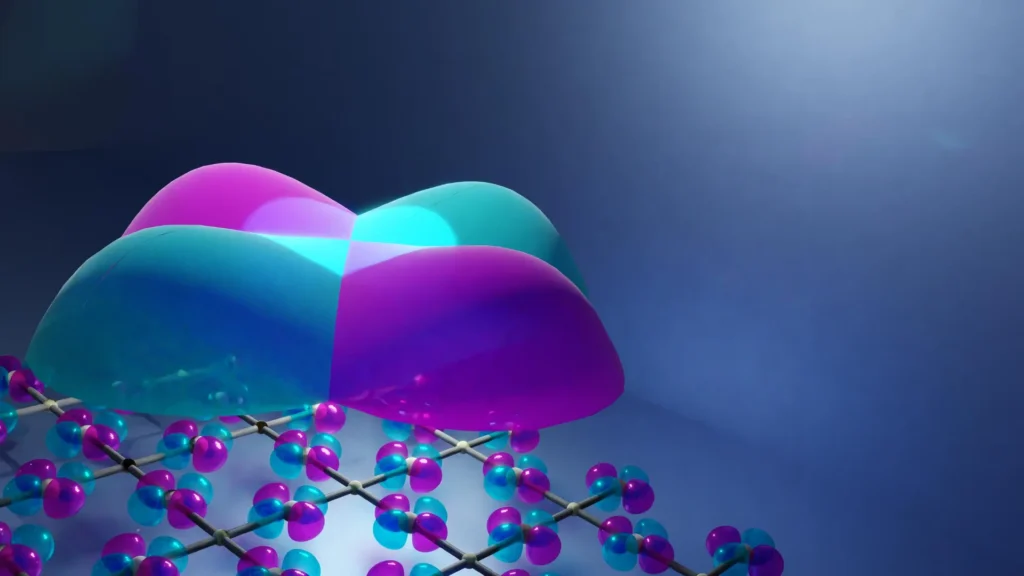
For over 100 years, the physics of collinear magnetism—where magnetic moments align along a single axis—was believed to be divided into two exhaustive camps: ferromagnetism and antiferromagnetism. Ferromagnets, known since antiquity, feature atoms with magnetic moments pointing in the same direction, creating a net magnetic field used in everything from compasses to hard drives. Antiferromagnets, identified in the mid-20th century, feature alternating magnetic moments that cancel each other out, resulting in no external magnetic field. Altermagnetism shatters this duality. It describes materials that, like antiferromagnets, have zero net magnetization, but like ferromagnets, possess a strong "spin-splitting" effect that allows them to interact with electrical currents in ways previously thought impossible for non-magnetized materials.
A Paradigm Shift in Condensed Matter Physics
The discovery of altermagnetism represents more than just the addition of a new entry to a textbook; it is a fundamental re-evaluation of how symmetry governs the behavior of electrons in solids. Professor Jairo Sinova, who serves as the Director of the Spin Phenomena Interdisciplinary Center (SPICE) at Mainz University, noted that the discovery proves even the most established scientific paradigms are subject to revision. According to Sinova, the fact that an entire magnetic phase remained hidden for over a century, despite the maturity of the field, serves as a reminder of the untapped potential within quantum material research.
The significance of the 2026 Europhysics Prize lies in its recognition of the rigorous theoretical work required to predict such a state and the subsequent experimental proof that verified its existence. The prize, established in 1975, is one of Europe’s highest distinctions in the field, often serving as a precursor to further global accolades. By awarding the prize to Sinova, Šmejkal, and Jungwirth, the EPS highlights the importance of cross-border collaboration between German and Czech research institutions in driving European scientific leadership.
The Chronology of Discovery: From Theory to Proof
The path to identifying altermagnetism was a multi-year journey characterized by sophisticated mathematical modeling and international experimental validation. The core of the research was conducted through a long-standing partnership between the Spin Phenomena Interdisciplinary Center at JGU in Mainz and the Institute of Physics of the Czech Academy of Sciences in Prague.
The timeline of this scientific revolution began in earnest around 2016. Dr. Libor Šmejkal, then a doctoral student under Professor Sinova and later a postdoctoral researcher, began exploring how the specific crystal symmetries of certain materials could influence electron spin. Between 2016 and 2024, Šmejkal and his colleagues moved beyond traditional magnetic models, utilizing advanced mathematical symmetry groups to predict a new type of electronic structure.
By 2019, the team began publishing preliminary findings regarding the "crystal anomalous Hall effect," a phenomenon where electricity moves through a material in a way that suggests magnetic influence, even if the material lacks a net magnetic field. This was the first major "smoke" indicating a "fire" hidden within the crystal lattice.
The definitive breakthrough arrived in 2022. The research team published a comprehensive theoretical framework that formally classified altermagnetism as a distinct magnetic order. In this landmark publication, they identified hundreds of candidate materials—including common compounds like ruthenium dioxide (RuO2) and manganese telluride (MnTe)—that possessed the necessary symmetry to be altermagnetic. This publication acted as a catalyst, sparking a global race among experimental physicists to verify the theory.
Throughout 2023 and 2024, experimental teams in Europe, Asia, and North America utilized Angle-Resolved Photoemission Spectroscopy (ARPES) to "see" the energy levels of electrons within these materials. The results were conclusive: the electronic bands showed a large spin-splitting—a hallmark of ferromagnetism—despite the materials having no net magnetization. This confirmed that altermagnetism was not a theoretical curiosity but a physical reality.
Technical Analysis: Why Altermagnetism Matters
To understand the impact of this discovery, one must look at the limitations of current magnetic technologies. Ferromagnets are excellent for storing data because their magnetic fields are easy to manipulate, but they are limited by "stray fields" that cause interference between neighboring bits, preventing devices from becoming smaller. They also operate at relatively slow speeds (gigahertz range). Antiferromagnets, while having no stray fields and operating at much higher speeds (terahertz range), are notoriously difficult to read and write because they do not interact strongly with electrical currents.
Altermagnets provide the "best of both worlds." They possess:
- Zero Net Magnetization: Like antiferromagnets, they produce no stray fields, allowing for ultra-dense packing of components without magnetic interference.
- Strong Spin Polarization: Like ferromagnets, they can highly polarize an electrical current. This allows for the efficient "reading" and "writing" of information.
- Ultrafast Dynamics: They operate at the terahertz frequency scale, potentially making computers and memory devices 1,000 times faster than current silicon-based technology.
This unique combination makes altermagnets the ideal candidate for spintronics—a field of electronics that uses the "spin" of an electron rather than just its electrical charge to process information. The discovery has also revealed links to other exotic states of matter, such as unconventional superconductivity, where materials can conduct electricity without resistance at higher temperatures than previously expected.
The Laureates and the Institutional Framework
The 2026 Europhysics Prize honors three individuals whose careers exemplify the synergy between theoretical insight and experimental leadership.
Professor Jairo Sinova has been a pivotal figure in the spintronics community for decades. As a professor at JGU Mainz and the head of SPICE, he has fostered an environment where high-risk, high-reward theoretical physics can thrive. His work on the Spin Hall Effect previously garnered international acclaim, and his leadership in the altermagnetism project has solidified Mainz as a global hub for magnetism research.
Dr. Libor Šmejkal is recognized as the primary architect of the altermagnetic symmetry framework. His ability to bridge the gap between abstract mathematical group theory and tangible material properties was essential for the discovery. Currently affiliated with the Max Planck Institute for the Physics of Complex Systems and the Czech Academy of Sciences, Šmejkal represents the next generation of physics leadership in Europe.
Professor Tomas Jungwirth brings a wealth of experience in experimental and theoretical spintronics. Based in Prague and Nottingham, Jungwirth has been at the forefront of antiferromagnetic spintronics for years. His collaboration with the Mainz group provided the necessary context to realize that certain "anomalous" antiferromagnets were, in fact, an entirely different class of matter.
Global Impact and Future Implications
The announcement of the prize coincides with a surge in global interest in altermagnetism. Since the 2022 classification, the number of scientific papers on the subject has grown exponentially. Research groups at institutions such as MIT, Stanford, and the University of Tokyo are now actively investigating how altermagnets can be integrated into next-generation semiconductors.
The implications for the technology industry are profound. As traditional silicon-based computing hits the physical limits of miniaturization (Moore’s Law), the industry is searching for alternative materials. Altermagnetism offers a pathway to non-volatile memory that is faster, uses less power, and is more stable than current Flash or RAM technologies. Furthermore, the discovery has implications for quantum computing, as the unique symmetry of altermagnets may help protect quantum bits (qubits) from environmental noise.
The 2026 Europhysics Prize ceremony, scheduled for September 2026 at the 32nd General Conference of the EPS Condensed Matter Division in Graz, Austria, will serve as a formal celebration of this new chapter in physics. While the discovery is still in its early stages of commercial application, the scientific foundation laid by Sinova, Šmejkal, and Jungwirth has already fundamentally altered the trajectory of material science.
As the research community continues to explore the "hundreds of materials" identified as potential altermagnets, the focus is shifting toward practical device fabrication. The discovery serves as a potent example of how fundamental research, driven by curiosity and rigorous mathematical inquiry, can lead to the discovery of hidden natural laws that have been right in front of humanity for over a century. Altermagnetism is no longer a hidden phase; it is the new frontier of the quantum age.