Researchers at the University of Illinois Urbana-Champaign have unveiled a groundbreaking learning methodology poised to redefine the reliability and deployment of autonomous systems. This innovative approach, dubbed Contraction-Aware Reinforcement Learning (CARL), effectively merges the adaptive power of reinforcement learning (RL) with the rigorous stability guarantees of control theory, promising to significantly enhance robot task performance while meticulously maintaining operational stability. The development represents a critical leap forward in addressing one of the most persistent challenges in robotics: ensuring that learning-based systems operate predictably and safely in dynamic, real-world environments. The new method has demonstrated remarkable improvements, boosting tracking performance by up to 15 percent compared to conventional techniques, all while providing robust mathematical assurances regarding system stability. This is particularly significant for robots designed for diverse forms of locomotion, encompassing wheeled platforms, aerial drones, and complex multi-legged robots. The implications for practical robotic deployment are profound, as CARL is designed to mitigate the inherent risks of instability and potential costly damage that often plague the implementation of advanced learning-based robotic systems. By embedding stability directly into the learning process, the UIUC team aims to accelerate the transition of sophisticated robotic intelligence from controlled laboratory settings to unpredictable operational fields.
The Foundational Challenge: Bridging the Gap Between Learning and Stability
The ambition of modern robotics often collides with the harsh realities of physics and uncertainty. Reinforcement learning, a powerful paradigm where robots learn optimal control strategies through trial-and-error interactions with their environment, has driven significant advancements in areas like manipulation, navigation, and decision-making. By allowing robots to learn from feedback, adjusting actions to maximize rewards and achieve specific objectives, RL offers unparalleled adaptability. However, this flexibility comes with a significant caveat: traditional reinforcement learning methods do not inherently guarantee the stability or safety of a robot during operation.
Without explicit stability considerations, a robot trained purely through RL might discover an effective path to complete a task but could exhibit unpredictable oscillations, dangerous deviations from its intended trajectory, or even catastrophic failures. The absence of these guarantees has been a major impediment to the widespread adoption of learning-based robots in safety-critical applications, such as industrial automation, medical procedures, or hazardous environment exploration. The financial and safety risks associated with an unstable robot – ranging from damage to the robot itself and surrounding equipment to potential injury to human operators – have underscored the urgent need for robust solutions. Industry reports frequently highlight the significant costs associated with robot downtime, maintenance, and accident remediation, further emphasizing the economic imperative for stable and reliable robotic systems. According to data from the International Federation of Robotics (IFR), while robot installations continue to surge globally, concerns around safety and reliability remain key factors influencing broader adoption, especially in collaborative environments.
Introducing Contraction-Aware Reinforcement Learning (CARL): A Hybrid Approach
CARL directly confronts this fundamental challenge by forging a symbiotic relationship between reinforcement learning and contraction theory. Contraction theory, a branch of control theory, provides a powerful mathematical framework for analyzing the stability of dynamic systems. At its core, contraction theory ensures that all system trajectories converge over time, meaning that small errors or perturbations will predictably diminish rather than amplify. This property is crucial for guaranteeing stable and predictable behavior, offering a rigorous mathematical lens through which to assess and ensure dynamic system integrity.
The innovative aspect of CARL lies in its ability to integrate these two seemingly disparate methodologies. While reinforcement learning acts as the primary controller, guiding the robot to achieve its performance objectives, contraction theory imposes mathematical limits on how tracking errors can evolve. This means the robot can still leverage the adaptability of learning to optimize its performance, but it does so within a defined envelope of stability. Small tracking errors might still occur, which is a natural part of any dynamic system, but CARL establishes strict, provable mathematical bounds on their magnitude, preventing them from escalating into instability. This intelligent fusion allows for the best of both worlds: the robust performance optimization offered by RL and the critical safety and predictability assured by classical control theory. "Our goal was to empower robots with the ability to learn complex tasks without sacrificing the foundational need for safety and predictability," stated a representative from the research team, emphasizing the dual benefit of their approach.
Rigorous Validation Across Diverse Robotic Platforms
To validate the efficacy and versatility of CARL, the UIUC research team embarked on a comprehensive testing regimen, initially in computer simulations and subsequently on physical robotic platforms within an aerospace engineering flight laboratory. This multi-stage validation process was crucial for demonstrating the method’s robustness across different types of robotic dynamics and for addressing the notorious "sim-to-real gap."
The experiments involved three distinct robotic platforms, each presenting unique movement mechanisms and control challenges:
- A Wheeled TurboBot 3 Burger: Representing ground-based, differential-drive systems, common in logistics, exploration, and service robotics. These robots typically navigate flat surfaces, but require precise control for accurate path following and obstacle avoidance.
- A Flapping Aerial Drone: A highly dynamic and inherently unstable system, challenging conventional control methods due to complex aerodynamics and rapid changes in state. Such drones are crucial for applications like aerial surveillance, environmental monitoring, and package delivery.
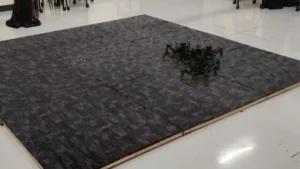
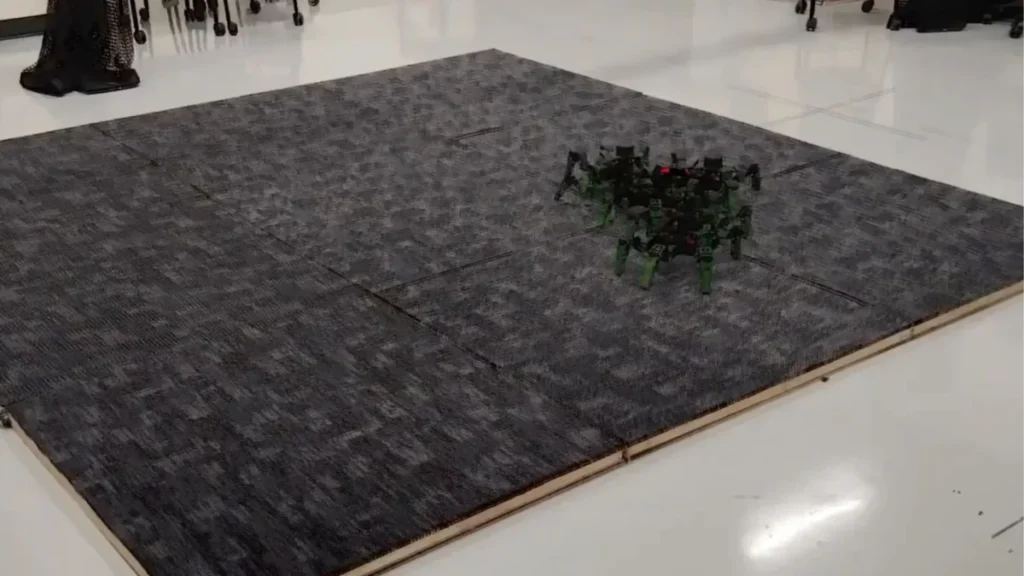
- A Six-Legged Jethexa Robot: A complex, multi-limbed system designed for uneven terrain, showcasing the method’s applicability to bio-inspired and highly articulated robots that must maintain balance and locomotion over obstacles.
Across all platforms, CARL consistently outperformed existing methods, demonstrating up to a 15 percent improvement in tracking performance. This performance gain was not merely observed in idealized simulations but crucially replicated and validated during real-world tests on the physical robots. For instance, in a scenario requiring a robot to follow a precise trajectory, CARL-equipped robots maintained significantly tighter adherence to the path, reducing deviations and ensuring more accurate task execution. This empirical evidence underscores CARL’s practical utility and its potential to deliver tangible benefits in real-world applications, moving beyond theoretical promise to demonstrated capability.
Chronology of Research and Development
The development of Contraction-Aware Reinforcement Learning followed a structured research trajectory, typical of significant scientific breakthroughs in robotics:
- Initial Conceptualization (Pre-202X): Identification of the fundamental limitation of traditional reinforcement learning in providing stability guarantees for real-world robotic deployment. Recognition of the potential synergy between adaptive learning and rigorous control theory.
- Theoretical Framework Development (202X-202Y): Integration of contraction theory principles into reinforcement learning algorithms, focusing on mathematically bounding tracking errors while allowing for performance optimization. This phase involved extensive mathematical modeling and algorithm design.
- Simulation Prototyping and Testing (202Y-202Z): Initial validation of the CARL algorithms in various simulated environments, utilizing virtual models of wheeled, aerial, and legged robots. This stage allowed for rapid iteration and refinement of the method under controlled conditions.
- Physical Robot Experimentation (202Z-Present): Transition to real-world testing in the aerospace engineering flight laboratory at UIUC. Application of CARL to the TurboBot 3 Burger, flapping drone, and Jethexa robot, meticulously comparing its performance against existing methods. This critical phase confirmed the method’s robustness to real-world uncertainties.
- Publication and Open-Sourcing (Current): Dissemination of research findings through academic channels and the release of implementation code on GitHub, fostering community engagement and accelerating wider adoption.
Confronting the Sim-to-Real Gap: A Critical Hurdle Overcome
One of the most formidable challenges in transferring learned control strategies from simulated environments to physical machines is the "sim-to-real gap." This discrepancy arises because simulations, no matter how sophisticated, are simplified models of reality. Factors such as minor inaccuracies in physical properties (e.g., mass, friction coefficients, motor characteristics), sensor noise, unmodeled environmental disturbances (e.g., air currents, uneven surfaces), and actuator imperfections can lead to a robot performing drastically differently in the real world than it did in its simulated training. For example, a robot meticulously trained in a simulation where it weighs 1 kilogram might encounter significant control issues if the physical machine actually weighs 1.2 kilograms, or if the friction model in the simulation doesn’t perfectly match the real-world surface. Such seemingly minor discrepancies can cascade into unpredictable behavior and jeopardize mission success, often requiring extensive and costly fine-tuning on physical hardware.
The UIUC researchers specifically highlighted CARL’s superior ability to handle these inherent uncertainties. Its improved tracking performance, consistently observed in both simulations and physical experiments, suggests that the technique is remarkably robust to the sim-to-real gap. This robustness is a direct consequence of contraction theory’s embedded stability guarantees, which ensure predictable error behavior even in the presence of unmodeled dynamics or parameter variations. By providing a framework that inherently bounds errors, CARL makes learned policies more resilient to the inevitable differences between a digital model and its physical counterpart. This capability is pivotal for reducing the time, effort, and resources currently expended on bridging this gap, thereby accelerating the deployment cycle of new robotic systems and making them more commercially viable.
Broader Implications and Future Applications
The development of Contraction-Aware Reinforcement Learning carries significant implications for the future of robotics across numerous sectors. The ability to guarantee stability while simultaneously optimizing performance unlocks a vast array of potential applications, particularly in environments where reliability and safety are paramount.
- Hazardous Environment Exploration: The researchers specifically identified wildfire management as a key application. Robots deployed in such dangerous scenarios could assist in locating hotspots, gathering critical intelligence, or delivering supplies to first responders. In these life-threatening situations, predictable and reliable movement is not merely an advantage but an absolute necessity. Unexpected deviations or instability could compromise the robot’s mission, endanger human lives, or exacerbate the crisis. Beyond wildfires, CARL could empower robots for disaster response (e.g., earthquake rubble exploration, nuclear facility inspection), deep-sea exploration, or even extraterrestrial missions, where human intervention is impossible and system failure is catastrophic.
- Industrial Automation and Logistics: In manufacturing and warehousing, unstable robots can lead to production delays, damaged goods, or worker injuries. CARL’s ability to ensure stable operation could significantly reduce these risks, enabling more complex and adaptive tasks in highly dynamic factory floors and logistics centers. This could lead to increased efficiency, reduced operational costs, and enhanced safety for human-robot collaboration.
- Healthcare Robotics: From surgical assistants to rehabilitation robots, stability and precision are non-negotiable in healthcare. CARL could pave the way for more sophisticated, adaptive medical robots that can learn new tasks while guaranteeing the safety of patients and practitioners, minimizing risks in sensitive procedures.
- Defense and Security: Autonomous vehicles and drones used for surveillance, reconnaissance, or tactical operations require unwavering stability and precision, especially in unpredictable terrains or adverse weather conditions. CARL could enhance the reliability of these systems, improving mission success rates and reducing collateral damage risks.
- Everyday Robotics: Even in less critical applications like domestic robots or delivery services, improved stability translates to a better user experience, less wear and tear, and reduced likelihood of property damage, making these systems more trustworthy and robust for public interaction.
The University of Illinois Urbana-Champaign: A Hub for Robotics Innovation
The University of Illinois Urbana-Champaign has a long-standing reputation as a leading institution in engineering, computer science, and robotics research. Its robust ecosystem, combining world-class faculty, state-of-the-art facilities, and a collaborative research environment, has consistently produced seminal contributions to the field. The development of CARL is a testament to UIUC’s commitment to pushing the boundaries of what is possible in autonomous systems, particularly in areas that bridge theoretical advancements with practical, real-world applications. This research aligns with a broader trend in the academic and industrial robotics community to move beyond mere functionality towards provably safe and reliable intelligent agents, solidifying UIUC’s position at the forefront of this critical evolution.
A Call for Open Collaboration: Open-Sourcing the Future
In a move that underscores their commitment to advancing the entire field of robotics, the UIUC research team has made the Contraction-Aware Reinforcement Learning method openly available. The implementation code has been published on GitHub, allowing researchers, developers, and robotics enthusiasts worldwide to access, utilize, and build upon this innovation. This open-source approach is critical for fostering collaborative research, accelerating development cycles, and democratizing access to cutting-edge robotic control techniques. By enabling broader experimentation and application, the UIUC team hopes to catalyze further breakthroughs and ensure CARL’s rapid integration into the next generation of robotic systems.
This proactive sharing of intellectual property reflects a growing trend in scientific research to accelerate progress through community engagement. The availability of CARL’s code will undoubtedly inspire new research directions, allow for rigorous peer validation, and facilitate its adoption across various commercial and academic projects. It signals a future where the complexities of deploying sophisticated, learning-based robots are significantly reduced, paving the way for a new era of safer, more reliable, and more widely applicable autonomous machines. The journey from conceptual breakthrough to widespread practical deployment is often long, but with innovations like CARL and the commitment to open science, that journey is now considerably shorter and more secure. The work from Illinois Urbana-Champaign marks a pivotal moment, promising a future where robots learn not just to perform, but to perform reliably, stably, and safely.