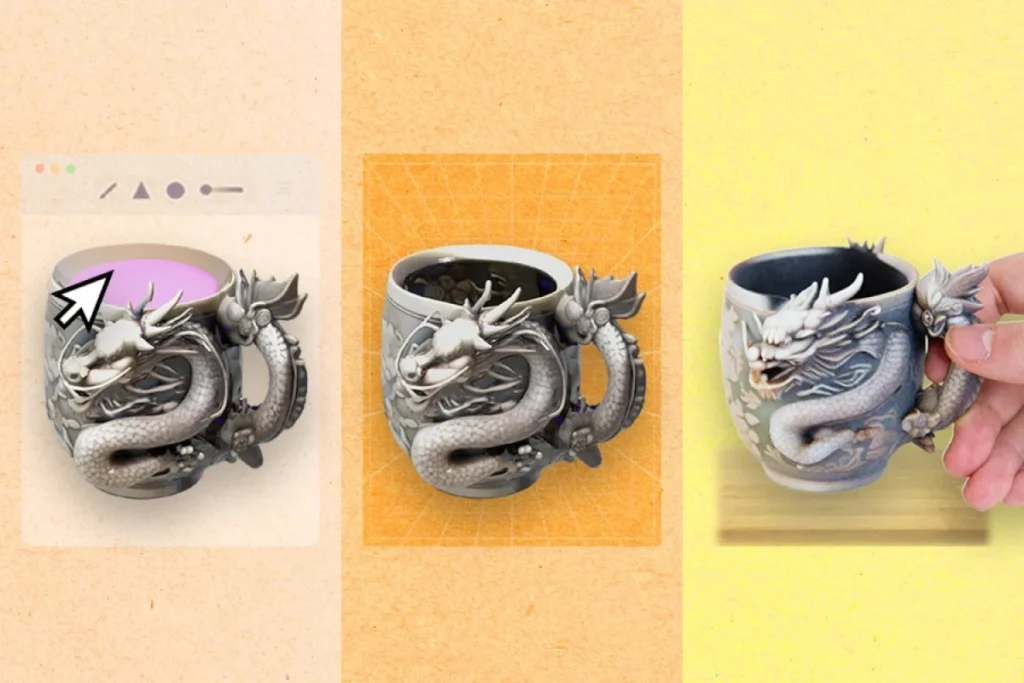
The age-old software engineering adage, "what you see is what you get," has long been a cornerstone of digital creation, ensuring that the on-screen representation accurately mirrors the final output. However, this principle has encountered a significant hurdle when it comes to generative artificial intelligence (AI) systems tasked with designing objects for 3D printing. The inherent challenge lies in the AI’s proficiency in understanding aesthetic form while lacking a grasp of practical functionality. This disconnect frequently results in 3D-printed objects, such as a coffee mug, that are visually appealing but functionally useless, unable to hold liquid or serve their intended purpose. A groundbreaking new approach, dubbed InstructMesh, is poised to revolutionize this landscape, empowering users to design and fabricate real-world objects with unprecedented ease and reliability.
Developed by a collaborative team of researchers from MIT’s Computer Science and Artificial Intelligence Laboratory (CSAIL), Google, and Northeastern University, InstructMesh offers a sophisticated yet intuitive interface that bridges the gap between AI’s generative capabilities and the practical demands of physical objects. Unlike previous AI design tools that often produced aesthetically pleasing but non-functional prototypes, InstructMesh is engineered to understand both the visual appearance and the operational requirements of an object. This allows for the creation of items like household goods, accessories, and even functional robots that are not only visually striking but also robust and practical for everyday use.
The Functional Deficit in Generative 3D Design
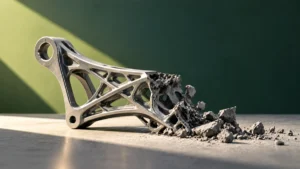
The core problem that InstructMesh addresses stems from the fundamental nature of current generative AI models. These models are trained on vast datasets of images and textual descriptions, enabling them to learn intricate patterns and generate novel designs that align with user prompts. For instance, an AI can be prompted to create a 3D model of a chair, and it can produce a visually accurate representation. However, the AI typically lacks the contextual understanding of how a chair is used – that it needs to support weight, have a stable base, and be comfortable for a person to sit on. This leads to designs that might appear as chairs but are structurally unsound or ergonomically impossible.
Furthermore, existing AI models for 3D design are notoriously difficult to edit, especially for users without extensive experience in 3D modeling software. The process of refining an AI-generated design often involves complex manipulation of parameters or direct mesh editing, a steep learning curve for novices. This barrier to entry limits the widespread adoption of AI in personal fabrication and custom design.
InstructMesh: A Paradigm Shift in AI-Assisted Fabrication
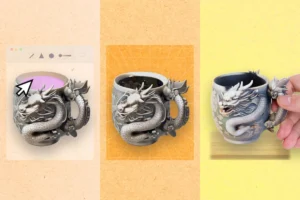
InstructMesh represents a significant leap forward by introducing an interactive design environment where users can guide the AI in a more nuanced and functional manner. The system allows users to prompt the AI to generate a 3D design, for example, a pair of eyeglasses. Crucially, users can then highlight specific areas of the generated blueprint and provide natural language instructions for refinement. This could involve specifying that the frame needs to be thicker for durability or that the arms should be adjustable for a better fit.
The system’s ability to understand and implement these user-driven edits is powered by a sophisticated fusion of existing advanced technologies. InstructMesh integrates Microsoft’s TRELLIS system, a cutting-edge platform capable of generating 3D models from text and image prompts, with GPT-4, OpenAI’s powerful large language model (LLM) that underpins ChatGPT. This potent combination of visual and textual understanding allows InstructMesh to interpret user intent with remarkable accuracy.
"We wanted to bring together the talents of 3D generators and the reasoning skills of LLMs in an interactive space to make objects that people actually want," explains Faraz Faruqi SM ’22, PhD ’26, the lead author of the paper presenting the project. Faruqi, a graduate of the Department of Electrical Engineering and Computer Science and a recent CSAIL affiliate, highlights the synergistic relationship between the two core components: "Language models are great at text and images, while TRELLIS’s talent lies in its ability to create 3D models, since it’s seen so many."
This synergy enables InstructMesh to not only generate visually compelling designs but also to ensure their practical viability. The AI can interpret instructions like "make the handle stronger" or "ensure the base is wide enough to prevent tipping," translating these functional requirements into tangible adjustments in the 3D model.
Demonstrating Creativity and Functionality
The researchers have showcased InstructMesh’s capabilities through a series of imaginative and practical applications. The tool has been used to generate a mug creatively enveloped by a dragon, with its tail forming the handle – a design that is both whimsical and structurally sound. Other examples include a lustrous blue whistle designed to resemble a seashell, and a pair of eyeglasses adorned with butterfly wings that gracefully extend from above the lenses. Pushing the boundaries of creative design, InstructMesh also produced an octopus-inspired dispenser, where each tentacle can dispense liquid into separate cups simultaneously, demonstrating its ability to handle complex multi-functional objects.
Beyond purely aesthetic creations, InstructMesh has also proven its utility in more specialized domains. For instance, MIT scientists employed the program to fabricate a custom knee brace designed to mimic the appearance of denim, intended to seamlessly match a patient’s attire. This application underscores the tool’s potential in personalized medical devices and fashion-integrated assistive technologies.
The system’s versatility extends to the realm of robotics, where it can be used to create "clever enclosures" that house wireless components. As a demonstration, the researchers fabricated a "bristle bot" that resembles a colorful shrimp. This small robotic device, powered by a hidden motor, can traverse surfaces like a miniature wind-up toy, showcasing InstructMesh’s capacity for generating functional electromechanical housings.
Empowering Novices and Experts Alike
A critical aspect of InstructMesh’s design is its accessibility to users with varying levels of 3D design expertise. To validate this, the research team conducted experiments involving individuals with no prior 3D modeling experience. They tasked TRELLIS with recreating popular 3D models from Thingiverse, a vast online repository of printable designs. The initial AI-generated recreations revealed a significant rate of structural flaws, with nearly 80 percent of the models exhibiting some form of deficiency.
Subsequently, these novice users were asked to identify and rectify these issues using InstructMesh. The results were highly encouraging: approximately 90 percent of the identified flaws were successfully corrected, as verified by an expert. This indicates that the intuitive interface of InstructMesh allows individuals to leverage their innate understanding of object functionality to guide AI-driven design, compensating for a lack of technical 3D modeling knowledge.
InstructMesh effectively scaffolds the intricate 3D modeling process, which traditionally demands specialized domain expertise. "With manipulation happening in the latent space of the generative model, InstructMesh supports natural language description of issues, and creates interpretive changes in the geometry for the user to evaluate and approve," Faruqi explains. This means that instead of directly manipulating complex geometric data, users can simply describe problems or desired changes in plain language, and the AI translates these into modifications of the underlying model.
Users who interacted with InstructMesh reported ease of use and an enhanced ability to express a wide range of creative ideas. The inclusion of intuitive controls, such as sliders, provided them with the precision needed to make specific adjustments, like scaling or extruding particular parts of a model. The overarching sentiment was that "the users got what they prompted for and easily tweaked designs where needed," as Faruqi summarized. "What they saw is what they got, and the items worked as advertised, so to speak." This direct correlation between on-screen visualization and functional reality embodies the refined "what you see is what you get" principle that InstructMesh champions.
Future Trajectories and Broader Implications
The success of InstructMesh has sparked ambitious visions for its future development and integration into emerging technologies. Faraz Faruqi, now working at Google, is exploring the incorporation of InstructMesh into augmented reality (AR) platforms. The envisioned application involves users prompting the system by describing their needs within their real-world surroundings. The AI would then rapidly generate and 3D print a customized solution, such as a phone case that perfectly matches a user’s wallet design, by analyzing the context of the environment.
Further advancements are expected to include the integration of physics simulations. This would allow InstructMesh to model how a designed object might behave under specific conditions, such as assessing the durability of a bowl when dropped or determining the most suitable materials for a given application. The software is also slated to incorporate the latest version of TRELLIS, TRELLIS.2, to enhance its ability to refine even the most minute details in 3D models, leading to even greater precision and complexity in generated designs.
The research behind InstructMesh was a collaborative effort involving several distinguished academics and industry professionals. Senior authors on the paper include Stefanie Mueller, an associate professor of electrical engineering and computer science (EECS) and mechanical engineering at MIT, and a member of CSAIL. The paper was co-authored by Google researchers Ahmed Katary ’23, Fabian Manhardt, Vrushank Phadnis MEng ’13, PhD ’20, Ruofei Du, and Federico Tombari. Additional co-authors from Northeastern University include Assistant Professor Megan Hofmann, along with several CSAIL colleagues: Demircan Tas SM ’24 and SMArchS ’24, a PhD student in EECS and architecture; former visiting researcher Theresa Hradilak; Ning Zhang ’25, a graduate student in EECS; postdoc Jiaji Li; and Martin Nisser SM ’19, PhD ’24.
This pioneering work received partial support from Google and the MIT-HPI Collaborative Research Program. The findings were presented at the ACM Symposium on User Interface Software and Technology in November, marking a significant milestone in the evolution of AI-driven design and manufacturing.
The implications of InstructMesh are far-reaching. By democratizing the process of functional 3D design, it has the potential to empower individuals, small businesses, and researchers to create custom solutions for a myriad of needs. From personalized assistive devices and innovative consumer products to rapid prototyping for scientific endeavors, InstructMesh promises to accelerate innovation and bring imaginative ideas into tangible reality, ushering in a new era where the line between digital concept and physical object is seamlessly and functionally bridged. The ability to not only visualize but also to reliably fabricate functional, aesthetically pleasing, and personalized objects opens up a universe of possibilities for how we interact with and shape our physical world.