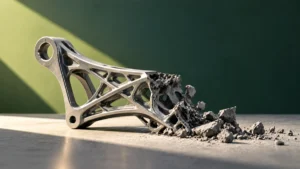
Massachusetts Institute of Technology (MIT) engineers have achieved a significant breakthrough in materials science with the development of a novel aluminum alloy engineered for 3D printing. This advanced material not only exhibits remarkable heat resistance but also surpasses the strength of conventionally manufactured aluminum by a staggering fivefold. The innovation promises to redefine the capabilities of additive manufacturing and unlock new possibilities across various high-demand industries, from aerospace to advanced computing.
From Computational Discovery to Material Reality
The genesis of this groundbreaking alloy lies in a sophisticated, interdisciplinary approach that fused cutting-edge computer simulations with the power of machine learning. This intelligent methodology dramatically accelerated the discovery process, sidestepping the traditionally arduous and time-consuming task of sifting through millions of potential material combinations. Researchers estimate that conventional methods would have necessitated evaluating over one million distinct elemental recipes. However, the bespoke machine learning model, meticulously trained on vast datasets of material properties, ingeniously narrowed this expansive search space to a mere 40 highly promising candidates, ultimately pinpointing the optimal formula for this exceptional alloy.
This algorithmic precision ensured that when the researchers transitioned from computational design to physical realization, the printed alloy’s performance aligned precisely with their predictive models. Rigorous mechanical testing of the 3D-printed samples confirmed that the material’s strength and integrity were on par with, and in many cases exceeded, the performance of the most robust aluminum alloys currently produced through traditional manufacturing techniques, such as die casting or forging.
A Lighter, Stronger Future for High-Performance Components
The implications of this high-strength, heat-tolerant, and printable aluminum alloy are far-reaching, particularly for sectors demanding both lightweight construction and exceptional durability. One of the most immediate and impactful applications envisioned by the research team is in the aerospace industry, specifically for the manufacturing of fan blades for jet engines. Currently, these critical components are predominantly fabricated from titanium, a material that is over 50% heavier and can command a cost premium of up to ten times that of aluminum. Alternatively, advanced composite materials are utilized, which, while offering weight advantages, present their own set of manufacturing complexities and cost considerations.
"The ability to utilize a lighter, yet significantly stronger material like this new aluminum alloy, presents a transformative opportunity for the transportation sector," stated Mohadeseh Taheri-Mousavi, the lead researcher on the project during her tenure as a postdoctoral associate at MIT. Taheri-Mousavi, who has since transitioned to an assistant professor role at Carnegie Mellon University, emphasized the potential for substantial energy savings across aviation and other transportation modes. By reducing the overall weight of critical components without compromising structural integrity, the fuel efficiency of aircraft and other vehicles could be considerably enhanced.
John Hart, the Class of 1922 Professor and head of MIT’s Department of Mechanical Engineering, echoed this sentiment, highlighting the alloy’s broader industrial significance. "Beyond aviation, the unique properties of this printable aluminum alloy, coupled with the inherent advantages of 3D printing—such as its ability to produce intricate geometries, minimize material waste, and enable novel design paradigms—position it as a key material for a wide array of advanced applications," Hart explained. He further elaborated that the alloy’s potential extends to critical components in advanced vacuum pumps, high-performance automobiles where weight reduction is paramount for efficiency and handling, and sophisticated cooling systems essential for the burgeoning data center industry, where thermal management is a constant challenge.
The detailed findings of this pioneering research have been published in the esteemed journal Advanced Materials, offering the scientific community a comprehensive understanding of the alloy’s composition, fabrication process, and performance characteristics. The MIT co-authors contributing to this landmark publication include Michael Xu, Clay Houser, Shaolou Wei, James LeBeau, and Greg Olson. The research was further bolstered by the invaluable contributions of international collaborators, including Florian Hengsbach and Mirko Schaper from Paderborn University in Germany, and Zhaoxuan Ge and Benjamin Glaser from Carnegie Mellon University.
A Journey from Classroom Challenge to Materials Paradigm Shift
The intellectual lineage of this remarkable discovery can be traced back to a transformative educational experience at MIT. In 2020, Mohadeseh Taheri-Mousavi enrolled in a course offered by Professor Greg Olson, a Professor of the Practice in the Department of Materials Science and Engineering. This particular course was dedicated to the application of computational simulations in the design of high-performance alloys—materials engineered by blending multiple constituent elements in precise proportions to achieve specific mechanical and physical properties.
Professor Olson, a recognized leader in the field of alloy design, presented his students with an ambitious challenge: to conceptualize and develop a 3D-printable aluminum alloy that would surpass the strength benchmarks of any existing material. The fundamental principle underpinning aluminum’s strength, as explored in the course, is its microstructure, particularly the size, distribution, and density of microscopic internal features known as "precipitates." Generally, alloys with smaller, more densely packed precipitates exhibit superior tensile strength.
During the course, students diligently employed computational simulations to explore a vast array of elemental combinations and concentration ratios, aiming to predict which formulations would yield the strongest possible alloy. Despite extensive modeling efforts, the project as a whole did not succeed in outperforming current state-of-the-art printable aluminum designs. This outcome, rather than signifying failure, served as a critical inflection point, prompting Taheri-Mousavi to re-evaluate and pivot her research strategy.
"There comes a point where the non-linear interactions between numerous factors influencing a material’s properties can render traditional simulation approaches insufficient, leading to a sense of being lost in the complexity," Taheri-Mousavi reflected on the challenges of the initial project. "Machine learning tools, however, offer a powerful guiding light. They can direct our focus to the most critical elements and interactions, for instance, pinpointing which two specific elements are predominantly dictating a particular microstructural feature. This efficiency allows for a far more targeted and productive exploration of the design space."
Harnessing Machine Learning for a Redefined Aluminum
Emboldened by this insight, Taheri-Mousavi decided to build upon the foundations laid during the classroom project, embarking on a new study that explicitly incorporated advanced machine learning methodologies. This strategic shift allowed her to leverage the algorithms’ capacity to discern subtle patterns and complex relationships within material property data, relationships that often elude the grasp of conventional simulation techniques.
By focusing the machine learning system’s analysis on a significantly reduced set of approximately 40 candidate compositions, the research team was able to identify an alloy design characterized by a substantially higher proportion of ultra-fine precipitates compared to previous attempts. This finely tuned microstructure was directly correlated with the remarkable increase in strength, a performance leap that dwarfed the results obtained from over a million simulations conducted without the aid of machine learning.
Crucially, the researchers opted to create the alloy using additive manufacturing, or 3D printing, rather than conventional casting methods. Traditional casting involves melting the metal and pouring it into a mold, where it cools and solidifies slowly. This prolonged cooling period allows precipitates to grow larger, a phenomenon that inherently diminishes the material’s overall strength.
In contrast, the team demonstrated that additive manufacturing processes, specifically laser powder bed fusion (LPBF), enable the metal to cool and solidify at an exceptionally rapid rate. In LPBF, a high-power laser selectively melts layers of fine metal powder, and the molten material solidifies almost instantaneously before the next layer is deposited. This rapid solidification is key to preserving the fine precipitate structure that the machine learning model had predicted would confer superior strength.
"A critical aspect of developing advanced materials is ensuring their compatibility with manufacturing processes like 3D printing," Professor Hart observed. "In this instance, 3D printing not only accommodates our new alloy but actively enhances its properties. The rapid cooling rates inherent to processes like LPBF are instrumental in achieving the unique microstructural characteristics that translate into such exceptional performance."
Empirical Validation: Unprecedented Strength Confirmed
To rigorously validate their theoretical design and computational predictions, the research team commissioned the production of a batch of printable metal powder precisely formulated according to their novel alloy recipe. This specialized powder, a sophisticated blend of aluminum and five additional carefully selected elements, was then dispatched to their collaborators at Paderborn University in Germany. There, using state-of-the-art LPBF equipment, small-scale test samples of the alloy were meticulously fabricated.
Upon their return to MIT, these printed samples underwent a battery of comprehensive mechanical tests and detailed microscopic analyses. The experimental results unequivocally corroborated the machine learning model’s predictions. The 3D-printed alloy demonstrated a fivefold increase in strength compared to a cast version of the identical material. Furthermore, it exhibited a 50% improvement in strength over aluminum alloys that had been designed using conventional simulation methods alone.
Microscopic imaging provided visual confirmation of the underlying structural advantages, revealing a densely packed array of exceptionally small precipitates. Beyond its exceptional strength, the alloy also proved remarkably resilient to elevated temperatures, maintaining its structural integrity and stability at temperatures up to 400 degrees Celsius. This thermal threshold is notably high for aluminum-based materials, further expanding its applicability in demanding environments.
The research team is not resting on their laurels. They are currently applying the same sophisticated machine learning techniques to further refine other critical properties of the alloy, aiming to optimize it for an even wider range of applications.
"The methodology we have developed opens up entirely new avenues for alloy design tailored specifically for 3D printing," Taheri-Mousavi enthused. "My ultimate vision is that one day, passengers looking out of an airplane window will see jet engines powered by fan blades fabricated from our advanced aluminum alloys, a testament to the transformative power of intelligent material design."